
Are Mazdas Foreign Cars? Essential Guide
Yes, Mazda is a Japanese automaker, meaning its cars are generally considered foreign in countries like the United States. However, many Mazdas are assembled in various global locations, including North America, making the “foreign car” label a bit more nuanced than it first appears.
Ever wondered where your car comes from? It’s a common question many car owners have, especially when you see different brands on the road. If you drive a Mazda, or are thinking about getting one, you might have heard people ask, “Are Mazdas foreign cars?” It’s a simple question, but the answer can be a little more interesting than you might expect. Don’t worry, though! I’m here to break it all down for you in a way that’s easy to understand.
We’ll explore Mazda’s origins, where they are made today, and what it all means for you as a car owner. By the end of this guide, you’ll feel confident knowing exactly where your Mazda stands. Let’s get started and uncover the story behind your Mazda!
Understanding “Foreign Cars”
When we talk about a car being “foreign,” what do we really mean? Usually, it refers to vehicles manufactured by companies headquartered in a country different from where the car is being sold or primarily used. For example, if you’re in the United States, a car made by a company based in Japan, Germany, or South Korea would typically be called a foreign car. This distinction often comes up in discussions about national economies, manufacturing jobs, and sometimes even perceived quality or style.
It’s a term that’s become part of our everyday language when discussing vehicles. However, in today’s connected world, the manufacturing process for cars is incredibly global. Many brands that are often labeled “foreign” have significant operations, including design studios, research centers, and assembly plants, in many different countries. This global footprint means that a car’s origin story can be quite complex.
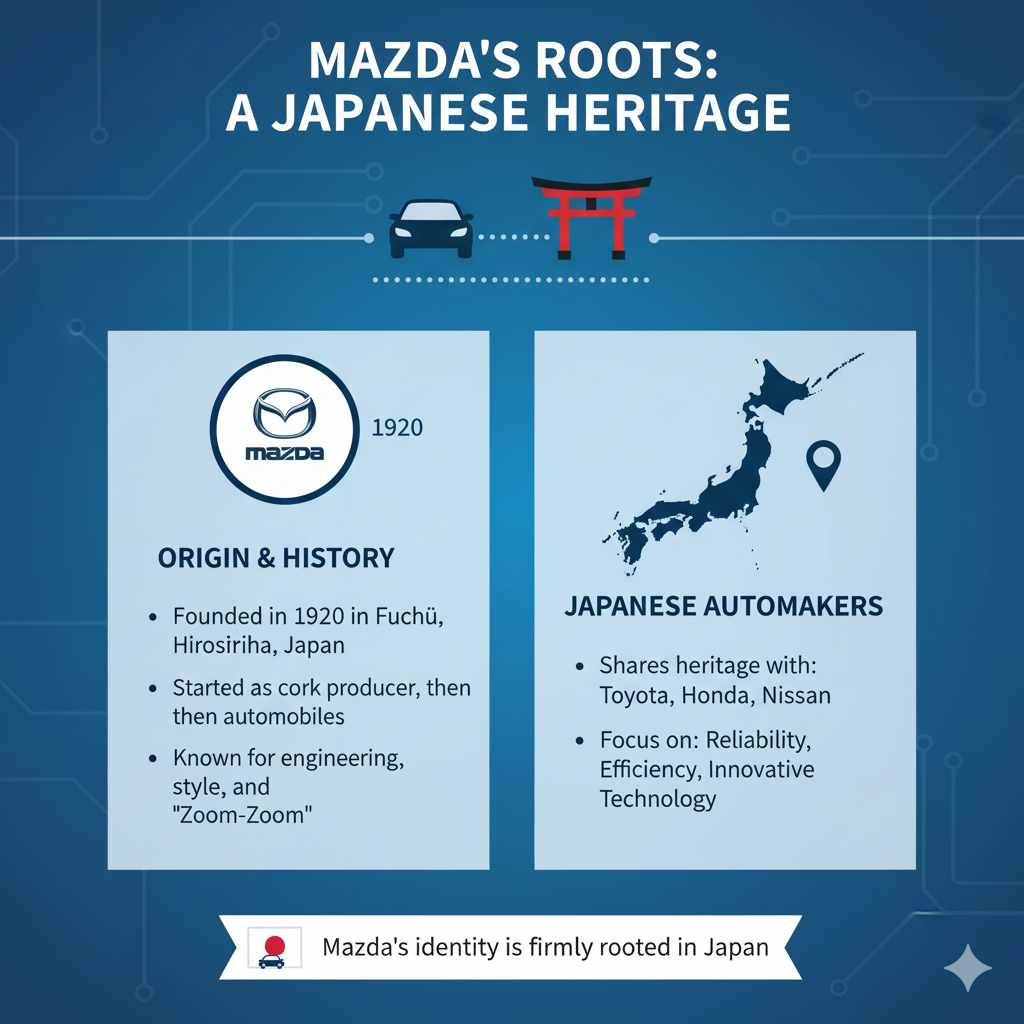
Mazda’s Roots: A Japanese Heritage
Mazda Motor Corporation is indeed a Japanese company. Its headquarters are located in Fuchū, Aki District, Hiroshima Prefecture, Japan. The company was founded in 1920, originally as a cork-producing company, before shifting to manufacturing tools and eventually automobiles. Over the decades, Mazda has become a globally recognized brand, known for its engineering, stylish designs, and the fun-to-drive nature of its vehicles, often encapsulated in their “Zoom-Zoom” slogan.
Being a Japanese automaker means that Mazda shares its national heritage with other renowned car brands from Japan, such as Toyota, Honda, and Nissan. This heritage often implies a focus on reliability, efficiency, and innovative technology, which are qualities many consumers associate with Japanese-made products. So, at its core, Mazda’s identity is firmly rooted in Japan.
Where Are Mazdas Made Today?
This is where things get interesting! While Mazda is a Japanese company, the actual assembly of its vehicles happens all over the world. Car manufacturers build plants in different regions to serve local markets more efficiently, reduce shipping costs, and adapt to specific regional demands or regulations. Mazda is no exception to this global manufacturing strategy.
Depending on the specific model and the market it’s intended for, a new Mazda could be assembled in:
- Japan: Many Mazda models for the Japanese domestic market and some global exports are still manufactured in Japan.
- North America: Mazda has assembly plants in Mexico and has had joint ventures or plants in the United States. For example, the Mazda3 and CX-30 intended for the North American market are often built in Mexico.
- Other Regions: Historically, and for certain models, Mazda vehicles have also been assembled in countries like Thailand, China, and Russia to cater to those specific markets.
This global production network means that a Mazda purchased in the United States might have been built in Japan or Mexico. Similarly, a Mazda bought in Europe could have originated from a Japanese factory or another assembly point. This practice is common across the entire automotive industry, not just for Mazda, and it helps manufacturers stay competitive and meet diverse customer needs.
Mazda’s North American Presence
For drivers in North America (the United States, Canada, and Mexico), understanding Mazda’s manufacturing footprint is particularly relevant. Mazda has a strong presence in this region, not just in terms of sales but also production.
Mazda de Mexico Vehicle Operation (MMVO) in Salamanca, Mexico, is a significant assembly plant. This facility produces popular models like the Mazda3 and the Mazda CX-30. These vehicles are then distributed to the United States and Canada. This means that a significant portion of Mazdas sold in these North American countries are, in fact, assembled in North America, albeit in Mexico.
Furthermore, Mazda has historically participated in joint ventures with other manufacturers to utilize production facilities. For instance, there was a period where Mazda vehicles were assembled at a plant in the United States operated by another automaker. This collaborative approach is a smart way to leverage existing infrastructure and optimize production.
What Does “Made In” Really Mean?
When you look at a sticker on a car, you might see “Made in Japan,” “Made in Mexico,” or “Assembled in the USA.” It’s important to understand that “Made in” often refers to the final assembly point. The reality of car manufacturing is that parts and components come from all over the world. An engine might be built in one country, the transmission in another, and the electronics sourced from a third. The final assembly plant is where all these pieces come together to form the finished vehicle.
So, even if a car is “Made in Japan,” many of its parts might have been sourced from other countries. Conversely, a car assembled in Mexico could contain many parts manufactured in Japan or the United States. The “Made in” label reflects the location where the vehicle achieved its final form.
The U.S. government has its own specific rules for determining domestic content, often outlined by the Federal Trade Commission (FTC). For example, the FTC’s “Made in USA” standard requires that “all or virtually all” of the product be made in the U.S., including the “value of the component parts.”
The Implications of Mazda’s Global Manufacturing
For the everyday driver, a car’s origin is often less about where it was born and more about its quality, reliability, and value. Mazda has built a reputation for producing vehicles that are well-engineered, durable, and enjoyable to drive, regardless of where they are assembled.
Here are some key points to consider:
- Quality Control: Major automakers, including Mazda, implement strict quality control measures at all their assembly plants worldwide. This ensures that vehicles meet the same high standards, whether they are built in Japan, Mexico, or elsewhere.
- Parts Sourcing: Modern vehicles are incredibly complex. The practice of sourcing parts globally allows manufacturers to utilize the best available technology and components to build reliable cars.
- Cost and Value: Building plants in different regions can help manufacturers offer more competitive pricing by reducing transportation costs and adapting to local economic factors. This can translate into better value for consumers.
- Impact on Local Economies: When Mazda or any automaker assembles cars in a country, it creates jobs and stimulates economic activity in that region. This is a significant factor in global manufacturing.
Ultimately, a Mazda is a product of a global automotive ecosystem, designed and engineered by a Japanese company but often brought to life in various countries. This global approach is what allows Mazda to deliver its vehicles to drivers around the world efficiently and competitively.
Mazda Models and Their Assembly Locations (Examples)
Assembly locations can change over time due to production shifts, new plant openings, or updates in model lineups. However, here are some general examples of where certain popular Mazda models have been or are typically assembled for the North American market:
| Mazda Model | Typical Assembly Location(s) for North America | Notes |
|---|---|---|
| Mazda3 | Mexico | Often produced at the MMVO plant in Salamanca, Mexico. |
| Mazda CX-30 | Mexico | Also frequently assembled at the MMVO plant. |
| Mazda CX-5 | Japan | Primarily manufactured in Japan for many markets, including North America. |
| Mazda CX-9 | Japan | Typically built in Japan. |
| Mazda MX-5 Miata | Japan | The iconic sports car is famously manufactured in Hiroshima, Japan. |
It’s always a good idea to check the specific vehicle identification number (VIN) or the sticker on the car itself if you want to know the exact assembly location of your particular Mazda. The VIN typically contains codes that indicate the country of origin or assembly. You can often find VIN decoders online which can help you interpret this information.
Comparing Mazda to Other “Foreign” Brands
Mazda’s global manufacturing strategy is very much in line with other major international automakers. For instance:
- Toyota, Honda, Nissan: These Japanese brands also have extensive manufacturing operations in North America (USA and Mexico). Popular models like the Toyota Camry, Honda CR-V, and Nissan Altima are frequently assembled in these North American plants.
- Hyundai and Kia: These South Korean brands have significant assembly plants in the United States, producing cars for the North American market.
- German Brands (BMW, Mercedes-Benz, Volkswagen): While their origins are in Germany, these luxury automakers also operate assembly plants in countries like the United States and Mexico to serve regional demand.
This trend highlights that the idea of a car being purely “foreign” is becoming increasingly outdated. Most brands, regardless of their home country, embrace a global approach to manufacturing to optimize their operations and better serve their customers worldwide.
What About Parts and Maintenance?
When it comes to maintaining your Mazda, you might wonder if parts are harder to come by because it’s a “foreign” car. The good news is that Mazda has a well-established presence in most major markets.
- Dealerships: Official Mazda dealerships are equipped with genuine Mazda parts and trained technicians. They can handle all your maintenance and repair needs.
- Aftermarket Parts: You can also find a wide range of aftermarket parts for Mazdas at auto parts stores or online retailers. Many of these parts are manufactured by companies that specialize in making components for various car brands, including imports.
- Specialty Shops: Independent auto repair shops often have experience working with Mazda vehicles. Many of these shops will stock or can easily order the necessary parts.
The perception that parts for foreign cars are expensive or difficult to find often stems from older experiences or from very niche or luxury brands. For mainstream vehicles like Mazda, parts availability is generally very good.
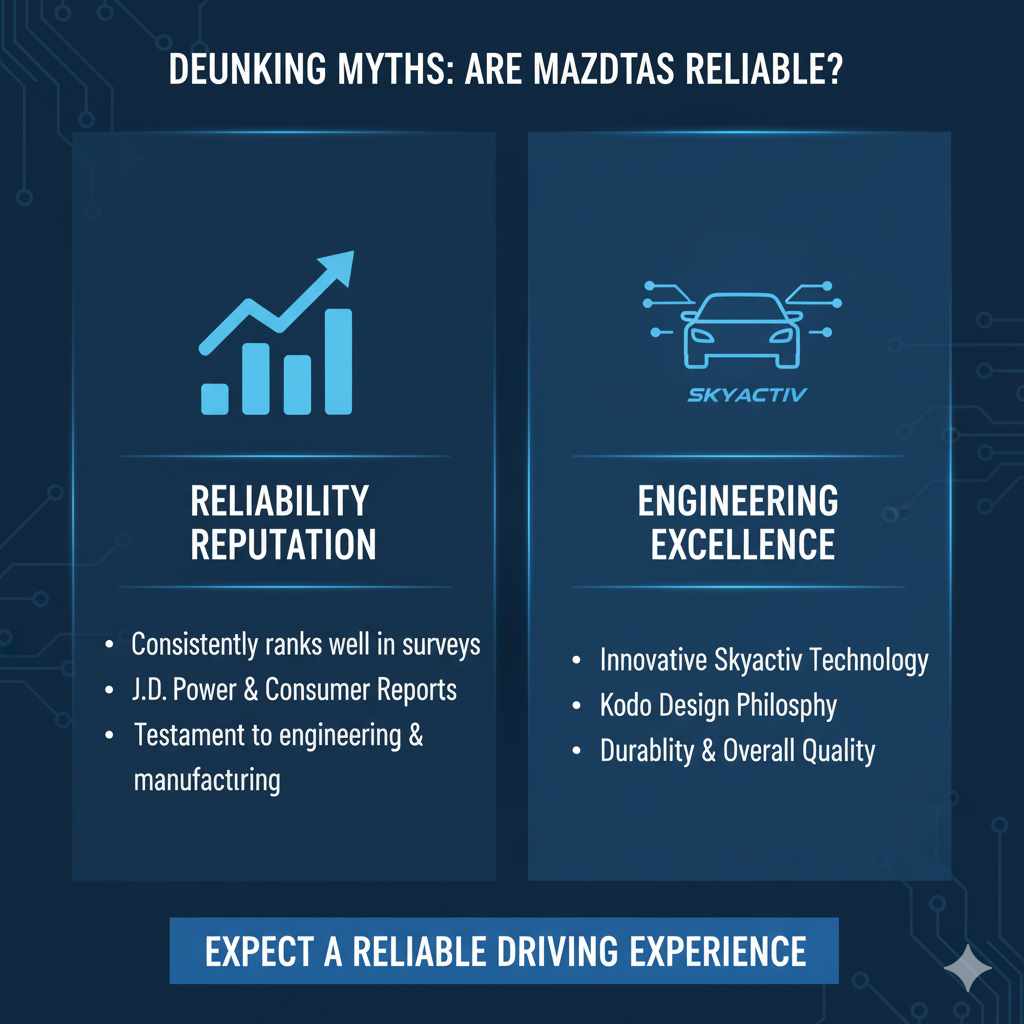
Debunking Myths: Are Mazdas Reliable?
A common concern associated with any car brand, regardless of origin, is reliability. Mazda has consistently ranked well in reliability surveys and quality studies conducted by organizations like J.D. Power and Consumer Reports. This reputation for reliability is a testament to their engineering and manufacturing processes, which are maintained across all their global facilities.
Mazda’s commitment to engineering excellence, often seen in their innovative Skyactiv technology and Kodo design philosophy, contributes to the durability and overall quality of their vehicles. So, whether your Mazda was assembled in Japan or Mexico, you can generally expect a reliable driving experience.
Frequently Asked Questions (FAQ)
Q1: Is Mazda a German car?
No, Mazda is not a German car. Mazda is a Japanese automotive manufacturer headquartered in Hiroshima, Japan.
Q2: Where are Mazda cars built for the US market?
Mazda cars for the US market are built in various locations. Many popular models, like the Mazda3 and CX-30, are assembled in Mexico. Other models, such as the CX-5 and MX-5 Miata, are typically manufactured in Japan. Mazda’s global manufacturing strategy means the origin can depend on the specific model.
Q3: Do Mazdas have good resale value?
Yes, Mazdas generally hold their value well. Their reputation for reliability, sporty driving dynamics, and stylish design contributes to strong resale values compared to many other vehicles in their class.
Q4: Are Mazda engines made in Japan?
While Mazda’s engineering and design are rooted in Japan, the manufacturing of components like engines can occur in various global facilities. For vehicles assembled outside of Japan (e.g., in Mexico), the engines might also be manufactured in facilities that serve those assembly plants, though often with significant Japanese-engineered components.
Q5: Is it expensive to maintain a Mazda?
Maintaining a Mazda is generally comparable in cost to maintaining other Japanese or North American vehicles. They are known for their reliability, which can lead to lower repair costs over time. Routine maintenance like oil changes, tire rotations, and brake checks are typically priced competitively at dealerships and independent shops.
Q6: What does the “Made in Japan” sticker signify for a Mazda?
A “Made in Japan” sticker on a Mazda indicates that the vehicle underwent its final assembly process in one of Mazda’s manufacturing plants located in Japan. This often applies to premium models or vehicles destined for markets where Japanese assembly is standard.
Q7: Are parts for Mazdas easy to find?
Yes, parts for Mazda vehicles are widely available. Official Mazda dealerships, major auto parts retailers, and online stores commonly stock or can easily source the parts needed for maintenance and repairs.
Conclusion
So, to circle back to our original question: Are Mazdas foreign cars? The straightforward answer is yes, Mazda is a Japanese automobile manufacturer. However, as we’ve explored, in today’s globalized world, the “foreign” label doesn’t tell the whole story. Many of the Mazdas you see on the road, especially in North America, are assembled in plants located within the continent, such as in Mexico.
This global manufacturing approach is standard practice across the automotive industry. It allows companies like Mazda to produce vehicles efficiently, adapt to local markets, and offer competitive pricing without compromising on the quality and reliability that drivers expect. Mazda’s Japanese heritage is evident in its engineering, design, and commitment to performance, while its global production network ensures these cars are accessible and well-supported worldwide.
When you’re looking at a Mazda, focus on the model that fits your needs, its features, and its overall condition. The specifics of where it was assembled are part of a larger, complex manufacturing process that ultimately brings a well-built vehicle to your driveway. You can be confident that Mazda, regardless of assembly location, aims to deliver a quality driving experience. Keep enjoying the drive, and feel free to ask if more car questions pop up – I’m always here to help demystify the world of automobiles for you!