Finding the Best Auto Repair in Longmont
The best auto repair in Longmont is the shop that diagnoses first, documents the fault with scan data or photos, and gives you written repair options you can compare before approving work. Weak diagnosis leads to repeat visits, avoidable parts replacement, and a bigger bill. This guide shows how to compare Longmont shops by evidence, service transparency, and booking value.
Quick checklist
Start with the problem you need solved. A check-engine light, brake noise, no-start condition, or cooling issue calls for a different level of testing, and the right shop should explain that difference before it touches parts.
For routine work, compare maintenance menus and convenience. For a diagnostic job, focus on proof: scan codes, symptom verification, test results, and a repair plan that names the cause instead of guessing at likely parts.
Separate maintenance from diagnosis
Oil service, brakes, A/C service, cooling systems, suspension work, and electrical repair are common menu items. Those jobs are different from a fault that needs tracing. A shop that treats every warning light like a parts order is taking a shortcut.
A low quote can be a warning sign if it skips diagnosis. Replacing a sensor, battery, or starter without confirming the root cause can send you back for the same complaint.
Use a comparison checklist before you call
Compare shops by the proof they can show you, not only by star ratings. Hours, location, vehicle make support, and communication style matter, and so do the details that protect your budget.
- Write down the symptom and when it happens.
- Ask whether the shop diagnoses before replacing parts.
- Ask what proof you will see before approval.
- Confirm warranty terms for the repair.
- Check loaner and drop-off options.
- Ask about financing for qualifying repairs.
- Read reviews for patterns, not slogans.
- Verify hours, address, and vehicle fit.
📊 All American Auto Repair of Longmont is at 141 Pratt St, Longmont, CO 80501. Source: Longmontautorepair.
What evidence should a good shop give you before repairs?
A good shop should show you how it reached the recommendation. That means starting with diagnostic testing, then sharing written findings, photos, or scan data before you approve labor and parts. If the shop cannot explain the failure path, you are paying to guess.
Diagnostic testing before parts replacement
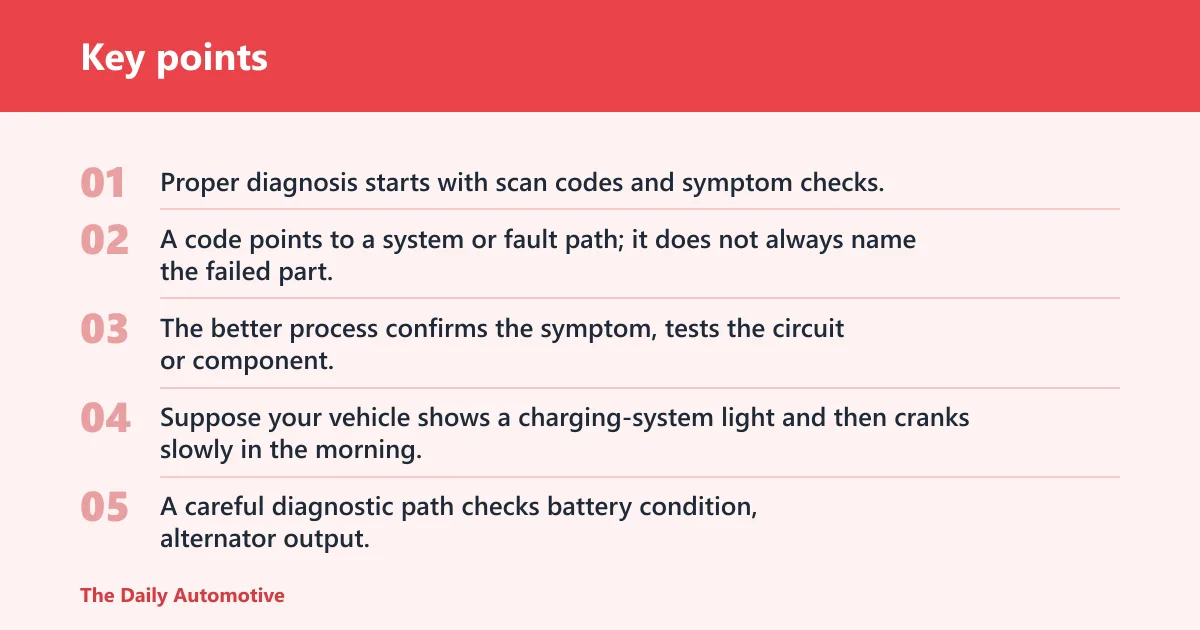
Proper diagnosis starts with scan codes and symptom checks, then moves to testing the root cause. A code points to a system or fault path; it does not always name the failed part. The better process confirms the symptom, tests the circuit or component, and rules out look-alike failures.
Suppose your vehicle shows a charging-system light and then cranks slowly in the morning. A careful diagnostic path checks battery condition, alternator output, and cable integrity before anyone orders a starter.
Written estimates with labor and parts detail
Ask for a written estimate that separates labor, parts, and any diagnostic fee. That lets you compare shops on real terms instead of on a single number that hides what is included.
Also ask whether the estimate can change after testing. A shop that updates you with clear reasons is easier to evaluate than one that changes the price without evidence.
Photos, scan data, and inspection notes
Digital vehicle inspections should include photos and findings that you can review before approval. That is especially useful for brake wear, fluid leaks, tire issues, and visible damage where the problem can be seen, not only described.
Visible evidence also helps when a repair is urgent but not obvious. If the shop sends scan data or inspection notes, you can ask better questions before authorizing work.
Finding the Best Auto Repair in Longmont checklist
Use this roughly 10-point checklist to compare local shops side by side. Score each item on a 1-to-5 scale, then total the points. The shop with the best evidence and communication usually offers the better value, even if its first quote is not the cheapest.
| Criterion | What to look for | Score 1-5 |
|---|---|---|
| Diagnostic process | Scan codes, symptom verification, and root-cause testing before parts replacement | |
| Written estimates | Labor, parts, and diagnostic fee listed separately | |
| Photo evidence | Photos, scan data, or inspection notes you can review before approval | |
| Warranty terms | Clear coverage, duration, mileage limit, and repair eligibility | |
| Loaner availability | Confirmed loaner access, limited supply, and drop-off convenience | |
| Financing | Options for qualifying repairs and budget flexibility | |
| Review quality | Verified reviews with specific praise or criticism, not vague language | |
| Turnaround communication | Updates if the estimate changes and a clear timeline for next steps | |
| Vehicle specialization | Experience with your make, model, drivetrain, or hybrid/EV needs | |
| Inspection transparency | Findings shared before approval, not after the bill is written |
What services should a full-service Longmont shop handle?
A full-service auto repair shop should cover routine maintenance and deeper repair work. That includes oil service, brakes, A/C, cooling systems, suspension, and electrical work. If you drive a family vehicle, commuter car, or used truck, those categories often cover many of the common failures that come up.
Oil service and scheduled maintenance
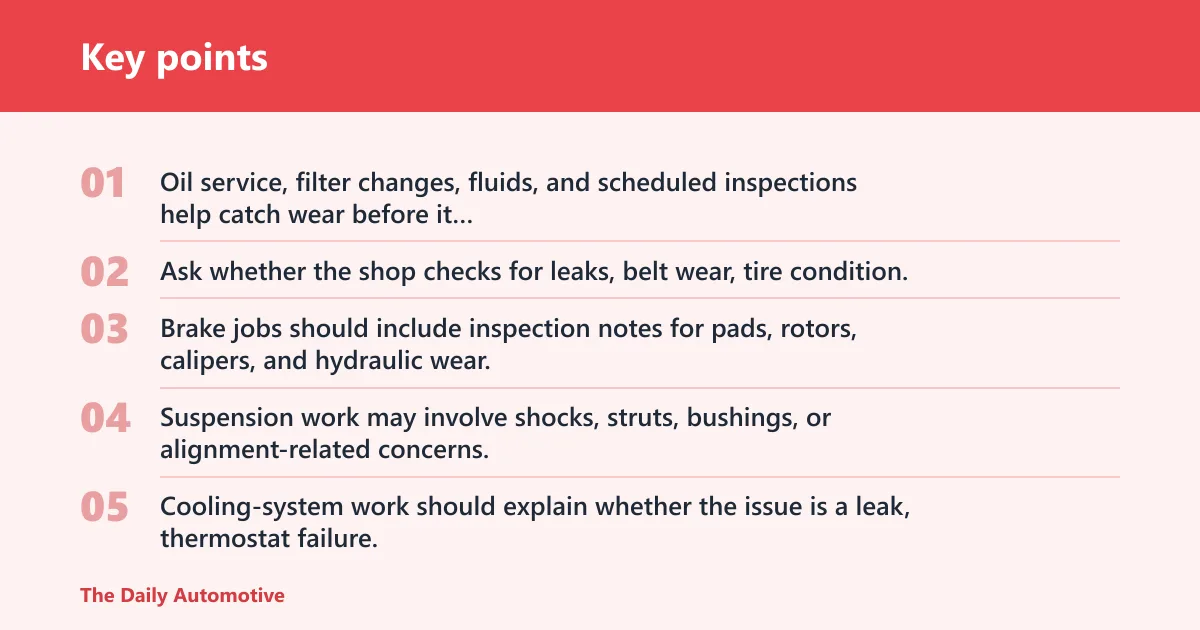
Oil service, filter changes, fluids, and scheduled inspections help catch wear before it becomes a breakdown. Ask whether the shop checks for leaks, belt wear, tire condition, and visible fluid loss during routine service.
Brakes, suspension, and cooling systems
Brake jobs should include inspection notes for pads, rotors, calipers, and hydraulic wear. Suspension work may involve shocks, struts, bushings, or alignment-related concerns. Cooling-system work should explain whether the issue is a leak, thermostat failure, fan problem, or another cause.
A/C work and electrical repair
A/C problems often need pressure checks, leak testing, and compressor or control diagnosis before parts are replaced. Electrical repair should cover battery, charging, starting, wiring, and lighting. Those complaints can overlap, so a precise test plan matters.
Pre-purchase inspections for used cars
A pre-purchase inspection gives you an independent assessment before you buy a used vehicle. It can reveal wear, deferred maintenance, leak signs, and safety concerns that a quick test drive may miss. That makes the price of the inspection easier to justify.
How do you judge reviews and reputation?
Trustworthy reviews are specific. Look for verified reviews that mention clear explanations, fair pricing, and whether the shop reported findings before doing the work. A wall of generic praise means less than a smaller set of detailed, consistent comments.
Verified reviews versus vague praise
Vague comments like “great shop” or “awesome service” do little. Better signals are remarks about turnaround updates, estimate clarity, or whether the shop explained the test results in plain language.
Say a family minivan needs brake work and a coolant leak check. Reviews that mention a clear estimate, photos of worn parts, and a call before extra work was approved are more useful than star count alone.
Patterns that matter more than star count
Read for repeat themes. If multiple reviews mention fair pricing, clear explanations, and consistent communication, that pattern matters. If complaints cluster around surprise charges or unclear diagnosis, take that seriously even when the average rating is high.
Convenience factors that can change the final cost
Convenience is part of value, but it should not hide the repair method. Hours, location, drop-off access, loaners, and financing can all affect how disruptive the visit feels and how quickly you get back on the road.
Hours and location
All American Auto Repair of Longmont is at 141 Pratt St, Longmont, CO 80501. Business hours are Monday–Friday, 8:00 AM–5:00 PM. That kind of schedule matters if you need a weekday drop-off or a pickup plan around work.
Drop-off planning and loaner vehicles
Loaner vehicles are available by confirmation while the vehicle is there, and supply is limited. That means you should confirm availability before you rely on it. Drop-off convenience is useful, but only if it fits your schedule and the shop has capacity that day.
Financing options for qualifying repairs
For larger repairs, financing can matter more than a small discount. NAPA EasyPay is available for qualifying repairs, which can help spread out costs when the work cannot wait. Always ask which jobs qualify and what the payment terms look like.
What should you ask before you leave the car?
Ask direct questions before you hand over the keys. You want to know what tests come first, what evidence you will see, which repairs are covered by warranty, and how the shop will notify you if the estimate changes. Clear answers now can prevent a messy bill later.
What tests will you run first?
This question tells you whether the shop diagnoses or guesses. A good answer should mention scan codes, symptom verification, and testing the likely cause before any parts are ordered.
Can I see the findings before approval?
Ask for photos, inspection notes, or scan data before you approve repair work. Digital inspections with photos and findings make it easier to compare options and decide whether the repair is urgent or can wait.
What warranty applies to this repair?
For qualifying repairs, the warranty is 2-year / 24,000-mile. Ask what counts as a qualifying repair and whether any exclusions apply. Warranty value matters because a corrected repair should stay corrected.
How will you update me if the estimate changes?
Ask how the shop contacts you, who approves additional work, and what happens if the diagnosis changes after teardown. A shop that explains the update process up front is easier to work with than one that treats changes as a surprise.
Frequently asked questions
What should I look for in an honest Longmont mechanic?
Look for clear explanations, written estimates, and proof of the fault through photos, scan data, or inspection notes. An honest shop should tell you what was tested, what was confirmed, and what still needs to be checked before you approve the repair.
Which auto repair shops in Longmont offer diagnostics before replacing parts?
Ask directly whether the shop performs professional diagnostics before parts replacement. A strong answer includes scan codes, symptom verification, and root-cause testing. Shops that can document the fault before they sell parts are better positioned to avoid repeat visits and wasted money.
How much should car repair cost in Longmont, Colorado?
Cost depends on labor time, parts quality, the diagnostic process, and whether the problem is simple or hidden. A fair estimate should break out labor, parts, and diagnostic charges. Be cautious with very low quotes if they skip testing or seem to assume the failed part.
Do any Longmont repair shops offer loaner vehicles or financing?
Some shops do, but both options depend on confirmation and repair eligibility. Loaner vehicles can be limited, and financing may apply only to qualifying repairs. Ask before drop-off so you know whether the schedule and budget will work for your visit.
What services should a full-service auto repair shop handle?
A full-service shop should handle oil service, brakes, A/C, cooling systems, suspension, electrical repair, and pre-purchase inspections. That coverage matters because many drivability problems cross over between maintenance and repair, and a single visit should be able to address several related checks.
Products related to this article
Sponsored / affiliate links. As an Amazon Associate I earn from qualifying purchases. I may earn additional commission from eligible campaigns.