Best Black Paint Sheen for Classic Car Interiors
Picking the right black paint sheen for your classic car’s interior can feel tricky, especially if you’re new to car restoration. You want it to look just right, like it did when it was brand new. But with so many choices, it’s easy to get confused.
Don’t worry, we’ll make it simple. We’ll walk through everything you need to know, step by step, to get that perfect classic look. Let’s find the Best Black Paint Sheen for Classic Car Interior Finish.
Choosing the Best Black Paint Sheen
Exploring Black Paint Sheen Options
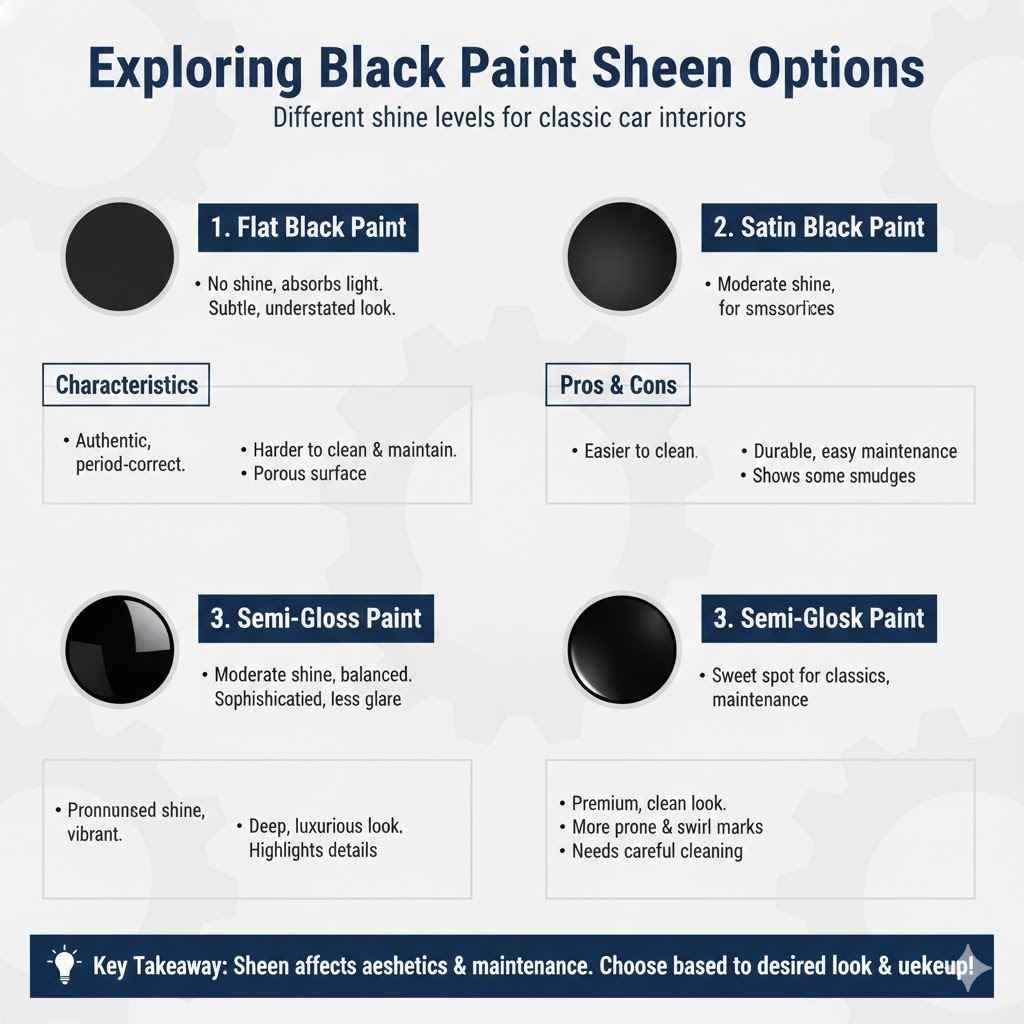
This section talks about the different shiny levels you can choose for black paint. It explains what each level means and why it matters for your car’s inside. We’ll look at how light hits different sheens and what look they give. This helps you decide what’s best for the classic feel you want.
Flat Black Paint
Flat black paint has almost no shine. It absorbs light rather than reflecting it. This gives a very subtle, non-glossy look.
Flat black is great for a period-correct, understated look. It’s often seen in older vehicles where a lot of trim was matte. It hides imperfections well because there’s no shine to highlight them.
However, it can be harder to clean than glossier finishes. Dirt and grime can soak into the pores of the paint more easily. This means you might need special cleaning products to keep it looking good.
It’s a popular choice for a very authentic restoration where you want to avoid anything too flashy.
Advantages of Flat Black
- Provides a very authentic, original look for many classic cars.
- Hides surface imperfections like minor scratches and sanding marks effectively.
- Offers a deep, non-reflective finish that can feel very subtle and period-appropriate.
When you’re aiming for a completely original appearance, flat black is often the go-to. It mimics the materials used in many cars from the mid-20th century. Think about dashboard elements or certain trim pieces that were never meant to gleam.
This sheen offers that specific, low-profile aesthetic that can really complete a restoration. It’s about capturing a piece of history in your car’s details. Many enthusiasts choose this for its historical accuracy above all else.
It doesn’t distract from the car’s overall lines or other restored features.
Disadvantages of Flat Black
- Can be more challenging to clean and maintain compared to glossier finishes.
- May absorb dirt and oils, requiring specific cleaning agents and techniques.
- Durability can sometimes be a concern if not properly cared for, as the porous surface is more vulnerable.
Keeping a flat black interior looking its best takes a bit more effort. Spills or greasy fingerprints can be hard to wipe off without leaving a mark. You’ll want to use cleaners designed for matte surfaces.
These usually don’t contain harsh chemicals that could alter the finish. Over time, if not cleaned correctly, it can start to look dull or uneven. So, while it offers that classic look, be prepared for the extra care it requires.
Satin Black Paint
Satin black paint has a moderate shine, more than flat but less than semi-gloss. It’s a balanced choice that offers some reflection without being overly glossy.
This is often considered the sweet spot for many classic car interiors. A satin finish provides a subtle sheen that looks sophisticated. It reflects light enough to show off the contours of your interior panels but not so much that it causes glare.
It’s also generally easier to clean than flat black. This makes it a practical choice for a car that will be driven and enjoyed. Many original interiors from the 1960s and 1970s had a satin-like finish, making it a great option for period correctness.
Why Satin Black is Popular
- Offers a sophisticated, understated sheen that isn’t too shiny.
- Provides a good balance between a natural look and a subtle reflective quality.
- Generally easier to clean and maintain than flat finishes, making it practical.
The popularity of satin black stems from its versatility. It works well on various interior surfaces, from plastic panels to vinyl seats. It gives a look that feels rich and detailed without being ostentatious.
For restorations aiming for a high-quality, factory-fresh appearance, satin is often the preferred choice. It avoids the mirror-like glare of high gloss while still providing a pleasing depth to the finish. This makes the interior feel more premium and complete.
Cleaning and Durability of Satin Black
- With proper care, satin black is quite durable and long-lasting.
- Regular cleaning with mild soap and water is usually sufficient.
- Avoid abrasive cleaners or tools that could scratch the finish.
Maintaining a satin black finish is relatively straightforward. A quick wipe-down with a damp cloth can often remove dust. For tougher spots, a pH-neutral interior cleaner works well.
The key is gentle treatment. Using soft microfiber towels prevents micro-scratches that can dull the sheen over time. This level of care ensures the finish stays consistent and attractive for many years.
It’s a finish that rewards consistent, light maintenance.
Semi-Gloss Black Paint
Semi-gloss black paint has a noticeable shine. It reflects light more strongly than satin but is still less reflective than full gloss.
This sheen offers a slightly more vibrant look. It can make black surfaces appear deeper and more luxurious. For classic cars, a semi-gloss finish can bring out the details in trim and molded plastic.
It’s a step up in shine from satin, giving a bit more pop to the interior. This can be a good choice if you want a clean, sharp look that still feels appropriate for a classic vehicle. It’s a common choice for dashboard components and door panels.
Aesthetic Appeal of Semi-Gloss
- Provides a more pronounced shine that enhances the depth of the black color.
- Can make interior surfaces appear cleaner and more premium.
- Offers a good balance for those who want a noticeable sheen without full gloss.
The visual impact of semi-gloss black is undeniable. It catches the light in a way that makes the black color look richer. If you have intricate designs or textures on your interior parts, this sheen can help highlight them.
It can also make a smaller interior feel a bit more open due to the light reflection. For many, this level of shine is the perfect blend of classic and refined. It signals that care has been taken to achieve a high-quality finish.
Maintenance for Semi-Gloss
- Easier to clean than flat finishes, but more prone to showing swirl marks than satin.
- Regular dusting and wiping with a cleaner are recommended.
- Protect from harsh chemicals that could damage the shine.
Cleaning semi-gloss is similar to satin, but you need to be a bit more careful about scratching. Because it’s more reflective, any fine scratches will be more visible. Always use soft cloths and avoid rubbing too hard.
A good interior detailer spray can help maintain that sheen. Wiping down surfaces regularly will prevent dirt buildup. This keeps the semi-gloss finish looking its best.
It’s a finish that looks great when well-maintained.
Factors to Consider for Your Classic Car Interior
Key Considerations for Sheen Selection
When you’re deciding on the best black paint sheen, several things come into play. It’s not just about how shiny it looks. You need to think about the original look of your car, how you plan to use it, and how much effort you want to put into upkeep. This section will help you weigh these factors.
Originality and Period Correctness
Many classic car owners strive for originality. This means choosing a sheen that matches what the car had when it first rolled off the assembly line.
Researching your specific car model and year is essential. Look at original sales brochures, owner’s manuals, or old photographs. If possible, examine unrestored examples of your car.
Manufacturers used different sheens for different parts. A dashboard might have been flat, while door handles could be semi-gloss. Getting this right makes a big difference to the authenticity of your restoration.
It shows attention to detail that enthusiasts appreciate. It’s about respecting the car’s history.
- Research Your Specific Model: Different manufacturers and models used varied finishes.
- Examine Original Examples: See what factory-correct cars look like in person or in photos.
- Consult Restoration Guides: Many marque-specific clubs or forums offer detailed information.
Finding period-correct information is key. Some cars from the 1950s might have had more matte finishes, while cars from the 1970s might have incorporated more satin or semi-gloss elements. Understanding the trends of the era your car belongs to is very helpful.
This knowledge guides your choice to achieve that factory-fresh look. It’s a detective task that pays off in authenticity.
Durability and Ease of Cleaning
How the paint holds up to daily use and how simple it is to clean are major practical concerns.
If your classic car is a daily driver or sees frequent use, you’ll want a finish that can handle it. Flat black, while authentic, can be the most challenging to keep clean. Satin and semi-gloss finishes are generally more forgiving.
They offer a good compromise between looks and practicality. Think about where the paint will be applied. High-touch areas like steering wheels or gear shifts might benefit from a more durable, easier-to-clean sheen.
A finish that requires constant special care might become a chore.
- Daily Driver Considerations: If the car is used often, choose a finish that withstands wear.
- High-Touch Areas: Surfaces like steering wheels need a durable, easy-to-clean sheen.
- Cleaning Products Available: Ensure you can easily find suitable cleaners for your chosen finish.
A common issue with classic interiors is wear and tear over time. Fingerprints, dust, and spills are inevitable. A finish that resists showing every smudge or scratch is desirable for many.
Satin and semi-gloss options typically offer this advantage over flat finishes. They are less porous and easier to wipe down. This means less time spent scrubbing and more time enjoying your car.
Desired Aesthetic and Visual Impact
What overall look are you trying to achieve for your car’s interior? This is where personal preference plays a big role.
Do you want a subtle, classic look, or something with a bit more pop? Flat black offers a very understated, vintage feel. Satin black provides a sophisticated, balanced look.
Semi-gloss can make the interior feel brighter and highlight details more. Consider the color of other interior components, like seats or headliners. The sheen of the black paint should complement these elements.
Experimenting with small samples on unseen parts can help visualize the final result.
Visualizing the Finish
- Flat Black: Absorbs light for a deep, non-reflective, authentic feel.
- Satin Black: Offers a gentle sheen, a good balance between matte and gloss.
- Semi-Gloss Black: Provides a noticeable shine that enhances depth and highlights details.
The way light interacts with the paint is crucial to the overall mood of the interior. A flat finish can make the interior feel more intimate and historically accurate. A semi-gloss finish, conversely, can make the space feel a bit more open and modern, while still being appropriate for a classic.
Satin strikes a middle ground, offering elegance without being too bold. Think about the feeling you want when you sit in the car.
Compatibility with Interior Materials
Ensure the paint you choose is compatible with the specific materials in your classic car’s interior. Different plastics, vinyl, and even fabrics react differently to various paint formulations. Some paints might be designed for hard plastics, while others work better on flexible vinyl.
Always check the product’s specifications to confirm it’s suitable for the surfaces you intend to paint. Using the wrong type of paint can lead to adhesion problems, cracking, or an uneven finish, regardless of the sheen chosen. This is a crucial step to avoid future issues.
Applying Black Paint Sheen to Your Interior
Preparing Surfaces for Paint
Getting the surfaces ready is the most important step for any paint job, especially for an interior finish. A good preparation ensures the paint sticks well and looks smooth.
Before you even think about applying paint, thorough cleaning and prep work are vital. Any dirt, grease, or old wax will prevent the new paint from adhering properly. This can lead to peeling or an uneven finish.
Start by removing any loose trim or components. Then, clean all surfaces with an appropriate interior cleaner. For plastics, a degreaser might be necessary.
If there are any damaged areas, repair them now. Sanding may be required to create a smooth surface for the paint to grip onto. A clean, smooth canvas is the foundation for a great paint job.
- Clean Thoroughly: Remove all dirt, grease, and grime.
- Repair Damage: Fix any cracks, dents, or holes before painting.
- Light Sanding: Create a profile for the paint to adhere to on smooth surfaces.
- Masking: Protect areas you don’t want to paint, like windows and upholstery.
Imagine painting over dust or oil. The paint would just sit on top and eventually flake off. That’s why cleaning is non-negotiable.
For stubborn residues, especially on older cars, specialized cleaners might be needed. Think about what the interior has been exposed to over the decades. Even invisible films of grime can ruin a paint job.
Taking the time here saves you a lot of headaches later on.
Choosing the Right Paint Type
Not all paints are created equal, and the type you select impacts the final look and durability.
For classic car interiors, you’ll typically be looking at acrylic lacquers, enamels, or urethane-based paints. Each has its pros and cons. Acrylic lacquers dry fast and are easy to re-coat, but can be less durable.
Enamels are more durable but take longer to dry and can be prone to sagging. Urethane paints offer excellent durability and resistance but can be more complex to work with. Always choose a paint formulated for automotive interiors.
This ensures it can handle temperature fluctuations and UV exposure.
| Paint Type | Pros | Cons |
|---|---|---|
| Acrylic Lacquer | Dries fast, easy to apply, good for multiple coats. | Less durable than other types, can be sensitive to solvents. |
| Enamel | Durable, good chemical resistance. | Slow drying time, can sag if applied too thick. |
| Urethane | Very durable, excellent resistance to chemicals and UV. | Requires specific activators, can be more expensive. |
For many DIY enthusiasts, acrylic lacquers are a popular choice because they are forgiving and dry quickly, allowing for faster project completion. However, if maximum durability is the goal, especially for high-wear areas, a urethane system might be worth the extra effort. The choice also depends on your experience level.
Simpler formulations are often better for beginners.
Application Techniques for Best Sheen
How you apply the paint greatly affects the final sheen and overall finish.
Spray application is generally recommended for achieving a uniform sheen on interior parts. Using a spray gun allows for even coats and reduces the risk of brush marks or roller textures. The distance from the surface, the spray pattern, and the speed of application all influence the final appearance.
It’s often best to apply multiple thin coats rather than one thick one. This builds up the color and sheen gradually. Practice on a scrap piece first to get a feel for your equipment and the paint’s flow.
This will help you achieve the desired Best Black Paint Sheen for Classic Car Interior Finish.
- Spray Gun Use: Achieve a smooth, even finish with a spray gun.
- Thin Coats: Apply multiple light coats for best results.
- Test Spraying: Practice on scrap material before painting the actual parts.
When spraying, maintain a consistent distance from the surface. Overlap your spray passes to avoid holidays or uneven coverage. If using a rattle can, ensure you keep the can moving and use even strokes.
The goal is to build up the finish gradually. For areas that are hard to spray, such as textured plastics, you might need to adjust your spray distance or pressure. This ensures the paint settles into the texture without pooling.
Real-World Examples and Scenarios
Case Study Restoring a 1960s Muscle Car Interior
This section looks at how one restorer tackled the challenge of choosing the right black paint sheen for a classic muscle car.
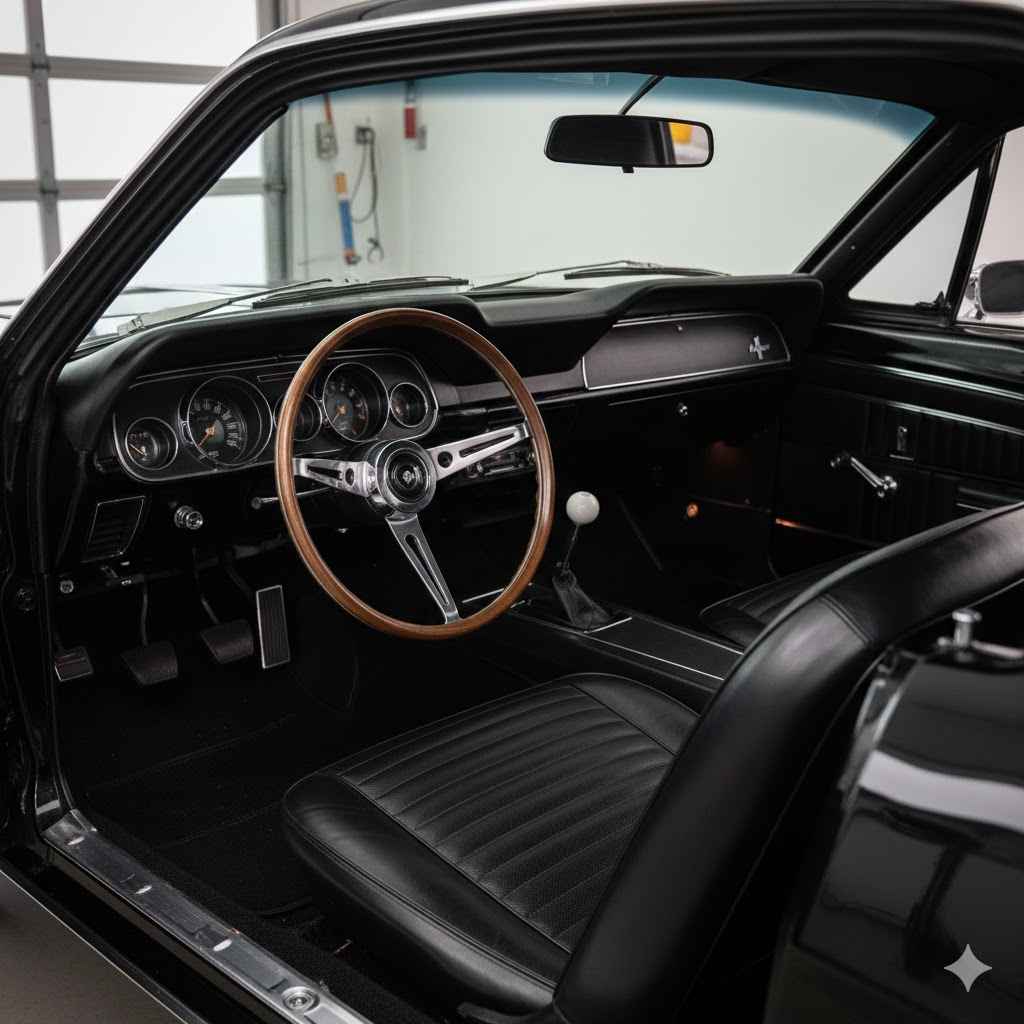
John, a long-time classic car enthusiast, was restoring a 1967 Mustang. He wanted the interior to look as original as possible. The dashboard was originally a matte black.
However, the door panels had a subtle sheen. After much research and testing, John decided to use a flat black for the main dashboard surfaces and a satin black for the door panels and center console. This approach captured the car’s original factory look while using a more practical sheen for frequently touched areas.
- Research Phase: John studied original factory manuals and photos of unrestored 1967 Mustangs.
- Material Testing: He purchased small sample cans of flat and satin black automotive interior paints.
- Test Application: He applied paint to scrap pieces of plastic that matched the texture of his interior panels.
- Final Choice: Flat black was chosen for the dashboard to mimic the original matte finish. Satin black was selected for door panels for a balance of authenticity and cleanability.
- Application: Using spray cans specifically designed for automotive interiors, he applied multiple thin coats, achieving a consistent sheen on each part.
The result was a stunning interior that looked factory-correct. The flat black on the dash absorbed light, giving it a deep, original appearance. The satin black on the door panels provided a touch of elegance and was easier to wipe clean from daily use.
This careful selection and application process highlighted the importance of understanding the nuances of different sheens for the Best Black Paint Sheen for Classic Car Interior Finish.
Scenario Choosing Sheen for a Vintage European Sedan
Imagine you are restoring a classic European sedan from the 1970s. These cars often had a more subdued and sophisticated interior design.
For a car like a 1975 Mercedes-Benz W114, the emphasis is often on understated luxury. The original interior might have featured a deep, almost velvety black. This suggests a very low sheen.
For this restoration, the restorer chose a flat black for most of the plastic trim and dashboard components. However, for the vinyl seats and door cards, a very subtle satin finish was applied. This combination provided a classic, refined look that was also comfortable and practical for passengers.
- Identify Interior Style: Recognize the car’s era and typical interior aesthetics (e.g., understated luxury vs. sporty).
- Consider Originality: Aim to replicate factory finishes where possible, but balance with modern durability.
- Material Diversity: Note that different materials within the interior may have had different original finishes.
- Application Strategy: Use flat for less-touched areas and satin for high-traffic zones or where a subtle highlight is desired.
- Final Inspection: Ensure the sheens complement each other and the overall interior design.
This scenario shows how mixing sheens can work well. It respects the original design while adding a touch of practicality. The key is to ensure the different sheens harmonize and don’t clash.
The goal is always to enhance the classic feel of the vehicle.
Choosing Sheen for a Retro Sports Car Interior
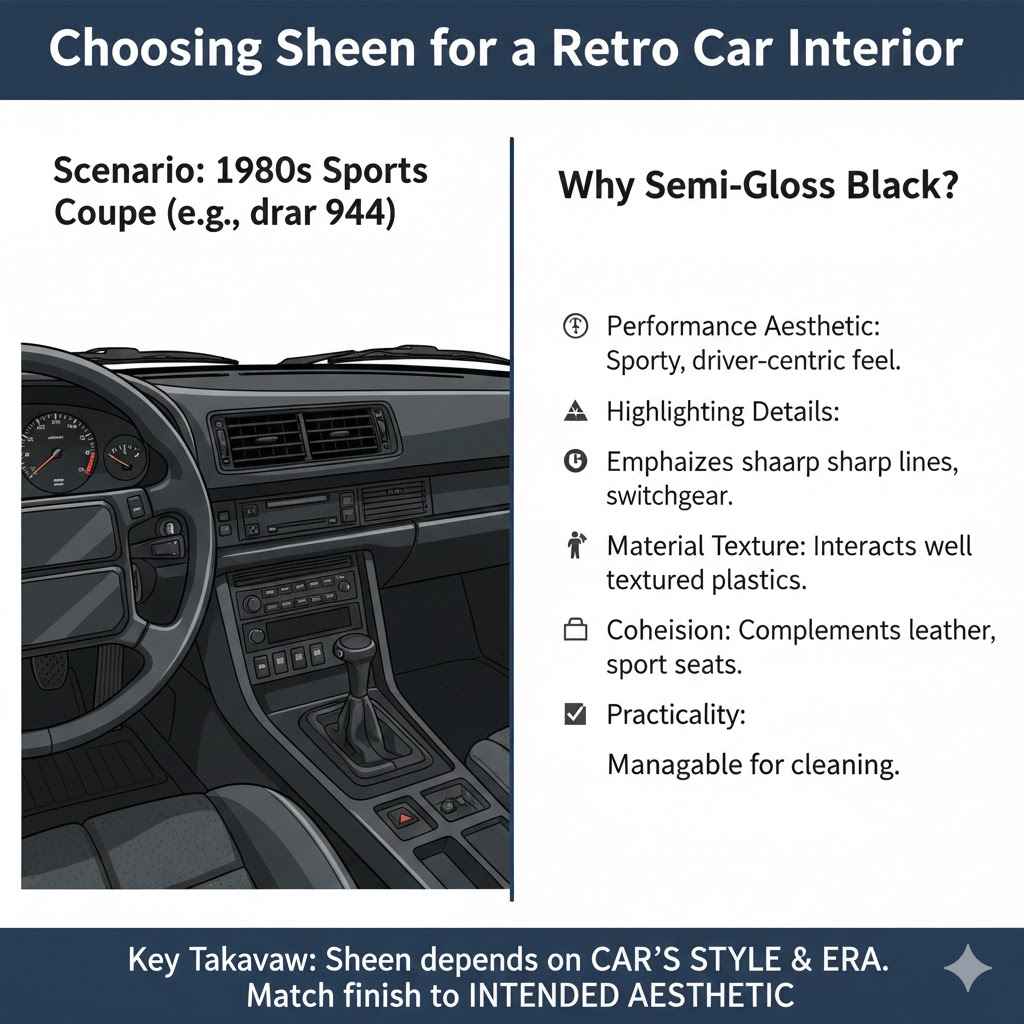
Let’s consider a sportier classic car, like a 1980s sports coupe. These interiors often aimed for a more performance-oriented and modern look for their time.
For a car like a Porsche 944, the interior might have featured more textured plastics and a slightly bolder finish. The original finish might have been a semi-gloss or a satin that had a bit more sheen than a typical luxury sedan. In this restoration, the owner opted for a semi-gloss black for the dashboard and center console.
This made the black appear richer and helped highlight the car’s functional design elements, like the instrument cluster and switchgear. It gives a clean, sharp appearance.
- Performance Aesthetic: Focus on finishes that convey a sporty and driver-centric feel.
- Highlighting Details: Semi-gloss can emphasize sharp lines and modern (for the era) design features.
- Material Texture: Consider how the sheen interacts with textured plastics common in sports cars.
- Cohesion: Ensure the sheen choice complements other interior colors and materials, like leather or sport seats.
- Practicality Check: While shinier, semi-gloss is still manageable for cleaning.
This approach balances the desire for a classic look with a more dynamic interior feel. It shows that the Best Black Paint Sheen for Classic Car Interior Finish can vary greatly depending on the car’s intended style and era.
Frequently Asked Questions
Question: What is the most common black paint sheen for classic car interiors?
Answer: The most common sheen is often satin black. It offers a balanced look that is both authentic-looking and practical for cleaning. Many classic cars originally featured satin finishes on various interior components.
Question: Can I use regular house paint for my car’s interior?
Answer: No, it is not recommended. Automotive interior paints are specifically formulated to withstand temperature changes, UV exposure, and the chemicals used for cleaning. House paint will likely not adhere properly and will not be durable.
Question: How do I know if my car’s original interior was flat, satin, or semi-gloss black?
Answer: Researching your specific car model and year is key. Look for original factory specifications, owner’s manuals, or period photographs. Examining unrestored examples of your car can also provide clues.
Question: Is flat black paint hard to keep clean?
Answer: Yes, flat black paint can be more challenging to clean than satin or semi-gloss finishes. Its porous nature can absorb dirt and oils, often requiring specialized cleaning products and techniques to maintain its appearance.
Question: Should I use the same sheen for all black parts of my interior?
Answer: Not necessarily. Many classic cars used different sheens for different parts to achieve specific looks or enhance functionality. For example, dashboard components might be flat, while trim pieces could be satin or semi-gloss.
Final Thoughts
Choosing the best black paint sheen for your classic car interior is about blending authenticity with practicality. Whether you select flat for a period-correct look, satin for balance, or semi-gloss for a subtle enhancement, careful preparation and application are key. Focus on your car’s original style and how you’ll use the vehicle. This helps you find the perfect finish that looks great and lasts.