Jack for Car Lift: How to Choose the Right One
The right jack for a car lift is a hydraulic floor jack rated for at least 3 tons (6,000 lbs), backed up by a pair of rated jack stands before you ever go underneath.
Most sedans weigh 2,800 to 4,000 pounds and most SUVs and light trucks weigh 4,000 to 6,000 pounds, so a jack that is only barely rated for your car leaves no margin for error, and a jack alone is never meant to hold that weight while you work underneath it. Picking the wrong jack, or skipping jack stands, is one of the most common ways home mechanics get hurt.
This guide covers how to choose between a floor jack, scissor jack, bottle jack, or a portable car lift, how to match weight capacity to your vehicle, what the ANSI/ASME PASE safety label actually means, and the mistakes that cause most jack-related accidents.
Floor Jack, Scissor Jack, Bottle Jack, or a Car Lift: Which One Do You Need?
“Car lift” gets used loosely online to mean anything from the folding jack in your trunk to a full four-post home lift. Here is how the main options actually compare for home garage use.
| Jack Type | Typical Capacity | Typical Price | Best For |
|---|---|---|---|
| Scissor jack (trunk kit) | 1-1.5 tons | $20-$50 | Emergency roadside tire changes only |
| Hydraulic floor jack | 1.5-3 tons | $60-$350 | Regular home garage maintenance |
| Bottle jack | 2-20 tons | $25-$150 | Trucks, tractors, and heavy loads in tight vertical space |
| Portable 4-post car lift | Often 7,000+ lbs | $800-$2,500+ | Frequent, longer jobs where you want both wheels up at once |
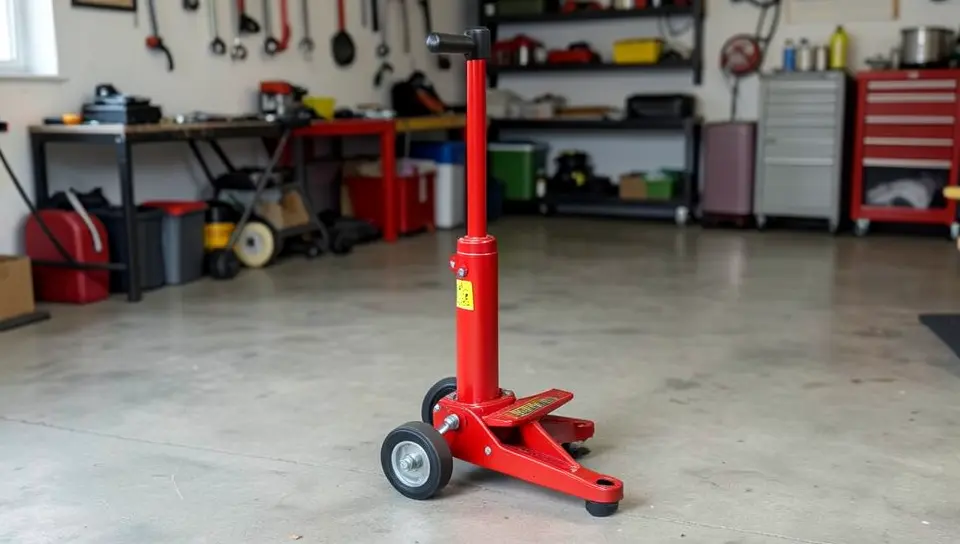
For most people asking about a “jack for car lift,” a hydraulic floor jack is the actual answer. It rolls under the car, lifts in a handful of pump strokes, and has a low, wide base that stays stable once the wheel is off the ground. A portable four-post lift is a different tool entirely: it is a mechanical platform that lifts and locks the whole car at a fixed height, and it is worth the cost only if you are doing frequent, longer jobs in the same garage.
SOLID 3-TON GARAGE PICK
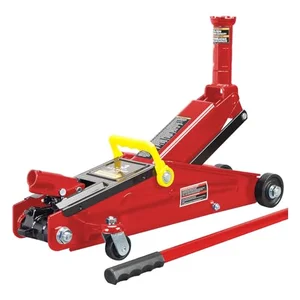 |
BIG RED T83006 Torin 3-Ton Hydraulic Floor Jack – $89.99 A 3-ton floor jack like this one covers the weight of most sedans, SUVs, and light trucks discussed below, with enough margin above the average curb weight to lift safely.
|
How To Pick The Right Weight Capacity
A jack lifts one corner or one end of the car at a time, not the full curb weight, but buying to the full vehicle weight is still the safer rule of thumb because it builds in a margin for wear, uneven ground, and the extra load of cargo or passengers.
| Vehicle Type | Typical Curb Weight | Minimum Recommended Jack Capacity |
|---|---|---|
| Compact sedan (e.g. Civic, Corolla) | 2,800-3,200 lbs | 2 tons (4,000 lbs) |
| Midsize sedan or crossover | 3,300-4,000 lbs | 2-3 tons |
| Full-size SUV | 4,500-5,700 lbs | 3 tons (6,000 lbs) |
| Half-ton pickup truck | 5,000-5,800 lbs | 3 tons (6,000 lbs) |
If you drive more than one vehicle, or you are not sure which one you will own next, a 3-ton jack is the safer all-around pick even for a compact car. It costs only a little more than a 2-ton model and it never leaves you buying a second jack when you upgrade to a bigger vehicle.
Check For This Before You Buy: ANSI/ASME PASE Certification
Look for a permanent metal stamp or label on the jack itself reading ANSI/ASME PASE (Portable Automotive Service Equipment) along with the rated capacity in tons or pounds. This is the industry safety standard for jacks, jack stands, and similar lifting tools sold in the US.
Data point: under the current ASME PALD standard, products that lift a load, like floor jacks and bottle jacks, must be proof-load tested to 150% of their rated capacity before certification. Products that support a load, like jack stands, must be tested to 200% of their rated capacity, since they are meant to hold weight for an extended period rather than just lift it. That gap in testing requirements is exactly why a jack should never be your only support: it is built and certified for lifting, not for sustained load-bearing.
Where To Position The Jack Under Your Car
Every jack needs to sit on a reinforced lifting point built into the car’s frame or pinch weld, never on the floor pan, a plastic underbody cover, or the exhaust. Lifting point locations vary by make and model, and using the wrong spot can dent the body or make the car unstable on the jack. For a full breakdown of where those points are on most vehicles, see our guide on where to put a jack under a car safely.
How To Safely Lift A Car With A Jack
- Park on level, solid ground, put the transmission in park or first gear, set the parking brake, and chock the wheels that will stay on the ground.
- Position the jack under the correct lifting point for that end of the car and check that the saddle sits flat before you start pumping.
- Pump the handle to raise the car to the height you need, watching to make sure the jack stays vertical and does not lean as it lifts.
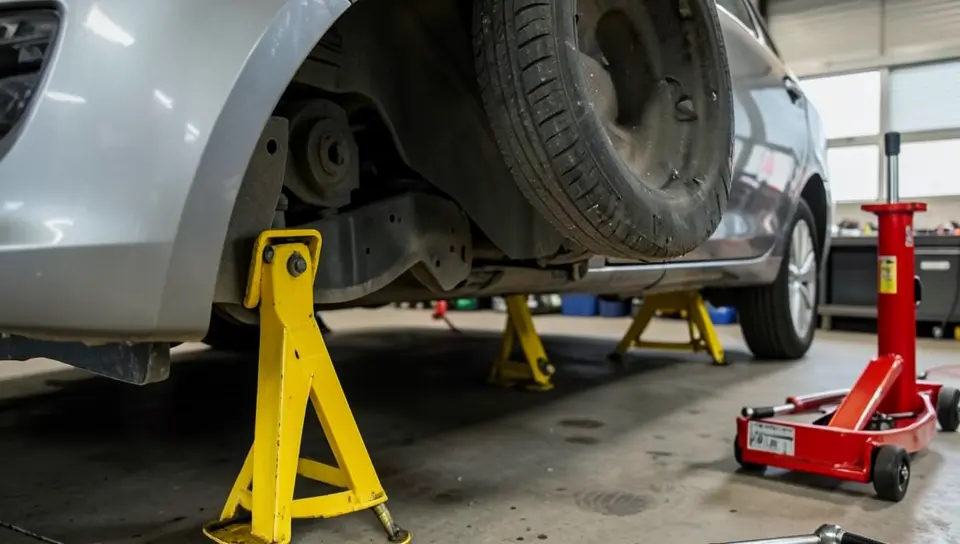
- Slide a rated jack stand under a nearby frame point and lower the jack slightly so the car’s weight settles onto the stand, not the jack.
- Give the car a firm push or shake by hand before you go underneath, to confirm it is stable on the stand.
This is the short version. For the complete walkthrough, including how to handle a slope, jacking a car with a flat tire, and what to do if the jack starts to lean mid-lift, see our full guide on how to jack up a car safely.
Common Mistakes People Make With Car Lift Jacks
- Buying a jack rated right at the vehicle’s weight, with no margin. Wear, cold hydraulic fluid, and an uneven floor all eat into a jack’s real-world lifting power over time.
- Skipping jack stands entirely. A jack can lose pressure or tip, and it is not rated to hold a load for the time it takes to do a repair.
- Lifting on soft ground, gravel, or a sloped driveway. Jacks are designed to be used on a flat, hard, level surface.
- Jacking under the floor pan, a plastic cover, or the exhaust instead of a real lifting point. This can crush the body or send the car sliding off the jack.
- Buying an unbranded jack with no ANSI/ASME PASE stamp. Without that certification, there is no independent proof the jack was tested at all.
Frequently Asked Questions
What Size Jack Do I Need To Lift My Car?
Match the jack’s rated capacity to your vehicle’s curb weight, then add a margin instead of cutting it close. A compact sedan usually weighs 2,800 to 3,200 pounds, a midsize sedan or crossover runs 3,300 to 4,000 pounds, and a full-size SUV or half-ton pickup can reach 5,000 to 6,000 pounds. Since a jack only lifts one end of the car at a time, a 2-ton (4,000 lb) jack covers most cars, but a 3-ton (6,000 lb) jack is the safer default for SUVs, trucks, and anyone who is not sure exactly what their vehicle weighs.
Is A Scissor Jack Or A Floor Jack Better For A Car Lift?
A floor jack is better for anything beyond a roadside tire change. Scissor jacks are the small, folding jack that comes in a car’s trunk kit; they are compact and cheap, but slow to pump and less stable on uneven ground. A hydraulic floor jack rolls into position, lifts in a few strokes of the handle, and sits lower and wider, which makes it far more stable once the car is in the air. If you are setting up a home garage rather than just carrying an emergency tool, buy the floor jack.
Can I Use A Car Jack Alone To Work Under My Car?
No. A jack is a lifting tool, not a support tool, and it is not designed to hold a load for an extended period. Once the car is at the height you need, lower it onto a pair of rated jack stands and let the stands carry the weight before you go underneath. Look for a permanent stamp on the jack and stands reading ANSI/ASME PASE, the safety standard for portable automotive lifting equipment, which requires jacks to be proof-tested well above their advertised rating before they are certified for sale.
How High Can A Floor Jack Lift A Car?
Most consumer 2-to-3-ton floor jacks have a maximum lift height of roughly 16 to 20 inches, with a minimum (starting) height around 3 to 5 inches for low-profile models. That is enough clearance to work on brakes, exhaust, or an oil change, but it is not the same as a full car lift. Portable four-post home lifts, like the VEVOR-style units sold for garage use, raise a vehicle 26 to 29 inches and hold it there mechanically instead of hydraulically, which is a different category of tool from a floor jack.
Do I Need A Full Car Lift Or Is A Floor Jack Enough?
For routine maintenance, most home mechanics never need a full lift. A 3-ton floor jack paired with a set of jack stands handles oil changes, brake jobs, tire rotations, and most suspension work. A portable four-post lift makes sense if you are doing frequent, longer jobs and want both wheels off the ground at a working height without repositioning a jack, but they typically run $800 to $2,500 and need a flat, solid garage floor to sit on.
How Much Does A Good Floor Jack Cost?
A reliable 2-to-3-ton steel hydraulic floor jack from a name brand generally runs $60 to $150. Low-profile and aluminum racing jacks, which are lighter and faster to pump, run $150 to $350. Anything advertised well below that range for a 3-ton rating is worth checking closely for a real ANSI/ASME PASE certification before you trust it under a vehicle.
Conclusion
For most home garages, the right jack for a car lift is a 3-ton hydraulic floor jack with a real ANSI/ASME PASE rating, used together with a matching pair of jack stands every single time. A portable four-post lift is worth the extra cost only if you are working under vehicles often enough to justify the price and the garage space it needs.
Match the jack’s capacity to your heaviest vehicle, check for the safety certification before you buy, and never treat the jack itself as your support while you are underneath the car.
Products related to this article
Sponsored / affiliate links. As an Amazon Associate I earn from qualifying purchases. I may earn additional commission from eligible campaigns.