Best Hoods for Cars: Based on Specs and Reviews
For most daily drivers, the best hood for a car is the OEM replacement hood if you want predictable fitment and lower install risk. Choose an aftermarket hood only when you need a style or weight change and can handle possible prep work. A bad hood choice can mean alignment gaps, latch problems, extra paint and labor, and repeated shop visits. This guide compares both options by total cost, fitment risk, installation effort, and daily-driving use case.
Quick comparison
| Product | Badge | Best for | Price | ||
|---|---|---|---|---|---|
 |
Hood Panel For 2009-2011 BMW 323i 335i 328i Primed SteelWANGRENL | Our pick | Direct replacement · OEM 41617153940 · primed steel | $285.99
Price as of 23 Oct 2026
|
View |
 |
Hood Panel Compatible for 2024-2025 Toyota Tacoma AluminumPart Synergy | Upgrade pick | Direct replacement · 2024-2025 Tacoma · aluminum scoop | $894.16
Price as of 23 Oct 2026
|
View |
 |
Vented Forged Car Carbon Fiber Fibre Front Engine BonnetFJKKLUQT | Also great | $570.92
Price as of 23 Oct 2026
|
View | |
 |
Cowl Induction Hood Scoop – 38" L x 4 ½" H x 24½" W SC-1145Unlimited Products | Also great | $143.60
Price as of 23 Oct 2026
|
View | |
 |
Honeywell Safety Products Usa Inc Primair Universal BibbedHoneywell | Our pick | $101.27
Price as of 20 Nov 2026
|
View |
The core trade-off is simple: OEM replacement hoods usually fit like the factory panel, while aftermarket hoods can save weight or change the look if you accept more checking and adjustment. The base price matters less than paint, labor, and whether the hardware lines up on the first try.
That is especially true after damage repair. A hood that looks cheap at checkout can turn expensive once you add primer, paint blending, latch work, and panel-gap correction.
How we chose
We compared the two hood choices on fitment risk, total ownership cost, installation complexity, and everyday use. We also looked at material implications, including steel, aluminum, fiberglass, and carbon fiber, because material affects both weight and repairability.
We favored parts with clear vehicle fit claims, direct-replacement intent, and realistic finishing requirements. We also separated cosmetic upgrades from repair parts, since those buyers do not have the same priorities.
OEM replacement hood: best for factory fit
The OEM replacement hood is the safer choice when you need factory-fit dimensions, predictable hinge spacing, and latch alignment that matches the original body structure. It is the better pick for damage repair, daily drivers, and any buyer who wants fewer adjustment headaches.
Based on the published product details, this WANGRENL panel is a primed steel hood for 2009-2011 BMW 323i, 328i, and 335i models, and an OEM part number is listed for fit confirmation. That part-number match matters because hood fit depends on more than appearance; latch position, hinge mounting, and edge shape all need to line up.
The drawback is cost and weight. Steel is typically heavier than aluminum, and a replacement hood often still needs paint, blending, and a final test-fit before it is bolted down for good.
Aftermarket hood: best for lighter weight
An aftermarket hood makes more sense when you want a lighter panel, a different look, or a functional change such as a scoop. It can be the better buy for an owner who values styling or weight reduction more than factory-perfect fit, provided the buyer is willing to verify every mounting point first.
This Part Synergy hood is listed as a direct replacement for 2024-2025 Toyota Tacoma models and is described as aluminum with a scoop. Aluminum can cut weight versus steel and resists corrosion well, but it can dent more easily and usually costs more than a basic steel replacement.
The drawback is fitment risk. Even a direct-fit aftermarket hood may need adjustment for hinge spacing, latch engagement, prop-rod or strut clearance, and final panel gaps. A vented or scoop-style hood can also add finishing work if the goal is a clean painted match.
Hood comparison table
| Criteria | OEM replacement hood | Aftermarket hood |
|---|---|---|
| Fitment risk | Lower when year, make, model, and part number match | Higher, especially with universal-fit or styling-focused panels |
| Material weight | Often steel; can also be aluminum on some vehicles | Can be steel, aluminum, fiberglass, or carbon fiber |
| Paint cost | Usually needs prep, primer, and color match | Often needs the same, plus more correction if the surface is rough |
| Installation complexity | Moderate; usually less adjustment time | Moderate to high; test-fit is more important |
| Best use case | Damage repair, daily driving, factory-style restoration | Weight change, appearance upgrade, performance-oriented build |
Fitment risk and hardware
Fitment is the first thing to verify because the hood must match the vehicle’s year, make, and model, then clear the hinges, latch, and safety catch. If the hardware is even slightly off, the hood may sit high, rattle, or refuse to close cleanly.
Suppose a hood closes with force but sits about 3 to 5 mm high at one front corner. That may sound minor, but it can point to hinge misalignment or latch mismatch, and both problems can lead to wind noise or repeated shop adjustment.
Weight, durability, and repairability
Steel hoods are durable, usually cheaper, and often closest to factory behavior, but they are heavier. That makes them practical for daily drivers and easier to repair after a small dent, since many body shops know how to work with steel panels.
Aluminum hoods are lighter and resist corrosion, but they cost more and tend to show dents differently than steel. Fiberglass is light and common on performance builds, yet it can crack from impacts and usually demands more careful prep before paint. Carbon fiber is the lightest common street material, but it brings the highest price and clear-coat care, especially if UV exposure is a concern.
Paint, finish, and total cost
Paint can change the budget more than the hood itself. A primed replacement still needs color matching, and many cars need blending into the fenders or front clip so the finish does not stand out.
Body shop labor also matters. Test-fit before paint is the safest path, because correcting a panel gap after paint can mean paying twice for the same labor. If the hood is bare, textured, or inconsistent in surface quality, finishing time rises quickly.
Installation and adjustment
Hood installation is not only a bolt-on job. You may need to adjust hinge position, latch depth, safety catch engagement, and prop-rod or hood-strut clearance, then recheck the gap at both fenders and the grille.
A common first-timer mistake is buying a hood for appearance alone and skipping the hardware check. The panel can look right on the listing, then refuse to sit flat because the latch pin, striker, or hinge pattern does not match the vehicle’s exact setup.
Will an aftermarket hood fit your car?
Yes, but only if the hood is made for your exact year, make, and model, and the hinge, latch, safety catch, and support hardware all match. “Direct-fit” is safer than “universal fit,” and even a direct-fit hood should be test-fitted before final paint and final tightening.
Check the listing for OEM part numbers, mounting points, prop-rod or strut compatibility, and whether the hood was built for the same trim or body style. If any of those details are unclear, the fit risk rises fast.
Picture a Tacoma owner choosing an aluminum hood with a scoop for a 2024 truck. If the hinge spacing is right but the scoop interferes with a washer nozzle or insulation, the fix may mean extra trimming, different hardware, or a return.
Choose OEM replacement hood if… / Choose aftermarket hood if…
Choose the OEM replacement hood if you are repairing crash or parking damage and want the lowest fitment risk. Choose it if you want the best chance of factory-style latch alignment, easier panel-gap correction, and a more predictable paint result.
Choose the OEM replacement hood if you want a daily-driver repair that keeps the car close to original. It is also the better call when you do not want to spend extra time checking hardware, finish quality, or adjustment range.
Choose the aftermarket hood if you want a lighter panel, a scoop, vents, or a styling change that the factory hood does not offer. It also makes sense if you are willing to test-fit, inspect hinge and latch points, and pay for more prep.
Choose the aftermarket hood if you are building for appearance or performance rather than simple replacement. Just budget for possible paint, alignment work, and replacement clips or hardware if the original pieces do not carry over cleanly.
Hood panel checklist
| Check | What to confirm before buying |
|---|---|
| VIN fitment | Confirm the hood matches the vehicle’s year, make, model, and trim. |
| Hinge alignment | Verify hinge mounting points and spacing match the original hood. |
| Latch compatibility | Check striker position, safety catch engagement, and closure depth. |
| Prop-rod or strut fit | Make sure the support system clears the panel and any scoop or vent. |
| Finish requirements | Confirm whether the hood is bare, primed, or ready for paint and blending. |
- Match the hood to the VIN, then confirm year, make, model, and body style.
- Check whether the panel is direct-fit or requires trimming, drilling, or extra brackets.
- Verify hinge spacing, latch pin position, safety catch function, and support hardware clearance.
- Plan for primer, paint, and blending before final installation.
- Test-fit the hood before final paint whenever possible.
What is the hood of a car?
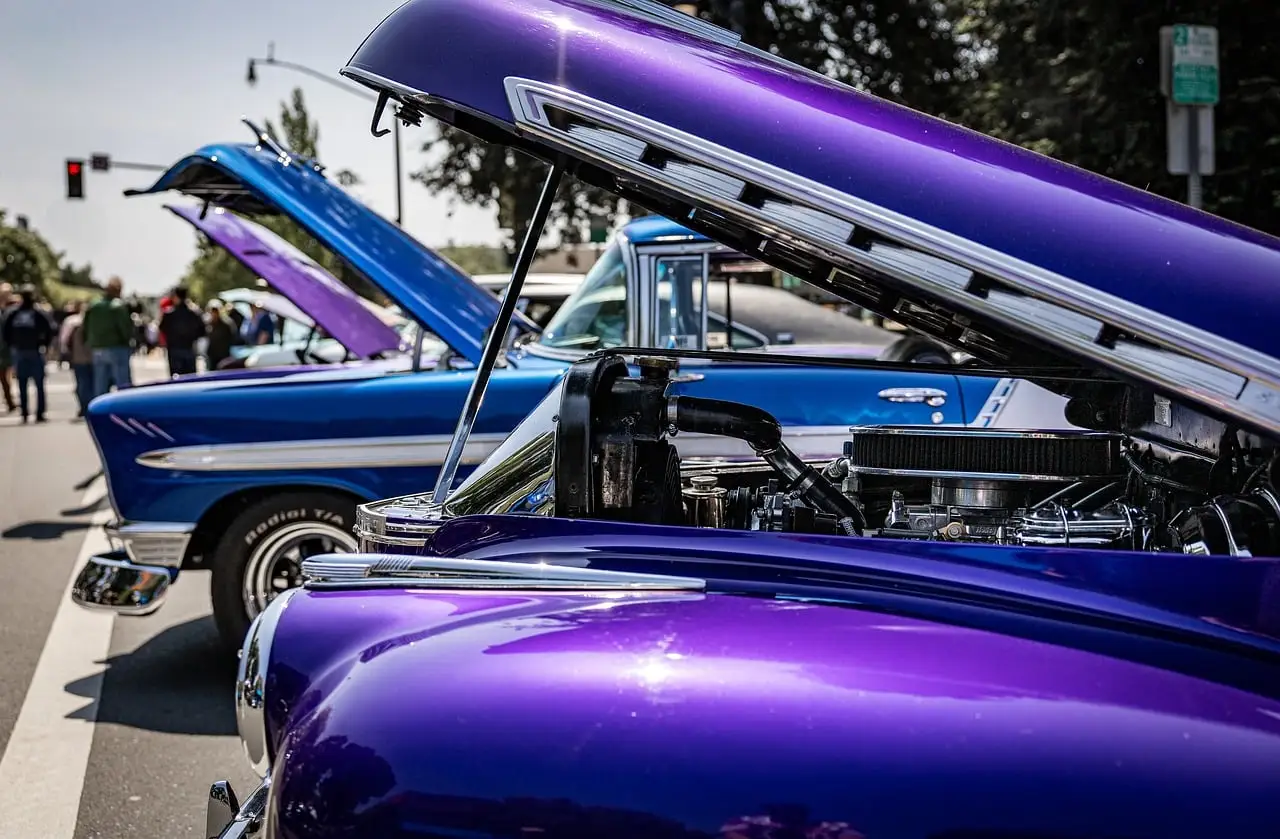
The hood is the front body panel that covers the engine bay and related components. Owners replace it after collision damage, corrosion, or failed fitment, and some replace it for styling or weight changes. The right choice depends on both the panel itself and the hardware it must meet.
How much does a car hood cost?
Price depends on material, vehicle fit, and whether the panel is primed or painted. A basic steel replacement can be less expensive than aluminum, fiberglass, or carbon fiber, but paint, labor, and blending may add more to the final bill than the hood purchase itself.
How heavy is a car hood?
There is no single weight for a car hood because size and material vary widely. Steel is usually the heaviest common choice, aluminum is lighter, fiberglass is lighter still, and carbon fiber is often the lightest common street material. Always check the exact part listing when weight matters.
What types of car hoods are there?
The common types are steel, aluminum, fiberglass, and carbon fiber, along with OEM replacement and aftermarket designs. OEM panels usually aim for factory-fit dimensions, while aftermarket versions may add vents, scoops, or cowl shapes. The right type depends on fitment tolerance, budget, and use case.
Is an aluminum hood better than steel?
Aluminum is better if you want less weight and good corrosion resistance, but steel is often better if you want lower cost and easier dent repair. For many daily drivers, steel remains the practical choice. For lighter front-end mass, aluminum can be worth the premium.
Do I need paint for a replacement hood?
Usually yes. Even a primed hood often needs color matching, blending, and final finishing so the front end does not stand out from the rest of the car. Bare fiberglass or carbon fiber may need even more careful prep if the surface is not already ready for paint or clear coat.
Frequently asked questions
Should I buy a hood for my car?
Buy a replacement hood if the current panel is bent, rusted, unsafe to latch, or so misaligned that repair costs are close to replacement. If you only want a visual change, an aftermarket hood can work, but the fit and finish risk is higher than with an OEM panel.
Will an aftermarket hood fit my car?
It can, but only if the part is built for your exact vehicle and the hinge, latch, and support hardware line up correctly. A direct-fit listing is safer than a universal one. Even then, test-fit before paint to avoid paying twice for correction work.
How do I choose the best hood for my car?
Start with your use case. Choose OEM for repair and factory fit. Choose aftermarket for style or weight savings. Then verify part number, VIN match, hinge spacing, latch alignment, and paint requirements. That order matters more than any material label alone.
How do I choose the best hood for my car?
Choose the hood that fits the job, not just the budget. A daily driver with collision damage usually benefits from an OEM-style steel replacement. A performance build may justify aluminum, fiberglass, or carbon fiber if you accept more finishing work and possible hardware adjustments.
Products related to this article
Sponsored / affiliate links. As an Amazon Associate I earn from qualifying purchases. I may earn additional commission from eligible campaigns.