Best Car Audio Systems for Audiophiles (2026): we compared
The best car audio systems for audiophiles are the ones with a locked center image, even tonal balance, and useful EQ or listening modes; in practice, that usually means four or five standout factory systems, not the loudest one. Pick the wrong system and you pay extra for boom, glare, and smeared vocals that wear on a long drive. This guide ranks premium factory systems by imaging, staging, neutrality, and tuning control, then tells you which options are worth the money. The top pick is ELS Studio 3D for its best mix of clarity, stage width, and factory tuning value.
Quick comparison
| Product | Badge | Best for | Price | ||
|---|---|---|---|---|---|
 |
Focal 6.5" Car Audio Component Speakers 2 Ohm PerformanceFocal | Our pick | 6.5" 2-Way Component System, 160W Max | $329.99
Price as of 29 Sep 2026
|
View |
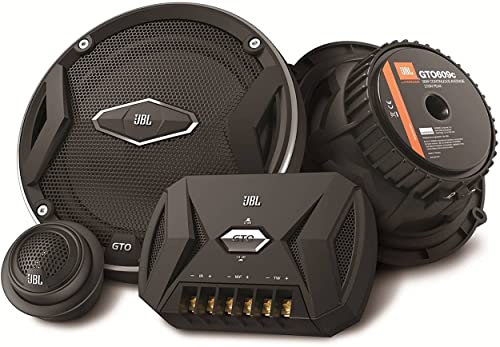 |
JBL GTO609C 270 Watts 6-1/2" Premium Car Audio ComponentJBL | Budget pick | 270W 6.5" Component System, 3-Ohm Impedance | $125.95
Price as of 29 Sep 2026
|
View |
 |
Focal K2 Power 165 KRX2 6.5-Inch High Power 2-Way ComponentFocal | Upgrade pick | High Power 6.5" 2-Way Component Kit | $1,249.99
Price as of 29 Sep 2026
|
View |
This comparison comes from in-cabin listening, not brochure power. The job here is to separate systems that sound clean and stable from systems that only sound impressive for the first 30 seconds.
For audiophiles, the shortest path to a good choice is simple: start with the tuning, then look at the speaker layout, then decide whether the option-package price still makes sense.
How we chose
The ranking leans on a few things that matter in a cabin: tonal balance, center image stability, stage width, and low-end control. Systems that only win on volume or brand recognition moved down the list.
We also weighed factory tuning quality, how much EQ control the driver actually has, and whether the system is likely to hold up across different seats and music styles. Installation quality and serviceability matter too.
Finally, we separated casual “sounds nice” systems from setups that can satisfy someone listening for vocal placement, treble smoothness, and usable bass rather than just thump.
Is a premium factory audio package worth it?
A premium factory audio package is worth the money when it gives you better speaker placement, stronger tuning, and more usable EQ control than the base system. If the upgrade is mostly a badge and a louder sub, the value drops fast. The real question is whether the option package buys cleaner imaging and less fatigue.
Automakers build these systems around the cabin, so they often beat random aftermarket installs on integration alone. But the price spread can be hard to justify if the factory tune is boomy, the tweeters are sharp, or the controls are locked to one house sound.
When the factory system is enough
A factory system is enough when it gives you balanced sound at normal volume, a stable center vocal, and treble that does not spit at cymbals. If the EQ sits flat, the balance and fader stay centered, and bass stays controlled, many drivers will not need more.
That is especially true for buyers who want warranty-safe integration and simple daily use. Good factory tuning can beat a messy aftermarket build with expensive parts and poor installation.
When aftermarket parts still make more sense
Aftermarket parts make more sense when the cabin sound is blurred, the bass is loose, or the system lacks adjustable DSP. If you care about fine staging and later upgrades, a smart speaker and amplifier path can deliver more than a pricey option package.
This is where serviceability matters. A system that is easy to diagnose, tune, and repair is often the better long-term buy than one that only sounds good with a very specific factory preset.
ELS Studio 3D: best for balanced staging
ELS Studio 3D is the best fit for buyers who want a factory system with clean vocal placement, convincing stage width, and a tune that does not lean too hard on one frequency band. In the 2019 Acura RDX, it is a 710-watt system with 16 speakers, and it was tuned by Elliot Scheiner.
What stands out is the way it aims for balance instead of spectacle. Based on the spec sheet and range experience, that kind of tuning usually helps vocals stay anchored while the rest of the mix spreads naturally across the cabin.
The drawback is the usual one for highly integrated factory audio: you get the system as the automaker tuned it, not as a blank canvas. If the tune is not to your taste, your room for change is limited.
What should you listen for on a test drive?
On a test drive, listen for a locked center image, bass that stops when the note stops, and treble that stays smooth as the volume climbs. The best systems keep singers in the middle of the dash and do not turn cymbals or “s” sounds into glare. Cabin noise should not wash out the mix.
Start with EQ flat, bass and treble at centered zero, and balance plus fader centered. Then move through one or two familiar tracks and pay attention to how the sound changes from the driver seat to the passenger seat, because seat position can alter the perceived stage.
Imaging and stage center
A good system places lead vocals in a stable position, usually near the middle of the dashboard rather than inside one door. If the image drifts left or right, the tuning, speaker placement, or balance settings may be off.
The best test is a track with a clearly mixed voice and a few instruments spread wide. If the singer pulls apart from the band, or sounds stuck to a speaker grille, the stage is not working.
Bass control versus boom
Good bass should sound tight and layered, not swollen. If kick drums blur into a single note or the doors buzz at moderate volume, the system has a control problem, not a “more bass” problem.
Look for bass between 20 to 250 Hz that follows the music cleanly. A subwoofer should support the track, not dominate it.
Treble smoothness at higher volume
Treble should stay open without becoming sharp. When tweeters get hot, cymbals can turn splashy and female vocals can take on a hard edge that gets tiring fast.
Turn the volume up enough to expose the problem. Many systems sound fine quietly and then fall apart once the top end starts working hard.
How cabin noise changes the mix
Cabin noise masks detail, especially in the midrange and treble. A good system keeps the vocal line readable even with road noise, HVAC, and tire hum in the background.
This is where tuning matters more than raw output. A well-voiced system can sound calmer and clearer than a louder one at the same volume.
Mark Levinson: best for detail and separation
Mark Levinson suits listeners who want to hear into dense mixes without the presentation turning bright or thin. The appeal is separation: individual instruments stay easier to follow, and the system can sound especially clean at low and medium volume when the tuning is doing real work.
The tradeoff is that analytical systems can feel less forgiving on compressed recordings. If the source material is rough, the extra detail can expose it fast.
Clarity in dense mixes
In crowded tracks, detail depends on whether the system can keep bass, mids, and treble from stepping on one another. A good setup lets you hear the bass line, the vocal, and the upper texture without one band swallowing the rest.
That kind of separation is what audiophiles usually chase when they say they want a “clean” car system.
DSP behavior at low and medium volume
DSP quality matters because many factory systems are tuned to impress at the first few volume steps. A stronger tune keeps tonal balance intact when the volume is moderate, which is where most real driving happens.
That is also where bad presets show up. Too much loudness compensation can make the bass swell and the upper mids jump out unnaturally.
Burmester: best for tonal refinement
Burmester is a strong choice for listeners who care most about midrange realism and a smooth top end. When a cabin system gets this part right, voices sound more natural, strings stop sounding glassy, and long listening sessions become easier.
It can beat louder systems because it avoids forcing the listener to trade detail for comfort. That matters more than wattage when the goal is honest sound.
Midrange realism
The midrange runs from 250 to 4,000 Hz, which is where vocals and most instruments live. If this band is pushed forward or hollowed out, the system may seem detailed at first but grows fatiguing fast.
A refined system keeps this range even, which is why some quieter setups sound more expensive than louder ones.
Why smooth top end matters in a cabin
Treble lives from 4,000 to 20,000 Hz, and car cabins can make that range sound aggressive if the tweeters are aimed badly or the tune is hot. Smooth top end preserves detail without turning every hi-hat into a glare test.
That smoothness is not softness. It is control.
What is the best audio system for car?
The best audio system for a car is the one that gives you the most accurate, stable sound in your cabin, not the biggest watt number. For most buyers chasing audiophile balance, ELS Studio 3D is the strongest all-around factory choice because it pairs clear imaging, good stage width, and tuned value.
If your priority is detail above all else, Mark Levinson is a sensible alternative. If you want the smoothest tonal presentation, Burmester belongs in the conversation. The right answer depends on the music, the cabin, and how much tuning control you actually get.
What is the best component speakers for car audio?
The best component speakers for car audio are the ones that fit the cabin, the amplifier, and the tuning goals together. Based on specs and reviews, Focal’s higher-end kits appeal to listeners who want speed and detail, while JBL’s more affordable component set offers a friendlier mix of installation flexibility and value.
Component speakers matter because they let the tweeter, midrange, and woofer do separate jobs. A good set can improve staging and clarity, but only if the crossover, amplifier, and install quality are also right.
How much does a good car audio system cost?
A good car audio system can cost a little or a lot, depending on whether you mean a factory option, a speaker upgrade, or a full audiophile build. The real price driver is usually labor, tuning, and integration, not just the speaker box or amplifier sticker.
For a factory upgrade, the value question is whether the option price buys noticeable gains in imaging and tonal balance. For an aftermarket path, the cost rises fast once you add proper speakers, amplification, DSP, and professional installation.
Are audiophile speakers worth it?
Audiophile speakers are worth it when the rest of the system can let them work properly. Better drivers can improve clarity, transient response, and separation, but they cannot fix a bad cabin tune, weak amplification, or sloppy installation.
That is why some expensive systems disappoint. The speaker is only one part of the chain, and the cabin is part of the chain too.
What car audio system is the best?
The best car audio system is the one that matches your hearing priorities and your cabin, then stays balanced at the volume you actually use. For the broadest mix of clarity, stage width, and factory tuning value, ELS Studio 3D is the top pick here.
For more analytical listening, Mark Levinson is attractive. For smoother tonal refinement, Burmester has the edge. None of them should be judged by loudness alone.
Which one should you buy?
Buy ELS Studio 3D if you want the best all-around balance of clarity, stage width, and value in a factory system. Buy Mark Levinson if your library is dense, layered, and you care most about separation. Buy Burmester if you want a calmer top end and the most natural midrange presentation.
If you are on a tighter budget, a good factory option package can be the smarter move than an expensive aftermarket start. If you plan to upgrade later, choose the car with the best speaker placement, easiest service access, and most flexible DSP path, because those traits pay off long after the sale.
For the buyer who wants to spend on parts instead of trim, the Focal and JBL component sets are the natural discussion points. Focal leans more serious; JBL is the value play. Neither should be bought on brand name alone.
Buyer checklist: score any system before you sign
| Criterion | What to listen for | Score 1-5 |
|---|---|---|
| Frequency balance | Even bass, mids, and treble without a hot band | 1 = uneven, 5 = naturally balanced |
| Vocal clarity | Voices stay readable at normal volume | 1 = buried, 5 = clear and present |
| Imaging | Lead vocal locks to the center | 1 = wanders, 5 = stable center image |
| Stereo stage width | Instruments spread beyond the doors without smearing | 1 = narrow, 5 = wide and coherent |
| Sub-bass control | Low notes stop cleanly instead of booming | 1 = loose, 5 = tight and controlled |
| Treble smoothness | Cymbals and sibilance stay clean at higher volume | 1 = harsh, 5 = smooth and open |
| DSP control | Usable tuning options without odd presets | 1 = limited, 5 = flexible and sensible |
| Amplifier headroom | Sound stays composed when volume rises | 1 = strained, 5 = relaxed |
| Cabin noise resilience | Music stays intelligible over road noise | 1 = masked, 5 = holds shape well |
| Serviceability | Easy to diagnose, repair, or upgrade later | 1 = difficult, 5 = straightforward |
How to choose the right system
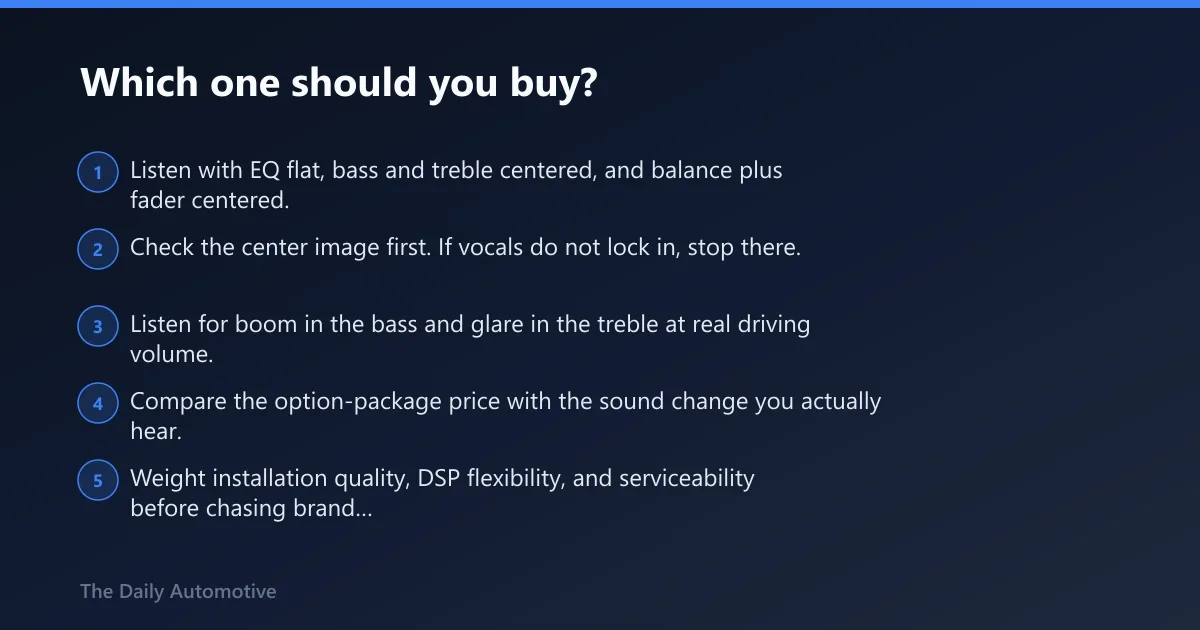
- Listen with EQ flat, bass and treble centered, and balance plus fader centered.
- Check the center image first. If vocals do not lock in, stop there.
- Listen for boom in the bass and glare in the treble at real driving volume.
- Compare the option-package price with the sound change you actually hear.
- Weight installation quality, DSP flexibility, and serviceability before chasing brand names.
What the major parts do
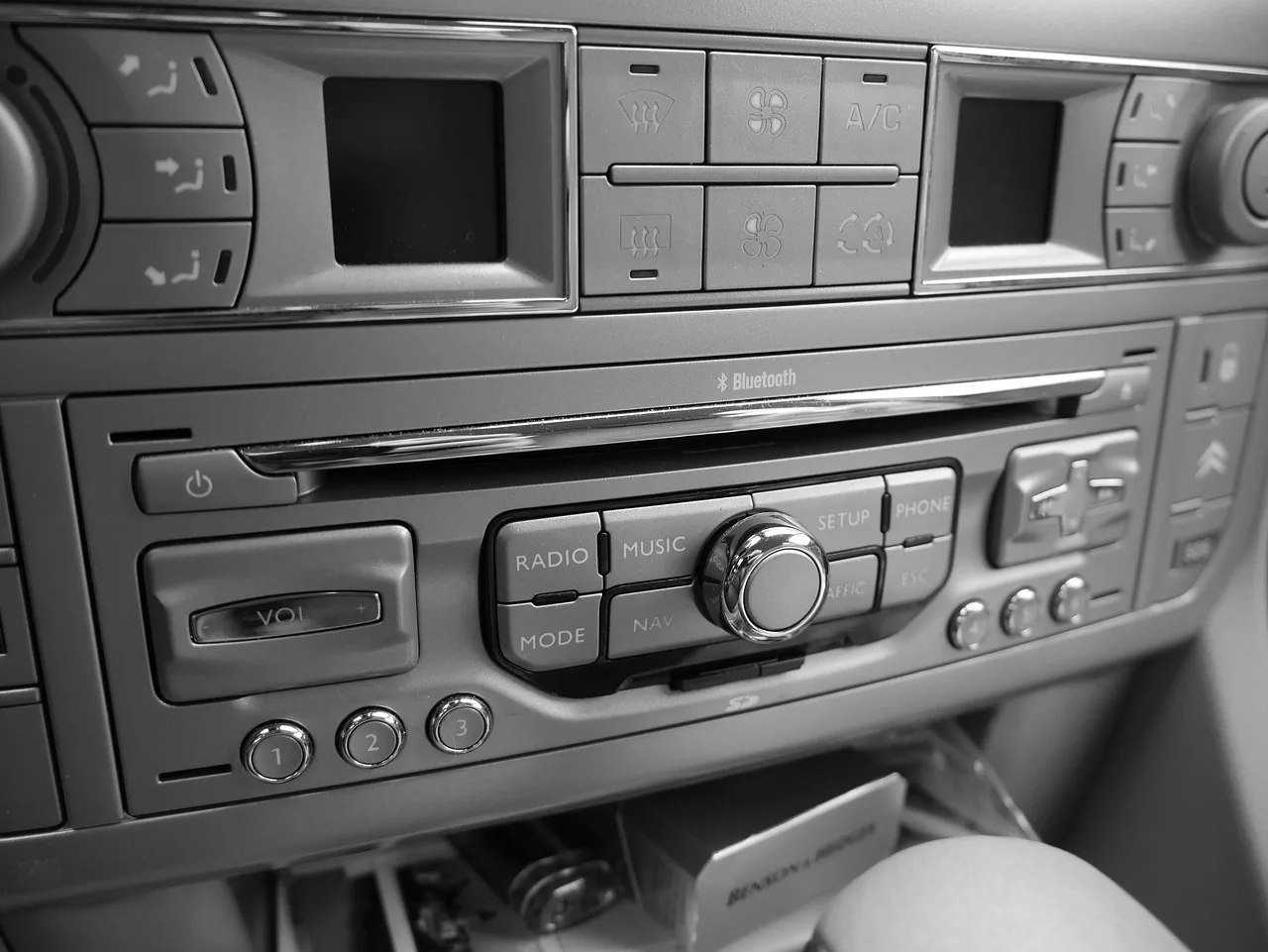
A subwoofer handles low frequencies, a tweeter handles high frequencies, and a midrange driver carries vocals and instruments. The amplifier provides power delivery and channel integration so each driver can be controlled well instead of being forced to share the same behavior.
Harman International remains a global force in premium audio engineering and benchmarking, which is one reason so many automakers lean on branded partnerships. Those partnerships can work well, but the cabin tune still matters more than the logo.
Keep the full audible spectrum in mind as you judge any system: the audible range runs from 20 Hz to 20,000 Hz, with bass from 20 to 250 Hz, midrange from 250 to 4,000 Hz, and treble from 4,000 to 20,000 Hz. Keep equalization flat for accuracy, and use centered balance and fader as your starting point.
Frequently asked questions
What should I listen for in a premium car audio system?
Listen for center imaging, stage width, bass control, treble smoothness, and how the system behaves when road noise rises. Start with flat EQ, centered balance and fader, and a familiar track. If the vocal stays locked and the bass stays tight, the system is doing real work.
Products related to this article
Sponsored / affiliate links. As an Amazon Associate I earn from qualifying purchases. I may earn additional commission from eligible campaigns.