5 Best Car Roof Racks for Kayaks (2026): We Compared
The best car roof rack for kayaks matches your roof type, kayak weight, and loading method. J-cradles suit lighter boats and side loading. Soft pads work for temporary transport. Foldable carriers help if you load often and want cleaner storage. Pick the wrong setup, and you get hard lifting, roof damage, or a loose load at highway speed.
Quick comparison
| Product | Badge | Best for | Price | ||
|---|---|---|---|---|---|
 |
Thule Hull-a-Port XTR, Carry Up To 2 Kayaks, Folds Flat,Thule | Our pick | Thule · Dual kayak carrier · Folds flat | $279.95
Price as of 16 Oct 2026
|
View |
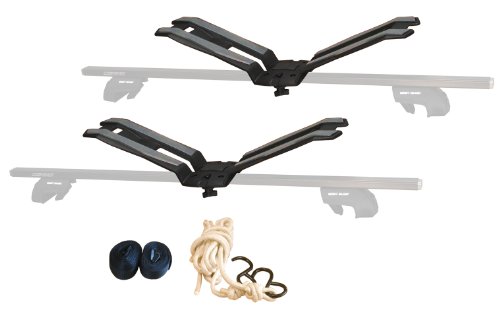 |
Swagman Exo Aero Canoe & Kayak Carrier – Roof Mount RackSwagman | Budget pick | Swagman Exo Aero · 1 kayak · Universal mount | $139.99
Price as of 16 Oct 2026
|
View |
 |
Rhino-Rack Kayak Roof Rack J-Style with Universal MountingRhino Rack | Also great | Rhino-Rack J-Style · Universal · Fixed mount | $49.95
Price as of 16 Oct 2026
|
View |
 |
Yakima – JayHook, Rooftop Kayak Carrier, 1 Boat Capacity |Yakima Products | Also great | Yakima JayHook · 1 kayak · Universal hardware | $198.95
Price as of 16 Oct 2026
|
View |
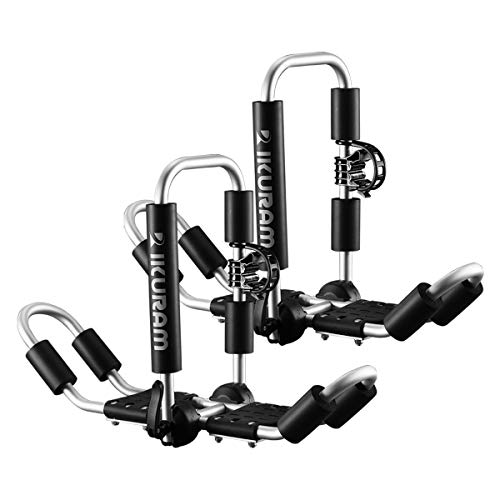 |
IKURAM R Aluminum Kayak Roof Rack Folding J-Style UniversalIKURAM R | Pair with it | IKURAM R · Folding J-style · 4-in-1 | $129.99
Price as of 16 Oct 2026
|
View |
This comparison centers on three common needs: frequent solo loading, temporary or occasional use, and heavier kayaks that need firmer hardware. Check your roof setup first, then match the rack style to the kayak’s weight and how often you will remove the carrier.
How we chose
We compared products using published load claims, included straps and tie-down hardware, crossbar compatibility, and storage convenience. We also favored models with rust-resistant coatings or durable hardware for rain and road spray, since corrosion is a common long-term failure point.
Fitment matters just as much as the rack itself. Factory rails, raised side rails, and bare roofs all change what you can mount, and some models work better on square, oval, or flat bars than on round bars.
We also weighed loading difficulty. A better rack for one paddler is not always the best rack for a tandem kayak, a heavy fishing kayak, or an occasional renter who needs fast setup and compact storage.
Thule Hull-a-Port XTR: best for frequent solo loading
The Thule Hull-a-Port XTR is the strongest fit for paddlers who load often and want a carrier that folds flat after use. It carries two kayaks in J-cradle or stacker mode, and the integrated strap management helps keep loose webbing under control during loading and travel.
That folding design matters if you leave the carrier on the vehicle between trips. It cuts down on wind exposure and garage clearance issues, which makes it a good pick for frequent use on SUVs, wagons, and crossbar-equipped sedans.
The drawback is price. At $279.95, it sits well above basic J-cradles, and buyers with one kayak or rare trips may not recover that cost as quickly as a simpler rack.
Why it stands out
For solo paddlers, side loading is often easier than lifting straight overhead. A fold-flat carrier also stores better than bulky fixed arms, so the roof stays cleaner between weekend runs.
Suppose your 12-foot kayak weighs around 50 to 60 pounds and you load it every Saturday. A foldable J-cradle is usually easier to live with than a soft pad kit because the boat has a defined cradle, the straps are easier to route, and the rack can stay mounted without becoming a constant nuisance.
Swagman Exo Aero: best for temporary or occasional use
The Swagman Exo Aero is a sensible option when you need a temporary roof carrier with fewer parts and broad crossbar compatibility. It uses a soft co-molded cradle to protect the hull and includes tie-down, bow, and stern straps, which gives it better baseline security than pad-only kits that leave those pieces to the buyer.
This style works well for renters, occasional paddlers, and drivers who do not want a permanent-looking rack on the roof. It is also the easiest model in this group to justify on a value basis when trip frequency is low.
The tradeoff is stability and convenience on longer highway trips. Soft-cradle systems depend more on strap tension and correct placement, so they deserve closer checks before every drive.
Rhino-Rack S510: best budget J-bar for durable transport
The Rhino-Rack S510 is the most straightforward budget J-style pick for buyers who want a fixed carrier with durable hardware. It is described as heavy duty, and the powder-coated steel build is a plus for outdoor exposure, rain, and road spray.
This is the kind of rack that fits a practical use case: one kayak, regular roof-mount transport, and a need for a cleaner price than premium foldable systems. It also suits drivers who want a compact J-cradle that does not take much storage space once removed.
The drawback is that fixed J-style racks are less forgiving for loading than wider, fold-flat systems. If your kayak is heavy or you often load alone, the side angle can still feel awkward without good technique and a solid step stool.
Yakima JayHook: best for secure loading and protection
The Yakima JayHook is a strong choice when you want a J-shaped cradle with a clear loading advantage and included security hardware. It uses a J-shaped cradle for easier load and unload, includes heavy-duty straps plus bow and stern tie-downs, and is sold with universal hardware for roof-rack mounting.
It is a better fit for paddlers who value stable transport and a cleaner loading angle more than the lowest price. The tool-free installation claim also matters for buyers who remove the rack between trips and do not want a slow setup.
The drawback is cost. At $198.95, it sits above budget J-bars, so it makes more sense for frequent users than for occasional renters or first-time buyers.
IKURAM R folding J-style: best for compact storage
The IKURAM R folding J-style carrier is a good match for buyers who want a universal folding rack with strong hull padding. Its oversized thick rubber saddles protect kayaks and SUPs, and the folding design reduces wind resistance when the rack is not in use.
This is a practical middle-ground option for car, SUV, and truck crossbars. It is not the cheapest pick, but it does offer a useful mix of foldability, padding, and broad vehicle compatibility.
The drawback is that universal fit still needs checking. “Universal” does not mean every bar shape or every roof setup, and buyers with bare roofs or unusual factory rails may need extra parts before installation.
Which one should you buy?
If you load often and want the easiest repeat use, start with a foldable J-cradle such as the Thule Hull-a-Port XTR or the Yakima JayHook. If your trips are occasional, the Swagman Exo Aero is easier to justify, especially if you want included bow and stern lines without paying premium prices.
For a tight budget and a simple one-kayak setup, the Rhino-Rack S510 is the most direct value play. For compact storage and broader vehicle flexibility, the IKURAM R folding J-style is the better middle path.
Roof setup should decide a lot of the answer. Bare roofs usually need a complete crossbar system before any kayak rack helps you, factory rails often need the right bar spacing, and raised side rails usually make mounting easier but still do not remove the need to check the carrier’s bar compatibility.
Weight should decide the rest. A light recreational kayak can work with a soft pad kit, but a heavy fishing kayak or tandem hull belongs on a real rack with published capacity, hardware you can inspect, and tie-down points at the bow and stern.
What is the best car roof rack for a kayak?
The best car roof rack for a kayak is the one that matches your kayak’s weight, your roof type, and how often you load alone. J-bars are best for many single kayaks, soft roof rack pads work for temporary use, and foldable J-cradles are better when you want more convenience and repeated trips.
If you carry a heavy boat or drive long highway stretches, a rack with a clear weight rating, hull padding, and bow/stern tie-downs is the safer choice. A lower-cost pad kit can work, but only when you accept more setup time and more frequent checks.
Do kayak roof racks fit square, oval, flat, or round crossbars?
Many kayak rack kits fit square, oval, flat, and circular bars, but not all do. Some models exclude round bars, and a universal label does not override the need to verify the clamp design against your exact crossbar shape and bar thickness.
Factory bars and aftermarket bars can both work. The key is not the brand of the bar; it is whether the rack’s mounts, clamp range, and hardware match the roof setup you actually have.
How much weight can a kayak roof rack hold?
Load capacity should be checked in two places: the per-kayak rating and the total set rating. Published examples in this group include support for kayaks up to 36 inches wide and 75 pounds, a two-kayak setup rated up to 150 pounds total, and a two-kayak set rated up to 160 pounds.
Do not stop at the rack rating. Your vehicle’s roof limit, crossbar limit, and the extra weight of straps or accessories all matter, especially for tandem boats and fishing kayaks that run heavier than standard recreational hulls.
Use the right rating for the right boat
A single light kayak may fit a 75-pound example comfortably, but a tandem or loaded fishing kayak should be matched to a higher-capacity system. If the rack is rated for two boats, that does not mean each side can ignore the total set limit.
What is the difference between J-bar and soft roof rack pads?
J-bar racks hold the kayak at an angle in a rigid cradle, while soft roof rack pads sit between the hull and the roof bars or roof. J-bars are better for repeat loading, better shape control, and cleaner long-trip transport; pads are lighter, cheaper, and easier to store for temporary use.
Soft pads are convenient, but they depend more on strap routing and correct tie-down use. J-bars usually offer better hull control and less movement once tightened, which is why they are the stronger choice for frequent highway driving.
When each style makes sense
Choose soft pads for an occasional rental, a borrowed kayak, or a vehicle that only needs temporary transport help. Choose a J-bar when you care more about repeatability, storage stability, and easier solo loading.
Say your sedan has factory rails and you only need to haul a 45-pound recreational kayak twice this summer. A soft pad kit may be enough, but the straps must be checked before every stop and after the first few miles on the road.
Are soft roof rack pads safe for long trips?
Soft roof rack pads can be safe for long trips if they are installed correctly, tied down with the right straps, and checked often. They are not the best first choice for heavy boats, high speeds, or long highway runs unless you are willing to monitor strap tension and bow/stern security closely.
The main risk is movement. Pads are universal and portable, but they rely more on the user than a rigid carrier does, so strap stretch, pad shift, and loose buckle placement matter more on a long route.
How do I keep a kayak from slipping on a roof rack?
Keep a kayak from slipping by using the correct cradle or padding, tightening straps evenly, adding bow and stern lines, and checking that the hull sits centered before you drive. If the straps are only snug on one side, the kayak can drift during turns or under wind pressure.
Use ratchet tie-downs carefully and keep buckle hardware away from the hull where possible. Quick-loop straps, S-hook straps, and anchor belts can help with attachment, but strap length and break strength need to match the load, not just the rack style.
Car roof racks safety checklist
- Check strap tension so the kayak cannot shift by hand, but stop short of crushing the hull.
- Place buckles and ratchets where they will not rub paint, doors, or the kayak surface.
- Secure bow and stern lines so the boat cannot slide fore or aft.
- Confirm bar clearance so clamps, hooks, and straps are not sitting on trim, glass, or door seals.
- Inspect padding wear, cracked coating, frayed webbing, and rust on all exposed hardware before every drive.
Can I use a kayak roof rack on an SUV or sedan?
Yes, but only if the vehicle has the right roof setup. SUVs, sedans, wagons, and trucks can all carry a kayak rack, yet bare roofs need crossbars, factory rails need compatible mounting hardware, and raised side rails still need a rack system that clamps correctly.
Truck beds and pickup cabs are not automatic fits either. The rack has to match the mounting surface, bar type, and load path, or the system may move under braking, crosswind, or highway vibration.
What comes with a kayak roof rack kit?
It varies by kit, but many include the carrier hardware, mounting brackets, and at least some straps. Examples in this review include four ratchet tie-downs on the 2 Pairs Heavy Duty Kayak Rack, 15-foot tie-down straps and a storage bag with the Golkcurx soft rack, and two heavy-duty tie-down straps plus two quick loop straps and a storage bag with the MeeFar system.
Some kits also include bow and stern lines, which is a major plus. If a kit does not include them, you should add them separately instead of assuming the main straps are enough for safe transport.
Kayak rack decision table
| Rack type | Ideal kayak weight range | Compatible crossbar types | Solo loading difficulty | Storage footprint | Common failure point |
|---|---|---|---|---|---|
| J-bar kayak roof rack | Light to midweight kayaks; a 75 lb limit is a common example for basic carriers | Square, oval, flat; some models exclude round bars | Moderate; easier than flat carries, harder than soft pads | Small when fixed, smaller when foldable | Loose straps, poor bar fit, worn padding |
| Soft roof rack pads | Light kayaks and temporary loads | Universal fit on many factory rails and crossbars; verify vehicle roof setup | Easy to moderate, depending on strap routing | Very small; usually fits in a storage bag | Strap loosening and pad shift |
| Foldable J-style system | Midweight kayaks and frequent use | Square, oval, flat; check round-bar exclusions | Moderate; good for repeated solo loading | Small when folded flat | Hardware corrosion and clamp wear |
| Heavy-duty two-kayak set | Heavier boats, tandem kayaks, or combined loads up to 150 lb or 160 lb set ratings | Usually aftermarket or factory crossbars with verified capacity | Harder; often best with two people | Medium to large | Bar flex, uneven load balance, over-tensioned straps |
Products related to this article
Sponsored / affiliate links. As an Amazon Associate I earn from qualifying purchases. I may earn additional commission from eligible campaigns.
 Powerty Heavy Duty 100lb Weight Capacity Truck Clothes Hanger Bar,27.5'' to 64" Wrinkle Adjustable Metal Clothes Rod for Sedans, SUVs, Trucks Cars
 Pyle Car Roof Mount DVD Player Monitor 13.3 inch Vehicle Flip Down Overhead Screen- HDMI SD USB Card Input with Built-in IR Transmitter for Wireless IR Headphone, 3 Style Colors - Pyle PLRD146