Best Car Seat Organizers for Busy Parents: Top Picks
The best car seat organizer for busy parents is the one that fits the car and the daily routine: a low-profile kick mat or seat-back organizer for snacks and toys, a floor bin for road trips, and nothing that blocks rear-facing legroom or airbags. Choose wrong, and you can lose access to stored items, add clutter, or create a safety issue that shows up only after a child kicks, spills, or needs something fast. This guide compares organizer types by family setup, car layout, and everyday use so you can choose the right one the first time. The overall top pick for most families is a slim backseat organizer with a kick mat, because it handles daily mess without crowding rear-facing seats.
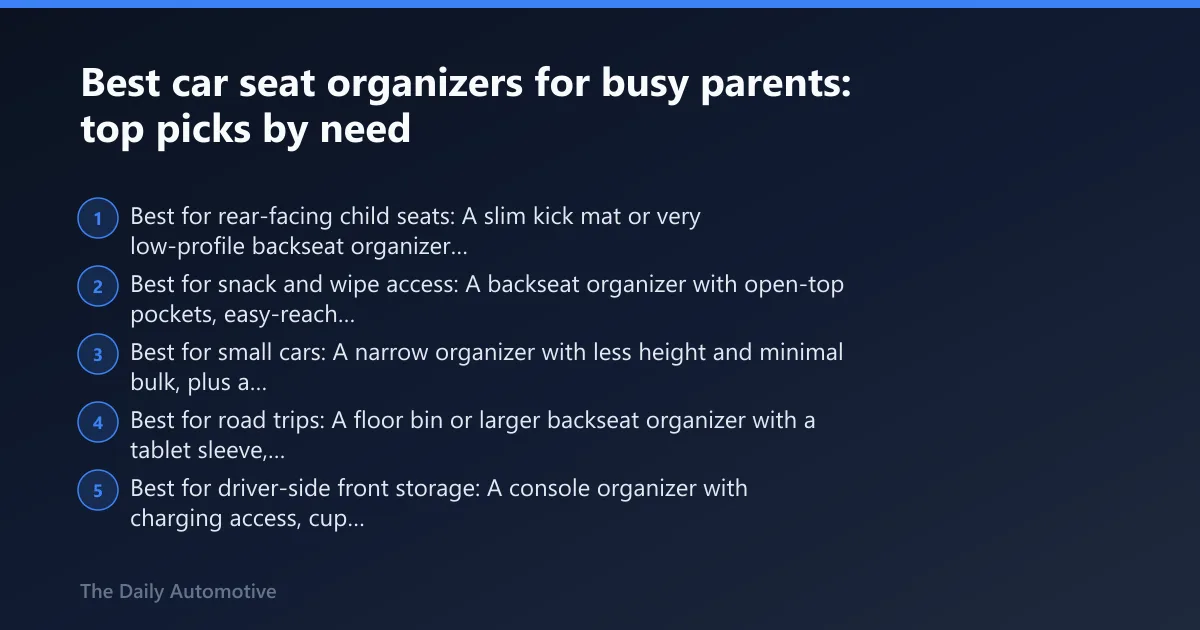
Best car seat organizers for busy parents: top picks by need
The best pick depends on how the car is used day to day, not on pocket count alone. For most families, a slim backseat organizer with a wipe-clean kick mat works best for weekday routines; gap organizers solve the lost-phone problem; console organizers help the driver; and larger floor bins make more sense for road trips than for school runs.
Quick picks by need
- Best for rear-facing child seats: A slim kick mat or very low-profile backseat organizer with short depth and no rigid lower edge.
- Best for snack and wipe access: A backseat organizer with open-top pockets, easy-reach side pockets, and a wipe-clean surface.
- Best for small cars: A narrow organizer with less height and minimal bulk, plus a seat-back fit that stays clear of the front seat.
- Best for road trips: A floor bin or larger backseat organizer with a tablet sleeve, bottle pockets, and room for charger cords.
- Best for driver-side front storage: A console organizer with charging access, cup holders, and closed compartments for small items.
Top pick for daily family use
A slim backseat organizer with kick protection is the safest default for most parents because it handles the mess that builds up every day without asking for much space. It should have a secure mounting system, a wipe-clean face, and cutouts or spacing that preserve seat belt access and child seat clearance.
Best for rear-facing child seats
For infants in rear-facing seats, the right choice is usually a kick mat or a very thin seat-back organizer. Rear-facing legroom is the key. If the child’s feet or the car seat shell will press into the organizer, move to a flatter design or skip the organizer on that seat.
Best for snack and wipe access
Parents who need fast snack and wipe access should look for a backseat organizer with open pockets, a reachable bottle pocket, and a surface that wipes clean after spills. Closed storage sounds useful, but slow access is a real problem when a child asks for a snack at a stoplight.
Best for small cars and tight back seats
Small cars need slim organizers with short overall height and limited bulk. A wide organizer can crowd the front seat, block kneeroom, or press into a rear-facing seat shell. In compact sedans and hatchbacks, the best setup is often one seat-back organizer or none at all.
Best for road trips and tablet storage
Road-trip setups need secure tablet storage, deeper pockets, and better bottle retention than local errands. A seat-back organizer with a padded tablet sleeve and higher-capacity pockets makes sense here, but only if the tablet pocket fits the device without forcing the zipper or elastic.
Quick picks by family setup
Choose by how the car is used every day. An infant, a toddler, two school-age kids, and a driver who wants front-seat storage each create different needs. The right organizer should solve the problem in the seat it lives in, not create a new one.
Infant in a rear-facing seat
Pick a slim kick mat or no organizer at all if legroom is tight. The main risk is interference with the rear-facing car seat shell and front-seat adjustment. Storage matters less than clearance and a safe install.
Toddler with frequent snack stops
A backseat organizer with easy-reach snack pockets and wipe storage works well for toddlers, especially when spills happen often. Low pockets matter more than deep pockets because toddlers need quick access and parents need faster cleanup.
Two kids in the back row
Multi-child setups usually need one organizer per seat or a shared floor bin, not a single oversized organizer stretched across both seating positions. That keeps buckle access clear and lowers the chance of one child kicking the other child’s storage space loose.
Driver who needs front-seat storage
A console organizer is the best fit for front-seat use. It keeps charging cords, phones, sunglasses, receipts, and drinks organized without taking space from the back row. It is not a substitute for child-seat storage.

What type of organizer fits your car best?
The right type depends on where the clutter starts. Backseat organizers handle rear-seat mess; gap organizers catch dropped items; console organizers help the driver; and trunk organizers handle bulk storage that does not belong in the cabin.
Backseat organizer vs kick mat
A backseat organizer adds pocket storage on the seat back. A kick mat protects the seatback from shoes and scuffs. Many products combine both, but fit decides the winner: if the lower section crowds a rear-facing seat, the combined design may be worse than a plain kick mat.
Gap organizer for lost items and spills
A car seat gap organizer fills the space between the seat and center console. It helps with coin and phone drop prevention, spill containment, and keeping small items from disappearing under the seat. It must fit around the seat belt buckle or it becomes a nuisance fast.
Console organizer for front-seat storage
A console organizer is for the driver or front passenger, not the child seat area. It usually offers storage compartments, cup holders, and phone or charging access. It helps when the cabin needs better everyday organization, but it does nothing for backseat kick damage.
When the trunk organizer is the better choice
A trunk organizer makes more sense for extra diapers, sports gear, emergency supplies, or grocery overflow. If the items do not need to be reached while driving, moving them to the trunk keeps the cabin cleaner and reduces clutter near child seats.
What should you look for before buying?
Start with fit, not features. A good organizer has the right pocket layout, enough room for the items you actually carry, a mounting system that stays put, and a shape that does not block belts, buckles, or car-seat hardware.
Pocket layout and storage capacity
Look for storage that matches the routine. Snacks, wipes, and toys need open pockets. Books and tablets need deeper pockets or sleeves. A tall pocket count can be misleading if the pockets are too small to use, too shallow for bottles, or placed where children cannot reach them.
Tablet sleeve and cup holder sizing
If tablet storage matters, check the sleeve size against the tablet dimensions, not the screen size on the box. For bottle storage, measure the bottle diameter and compare it with the cup holder opening. A loose fit causes rattling, while a tight fit can split the pocket seam over time.
Material, wipeability, and kick protection
Wipe-clean fabric is worth paying for if snacks and drinks live in the car. Water-resistant surfaces handle spills better than cloth-only panels. For kick protection, look for a firm lower panel that covers the seatback without becoming so rigid that it fights the seat shape.
Mounting system and anti-slip support
Good organizers use headrest straps, bottom anchors, non-slip backing, and adjustable buckles. Weak straps lead to sagging and sliding. If the organizer swings when a child kicks it, the mounting system is too loose or the panel is too heavy for the seat it is on.
How to check safety and fit in your vehicle
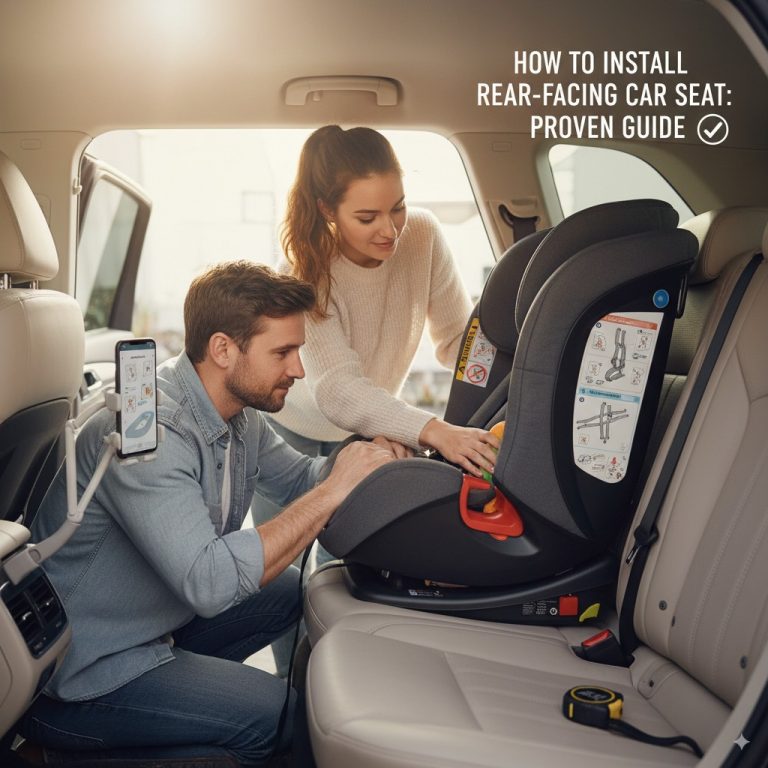
Safety should come before storage, especially when a rear-facing seat needs enough room to sit at the right angle and position. The organizer should stay clear of airbags, allow easy seat belt access, not interfere with LATCH installation, and leave rear-facing seats enough room to sit at the correct angle and position. Small cars need the most careful checking.
Airbag clearance and seat belt access
Never place an organizer where it can interfere with a seat-mounted airbag or block the path of a seat belt. The organizer should not cover a buckle, hide the belt latch, or make it hard to click a belt in during a quick stop.
LATCH and child seat compatibility
Child seats need unobstructed anchor points and a clean install path. A seat-back organizer should not sit where the car seat base or tether path needs space. If the organizer shifts while tightening the child seat, that is a sign the layout does not work.
Rear-facing legroom and seat adjustment
Rear-facing seats need space in front of them. Measure the gap from the back of the child seat to the front seat before buying anything. If the organizer forces the front seat forward or pushes into the rear-facing shell, skip it.
Measurements to take before ordering
- Measure seat-back width from side bolster to side bolster.
- Measure seat-back height from the top of the seat to the point where the cushion curves.
- Measure the gap between the front seat and the rear seat, especially for rear-facing seats.
- Measure the width of the center-console gap if you want a gap organizer.
- Measure tablet height, bottle diameter, and any item that must fit inside a pocket.
- Check where the seat belt buckle sits and whether the organizer would press on it.
Parent use-case matrix: organizer style, vehicle, and child age
This matrix maps the organizer to the way the family actually uses the car. The best match changes with vehicle size, child stage, and what must stay reachable. Clearance risk matters as much as storage capacity.
| Organizer style | Best vehicle fit | Best child stage | Best storage need | Clearance risks to watch |
|---|---|---|---|---|
| Backseat organizer | Midsize SUV, minivan, sedan with good front-seat room | Toddlers, boosters, school-age kids | Snacks, wipes, books, tablets | Blocks rear-facing legroom, hangs too low, covers buckle area |
| Kick mat | Small cars, rear-facing seat positions, leased vehicles | Infants and toddlers in rear-facing seats | Seatback protection, light storage only | Can press into the child seat shell or slip if straps are loose |
| Car seat gap organizer | Any vehicle with a usable console gap | Any stage, mostly driver-focused use | Phones, coins, snacks, spill catch | Can block seat belt buckle or shift when seats move |
| Console organizer | Daily driver, commuter car, family hauler | Adults only, front-seat use | Charging, drinks, small items | Can crowd cup holders or block shifter access |
How much should you spend on a car seat organizer?
Spending should match the job. Basic organizers are fine for light use, but paying more makes sense when you need stronger mounting, better fabric, clearer pocket structure, or more precise fit. Extra money is wasted if the organizer still blocks a buckle or rear-facing seat.
Budget options and trade-offs
Budget organizers can handle snacks and light storage, but they often sag, slide, or use thinner pockets that wear faster. They tend to work best for short trips and when the organizer holds only a few items. For heavy daily use, low cost often becomes false economy.
Midrange features worth paying for
Midrange products usually offer better stitching, stronger straps, more stable panels, and cleaner pocket layouts. That is where most families should shop. The money goes toward fit and function, not just more pockets.
When premium materials make sense
Premium materials can be worth it when the organizer gets heavy use, the car is small, or the child seat setup leaves little room for error. Better fabrics and reinforced pockets reduce common failure points such as broken tablet sleeves and torn seams, though no organizer lasts forever.
What are the most common failure cases?
The biggest problems are sagging, sliding, overstuffing, broken tablet pockets, and blocked buckle access. These failures show up after a few weeks of real use, usually because the organizer was too large, too heavy, or installed without enough tension.
Sagging and sliding
Sagging happens when the straps stretch or the panel is too full. Sliding happens when the lower edge lacks grip or the back panel does not match the seat shape. Both problems make the organizer harder to use and can expose the seatback to kicks again.
Overstuffing and pocket failure
Many organizers fail because they are loaded with more than they were built to hold. Pockets that look roomy can tear if filled with hard bottles, heavy books, and chargers. A better choice is a smaller organizer used well than a large one packed until seams pull.
Broken tablet pockets
Tablet sleeves fail when the device is too heavy, the pocket is too tight, or the material stretches under heat and repeated use. If a tablet is part of the plan, choose a sleeve with a clear size match and use the correct strap tension so the pocket does not droop.
What is the best car seat organizer for busy parents?
The best car seat organizer for busy parents is usually a slim backseat organizer with a kick mat, strong straps, and easy-clean pockets. It gives quick access to snacks, wipes, and small toys without taking much space. For rear-facing seats or tight cabins, a flatter kick mat often fits better.
What features should I look for in a car seat organizer?
Look for pocket layouts that match your routine, wipe-clean material, a secure mounting system, and sizing that fits your seat. Tablet sleeves, cup holders, and kick protection matter only if the dimensions work in your car. Clear access to belts and buckles matters more than extra storage.
Will a car seat organizer fit in a small back seat?
Sometimes, but small back seats need careful measurement. The biggest risks are rear-facing legroom loss, blocked buckles, and a front seat that can no longer move back far enough. In compact cars, narrow kick mats and slim seat-back organizers usually fit better than tall, bulky models.
How do I keep toys, snacks, and wipes from falling under car seats?
Use a gap organizer if the items are dropping between the seat and console, and use a seat-back organizer with firm pockets if the problem is in the rear seat. For very small items, a closed pouch or zipper pocket works better than an open pocket that spills during hard braking.
Are car seat organizers safe with child car seats?
They can be safe when they do not interfere with car seat installation, LATCH anchors, seat belt routing, or rear-facing clearance. The organizer must not sit in the path of the child seat base or tether. If any part blocks the install, the organizer should come out.
What is the difference between a backseat organizer and a trunk organizer?
A backseat organizer keeps items reachable during the drive, while a trunk organizer holds bulk storage that can stay out of sight until needed. Backseat models are for snacks, toys, wipes, and tablets. Trunk organizers are better for emergency kits, sports gear, and bulk supplies.
Which car seat organizer is best for toddlers?
Toddlers usually do best with a seat-back organizer that has low, easy-reach pockets and a wipe-clean surface. Toddlers spill often and grab quickly, so the right setup keeps snacks and wipes close without creating a deep, cluttered pocket system they cannot use well.
How much should I spend on a car seat organizer?
Most families should spend enough to get a stable fit and durable mounting before paying for extra pockets or premium trim. Budget models can work for light use. If the car is small, the child is rear-facing, or daily use is heavy, spending more on fit and stitching is usually worth it.
Products related to this article
Sponsored / affiliate links. As an Amazon Associate I earn from qualifying purchases. I may earn additional commission from eligible campaigns.
 Seat Belt Covers for Kids, 2 in 1 Car Seat Strap Covers & Auto Seatbelt Pillow for Kids nap, Car Travel Pillow & Strap Pads Cushion for headrest, Neck/Shoulder Support, fit Child, Adult, Grey;
 PartsTo Adjustable Kids Travel Car Seat Headrest Pillow with Lean Support Cushion Sleeping Travel Neck Safeguard Cushion Suitable for Kids Children Teenagers and Adults