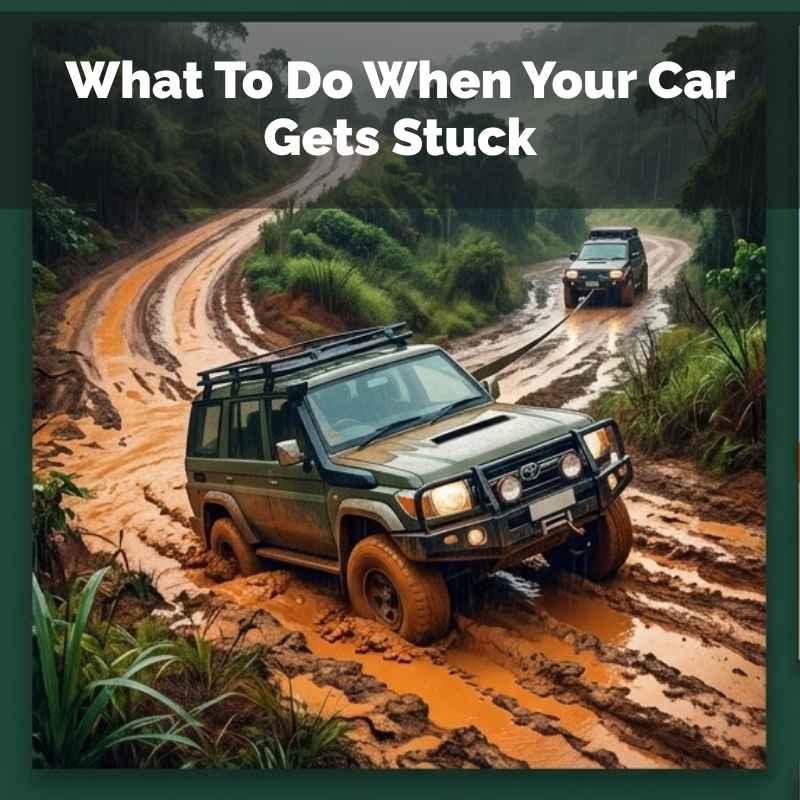
What To Do When Your Car Gets Stuck
It’s not about avoiding getting stuck entirely, as sometimes it’s unavoidable. It’s about knowing the best way to handle it when it happens. We’ll cover the common scenarios and give you actionable steps to free your vehicle.
Understanding Why Your Car Gets Stuck
Before we dive into solutions, let’s quickly touch on why cars get stuck. It usually boils down to a lack of traction. Traction is the grip your tires have on the road or surface.
When that grip is lost, your wheels spin but don’t move the car forward. Several things can cause this loss of traction.
Soft surfaces are the biggest culprits. Think about mud after heavy rain. It’s wet and yielding.
Your tires can sink into it. Snow, especially wet or slushy snow, acts similarly. It can pile up around your tires and wheels, preventing them from finding a solid surface.
Sand, whether on a beach or a dusty trail, is also loose and can let tires dig in and get buried.
Sometimes, it’s not just the surface. A sudden dip in the road, a hidden pothole, or even a minor accident can cause your car to tilt or become wedged in a way that lifts one or more wheels off the ground. When a wheel is in the air, it has no traction.
Even if the other wheels are on solid ground, if they can’t get enough grip, the car won’t budge.
It’s also about the weight of your vehicle and the power of its engine. A heavy truck might sink deeper into mud than a small car. A car with all-wheel drive might have a better chance of getting out of a sticky situation than a two-wheel-drive vehicle, but even AWD can’t overcome zero traction.
My Car Got Stuck: The Time I Almost Lost My Cool
I remember one particularly damp autumn afternoon. I was visiting a friend who lived down a country lane that was… well, let’s call it “rustic.” It hadn’t been graded in a while, and after a week of steady rain, it had turned into a muddy track. I wasn’t driving my usual car; it was an older sedan I was borrowing.
I was being careful, taking it slow, but there was one section that looked particularly bad – a bit of a dip with some serious-looking mud. “I can make it,” I thought, a common phrase right before disaster.
As I entered the muddy patch, the tires started to churn. I pressed the accelerator a little harder, hoping to power through. That was my first mistake.
The engine revved, the wheels spun wildly, throwing mud everywhere, but instead of moving forward, the car settled deeper into the muck. The spinning intensified, and I could feel the car groaning. Panic set in.
I tried reversing, but that just dug the rear tires in further. The thought of having to call a tow truck on a remote country road, in the dark, with a borrowed car, made my stomach clench. I sat there for a minute, hands tight on the wheel, heart pounding, staring at the brown sludge surrounding my tires.
That feeling of helplessness is what we want to avoid. Thankfully, after a few deep breaths and a quick text to my friend, we managed to get it out with some strategic placement of floor mats and a good shove. But it was a stark reminder that pride and optimism aren’t enough when you’re stuck.
What to Do When Your Car is Stuck: A Step-by-Step Guide
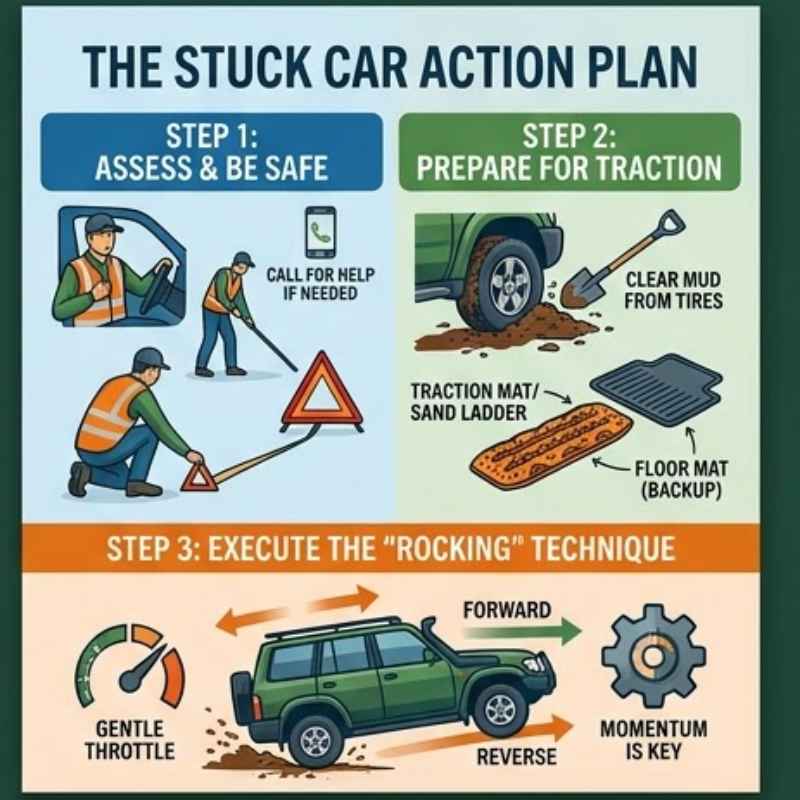
Okay, let’s get practical. When you realize your car is stuck, the very first thing you need to do is stop trying to force it. Keep hitting the gas, and you’ll likely just dig yourself in deeper, potentially damaging your transmission or tires.
Here’s what you should do:
Assess the Situation First
1. Stay Calm: Easier said than done, I know. But panic clouds judgment.
Take a few deep breaths. You’re going to figure this out.
2. Turn Off the Engine: This stops further stress on your transmission if it was trying to engage gears. It also lets you listen and think clearly.
3. Get Out and Look: Safely exit your vehicle. Check how deep the problem is.
Are all four wheels stuck? Are you high-centered (the car’s frame resting on the ground)? Is there a clear path forward or backward?
Your assessment will guide your next steps. If you’re in a safe spot, take your time.
Freeing Your Car from Common Sticking Scenarios
The method you use depends heavily on what you’re stuck in.
Mud Woes
Mud is everywhere after rain. It can make dirt roads or even parking lots treacherous. Here’s how to tackle it.
Mud Extraction: Quick Steps
1. Clear the Mud: Use a shovel if you have one, or even your hands and feet, to clear mud from in front of and behind your tires. Also, clear any mud that’s packed under your car’s frame if you’re high-centered.
2. Add Traction Material: This is key. You need something for your tires to grip.
Look for:
- Floor mats (the rubber kind are best)
- Sticks, branches, or gravel
- Cardboard or old newspapers
- Sand or kitty litter (if you carry it)
Place these materials under the drive wheels. If you have front-wheel drive, put them in front of the front tires. For rear-wheel drive, put them behind the rear tires.
For all-wheel drive, figure out which wheels are spinning and place material there.
3. Gentle Acceleration: Get back in your car. Put it in the lowest gear (or “D” for drive).
Gently press the accelerator. You want the tires to spin slowly and grab the traction material. Avoid flooring it.
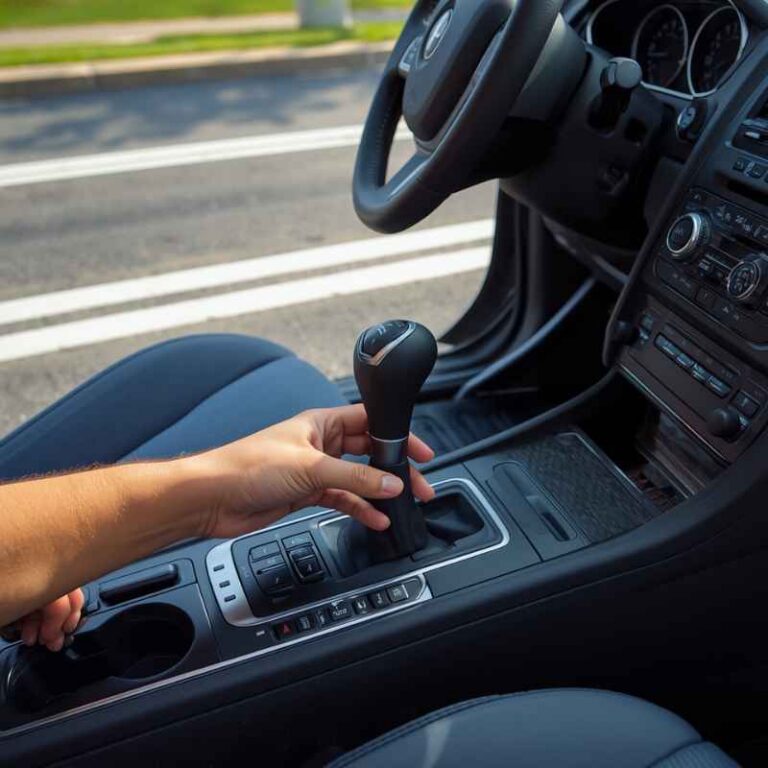
4. Rocking Motion: If gentle acceleration doesn’t work, try rocking the car. Shift between Drive and Reverse.
Accelerate gently in Drive, then quickly shift to Reverse and accelerate gently. Repeat this, trying to build a little momentum. This can sometimes help the tires find grip.
Sometimes, you might need a push. If you have a friend with you or someone stops to help, they can push the car while you steer and gently accelerate. Make sure they are pushing on a sturdy part of the car, like the rear bumper or frame, and not on the body panels.
Snow and Ice Challenges
Winter driving brings its own set of challenges. Snow can be soft and deep, or it can freeze into slippery ice.
Snow/Ice Escape Plan
1. Clear Snow: Use a shovel to clear snow away from your tires, especially in front of them. Also, clear the exhaust pipe to prevent carbon monoxide buildup if you need to run the engine.
2. Add Traction: Similar to mud, traction is vital. Sand, salt (if you have it), kitty litter, or even rough materials like old carpet scraps can help.
Car mats can work here too.
3. Turn Off Traction Control (Sometimes): Your car’s traction control system is designed to prevent wheel spin. In deep snow or ice, this can sometimes hinder your escape by limiting power.
Consult your owner’s manual to see if your car has this feature and how to temporarily disable it. For many modern cars, this is a key step.
4. Gentle, Steady Throttle: Ease onto the gas pedal. You want a smooth, continuous application of power.
Too much sudden power will just spin your wheels on the slick surface.
5. Tire Pressure: If you have a tire pressure gauge and a way to inflate tires (like a portable compressor), slightly deflating your tires can increase the contact patch with the snow, providing more grip. Be careful not to over-deflate, and remember to reinflate them to the proper pressure once you’re on a solid surface.
Remember, if you’re on a steep incline covered in ice, it’s incredibly dangerous to try and force your way out. If possible, wait for conditions to improve or for professional help.
Sandy Situations
Driving on sand, like at the beach or on desert trails, requires a specific approach. Sand is loose and your tires can sink quickly.
Beach/Sand Driving Tips
1. Maintain Momentum: The key to sand is momentum. Once you stop, you sink.
If you have to stop, do it gently.
2. Lower Tire Pressure: This is often recommended by experienced sand drivers. Letting some air out of your tires increases their surface area.
This helps the vehicle “float” on top of the sand rather than digging in. Check your owner’s manual or online forums for recommended pressures for your vehicle and the specific sand conditions. Always have a way to reinflate them afterward.
3. Drive Smoothly: Avoid sudden braking or acceleration. Gentle, consistent speed is best.
4. If Stuck: Clear sand from around your tires. You might try placing mats or branches for traction.
If you can’t get out, it’s often best to call a local tow service who specializes in beach recoveries.
Many beach access roads have specific rules. Always check local regulations before driving on the sand. And never drive on a beach during high tide!
Ditch Drama
Landing in a ditch is less about traction and more about getting the vehicle back on level ground. This is one of the trickier situations.
Getting Out of a Ditch
1. Assess Safety: Is your car stable? Are there any immediate hazards like leaning trees or power lines?
If the car is significantly tilted or unstable, it might be best to stay put and call for professional help.
2. Check Undercarriage: See if any part of the car’s frame or body is resting on the edge of the ditch. If so, you’ll need to try and lift that section or dig it out.
3. Use Traction Aids: Place mats, branches, or rocks under the tires that are still touching the ground or have some contact with the roadside. You want to give them something to grip.
4. Gentle Steering and Throttle: Try to steer gently towards the road. Apply minimal gas.
You don’t want to spin your wheels and dig deeper.
5. Digging Out: If you have a shovel, you might need to dig out the side of the ditch your tires are resting against. This can create a ramp for your tires to climb.
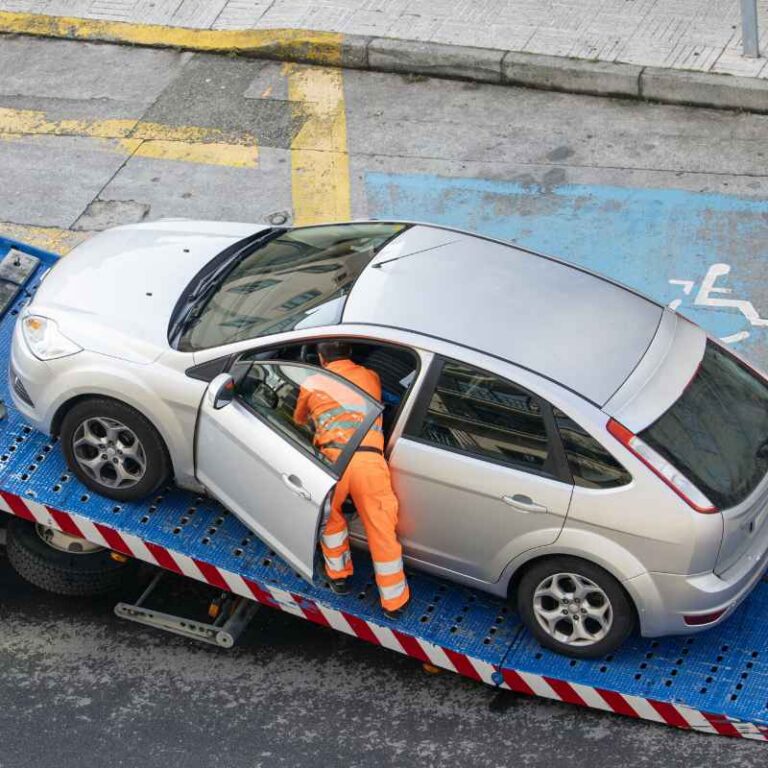
6. Professional Help is Often Best: For serious ditch situations, especially if the car is damaged or unstable, a tow truck with a winch is often the safest and most effective solution.
If your car is in a ditch and the ground is soft or unstable, calling a tow truck is often the wisest choice. Trying to force it can lead to more damage or even make the situation worse.
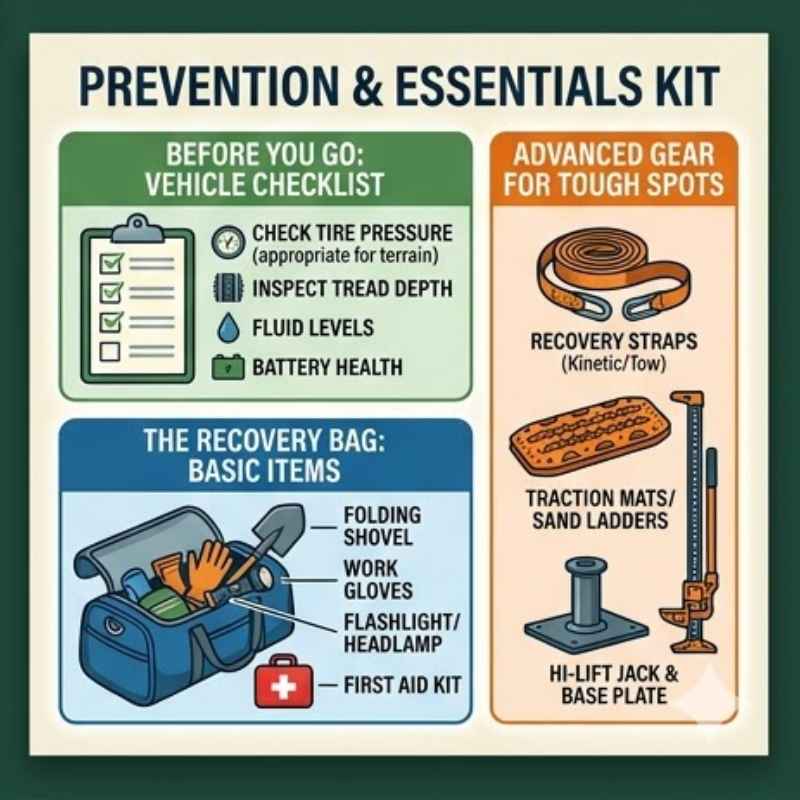
Essential Gear for Prevention and Recovery
Being prepared can turn a frustrating experience into a minor inconvenience. Keeping a few items in your car can make a huge difference when you get stuck.
Your “Get Unstuck” Kit
- Shovel: A small, collapsible shovel is invaluable for digging out tires.
- Traction Mats/Boards: These are specifically designed to provide grip in mud or snow. You can buy them, or use sturdy cardboard, old mats, or even rough wood.
- Sand or Kitty Litter: A small bag can provide much-needed traction in slippery conditions.
- Gloves: Keeps your hands clean and protected while you work.
- Flashlight: Essential if you get stuck after dark.
- Tow Rope/Strap: Only use if you have another vehicle to help pull you and know how to do so safely.
- Tire Pressure Gauge and Air Compressor: Crucial for sand driving and for reinflating tires after deflating them for traction.
- Basic Tool Kit: For minor adjustments or checking under the hood.
Even if you don’t plan on off-roading, a simple shovel and some sand can be a lifesaver during a heavy snowfall.
Real-World Scenarios and What They Mean
Let’s look at some common places and situations where getting stuck is more likely.
The Unpaved Driveway
Many of us have unpaved driveways or live on roads that aren’t regularly maintained. After a strong rain or a thaw, these can become muddy quagmires. The key here is observation.
Before you drive onto a soft spot, check its depth. If you see deep ruts, try to avoid them or drive slowly and steadily through them.
Parking Lot Puddles
You might think parking lots are safe, but a large, deep puddle can hide a significant hazard. It could be a pothole, or the ground beneath might be soft. Driving through unexpectedly deep water can sometimes cause your tires to lose all grip and sink.
It’s always better to find a different parking spot if a puddle looks too deep.
The “Shortcut” That Wasn’t
We’ve all been tempted by a seemingly faster route. This often leads us down unmaintained paths, logging roads, or trails. These surfaces are unpredictable.
They can have soft spots, hidden rocks, or steep inclines that can leave you stranded. Stick to known, maintained roads unless you are prepared for off-road conditions.
Seasonal Hazards
Snow and ice are obvious culprits in winter. But don’t forget spring thaws, which can turn normally firm ground into soft mud. Heavy summer rains can create flash floods and wash out parts of roads, leaving unexpected soft patches or even sinkholes.
What This Means for You: When to Worry and When It’s Okay
Getting your car stuck is rarely ideal, but it’s often not a catastrophe. There’s a spectrum of “stuckness.”
When It’s Normal and You Can Probably Handle It
If your tires are just slightly sunk into mud, snow, or sand, and you can see a clear path forward or backward, it’s usually a situation you can resolve with a little effort and the right technique. If you can clear the area around your tires and add some traction material, you’re likely on your way.
The rocking motion (Drive-Reverse-Drive) is often effective for minor situations. This is when having those basic tools like a shovel and some sand can be incredibly useful.
When You Should Pause and Consider Professional Help
You should start to worry and consider calling a tow truck or roadside assistance if:
- Your car is high-centered: This means the frame of your car is resting on the ground, lifting your drive wheels off the surface. You have no traction.
- You’re in deep water: Driving through water that is higher than your car’s wheel hubs is dangerous. It can flood your engine or electrical systems. If you’re stuck in water, don’t try to force your way out.
- The car is unstable: If your vehicle is leaning precariously, or you suspect the ground beneath it is about to give way, prioritize your safety.
- You’ve tried everything and made it worse: If your wheels are spinning excessively, throwing sparks, or you smell burning rubber or oil, stop immediately.
- You’re on a steep, slippery incline: Trying to get unstuck here can lead to your car sliding further or even rolling.
- You lack the necessary tools or knowledge: If you don’t have a shovel, traction aids, or aren’t sure what to do, it’s safer to call for help.
Don’t be embarrassed to call for help. It’s better to pay for a tow than to cause extensive damage to your car or, worse, injure yourself.
Quick Tips for Prevention
The best way to deal with being stuck is to avoid it. Here are some simple tips:
Preventing Getting Stuck
- Know Your Route: If you’re going somewhere new, especially off the beaten path, research the road conditions. Look for recent reports or ask locals.
- Observe Conditions: Before driving onto any unpaved surface, especially after rain or snow, take a moment to assess the ground. Look for deep ruts or soft spots.
- Maintain Momentum (When Appropriate): When driving on surfaces like gravel or light snow, maintaining a steady, moderate speed can help you avoid getting stuck. Don’t crawl along if it means losing momentum.
- Use Proper Tire Pressure: Ensure your tires are inflated to the manufacturer’s recommended pressure. This maximizes traction and fuel efficiency.
- Consider Your Vehicle: If you frequently drive in conditions prone to getting stuck (mud, snow, sand), consider a vehicle with higher ground clearance or all-wheel/four-wheel drive.
- Be Wary of Puddles: Deep puddles can hide dangers. If you can’t see the bottom, it’s often best to find an alternative.
A little foresight goes a long way. Driving defensively means anticipating potential hazards, not just reacting to them.
Frequently Asked Questions About Getting Unstuck
What’s the very first thing I should do if my car gets stuck?
The most important first step is to stop trying to force it. Turn off the engine to prevent further damage and take a moment to assess the situation calmly.
Can I damage my car by trying to get it unstuck?
Yes, you absolutely can. Excessive wheel spinning can damage your transmission, differential, and tires. Trying to rock the car aggressively or forcing it out of a deep rut can also cause suspension or body damage.
How can I add traction if I don’t have special traction mats?
You can use common items like rubber floor mats, sturdy cardboard, newspapers, sticks, branches, gravel, or even kitty litter. Place these materials under the drive wheels to give them something to grip.
When should I definitely call for professional help?
Call for help if your car is high-centered, in deep water, unstable, on a steep slippery incline, or if you’ve made the situation worse and are unsure how to proceed.
Is it safe to accept a push from strangers if I’m stuck?
Be cautious. Ensure the people pushing know what they are doing and where to push. Make sure your car is stable and the surface is safe for them. Always thank them and consider offering a small reward for their help.
What is “high-centering” and why is it so bad?
High-centering happens when the frame or undercarriage of your vehicle rests on the ground or a high point, lifting your drive wheels off the surface. This means your wheels have no contact with the ground, and therefore no traction to move the vehicle.
How low can I safely let my tire pressure go for traction?
This varies greatly by vehicle and tire type. For sand, drivers sometimes go down to 15-20 psi or even lower. Always check your owner’s manual or reliable online resources for specific recommendations for your vehicle and conditions, and be prepared to reinflate your tires.
Conclusion
Getting your car stuck can be a moment of real stress. The good news is that most situations are manageable with a clear head and the right steps. By understanding why cars get stuck and having a plan, you can often free yourself or know when to call for backup.
Remember to stay calm, assess the situation, and use the techniques that best suit whether you’re in mud, snow, sand, or a ditch. Being prepared with a few essential items can also make a world of difference. Don’t let the fear of getting stuck prevent you from exploring, but do so wisely and always have a plan B.
Products related to this article
Sponsored / affiliate links. As an Amazon Associate I earn from qualifying purchases. I may earn additional commission from eligible campaigns.