Best Car Snow Chains for Winter: We Compared
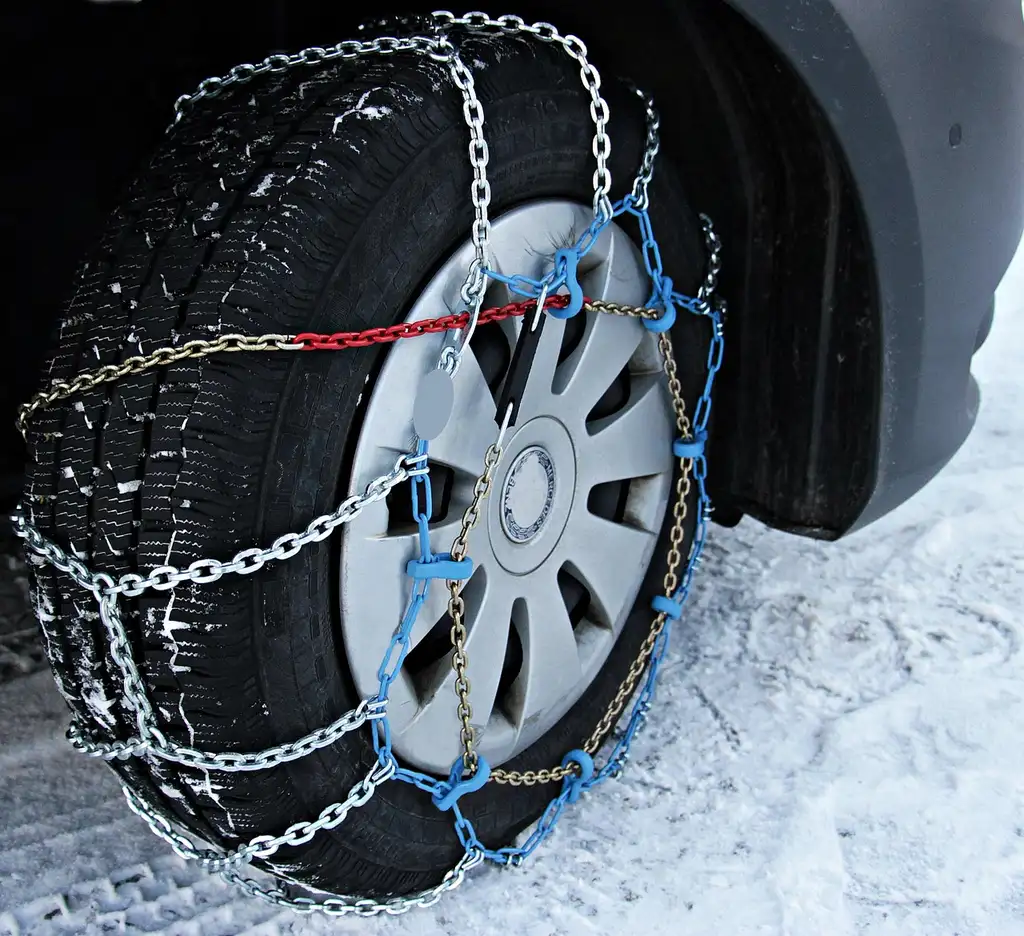
Choose steel-link chains for frequent mountain travel, low-profile cable chains for emergency kits, and auto-tightening sets if you need fast roadside installation in cold, slushy conditions. Pick wrong, and you can lose traction, damage wheel wells, or spend more on chains that do not fit your tire size. The top pick for many drivers is the SCC 0232805 Auto-Trac because its self-tightening, diamond-pattern design can reduce installation strain while still fitting regular winter travel needs.
Quick comparison
| Product | Badge | Best for | Price | ||
|---|---|---|---|---|---|
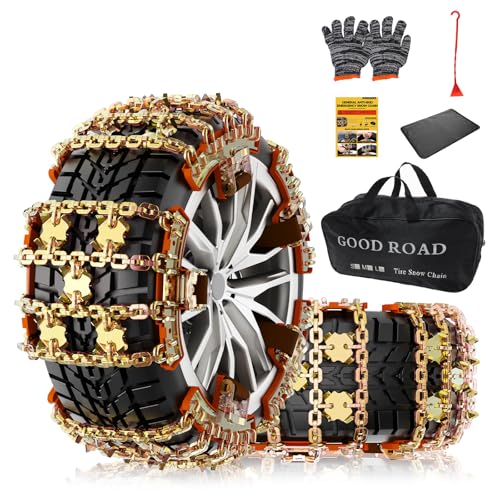 |
KYX Snow Tire Chains for Car/SUV/Pickup, AdjustableKYX | Our pick | Universal · Alloy Steel · 6-Piece Kit | $78.52
Price as of 16 Oct 2026
|
View |
 |
DEDC Auto Lock Y-type Snow Tire Chain for SUV Pickup truckDEDC | Upgrade pick | Y-Type · Auto Lock · SUV/Pickup | $129.99
Price as of 16 Oct 2026
|
View |
Use this comparison to narrow the field before you shop by brand or price. The right choice depends more on clearance, road rules, and how often you will install the chains than on marketing claims.
This guide separates emergency carry, mountain-rule compliance, and regular commuting, because those are different jobs. A chain that works well in a trunk emergency kit can be the wrong choice for weekly snowbelt driving.
How we chose
We compared the options by fit range, clearance demands, traction style, installation burden, and ownership tradeoffs. We also weighed whether each design fits a short roadside stop, a posted chain-control zone, or repeated winter use.
Two details matter most on modern vehicles: exact tire size and wheel-well clearance. ABS, traction control, and tight suspension or brake packaging leave less room for a sloppy fit than older trucks had.
We also looked at material construction. Steel links, heat-treated steel, cable-style assemblies, and TPU or polymer traction devices behave differently on ice, packed snow, and bare patches.
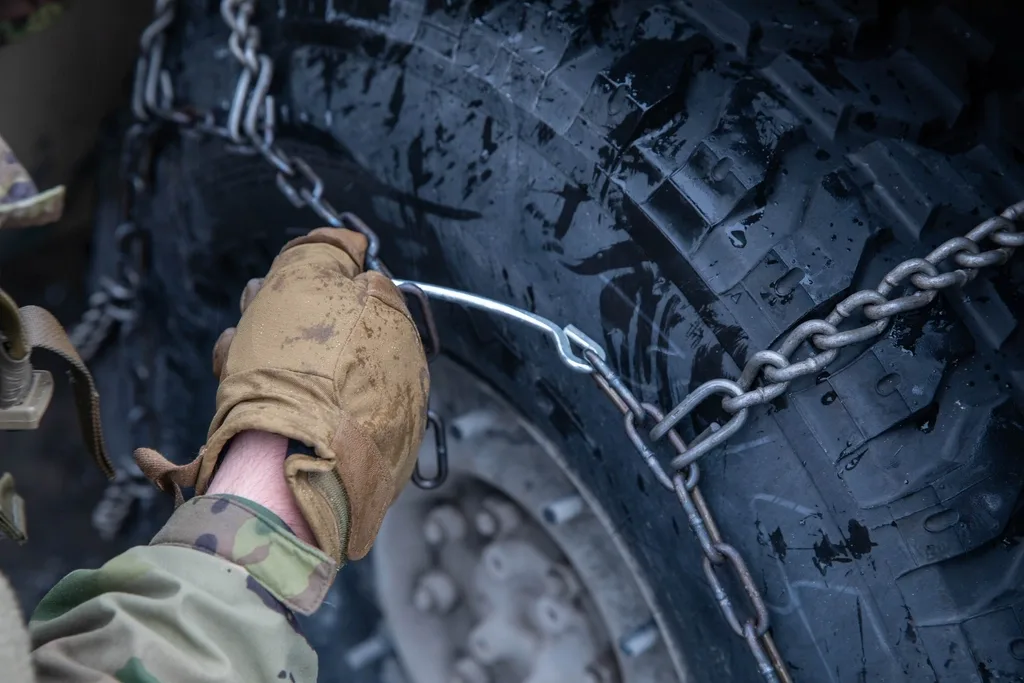
Snow chain decision matrix
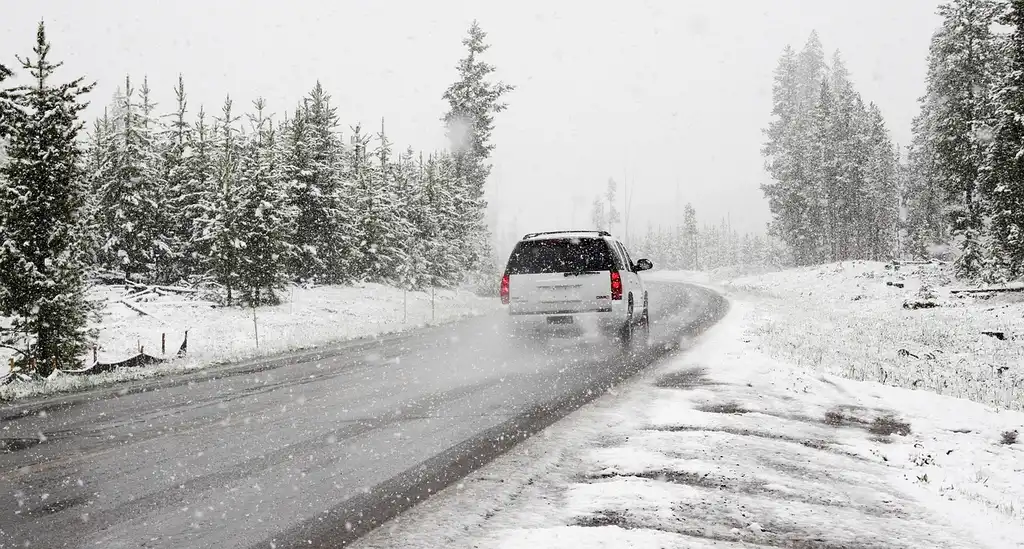
The right chain type depends on the job, not just the tire size. Start with this matrix, then verify manufacturer fit data and the vehicle owner’s manual before you buy.
| Use case | Chain type | Clearance need | Installation difficulty | Noise level | Best-fit vehicle class |
|---|---|---|---|---|---|
| Emergency roadside kit | Cable-style or TPU/polymer emergency traction device | Low profile, useful where space is tight | Lower to moderate | Low to moderate | Passenger cars and crossovers with limited room |
| Mountain travel and chain-control roads | Traditional linked steel chains or self-tightening steel-link chains | More clearance required at suspension, brake, and body points | Moderate to higher | Higher | SUVs and light trucks with enough wheel-well space |
| Regular winter commuting | Diamond cross pattern with self-tightening tensioners | Moderate, but fit must still be verified | Moderate | Lower than ladder-style linked chains | Passenger cars, SUVs, and some light trucks |
Picture a sedan with 205/55R16 tires and a tight front wheel well. A cable-style set may fit where a heavy linked chain would rub the strut or inner fender liner. Now picture a pickup heading into a posted mountain chain zone; the extra bite of steel links matters more than low noise.
- Confirm the exact tire size on the sidewall.
- Check the manufacturer fit range for that size.
- Measure or inspect suspension, brake, and body clearance.
- Confirm whether your route requires chains by law or road posting.
- Match the chain style to how often you expect to install it.
What size snow chains fit your tires?
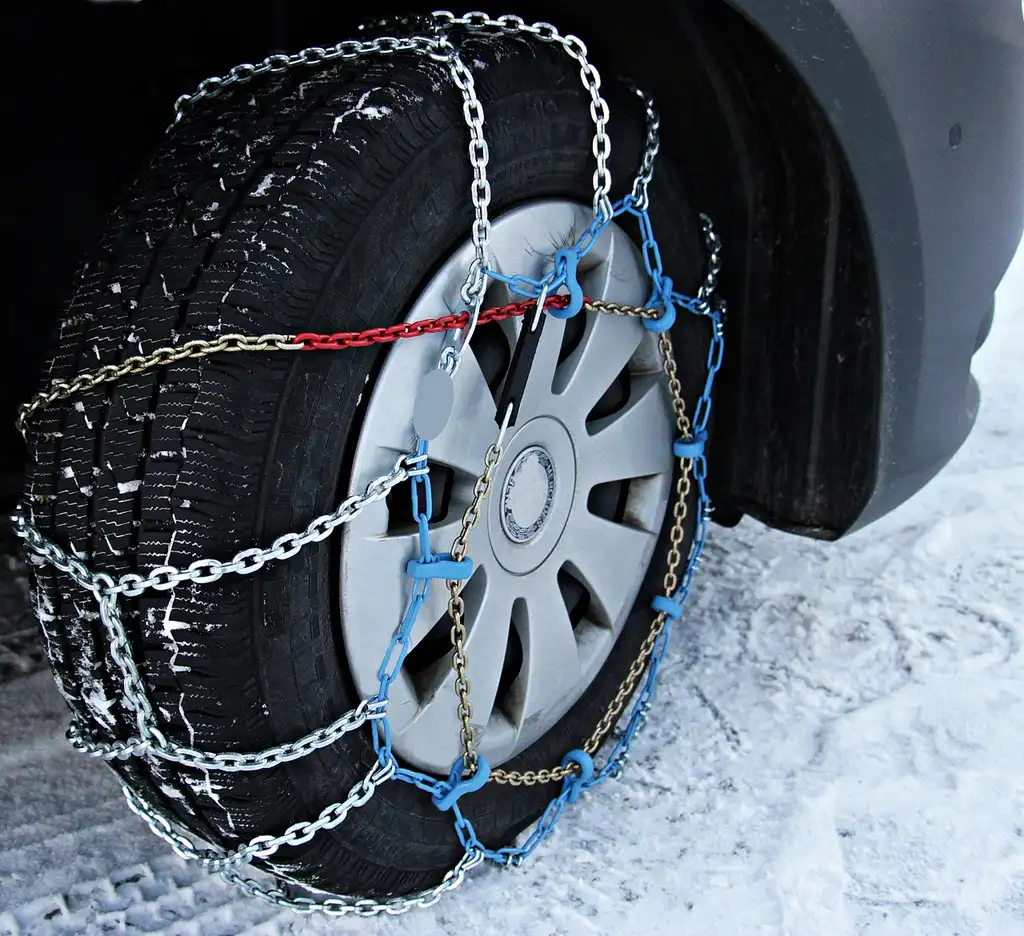
Chains should match the tire size printed on the sidewall and still fit within the manufacturer’s approved range. You also need enough clearance around the suspension, brake hardware, and inner body panels, because a correct tire size does not guarantee a safe fit.
Read the tire sidewall size
Find the full tire code, such as width, aspect ratio, and rim diameter, on the sidewall. Do not guess from the vehicle trim or wheel style, because a single model can wear different tire sizes across trims, options, or previous owner changes.
Match the manufacturer fit range
Chain makers publish fit charts for specific tire sizes. Use that chart, not a rough match by wheel diameter alone. If the manufacturer does not list your exact tire code or approved substitute, do not assume the set will work.
Check wheel-well clearance before buying
Clearance means room at the suspension, brake, and body contact points. Even low-profile chains can rub if a vehicle has tight strut spacing, limited fender space, or brake components close to the tire shoulder. That rub risk is especially important on SUVs with large tires and short wheel-well gaps.
Say your crossover runs 235/60R18 tires and the chain chart says the model fits that size. If the inner fender liner sits very close to the tire shoulder, the fit can still fail once the chain centers under load, so clearance matters as much as the size code.
Cable chains: best for tight clearances
Cable-style chains are the lower-profile choice when wheel-well space is limited. They are easier to fit on some modern cars and smaller SUVs, but they usually give up some bite compared with heavier steel-link chains in deep snow, loose slush, and steep climbs.
Lower profile for modern wheel wells
Cable-style snow chains sit closer to the tire than traditional linked steel designs. That makes them a practical emergency option where suspension, brake, or body clearance is tight and a bigger chain would rub.
Tradeoff versus maximum bite
The tradeoff is traction. Cable chains are a cable-style alternative, so they are generally chosen for fit first and grip second. If the road is packed with snow rather than deep and churned up, they can be enough; if you need maximum bite, steel links usually do more.
Best vehicle types
They suit passenger cars, some crossovers, and light vehicles with limited wheel-well room. They also fit drivers who want an emergency traction device for short-distance use, not a full-time winter commute solution.
Are self-tightening snow chains easier to install?
Yes, self-tightening snow chains are easier for many drivers because the ratcheting tensioner centers the chain as you drive and reduces the need for manual re-tightening. That matters in cold roadside conditions, where stopping to recheck tension with gloves on can be awkward and time-consuming.
Ratcheting tensioners and centering
A self-tightening system uses ratcheting tensioners to pull slack out of the chain after installation. The chain then centers itself while driving, which helps keep the fit more consistent than a loose set that shifts across the tread.
Less manual re-tightening
Drivers still need to read the instructions and verify tension after installation, but the system cuts down on repeated adjustment. That makes it a better match for frequent winter use and for drivers who may need to install chains in a hurry.
When the extra cost makes sense
The higher price makes sense if you expect repeated installs, cold roadside work, or long stretches in chain-control weather. If you only need a backup set once or twice a year, a simpler chain may be enough.
A common first-timer mistake is buying a self-tightening set only because it sounds convenient, then skipping the fit chart and clearance check. Convenience does not fix a wrong size, and a tensioning system cannot prevent rubbing if the chain is too close to the brake caliper.
Linked steel chains: best for deep snow grip
Traditional linked steel chains deliver the most bite when the road surface is deep, packed, or uneven. They are heavier, louder, and rougher riding than cable-style options, but they are still the benchmark when traction matters more than comfort.
Diamond cross pattern versus ladder style
A diamond cross pattern spreads contact more evenly across the tread, which gives a smoother ride, better cornering feel, and more consistent grip on packed snow than old ladder-style layouts. The SCC 0232805 Auto-Trac uses a diamond pattern, and that design is one reason it suits regular winter driving better than basic emergency-only sets.
Noise and vibration
Traditional linked chains make more noise and vibration than cable chains or polymer traction devices. That is normal. The tradeoff buys stronger bite on steep grades, slushy mountain approaches, and roads where snow depth changes from one section to the next.
Where the heavier build helps
Heavier steel links help when the road is rough, the grade is steep, or the vehicle is loaded. Chains sold as heat-treated steel, such as the HAPPYMATE HKN-130, are built for tougher winter duty, though the extra mass can also mean more installation effort and a harsher ride.
Which one should you buy?
Choose the cheapest set only if your need is truly occasional emergency use. Spend more when you need frequent installs, posted mountain travel, or a vehicle with tight clearance that still needs reliable winter traction.
Best pick for emergency-only use
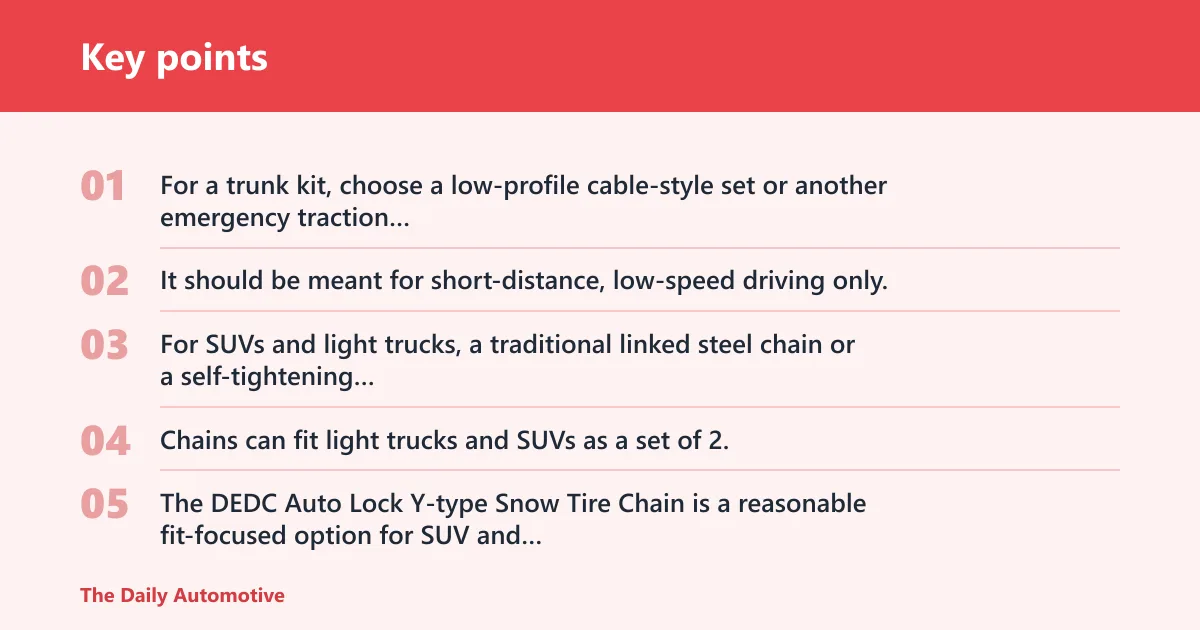
For a trunk kit, choose a low-profile cable-style set or another emergency traction device that fits your exact tire code and stores easily. It should be meant for short-distance, low-speed driving only, not highway travel or all-day winter commuting.
Best pick for SUVs and light trucks
For SUVs and light trucks, a traditional linked steel chain or a self-tightening steel-link set usually makes the most sense if you have clearance. Chains can fit light trucks and SUVs as a set of 2, but you still need to confirm whether your vehicle calls for two driven wheels or all four.
The DEDC Auto Lock Y-type Snow Tire Chain is a reasonable fit-focused option for SUV and pickup buyers who want an auto-lock approach and a model sold for larger tire sizes. Its drawback is the same one many heavy-duty chains share: more bulk, more noise, and a greater need to verify clearance before you buy.
Best pick for regular snow commuting
For repeated winter commuting, a self-tightening diamond-pattern set is the most balanced choice. The SCC 0232805 Auto-Trac is the clearest example here: self-tightening design, diamond pattern, and a smoother ride than old heavy chains, which makes it better suited to repeated use than a bare-bones emergency set.
When to spend more for self-tightening
Pay for self-tightening if you expect roadside installs, frequent removals, or wet snow that packs into the chain during use. The reduced re-tensioning burden is worth it when time, gloves, and cold matter more than the last bit of savings.
Are snow chains legal where I drive?
Legal use depends on local rules, posted chain-control signs, and road-condition orders. Some states and provinces require chains in mountain zones or during storms, while other areas limit where and when they can be used. Check the route before departure and follow the posted speed or equipment requirement.
Chain rules can change by highway segment and weather event. A road that is open to bare tires in one county may require chains a few miles later if the grade steepens or the control point is activated.
State and province requirements
Many jurisdictions publish chain-control rules for mountain passes and severe winter events. Some only require chains when signs are posted; others allow approved snow tires or traction devices in place of full chains. The vehicle and tire combination matters as much as the road itself.
Road-posted caveats
If a sign says chains required, that usually means the road authority expects a specific level of traction equipment at that moment. An emergency-only cable set may not satisfy every rule, and some routes require chains on the drive axle or even all four tires depending on the vehicle class and conditions.
How fast can I drive with snow chains on?
Keep speed low. A common maximum is 30 mph with some chains, but the real limit is manufacturer-specific and can be lower. Chains are for snow-covered, low-speed driving, and higher speeds can increase wear, breakage, and rub risk, especially if the fit is marginal.
Manufacturer-specific maximums
Always follow the printed limit for the exact chain model. Some sets list a 30 mph ceiling, but that number is not universal. The wrong speed can heat the chain, stress the tensioner, and increase the chance of damage on bare pavement.
Practical road scenarios
Low-speed use means crawl through a storm, climb a pass, or get out of a stranded spot. It does not mean normal freeway cruising. If the road clears, remove the chains as soon as conditions allow to reduce noise, wear, and road damage.
Do I need chains on all four tires?
Not always. Many vehicles use chains on the drive wheels only, and chains can fit light trucks and SUVs as a set of 2. That said, some vehicles, routes, or traction-control systems call for all four tires to be equipped, so you should check the owner’s manual and local rules.
Front-wheel-drive cars usually chain the front axle, while rear-wheel-drive vehicles often chain the rear. All-wheel-drive and four-wheel-drive vehicles are the ones most likely to have special instructions, because mismatched traction can affect system behavior and handling.
Will snow chains fit my SUV without rubbing?
Maybe, but only if the fit chart and wheel-well clearance both check out. SUVs often have more tire room than cars, yet larger tires, larger brakes, and tighter suspension packaging can still create rub risk. Verify the inside and outside clearances before relying on a set for mountain travel.
Look for clearance at the strut, control arm, brake caliper, and inner fender liner. A chain that clears on the driveway can still touch once the suspension compresses on a crowned road or a hard turn.
Which snow chains work best for emergency use?
For emergency use, choose the lowest-profile device that fits your tire size and clears the wheel well, then treat it as short-distance equipment only. Cable-style chains and some TPU or polymer options are the usual emergency answer because they store well and are easier to mount quickly than heavy steel links.
Emergency traction device limits
An emergency traction device is for low-speed driving over a short distance, such as getting out of a stuck spot or reaching a safer road. It is not a high-speed travel tool, and it should not be left on longer than needed once pavement conditions improve.
What to inspect before a trip
Inspect the chain or device for bent links, cracked connectors, frayed cables, damaged tensioners, and missing fasteners. Check the storage bag, gloves, and instruction sheet too. If the set is old, corroded, or has been repaired poorly, replace it before the next storm.
Quick picks
| Need | Pick | Why it fits |
|---|---|---|
| Emergency roadside kit | Cable-style snow chain | Low profile, easier to store, less clearance demand |
| Frequent mountain travel | Self-tightening diamond-pattern steel-link chain | Better fit retention and stronger traction under repeated use |
| SUV or pickup with clearance | Traditional linked steel chain | Maximum bite in deep snow and steep grades |
Frequently asked questions
What size snow chains fit my tires?
Your chain size has to match the exact tire code on the sidewall, then fall within the manufacturer’s approved fit range. Width alone is not enough. After that, verify suspension, brake, and body clearance so the chain does not rub when the wheel turns or the suspension compresses.
What’s the difference between cable chains and link chains?
Cable chains are lower profile and usually easier to fit where space is tight, but they typically give up some traction compared with linked steel chains. Linked chains are heavier, louder, and rougher, yet they bite harder in deep snow, packed snow, and on steep mountain grades.
Products related to this article
Sponsored / affiliate links. As an Amazon Associate I earn from qualifying purchases. I may earn additional commission from eligible campaigns.