Best Car Wax and Sealant for Shine (2026): We Compared
Choose wax for soft, show-car gloss on well-kept paint, sealant for longer durability in harsh weather, spray sealant for quick upkeep, and a cleaner-wax or one-step product for faded paint that needs minor correction in one pass. Pick wrong, and you waste time, lose gloss fast, and leave protection thin. This guide compares the main product types, explains which fits your paint and climate, and gives practical picks by maintenance interval.
Quick comparison
| Product | Badge | Best for | Price | ||
|---|---|---|---|---|---|
 |
Meguiar’s Gold Class Carnauba Plus Premium Paste Wax, 11 OzMeguiar’s | Our pick | 11 oz · Gold Class · Carnauba Plus Paste | $15.57
Price as of 24 Oct 2026
|
View |
 |
Chemical Guys, Honeydew Snow Foam Car Wash Soap for FoamChemical Guys | Pair with it | 64 oz · Honeydew · Snow Foam Wash Soap | $29.97
Price as of 24 Oct 2026
|
View |
 |
Collinite 845 Insulator Wax-Easy to Use Carnauba+PolymerCOLLINITE | Upgrade pick | 16 fl oz · 845 Insulator · Carnauba+Polymer | $20.95
Price as of 24 Oct 2026
|
View |
 |
Turtle Wax Hybrid Solutions Ceramic Spray Wax Coating, 16Turtle Wax | Also great | 16 oz · Hybrid Ceramic · Spray Wax Coating | $14.39
Price as of 24 Oct 2026
|
View |
 |
SONAX Xtreme Ceramic QuickDetailer (750 ml) | The easy andSONAX | Pair with it | 750 ml · Xtreme Ceramic · Quick Detailer | $33.38
Price as of 24 Oct 2026
|
View |
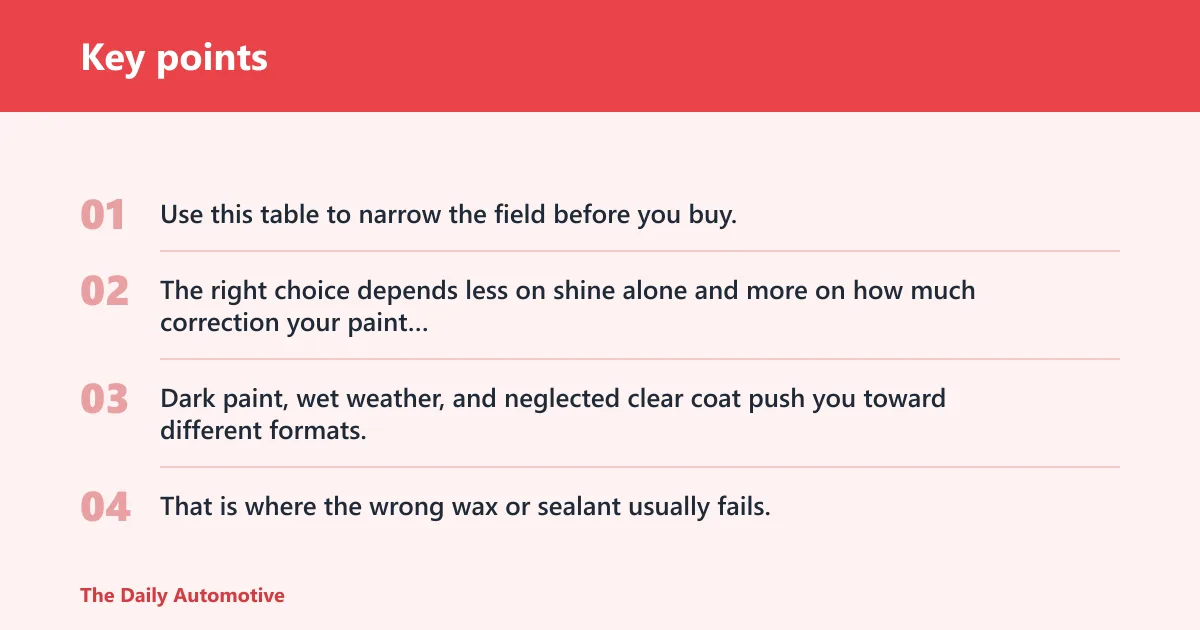
Use this table to narrow the field before you buy. The right choice depends less on shine alone and more on how much correction your paint needs, how often you want to reapply, and where the car is parked.
Dark paint, wet weather, and neglected clear coat push you toward different formats. That is where the wrong wax or sealant usually fails.
How we chose
We compared gloss character, protection, ease of use, prep demands, and value per application. We also separated products by paint condition, because a neglected hood and a garage-kept coupe do not need the same finish.
Durability mattered in practical terms, how often you would likely need to reapply, not vague claims. We also weighed streaking risk, residue cleanup, and whether a product makes sense in sun, shade, wet climates, or layered protection systems.
Quick picks
- Best overall for most drivers: Collinite 845 Insulator Wax. It blends carnauba warmth with polymer support, so it fits drivers who want real protection without moving to a fully synthetic look.
- Best for fastest upkeep: Turtle Wax Hybrid Solutions Ceramic Spray Wax Coating. Spray format keeps maintenance simple, especially after routine washes.
- Best for dark paint: Meguiar’s Gold Class Carnauba Plus Premium Paste Wax. Paste carnauba tends to suit deep, warm reflections on well-kept dark finishes.
- Best for wet climates: Meguiar’s Professional Synthetic Sealant 2.0. Synthetic sealants usually bead water more strongly and fit outside-parking duty better than traditional wax alone.
- Best for faded or swirled paint: 3D Speed All-In-One. It can clean minor defects and leave protection in the same step.
 As an Amazon Associate we earn from qualifying purchases. Prices and availability are accurate as of the date shown and are subject to change.
Meguiar’s Gold Class Carnauba Plus Premium Paste Wax: best for dark paint
Choose this if your paint is already in good shape and you want a warm, reflective finish with a classic wax look. Carnauba-based paste wax is a strong fit for dark colors because it gives depth and softness that many synthetic sealants do not aim for as aggressively.
Based on the product details, this paste format is easy to work with and clear coat safe. The drawback is durability: traditional wax usually needs more frequent reapplication than a sealant, and it is not the right answer for oxidized paint that still needs correction.
If your black or deep blue finish is clean, glossy, and stored in a garage, this is one of the most sensible wax-first choices. It suits owners who value visual richness over the longest possible interval.
Collinite 845 Insulator Wax: best for long-term protection
This is the pick for drivers who want a hybrid approach: carnauba warmth with polymer-backed protection. The manufacturer description says it combines heavy-duty polymers and pure carnauba wax, which makes it a practical middle ground when you want shine and a stronger protection window.
Its stated 4-7 months durability with hydrophobic beading gives it a clear edge for people who do not want to wax every few weeks. The drawback is that it is still not a true ceramic coating, and a hybrid wax can leave some users wanting a more mirror-like synthetic finish on very light colors.
For daily drivers, outdoor parking, and mixed climates, this is one of the strongest value choices in the group. It also makes sense if you want a single product that behaves more like a sealant than a short-interval carnauba wax.
As an Amazon Associate we earn from qualifying purchases. Prices and availability are accurate as of the date shown and are subject to change.
Turtle Wax Hybrid Solutions Ceramic Spray Wax Coating: best for quick maintenance
Pick this when speed matters more than maximum longevity. Spray wax and spray coating formats are the fastest to apply, and this one is positioned as a ceramic spray option with strong water beading action and durable paint protection.
The drawback is the usual spray tradeoff: shorter life than a paste or liquid wax, and less ability to hide minor paint defects. It is best as maintenance protection after washing, not as the only defense for neglected paint.
This is a practical choice for weekly detailers, lease returns, and drivers who want a quick gloss boost on top of existing protection. It is also a useful support product for owners who do not want to spend much time on each wash day.
As an Amazon Associate we earn from qualifying purchases. Prices and availability are accurate as of the date shown and are subject to change.
SONAX Xtreme Ceramic QuickDetailer: best for ceramic maintenance
Use this if the car already has ceramic protection or film and you want a fast gloss refresh with ceramic technology. The product details position it as a quick detailer that adds smoothness and a mirror-like finish, while being safe for film-covered vehicles.
The drawback is durability relative to a true sealant or wax layer. Quick detailers help with upkeep, but they are not the right substitute when you need a full protective base on bare paint.
This fits owners who already maintain their paint carefully and want a faster bonding product than traditional coating methods. It is especially relevant for layered systems where you want to support, not replace, the existing protection.
As an Amazon Associate we earn from qualifying purchases. Prices and availability are accurate as of the date shown and are subject to change.
Meguiar’s Professional Synthetic Sealant 2.0: best for wet climates
This is the strongest pick here for drivers who care more about protection behavior than warm wax glow. As a synthetic sealant, it is aimed at durable, glossy, reflective protection with strong hydrophobic behavior, which is useful when rain, spray, and road grime are constant.
The drawback is visual character: synthetic sealants usually look slick and sharp rather than soft and deep. If you want a concours-style warm finish on dark paint, a carnauba wax or hybrid wax may look better to your eye.
For wet-climate commuters, outdoor parkers, and anyone who wants a cleaner maintenance cycle, this is the safest all-weather answer in the list. It also fits owners who would rather reapply less often than chase a softer wax glow.
What is the difference between wax and sealant?
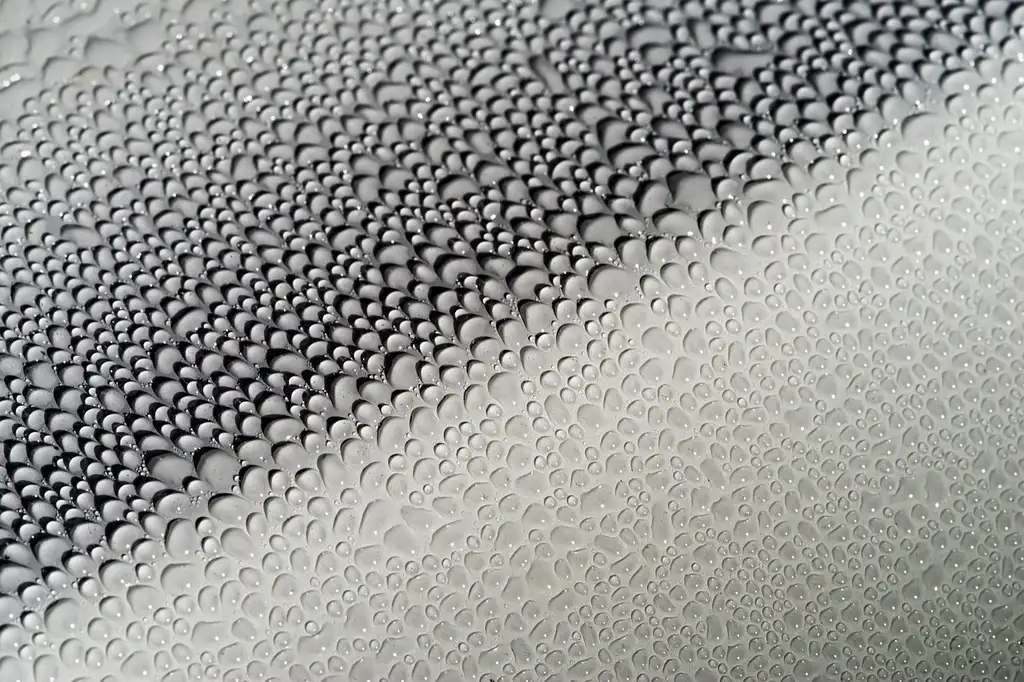
Wax usually gives a warmer, softer gloss and generally needs more frequent reapplication. Sealant uses synthetic polymers, tends to last longer, and often beads water more strongly. If your goal is show-car depth, wax leans that way; if your goal is protection and easier upkeep, sealant usually wins.
Traditional wax: warm gloss and shorter intervals
Car wax is a protective finish that adds gloss, slickness, and water behavior to paint. It comes in paste, liquid, and spray formats, and carnauba wax is the classic choice when you want a deep, warm shine rather than the sharp reflection of a synthetic layer.
Traditional wax usually needs reapplication more often than a sealant. That tradeoff matters if the car lives outside or sees frequent washing.
Synthetic sealant: polymer protection and longer intervals
Car sealant is a synthetic polymer protection product built for stronger water beading and longer service life than traditional wax. It usually leaves a glossy, reflective finish that suits daily drivers and wet weather better than a show-only wax routine.
For owners who want fewer reapplications and cleaner maintenance between washes, a polymer sealant is often the more practical base layer.
Carnauba, spray, and ceramic spray roles
Carnauba wax is the choice for visual depth. Spray wax is the fastest format and works well for touch-ups, but it is usually shorter-lived than paste or liquid wax. Ceramic spray coating sits closer to the protection side, with fast bonding and hydrophobic behavior, and it is faster to apply than traditional coating methods.
Those roles matter because not every glossy product is meant to do the same job. Some are for shine, some for protection, and some are for maintenance over an existing layer.
Which car wax lasts the longest?
Among the common wax choices, hybrid waxes and sealant-heavy blends tend to last the longest. Pure carnauba wax usually gives the warmest look, but it generally needs more frequent reapplication than a synthetic sealant or a carnauba-plus-polymer blend.
In this group, Collinite 845 Insulator Wax is the clearest long-interval choice because the manufacturer description pairs polymers with pure carnauba and gives a 4-7 months durability claim. That makes it more suitable for people who want a wax-like finish without constant upkeep.
Can I use spray wax in direct sun?
Some spray waxes are built for direct-sun use, but many are not. Heat raises the risk of streaking, flashing, and residue that becomes harder to buff off cleanly, so shade or a controlled temperature is still the safer default unless the label specifically allows sun application.
Meguiar’s Quik Wax is described as working on wet or dry paint and in direct sun, which is unusual enough to be worth checking on the label before use. Even then, thin application matters, because heavy product in hot conditions increases wipe-off problems.
What is the difference between carnauba wax and synthetic sealant?
Carnauba wax is mainly about warm visual depth and a soft glow, especially on dark or well-corrected paint. Synthetic sealant is about polymer protection, stronger hydrophobic behavior, and a more reflective finish that usually lasts longer between applications.
If you want the car to look richer under sunlight, carnauba is the more flattering route. If you want easier maintenance and better weather resistance, a synthetic sealant is usually the better tool.
Which wax is easiest to apply and remove?
Spray wax is usually the easiest to apply and remove because it uses less product and needs less working time. Liquid wax is the next easiest for many users, while paste wax often rewards careful application but can take more effort if you overapply or work in warm conditions.
Among the products here, Turtle Wax Hybrid Solutions Ceramic Spray Wax Coating is the simplest maintenance choice. Meguiar’s Ultimate Liquid Wax is also designed to spread and wipe off easily, even in full sun, which helps if you prefer a liquid over a spray.
Do I need to polish before waxing or sealing?
You do not need to polish every time, but polishing helps when the paint is oxidized, hazy, or covered with light swirls that dull the finish. Wax and sealant both work better on a clean, dry surface, and a one-step polish-and-wax can be the smarter choice when the clear coat needs light correction too.
If the paint is already glossy and defect-free, polishing can be skipped. If the surface looks tired, the protection layer alone will not fix the appearance.
All-in-one polish and wax: best for neglected paint
A one-step polish-and-wax product is the right answer when the finish needs light defect cleanup before protection. It can remove minor swirl marks and oxidation while leaving a wax or sealant layer in the same pass, which saves time on tired paint.
Because it has to clean and protect at once, prep matters more here than with a straight wax. The paint still needs to be washed and dried first, and badly damaged clear coat will still need real correction beyond a one-step product.
Light swirl and oxidation cleanup
3D Speed All-In-One combines polishing and waxing in one step, which makes it well suited to light cleanup jobs. It is the kind of product that can improve clarity on a neglected sedan without requiring a separate correction stage.
When one-step correction is enough
Use a one-step product when the paint has light oxidation, minor swirls, and only moderate dullness. If the defects are deep, a cleaner-wax will not replace machine correction or more serious paint work.
Why prep matters more here
One-step products can streak or look uneven if the surface still has grime or water spots. Thin application and a clean panel give the correction agents room to work and prevent the protection layer from smearing.
Wax and sealant decision matrix
| Scenario | Best format | Prep level | Reapplication cadence |
|---|---|---|---|
| Dark daily driver | Carnauba wax or hybrid wax | Wash, dry, work in shade | About every 6-8 weeks for wax; longer for a hybrid sealant blend |
| Neglected paint | All-in-one polish and wax | Wash, dry, light polishing first | After correction, every 6-8 weeks or per label |
| Garage-kept show car | Paste carnauba wax | Careful wash, dry, cool panel | Before major shows or roughly every 4-8 weeks |
| Wet-climate commuter | Synthetic polymer sealant | Thorough wash, full drying, decontamination if needed | About every 3-6 months, sooner if beading drops off |
| Quick-weekly maintainer | Spray wax or ceramic spray coating | Clean, dry surface, light towel work | After washes or every 1-3 weeks |
This matrix is the simplest way to avoid buying the wrong product for the wrong job. A weekly maintainer does not need a concours paste wax, and a rainy commuter does not need a delicate show-car finish that fades too quickly.
Say your black sedan lives outside in a wet climate and starts losing water beading after a few weeks. A synthetic polymer sealant is the better match than a soft carnauba wax, because the sealant fits the weather and the reapplication window better.
Suppose your silver coupe is garage-kept, washed by hand, and used for weekend events. A paste carnauba wax gives you the warmer, deeper look that stands out under direct light, and the shorter maintenance interval is less of a burden.
Which one should you buy?
Buy by the job, not by the hype. If you want the warmest gloss on sound paint, choose a carnauba wax. If you want the best weather protection and the least frequent reapplication, choose a synthetic sealant. If you want the quickest upkeep, choose a spray format.
For budget-minded buyers, Collinite 845 Insulator Wax and Turtle Wax Hybrid Solutions Ceramic Spray Wax Coating make the strongest value case because they cover two different needs: durable protection and fast maintenance. For paint that needs a reset, 3D Speed All-In-One is the smarter first step than a pure wax.
Paint condition should steer the decision more than brand loyalty. Dark paint usually looks better with carnauba warmth, neglected paint needs correction first, and daily drivers in wet climates benefit from sealant behavior over classic wax softness.
Layered systems matter too. If the car already has PPF or a ceramic coating, use a maintenance product that respects the existing layer rather than trying to replace it. SONAX Xtreme Ceramic QuickDetailer fits that role better than a heavy paste wax.
Frequently asked questions
What is the best car wax and sealant for a showroom shine?
For a true showroom-style look, paste carnauba wax is usually the best visual choice on already-corrected paint. If you want more protection with less upkeep, a hybrid wax or sealant is the safer tradeoff. The best answer depends on whether you want warmth or durability.
Should I use car wax or sealant on my car?
Use wax if you want a softer, warmer finish and do not mind reapplying more often. Use sealant if your car sees rain, outdoor parking, or frequent washes and you want longer protection with stronger water beading. Many owners choose sealant first, then top with wax when appearance matters most.
What car wax is best for dark paint?
Dark paint usually looks best with carnauba wax because it adds depth and a warmer reflection. Meguiar’s Gold Class Carnauba Plus Premium Paste Wax is a strong fit for that reason. It flatters black, navy, and deep red finishes better than many sharper synthetic sealants.
What wax or sealant works best in wet climates?
Synthetic polymer sealants are the most practical choice for wet climates because they are built around hydrophobic behavior and longer protection intervals. A hybrid wax-sealant blend is the next best option if you want a little more warmth without giving up water behavior.
How often should I reapply car wax or sealant?
Traditional wax usually needs reapplication more often than sealant. A practical rhythm is every 4-8 weeks for many waxes, every 1-3 weeks for spray products, and around 3-6 months for many sealants, depending on washing, storage, and weather. When beading and slickness drop off, it is time to refresh the layer.
Products related to this article
Sponsored / affiliate links. As an Amazon Associate I earn from qualifying purchases. I may earn additional commission from eligible campaigns.