Best Wheel Cleaners for Shine (2026): We Compared
The best car wheel cleaner depends on finish and grime: use pH-neutral spray for polished, painted, or coated wheels, iron remover for brake dust, and gel for heavy buildup. Pick the wrong formula and you can stain clear coat, dull machined faces, or waste time scrubbing. This guide sorts top wheel cleaners by rim material and soil level, so you can choose fast results with less risk of finish damage.
Quick comparison
| Product | Badge | Best for | Price | ||
|---|---|---|---|---|---|
 |
Adam’s Polishes Wheel & Tire Cleaner Gallon – ProfessionalAdam’s Polishes | Our pick | 1 Gallon · Pro · Spray | $34.99
Price as of 16 Oct 2026
|
View |
 |
Chemical Guys, Diablo Brake Dust & Wheel Cleaner Spray forChemical Guys | Also great | 32 oz · pH-balanced · Spray | $21.55
Price as of 16 Oct 2026
|
View |
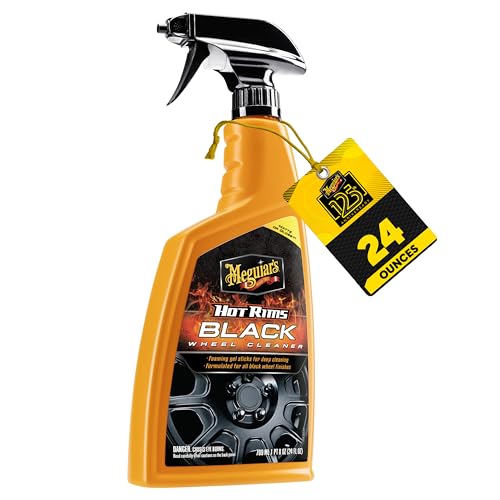 |
Meguiar’s Hot Rims Black Wheel Cleaner, 24 Oz | DeepMeguiar’s | Budget pick | 24 oz · Black · Gel | $13.49
Price as of 16 Oct 2026
|
View |
This comparison groups the options by finish safety, soil level, and the fastest cleaning path. Use it to match the cleaner to your wheels before you reach for a brush.
For glossy daily-driver wheels with mixed grime, start with the gentler spray format. For baked-on brake dust, a heavier gel or stronger cleaner gives a higher-gloss result with fewer repeat passes.
How we chose
We compared finish safety, brake-dust power, value per ounce, and the usefulness of any included tools or bundle items. We also looked at whether a product fits common wheel materials, including gloss finishes, painted wheels, chrome wheels, and alloy wheels.
Two other filters mattered. First, whether the cleaner could handle embedded dust and road film without forcing harsh scrubbing. Second, whether the format made sense for routine maintenance, deep cleaning, or a full wheel-and-tire reset.
All-purpose spray cleaner: best for mixed grime
Adam’s Polishes Wheel & Tire Cleaner is the best fit for drivers who want one product for routine wheel cleaning and tire cleanup. Based on the published specs, it is a 16 fl oz wheel cleaner described as safe for gloss finishes and positioned for use on cars, trucks, SUVs, motorcycles, and RVs.
It stands out when you want a straightforward spray bottle cleaner that removes dirt and grime effectively while staying friendly to gloss surfaces. That makes it a practical pick for painted wheels, many alloy wheels, and coated finishes where you want visible gloss without changing the look of the wheel face.
The drawback is that it is not the most aggressive answer for neglected brake dust or thick, baked-on buildup. For those wheels, expect multiple passes and a brush rather than a single spray-and-rinse cycle.
What it cleans well
This type of cleaner is a good match for light road grime, fresh brake dust, and regular maintenance washes. It works best when the wheel still has clear surface contamination rather than crusted deposits.
It is also a sensible choice for owners who want one bottle to cover a garage full of vehicles. Cars, trucks, SUVs, motorcycles, and RVs can all benefit from the same basic wash workflow when the finish is gloss and the grime is moderate.
What finishes it suits
Use this class of cleaner on gloss finishes first. It is the safer starting point for clear-coated wheels, many painted wheels, and similar finishes where a strong acid-free spray can clean without changing the surface tone.
For chrome wheels and bare alloy, the key is to verify the label and avoid long dwell times if the surface is already damaged. If the wheel face is etched, pitted, or heat-stained, even a safe-on-finish claim does not mean the wheel will look new again.
Where it falls short
All-purpose formulas are not the fastest route when brake dust has baked into the wheel face or barrel. They can remove the contamination, but the job often takes agitation, a rinse, and a second application on the worst spots.
Say your commuter sedan has front wheels darkened by a week of highway driving and wet weather. A gentle spray may clean the face, but the barrel and spoke corners usually need a detail brush and a second pass before the gloss comes back evenly.
Heavy-duty wheel cleaner: best for baked-on brake dust
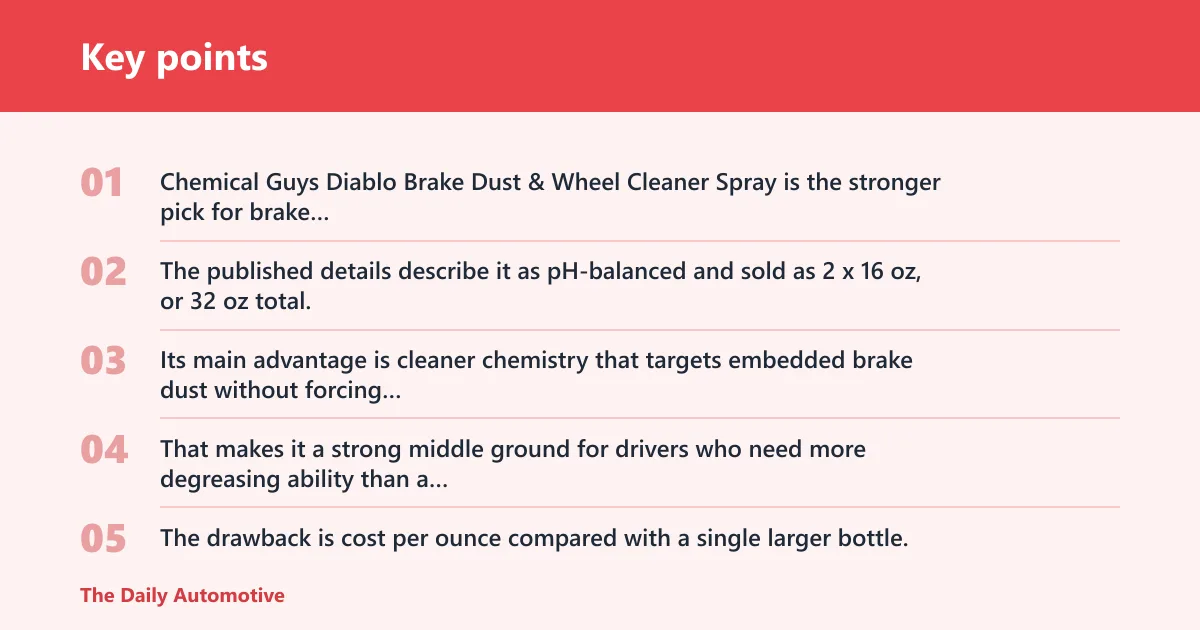
Chemical Guys Diablo Brake Dust & Wheel Cleaner Spray is the stronger pick for brake dust and grime on chrome and aluminum wheels when you want a sprayable formula with more cleaning bite. The published details describe it as pH-balanced and sold as 2 x 16 oz, or 32 oz total.
Its main advantage is cleaner chemistry that targets embedded brake dust without forcing you to reach for an acid formula. That makes it a strong middle ground for drivers who need more degreasing ability than a basic wash soap but still want a finish-safer approach on chrome and aluminum.
The drawback is cost per ounce compared with a single larger bottle. At $21.55 for 32 oz, it is pricier than some larger-format options on a per-ounce basis, and the worst neglected wheels may still need several rounds of agitation.
When to use a stronger formula
Choose a heavy-duty cleaner when the wheel has embedded brake dust, oily road film, or brown residue that does not rinse away after a quick wash. This is the better path when the contamination is visible in the spoke corners and around lug areas.
Strong formulas help most on chrome wheels, aluminum wheels, and many alloy wheels when the surface is dirty but still intact. If the grime is only light, a gentler all-purpose spray is usually faster because it needs less rinsing and less careful dwell-time control.
Why multiple passes may be needed
Heavily soiled wheels often need two applications because the first pass loosens the outer layer while the second reaches the residue underneath. That is especially true when brake dust has been left on the wheel through several wet and dry cycles.
The right workflow is simple: spray, let it dwell briefly, agitate with a brush, then rinse. If the rinse water still carries brown residue, repeat the cycle instead of scrubbing harder.
Finish risks to watch
Even non-acid options can still damage a compromised finish if they are left to dry on hot metal or a wheel that already has coating failure. Chrome that is pitted, painted wheels with chips, and clear-coated faces with etched spots deserve shorter dwell time and faster rinsing.
A common rule of thumb is to test one small section first and keep the wheel wet while the cleaner works. If the label says safe on certain finishes, that does not mean safe on every finish or every level of damage.
Wheel-and-tire kit: best value for a full reset
Meguiar’s Hot Rims Black Wheel Cleaner is the value play for drivers cleaning black wheels that need more clinging power. Based on the published details, it is a 24 oz deep foaming gel formulated for black matte, gloss, satin, and chrome black wheels, and it is meant to remove brake dust and grime safely and powerfully.
Its strength is dwell time. A gel that clings to the face can work longer than a thin spray, which helps on black wheels where dust and road film are easy to miss until the finish loses contrast. At $13.49 for 24 oz, it also lands as the cheapest listed option by bottle price.
The drawback is narrower use. It is tuned for black wheel finishes, so it is less of a universal buy than a broader spray cleaner if your household has mixed wheel colors and materials.
Cleaner plus tire shine
Wheel-and-tire kits make sense when you want the wheel face and sidewall to match after one session. Armor All’s 3 Count kit includes a heavy-duty wheel cleaner, an extreme tire shine spray, and a wash brush, which gives you the full reset pieces in one bundle.
That matters if the goal is not only clean rims but also a darker, wetter look on the tire itself. A kit can be better value than separate purchases when you need all three items anyway and do not already own a good brush.
Included brush and convenience
The included wash brush saves a stop and helps on tires and wheel barrels where hand pressure alone is not enough. It also lowers friction in the buying process because you do not need to match a cleaner to a separate tool right away.
Bundle value is strongest for drivers who clean multiple vehicles or want a complete weekend detail setup. It is weaker if you already have a wheel cleaner and only need a refill, because the tire shine may go unused.
When the bundle beats a standalone bottle
Buy the kit when your wheels and tires both need attention and you want a cleaner, tire shine, and brush in one purchase. A standalone bottle makes more sense if you already have detailing tools or if your tires are in good shape and only the wheels need work.
Picture a crossover with dull sidewalls, dusty spokes, and a trunk full of road salt from winter driving. A kit solves more of the job in one run, while a single bottle only handles the wheel face and leaves the tire finish for later.
Which wheel cleaner is best for your rims?
The best choice depends on finish, soil level, and how much time you want to spend with a brush. Start with the gentlest cleaner that matches the contamination, then move up only if brake dust remains after the first rinse.
Gloss and painted wheels
For gloss finishes and most painted wheels, a safe-on-finish spray is the smart starting point. It usually removes fresh dirt, road grime, and light brake dust with less risk of dulling clear coat or leaving streaks on the face.
Use a detail brush around lug holes and spoke edges, then rinse with a bucket wash or hose rinse before drying with a microfiber towel. If you want a product that also fits multiple vehicle types, the broader spray cleaner is the most flexible answer.
Chrome and alloy wheels
Chrome wheels and alloy wheels can often take a stronger pH-balanced spray if the surface is intact. The goal is to remove contamination without attacking plating, staining a polished face, or forcing aggressive scrubbing that can mark the finish.
For chrome, shorter dwell time is safer than letting cleaner dry on the surface. For alloy, look at the wheel closely first; if the face is already pitted or stained, cleaner can improve the look but not fully restore it.
Heavily soiled or neglected wheels
Choose a heavy-duty cleaner or a gel when brake dust is baked on, the barrel is dark, or the wheel has not been cleaned in weeks. These formulas are better at lifting tough buildup, but they may still need multiple applications and a brush.
A neglected wheel often needs a wash brush for large surfaces, a detail brush for tight corners, and a drying cloth after rinsing. If the grime feels gritty, do not press hard; let the cleaner work and repeat the process instead.
Budget vs convenience
If you care most about value per ounce, a larger standalone bottle usually beats a kit. If you care about convenience and want the wheel, tire, and tools covered in one purchase, the bundle can be the better buy even when the sticker price is higher.
Spending less per ounce does not help if the formula is wrong for the wheel finish. Spending more on a bundle does not help if you already own a strong brush and tire dressing.
Can wheel cleaner damage your wheels?
Yes, the wrong wheel cleaner can damage finish, especially on acid-based formulas, hot wheels, or surfaces that are already chipped, etched, or pitted. Safer products still need proper dwell time, a rinse, and the right brush, because finish condition matters as much as chemistry.
When to skip acid-based formulas
Skip acid-based cleaners on clear-coated wheels, chrome wheels, painted wheels, and any surface with visible coating failure unless the label explicitly allows that finish. Acid can clean quickly, but it also raises the risk of staining, dulling, or uneven appearance on sensitive surfaces.
Non-acid formulas are the better default for readers who want less finish risk. They are slower on the worst brake dust, yet they give you more control during the scrub-and-rinse stage.
Signs a wheel needs gentler cleaning
If the wheel already looks cloudy, has chalky patches, or shows lifting clear coat, use the gentlest cleaner you can find and keep the dwell short. Those signs usually mean the finish is vulnerable, not merely dirty.
Gentler cleaning also makes sense for matte surfaces, even though this guide focuses on gloss, painted, chrome, and alloy wheels. Matte finishes can spot or change appearance if a cleaner leaves residue.
What to do with etched or pitted rims
Etched or pitted wheels need realistic expectations. Cleaner can remove dirt and brake dust, but it will not reverse metal loss, corrosion pits, or permanent staining.
For those wheels, start with a mild formula, rinse quickly, and inspect after each pass. If the finish is already failing, cleaning should stop before it turns into abrasion from repeated scrubbing.
How to clean brake dust off rims without scratching them
Use a spray cleaner, let it dwell briefly, agitate with a soft brush, and rinse before the product dries. The safest workflow is low pressure, short contact time, and repeated passes instead of hard scrubbing on a dry surface.
Rinse the wheel first if there is loose grit. Then spray the cleaner, work the face with a wash brush, switch to a detail brush for lug areas and spoke pockets, and dry with a microfiber towel or drying cloth after the final rinse.
Step-by-step workflow
- Rinse the wheel to remove loose grit and sand.
- Spray the cleaner across the face, barrel, and lug area.
- Let it dwell briefly, but do not let it dry.
- Agitate with a wash brush on broad panels and a detail brush in tight spots.
- Rinse thoroughly and repeat on dark residue if needed.
- Dry with a microfiber towel or drying cloth to reduce water spotting.
Tooling that matters
A good wheel wash needs more than cleaner. A wash brush handles large faces, a detail brush reaches lug nuts and spoke corners, a microfiber towel removes rinse water, and a bucket rinse keeps the tool free of grit.
Those tools matter most on black wheels and chrome faces where leftover dirt stands out. They also help keep the cleaner working on contamination instead of grinding loosened dust back into the surface.
How often should you clean your car wheels for the best shine?
Clean wheels often enough that brake dust never hardens into the finish. For many drivers, that means a maintenance wash every one to two weeks, with quicker touch-ups after wet weather, long highway runs, or heavy brake use.
The goal is not a full deep clean every time. It is to stop contamination before it bonds, because fresh dust comes off with less cleaner, less brush pressure, and fewer repeat passes.
Say your SUV spends the week on salted winter roads. A quick rinse and spray clean before the grime dries can keep the wheels looking glossy, while waiting a month usually means more dwell time and more brush work later.
What is the best car wheel cleaner for shiny rims?
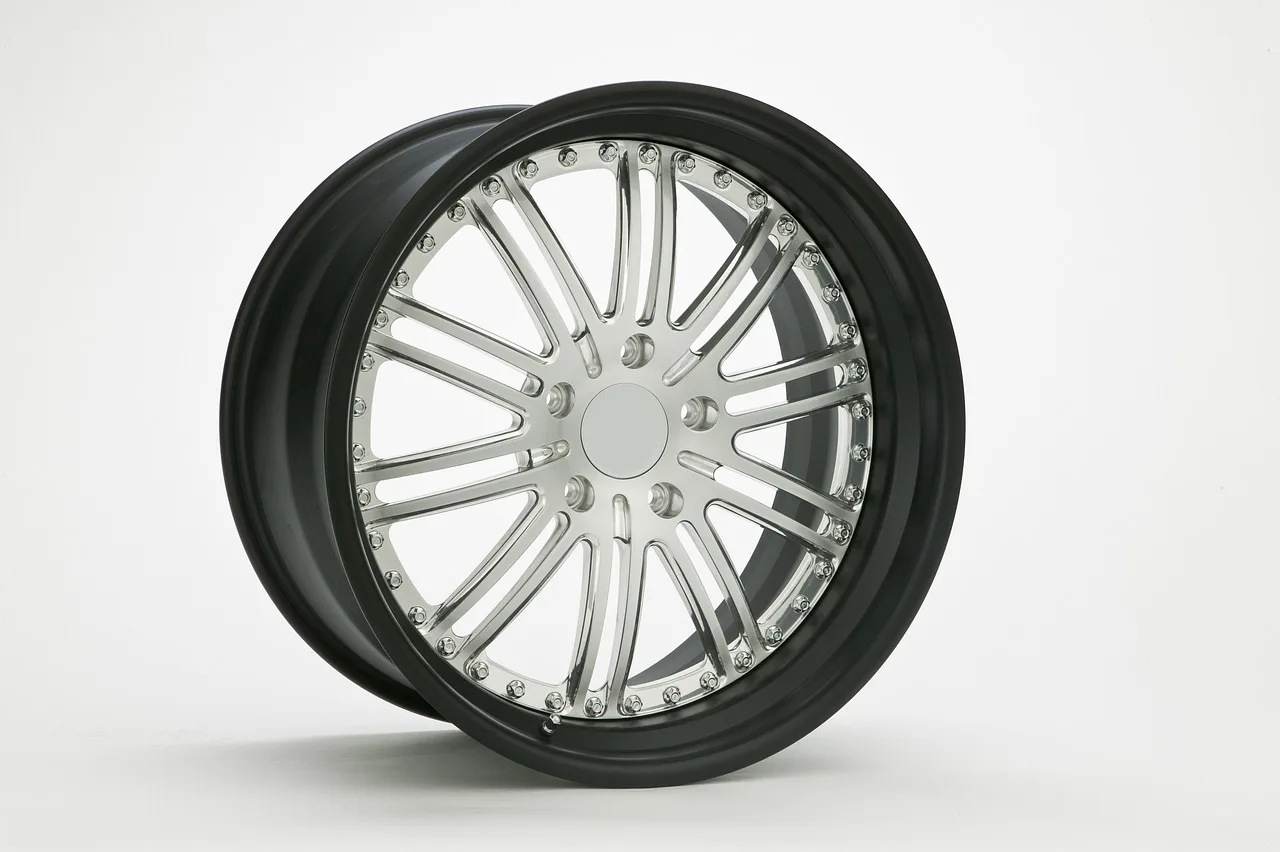
The best car wheel cleaner for shiny rims is a finish-safe spray that removes dirt and brake dust without clouding the surface. For gloss wheels, that usually means a pH-balanced or non-acid formula; for heavier buildup, a stronger cleaner or gel gets better results with less scrubbing.
Match the cleaner to the rim condition first, then chase shine with proper rinsing and drying. That is how you get a visible gloss and a cleaner wheel face without risking damage.
Frequently asked questions
Are wheel cleaners safe on all wheel finishes?
No single wheel cleaner is safe on every finish. Products can be safe on gloss finishes, most rim finishes, chrome, or painted wheels, but you still need to check the label and avoid long dwell times on hot or damaged surfaces. If the finish is etched or pitted, use the gentlest option.
Do I need a separate cleaner for tires and wheels?
Not always. A wheel-and-tire kit can be better value when you want cleaner, tire shine, and a brush in one purchase. If you already have tire dressing or only care about the wheel face, a standalone wheel cleaner is the smarter buy.
What’s the difference between heavy-duty and all-purpose wheel cleaner?
All-purpose cleaners are better for routine dirt, fresh road grime, and light brake dust. Heavy-duty formulas are aimed at embedded dust and tougher buildup, so they are more likely to need a brush and multiple passes, but they usually clean neglected wheels faster.
How do I clean brake dust off rims without scratching them?
Rinse first, spray the cleaner, let it dwell briefly, and agitate with a soft brush rather than a stiff one. Keep the wheel wet, rinse before the product dries, and dry with a microfiber towel. That sequence removes dust while limiting the chance of scratching grit into the surface.
Can wheel cleaner damage gloss, painted, or chrome wheels?
Yes, if the formula is too aggressive, left on too long, or used on a compromised finish. Gloss, painted, and chrome wheels usually do best with non-acid or pH-balanced cleaners, short dwell time, and quick rinsing. Damaged or failing clear coat needs the most caution.
Which wheel cleaner works best on heavily soiled wheels?
A heavy-duty cleaner or a clingy gel is usually the best answer for heavily soiled wheels. Those formulas stay on the surface longer and give brake dust more time to break down, but they still may need multiple applications and brush agitation to fully clear the residue.
Products related to this article
Sponsored / affiliate links. As an Amazon Associate I earn from qualifying purchases. I may earn additional commission from eligible campaigns.
 Shine Armor Car Detailing Bundle - Fortify Quick Coat Ceramic Waterless Wash & Interior Cleaner - Complete Automotive Care Kit for Mirror Shine Paint Protection & Deep Interior Cleaning - 2 Pack
 Automotive Windshield Oil Film Cleaner Brush, 2PCS 150ml Car Glass Cleaner with Refill Fluid & Microfiber Cloth, Repellent Windshield Cleaning Tool for Auto Windows, Mirrors & Home Glass