Adam’s Wheel & Tire Cleaner Review: Is It Worth the Price?
Adam’s Wheel & Tire Cleaner is a smart buy for routine wheel and tire cleaning on clear-coated, painted, powder-coated, and factory-finish wheels. On heavy, baked-on brake dust, plan on a second pass and some agitation. Using the wrong cleaner can stain sensitive finishes, leave dust in barrels and spokes, and waste time on tires that still look brown after washing. This guide breaks down finish safety, brake-dust performance, tire-sidewall cleaning, and when it fits a weekly or monthly maintenance routine.
Verdict

From the spec sheet and review claims, this fits when you want one spray for wheels and tires, a ready-to-use formula, and a cleaner described as pH-neutral. It makes less sense on neglected wheel sets, with heavy brake dust, or if you need a product aimed at one finish only.
Pros and cons
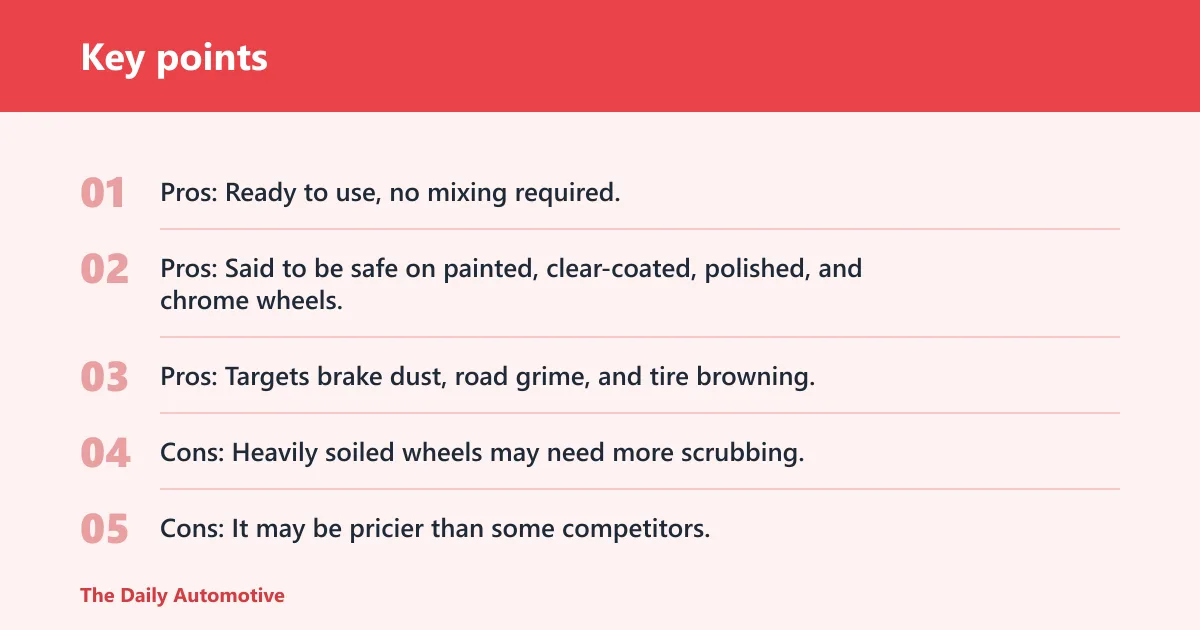
- Pros: Ready to use, no mixing required.
- Pros: Said to be safe on painted, clear-coated, polished, and chrome wheels.
- Pros: Targets brake dust, road grime, and tire browning.
- Cons: Heavily soiled wheels may need more scrubbing.
- Cons: It may be pricier than some competitors.
Bottom line on who should buy it
Buy it if you clean wheels on a regular schedule and want one bottle that can handle both rims and sidewalls. Skip it if you face baked-on dust, neglected barrels, or hot brakes after spirited driving; those cases usually reward a stronger cleaner, tighter dwell control, or a separate wheel-only product.
📊 The reviewer recommends a 2-3 minute dwell time. Source: Adam’s Wheel and Tire Cleaner Review: Does It *Really* Work? (2026).
Specs at a glance
| Spec | What Adam’s Wheel & Tire Cleaner is described as doing |
|---|---|
| Formula type | Ready to use with no mixing required |
| pH claim | Described as pH-neutral |
| Wheel compatibility | Safe on painted, clear-coated, polished, and chrome wheels |
| Intended targets | Brake dust, road grime, tire browning, and sidewall dirt |
| Visual reaction | May turn purple when reacting with brake dust |
| Recommended dwell | 2-3 minutes before rinsing |
| Suggested agitation tools | Soft-bristled brush, sponge, and tire brush for sidewalls |
| Scent | Citrus scent |
Who is Adam’s Wheel & Tire Cleaner for?
It is for drivers who clean wheels on a schedule and want a single spray for regular brake dust, road film, and tire sidewalls. It is also a strong fit for anyone who prefers a ready-to-use bottle and does not want to mix a separate wash for each job.
It is less suitable for people facing neglected, baked-on contamination or for owners of performance-brake vehicles that leave heavy dust after short drives. In those cases, a stronger cleaner or a tighter routine usually makes more sense.
Who should skip it
- Owners of wheels with severe, months-old buildup.
- Drivers who often clean immediately after a drive, while wheels are still hot.
- People looking for a low-cost, bulk wheel-only cleaner for high-volume use.
What works
It does well on routine brake dust and road grime, especially when the contamination is caught early. The review claims it can remove brake dust and road grime, and the visible purple reaction is a useful cue that the cleaner is working on ferrous contamination.
It also covers a wide range of finishes. The product is said to be safe on painted, clear-coated, polished, and chrome wheels, which matters if your car has factory alloys up front and brighter trim or chrome elsewhere.
Brake dust and the purple reaction
Brake dust is stubborn because it is not just loose dirt. It often includes hot metallic particles that cling to spokes, barrel edges, and lug recesses, so a cleaner that chemically loosens contamination can save time before scrubbing begins. The purple color reaction is the part most readers notice first.
That color shift should be read as a signal, not as proof that everything is clean. If the dust is light, the reaction may be enough to loosen most of it. If the dust is heavy, the cleaner may need help from a brush and a second pass.
Tire browning and sidewall cleanup
The product is also described as helping with tire browning. That matters because brown sidewalls usually mean oxidized rubber residue, road film, and old dressing buildup, not just loose dirt. A cleaner can lift a layer of that grime, but a severely aged sidewall may still need agitation and a protectant afterward.
Say your sedan has weekly brake dust and lightly gray sidewalls after a seven-day commute. This is the kind of maintenance case where one bottle can work well, provided you give it a short dwell and a quick brush on the worst spots.
What does not work as well?
It is less convincing on baked-on brake dust, hot wheels, and neglected wheels that have gone too long between washes. The cleaner may still help, but the job becomes a mechanical one as much as a chemical one. Expect more scrubbing and, sometimes, a second application.

It is also not a cure-all for tire sidewalls. If the rubber is deeply brown, old dressing has layered up, or the tire has embedded oxidation, wheel cleaner alone may only lighten the surface instead of restoring a uniform black finish.
Failure cases to plan for
- Hot wheels: Let the wheel cool first. Chemical cleaners can dry too fast on warm metal and lose contact time.
- Baked-on dust: Use a soft-bristled brush or sponge and plan on a second pass.
- Neglected tires: Add a tire brush and a follow-up dressing or protectant.
How long should Adam’s Wheel & Tire Cleaner dwell before rinsing?
The review benchmark is 2-3 minutes, which is long enough for a wheel cleaner to loosen grime without drying on the surface. That dwell window matters most on brake dust, inside barrels, and sidewalls where residue is clinging rather than sitting loosely on top.
Short dwell times can still work on fresh dirt. Longer dwell times are better only if the surface stays wet and the wheel is cool. Once the cleaner starts drying, the benefit drops and the risk of streaking or spotty cleaning goes up.
Practical dwell guidance
- Use the low end of the range for light dust and recent wash intervals.
- Stay closer to the full 2-3 minutes for daily-driver dust or tire browning.
- Reapply rather than letting product dry on the wheel.
Do I need to scrub after spraying Adam’s Wheel & Tire Cleaner?
Not always, but you should expect to scrub when buildup is visible or the wheel has gone too long without cleaning. The cleaner is meant to reduce work, not eliminate it on every job. On light dust, a rinse may be enough; on heavier soil, agitation makes the difference.
A soft-bristled brush or sponge is the safest starting point for wheel faces, barrels you can reach, and tight lug areas. For sidewalls, a tire brush gives better contact than a general sponge and helps lift browning that sits in the texture of the rubber.
Best agitation tools by area
- Wheel faces: Soft-bristled brush or sponge.
- Barrels and spoke backs: Soft-bristled brush with controlled pressure.
- Tire sidewalls: Tire brush.
Can Adam’s Wheel & Tire Cleaner clean tire sidewalls too?
Yes, it is described as helping with tire browning and can be used on sidewalls, but it is not the same as a dedicated tire-restoration product. For regular maintenance, it can pull off road film and surface discoloration. For years of oxidized brown residue, it usually needs brushing and a follow-up dressing.
That follow-up matters because a clean sidewall and a protected sidewall are not the same thing. If the tire is left bare after cleaning, it can re-brown sooner. A tire shine or protectant helps the surface look finished and may slow the return of road film.
Why is my tire still brown after using wheel cleaner?
Because browning is often more than loose dirt. It can be oxidation, old dressing buildup, embedded road grime, or residue that sits in the rubber texture. Wheel cleaner can remove some of that, but severe browning usually needs dedicated agitation and, in some cases, repeated cleaning.
A common first-timer mistake is spraying the sidewall, waiting briefly, and rinsing before using a brush. That often leaves the tire looking gray-brown instead of black. A tire brush plus a second pass is the more realistic fix for a neglected sidewall.
Wheel finish decision matrix
Use the table below to match wheel finish, dust severity, and wash interval with the safest cleaner choice. This is the practical part most product pages skip. Light-maintenance routines and neglected wheels do not deserve the same treatment.
| Wheel finish | Dust severity | Wash interval | Safest cleaner choice | Agitation tool | Expected dwell time | Likely rewash frequency |
|---|---|---|---|---|---|---|
| Painted or clear-coated | Light | Weekly | Adam’s Wheel & Tire Cleaner | Sponge or soft-bristled brush | 2 minutes | Usually one wash cycle |
| Painted or clear-coated | Heavy | Biweekly or longer | Adam’s Wheel & Tire Cleaner, with second pass if needed | Soft-bristled brush | 2-3 minutes | Often 1-2 passes |
| Polished | Light to moderate | Weekly | Adam’s Wheel & Tire Cleaner | Soft-bristled brush only | 2 minutes | Usually one wash cycle |
| Chrome | Light to moderate | Weekly or monthly | Adam’s Wheel & Tire Cleaner | Sponge for face, brush for crevices | 2-3 minutes | Usually one wash cycle |
| Painted or clear-coated | Heavy, baked-on | Monthly or longer | Stronger wheel cleaner may be a better fit | Soft-bristled brush plus repeat cleaning | 2-3 minutes | Often 2 passes or more |
How does it compare with other wheel cleaners?
Compared with stronger wheel cleaners, Adam’s is the better fit when you want a one-bottle maintenance product rather than a more aggressive specialty formula. Compared with gentler options, it gives more help on brake dust and tire browning, but that usually brings a higher price and a greater need for agitation on dirty wheels.
The tradeoff is straightforward. If your wheels are cleaned regularly, this cleaner can do the job without much fuss. If your wheels are neglected or your brakes are especially dusty, you give up some cleaning force in exchange for broader finish safety and one-product convenience.
When a stronger cleaner makes more sense
- Brake dust has been baked on for weeks.
- The wheels stay dark even after a normal wash.
- You need a product aimed at deep contamination rather than maintenance.
When a gentler cleaner is the better fit
- You wash often and only need to remove fresh road film.
- Your wheels are delicate and rarely see heavy dust.
- You prefer minimal agitation and lighter cleaning chemistry.
Alternatives

Chemical Guys Diablo Wheel Cleaner is the broader alternative if you want a sprayable foaming wheel cleaner that is also pitched as beginner-friendly. Based on the spec sheet and reviews, it makes sense for owners who prefer foam coverage and all-rim-finish flexibility, but the drawback is the same one shared by many all-purpose cleaners: heavy brake dust can still demand brush work.
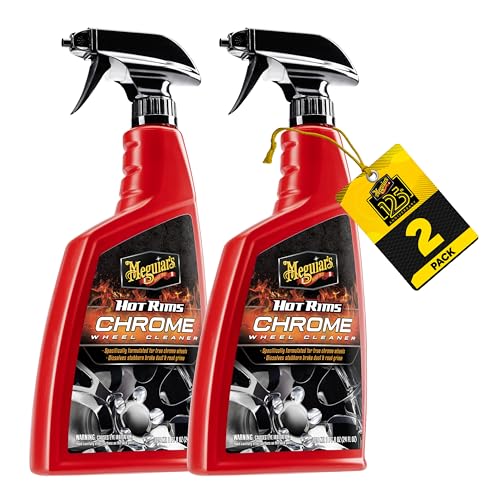
Meguiar’s Hot Rims Chrome Wheel Cleaner is the more focused choice if true chrome is the main concern. Its clinging action is a plus when you want extended contact on bright metal, but it is a narrower tool than Adam’s and is not the best single-bottle answer for painted wheels, tire browning, and mixed-finish garages.
Is Adam’s Wheel & Tire Cleaner worth the higher price?
It can be, if you value one product for wheels and tires and you wash on a steady schedule. The price makes more sense when the bottle prevents you from buying separate wheel and tire products, especially for light to moderate dust. For heavily soiled vehicles, the value drops because you may still need extra passes.
A basic cost-per-wash estimate depends on how much you use per wheel set and how often you clean. If one bottle covers repeated maintenance washes, the higher upfront cost can still be reasonable. If your car needs repeated scrubbing every time, the price advantage fades quickly.
Value judgment by use case
- Best value: Weekly or monthly maintenance on mixed wheel finishes.
- Fair value: Daily drivers with moderate brake dust.
- Poor value: Neglected wheels that need repeated deep cleaning.
Should you buy it
Buy Adam’s Wheel & Tire Cleaner if your wheels are maintained regularly, your dust is moderate, and you want a ready-to-use product that also helps with tire sidewalls. The pH-neutral claim, finish compatibility, and purple brake-dust reaction all point toward a maintenance-first cleaner rather than a heavy-restoration formula.
If your car lives with severe brake dust or long wash intervals, start elsewhere or plan on using this as a first step before a stronger second cleaner. For routine upkeep, though, it is a practical buy and a sensible one-bottle choice.
Frequently asked questions
Does Adam’s Wheel and Tire Cleaner actually remove brake dust?
Yes, the review says it removes brake dust, and the purple reaction is the visible sign readers are told to watch for. That said, removal is strongest on fresh or moderate dust. Baked-on contamination usually needs a brush and sometimes a second application.
Is Adam’s Wheel and Tire Cleaner safe on chrome and clear-coated wheels?
The cleaner is described as safe on chrome, clear-coated, painted, and polished wheels. That makes it a flexible maintenance product for mixed wheel sets. Still, chrome and polished finishes deserve a gentle touch, cool surfaces, and brief dwell so the product does not dry in place.
Products related to this article
Sponsored / affiliate links. As an Amazon Associate I earn from qualifying purchases. I may earn additional commission from eligible campaigns.