Best Cleaning Products for Car Interior 2026: We Compared
The best cleaning products for car interiors are surface-specific: use a pH-balanced all-purpose interior cleaner for dashboards and vinyl, an upholstery shampoo or enzyme spray for fabric stains, and a dedicated leather cleaner-conditioner for leather seats. One wrong cleaner can streak plastics, swell leather, set stains, or leave residue that grabs more dust. This guide compares top picks by stain type and surface, so you can match each product to the exact job.
Quick comparison
| Product | Badge | Best for | Price | ||
|---|---|---|---|---|---|
 |
Chemical Guys, Total Interior Cleaner & Protectant, LeatherChemical Guys | Our pick | 16 oz · Interior cleaner · Leather & vinyl | $11.97
Price as of 28 Oct 2026
|
View |
 |
Armor All Multi-Purpose Car Cleaner Spray, New Car Scent,Armor All | Budget pick | 16 fl oz · Interior spray · New car scent | $6.59
Price as of 28 Oct 2026
|
View |
 |
Meguiar’s Quik Interior Detailer Cleaner, 24 Oz | Cleans &Meguiar’s | Also great | 24 oz · Interior detailer · Plastics & leather | $9.74
Price as of 28 Oct 2026
|
View |
 |
CAR GUYS Super Cleaner | Interior Car Cleaner for ToughCAR GUYS | Upgrade pick | 18 oz · Interior cleaner · With microfiber towel | $19.99
Price as of 28 Oct 2026
|
View |
 |
P & S PROFESSIONAL DETAIL PRODUCTS Xpress Interior CleanerP & S PROFESSIONAL DETAIL PRODUCTS | Pair with it | 1 gallon · Interior cleaner · No dilution needed | $31.99
Price as of 28 Oct 2026
|
View |
Begin with the surface, then match the mess. A spray that handles dash dust may fail on seat stains, and a leather-safe formula is not the right answer for carpet grime.
How we chose
These picks are based on manufacturer specs, listing details, and published buyer feedback. The focus is surface safety, residue level, scent strength, and whether the product fits daily maintenance or heavier cleaning.
Each item below is chosen for a distinct job, not as a vague all-purpose answer. That matters because a cleaner that works well on vinyl can streak glass, while a stain remover meant for fabric can be too aggressive for leather trim.
Quick picks
| Pick | Best for | Key detail | Price |
|---|---|---|---|
| Chemical Guys Total Interior Cleaner & Protectant | Mixed-surface wipe-downs | All-in-one cleaner for many interior surfaces; natural finish | $11.97 |
| Armor All Multi-Purpose Car Cleaner Spray | Budget daily cleaning | Cleans dashboards, vinyl, plastics, carpet, and fabric; new car scent | $6.59 |
| Meguiar’s Quik Interior Detailer Cleaner | Fast dusting and UV-minded maintenance | Works on plastics, leather, rubber, and trim; sun-blocking agents | $9.74 |
| CAR GUYS Super Cleaner | Stains and embedded dirt | No-rinse formula; includes a microfiber towel | $19.99 |
| P & S PROFESSIONAL DETAIL PRODUCTS Xpress Interior Cleaner | Large-bottle value and frequent use | Ready-to-use; no dilution needed; fresh scent | $31.99 |
Chemical Guys Total Interior Cleaner & Protectant: best for mixed surfaces
This is the right starting point if you want one bottle for regular wipe-downs on dashboards, door panels, trim, vinyl, leather, rubber, and some glass. Its appeal is simple: spray, wipe, and leave a factory-style finish instead of a shiny film.
It fits drivers who want one cleaner for most cabin plastics and touch points. Based on the listing, it is easy to apply and built for a non-greasy result, which lowers the risk of residue that can make interior dust stick faster.
The honest drawback is reach and specialization. A multi-surface cleaner is convenient, but it is not the best choice for set stains in carpet or fabric, and glass can still streak if the panel is already dirty or if the towel is loaded with product.
What stands out
This type of cleaner is best for light to moderate daily soil, fingerprints, and wipe-off dust. It is also the most practical option when you want fewer products in the glove box or detailing bag.
What to watch
Use a light pass first. If the surface is heavily soiled, you may need a second wipe with a clean microfiber cloth rather than more spray. That keeps the finish cleaner and helps avoid smearing.
Surface notes
It is the better choice for plastic, vinyl, leather, and rubber than for cloth seats or floor mats. If you need a deep fabric clean, move to a carpet and upholstery product instead.
Armor All Multi-Purpose Car Cleaner Spray: best for budget daily cleaning
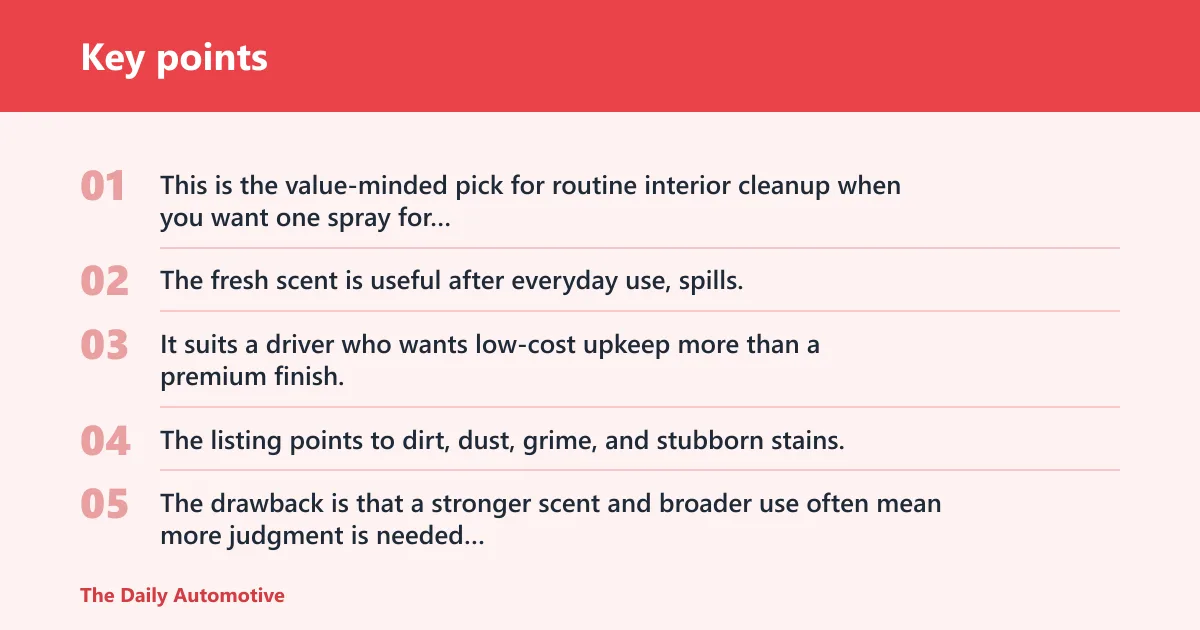
This is the value-minded pick for routine interior cleanup when you want one spray for dashboards, vinyl, clear plastics, carpet, and fabric. The fresh scent is useful after everyday use, spills, or a food mess that leaves a smell behind.
It suits a driver who wants low-cost upkeep more than a premium finish. The listing points to dirt, dust, grime, and stubborn stains, so it is the most economical option here for general cabin maintenance.
The drawback is that a stronger scent and broader use often mean more judgment is needed on delicate surfaces. On glass or high-gloss trim, a multi-purpose formula can leave haze if you do not finish with a dry microfiber cloth.
Surface notes: it can handle fabric
It can handle fabric, but it is not a substitute for a true upholstery cleaner on deeply set stains. It is also less precise than a leather-specific product for seats that need gentle conditioning.
Meguiar’s Quik Interior Detailer Cleaner: best for fast wipe-downs
This is the best fit when you want a quick spray-and-wipe cleaner for plastics, leather, rubber, and trim with some UV-minded protection built in. It is aimed at routine maintenance, not heavy stain removal.
It works well for drivers who want a cleaner that leaves a more natural look and does not feel slick. That makes it a strong choice for dashboards and touch surfaces where a greasy finish is a problem.
The drawback is its limited deep-cleaning ability. It is not the tool for embedded upholstery soil, and it may need several passes on scuffed or dusty trim before the surface looks even.
Surface notes: because it is built
Because it is built for multiple interior materials, it is a practical choice for mixed cabins. Use a separate glass cleaner if your windows or mirrors need a streak-free finish.
CAR GUYS Super Cleaner: best for stains and embedded grime
This is the strongest fit here for tough stains, oily marks, and embedded grime on carpet, upholstery, fabric, leather, vinyl, and plastic. The included microfiber towel is useful because stain removal usually needs a clean cloth nearby.
It belongs in the kit when you need more than a surface wipe. If a seat or mat has deep dirt, this category makes more sense than a general interior spray because it is built to cut through heavier soil.
The drawback is that a stronger cleaner can still require extra effort and careful wiping. Heavy stains may need more than one pass, and it is not the right product for a delicate leather refresh if the goal is conditioning rather than cleaning.
Surface notes: it is not the product
It is not the product to choose for dashboards that only need dusting. Use it where grime is actually built up, then follow with a dry microfiber cloth to reduce residue.
P & S PROFESSIONAL DETAIL PRODUCTS Xpress Interior Cleaner: best for frequent use
This is the best fit for regular interior cleaning when you want a ready-to-use bottle in a larger size. It is listed as safe for leather, vinyl, plastic, and more, with a no-residue approach and a fresh scent.
It makes sense for anyone who cleans often and prefers a bottle that does not require dilution. That lowers the chance of mixing mistakes and makes repeated wipe-downs quicker.
The honest drawback is that a gallon-style cleaner is overkill for drivers who only do occasional touch-ups. If your cabin only needs light dusting, a smaller bottle may be easier to store and use before it is opened too often.
Surface notes: use
Use this for mixed interior surfaces, not as a dedicated stain remover for fabric. It is a maintenance cleaner first, with a broader surface range than a true upholstery specialist.
Leather cleaner: best for seats
A dedicated leather cleaner belongs in the kit when the seats need gentle cleaning without drying the surface. For automotive leather, look for a pH-balanced or otherwise gentle formula that cleans and conditions rather than stripping the finish.
That matters because leather seats need maintenance cleaning and stain removal are not the same job. A light cleaner keeps grime off the surface; a stain-focused product may be too aggressive if the leather only needs regular upkeep.
Why it belongs in the kit
Leather can dry out, dull, or crack if it is cleaned with the wrong product too often. A dedicated formula helps reduce that risk, especially on bolsters, seat faces, and armrests that get constant contact.
Say your driver seat shows gray transfer on the outer bolster and the rest of the cabin still looks clean. A leather cleaner-conditioner is the correct first step there, while a carpet spray would be the wrong tool and could leave the seat feeling uneven.
Cleaning versus conditioning
Cleaning removes body oils and grime. Conditioning helps slow drying and cracking. A two-part leather kit is useful when the leather is older, exposed to sun, or cleaned regularly.
Safety notes for automotive leather
Follow the vehicle and product manual, and check the leather finish before using any cleaner. Some coated automotive leather can handle routine wipe-downs, but overly wet applications can leave streaks or patchy spots if you oversaturate the surface.
A common first-timer mistake is using an all-purpose interior spray on leather and assuming the finish will behave like vinyl. If the seat looks clean but feels dry afterward, that is a sign the product was the wrong match for the job.
Carpet and upholstery cleaner: best for stains
Use a carpet and upholstery cleaner when the mess is on fabric, not on hard trim. It is the better choice for stains, embedded grime, and spills that sit in seats or floor material, and it should usually follow vacuuming first.
Do not treat this as a leather cleaner. Fabric products are designed to get deeper into fibers, while leather needs a gentler formula that cleans without soaking or drying the surface.
When to vacuum first
Vacuum first any time you are dealing with crumbs, sand, pet hair, or loose dirt. Removing loose debris keeps the cleaner from turning surface soil into a muddy paste and helps the spray reach the actual stain.
- Vacuum the area to remove loose grit.
- Apply the fabric cleaner to the stained section.
- Let it sit only as directed on the bottle.
- Blot or agitate gently with a clean microfiber cloth or brush.
- Repeat only if the stain is still visible after the first pass.
What kinds of messes it handles
It is best for coffee spots, drink spills, tracked-in grime, and deep seat contamination that a spray-and-wipe cleaner cannot lift. If the stain has already set, expect at least one extra pass.
Where not to use it
Do not use fabric cleaner on dashboards, clear plastics, or leather seats unless the label specifically allows it. These surfaces need different residue control, and the wrong chemistry can leave dull spots.
What should you use for vents and seams?
For vents, seams, and tight crevices, use a detailing brush set, cleaning gel or detailing putty, and a microfiber cloth together. Brushes loosen dirt, gel lifts debris from small openings, and microfiber finishes the surface without lint or streaks.
Detailing brush set
A good set should include a vent brush and crevice tools, with soft and boar-bristle options for different surfaces. Softer bristles are safer for trim and screens, while firmer brushes help dislodge dust from seams and textured plastic.
These are the tools for areas a spray cannot reach cleanly. If dust collects in vent slats or around button edges, the brush gets it moving before you wipe it away.
Cleaning gel or detailing putty
Gel or putty is best for pressed-in debris in vents, cup holders, seams, and other narrow spaces. Press it gently into the gap, lift it away, and keep using it until it darkens enough that it is no longer picking up cleanly.
The drawback is that it is a pickup tool, not a cleaner for oily film. It works best after loose dirt has already been removed with a brush or vacuum attachment.
Microfiber cloths
Microfiber cloths matter because they are lint-free, highly absorbent, washable, and reusable. They are the last step for wiping residue off hard surfaces and for buffing away any streak left by a spray cleaner.
Picture a dusty dash with crumbs in the vents and fingerprints on the trim. The cleanest sequence is brush first, gel for the tight gaps, then microfiber with a light cleaner on the open panels.
Where protectant fits
After cleaning, an interior protectant can help with fading and cracking prevention on exposed plastics and vinyl. Choose a matte or natural finish so the surface does not look greasy or reflective, especially on the dash.
Keep dash and windshield items out of airbag zones and the driver’s view, and check local laws for any interior accessories you add.
Car interior cleaner match table
| Surface | Mess type | Recommended product category | Risk to watch for | Vacuuming or brushing first? |
|---|---|---|---|---|
| Dashboard, door panel, vinyl trim | Dust, fingerprints, light grime | All-purpose interior cleaner | May streak glass or leave shine if overapplied | Brushing usually not needed; wipe first with microfiber |
| Leather seats | Body oils, light soil, transfer marks | Leather cleaner | Drying or patchy finish if the formula is too strong | Vacuum seat seams first if grit is present |
| Carpet, fabric seats, upholstery | Spills, set stains, embedded grime | Carpet and upholstery cleaner | Overwetting can leave rings or slow drying | Vacuum first; brush if the stain is worked into fibers |
| Vents, seams, cup holders | Dust, crumbs, trapped debris | Detailing brush set and cleaning gel | Gel can leave residue if pushed into oily buildup | Brush first, then use gel for the tightest gaps |
| Plastic and vinyl in sun-exposed areas | Dust and fading risk | Interior protectant | Too much gloss can distract and attract dust | Clean first; no brushing required unless debris is in seams |
| Touch points and air vents | Routine maintenance, odor from daily use | Microfiber cloth with a light cleaner and optional odor control | Overpowering scent can be unpleasant in a small cabin | Brush first if dust is trapped in the vents |
Which one should you buy?
The right answer depends on how your cabin actually gets dirty. If you want one bottle for most hard surfaces, start with Chemical Guys Total Interior Cleaner & Protectant. If you want the lowest price for general use, Armor All is the budget call.
If your seats are the main issue, buy a leather cleaner for leather and a separate fabric cleaner for cloth seats. Do not force one product to cover both problems, because maintenance cleaning and stain removal need different chemistry.
Best for budget
Armor All Multi-Purpose Car Cleaner Spray is the most affordable option here for everyday cleanup. It covers a wide range of common messes, but you should expect a more basic finish than the premium-looking spray-and-wipe products.
Best for leather-heavy interiors
Meguiar’s Quik Interior Detailer Cleaner is the better maintenance pick when leather, rubber, and trim dominate the cabin. It is not a deep stain remover, but it is a smart choice for regular upkeep and some UV-minded protection.
Best for mixed surfaces
P & S PROFESSIONAL DETAIL PRODUCTS Xpress Interior Cleaner is the most practical option if you clean often and want a no-dilution bottle. Chemical Guys Total Interior Cleaner & Protectant is the better pick if you want a more factory-style finish.
Best for heavy soil
CAR GUYS Super Cleaner is the strongest match for embedded grime, stain cleanup, and messy fabric. For a badly soiled interior, pair it with vacuuming, a brush, and a dry microfiber cloth instead of relying on one spray alone.
If you only want one product, choose the cleaner that matches the main surface you touch every day. If you want two, pair a mixed-surface interior cleaner with a fabric or leather specialist. If you want a small kit, add microfiber cloths and a detailing brush set, then keep cleaning gel for vents and seams.
Frequently asked questions
What is the best cleaning product for car interior surfaces?
The best all-around interior cleaner is a surface-safe spray that wipes clean without a greasy film. For most drivers, a mixed-surface cleaner is the right first buy, because it handles dashboards, vinyl, rubber, and many plastics without forcing you to use a separate bottle for every panel.
Which car interior cleaner works best on leather seats?
A dedicated leather cleaner is best for leather seats, especially one that is pH-balanced or described as gentle for automotive leather. It should clean surface soil and help keep the material from drying out, which is more important on seats than on hard trim.
What cleaner is safe for dashboards, vinyl, and plastic?
Use an all-purpose interior cleaner made for dashboards, vinyl, and plastic. The safer choices leave a non-greasy or residue-free finish and are simple spray-and-wipe products, which lowers the chance of attracting dust or leaving a shiny film.
Do I need a separate product for carpets and upholstery?
Yes, if the mess is a stain or embedded grime. Fabric surfaces usually need a carpet and upholstery cleaner, often after vacuuming, because general interior sprays are better for dust and fingerprints than for soil that is worked into fibers.
Which interior cleaner leaves the least residue?
Look for a residue-free or no-residue formula with a natural or factory-style finish. Those are usually the best fit for drivers who dislike slick dashboards or dust that sticks to leftover product, but a clean microfiber wipe still matters.
What should you use for vents, seams, and tight crevices?
Use a detailing brush set for loosened dust, cleaning gel or detailing putty for narrow gaps, and a microfiber cloth to finish the surface. That combination reaches places a spray cannot, especially vent slats, seams, cup holders, and trim joints.
Which car interior cleaner is best for UV protection?
Choose a cleaner or protectant that specifically mentions sun or UV defense. A product like that is useful on upper dash areas and other sun-exposed trim, where fading and cracking matter more than glossy shine.
What is the best value interior car cleaner for everyday use?
For value, a low-cost multi-purpose spray is the strongest everyday choice. It should cover the main surfaces you clean most often, handle light soil, and keep the cabin looking tidy without requiring a full detailing kit for routine wipe-downs.
Products related to this article
Sponsored / affiliate links. As an Amazon Associate I earn from qualifying purchases. I may earn additional commission from eligible campaigns.