Best Lubricants For Rust Squeaky Brakes
Fixing rusty metal and squeaky brakes can seem tricky, especially when you’re just starting out. It’s easy to feel a bit lost with all the different products out there. Don’t worry, though!
This guide breaks everything down simply. We’ll walk you through finding the Best Lubricants to Fix Rust and Squeaky Brakes with easy steps. Get ready to learn how to get things working smoothly again.
Choosing the Best Lubricants for Rust
Rust on metal parts can make them stiff, noisy, and even cause them to break. When rust forms, it weakens the metal. This happens when iron in the metal reacts with oxygen and water.
The result is a flaky, reddish-brown coating that’s rough to the touch. Over time, this can spread and damage the entire piece of metal. Selecting the right lubricant is key to stopping rust’s progress and restoring movement.
Understanding Rust Penetrants
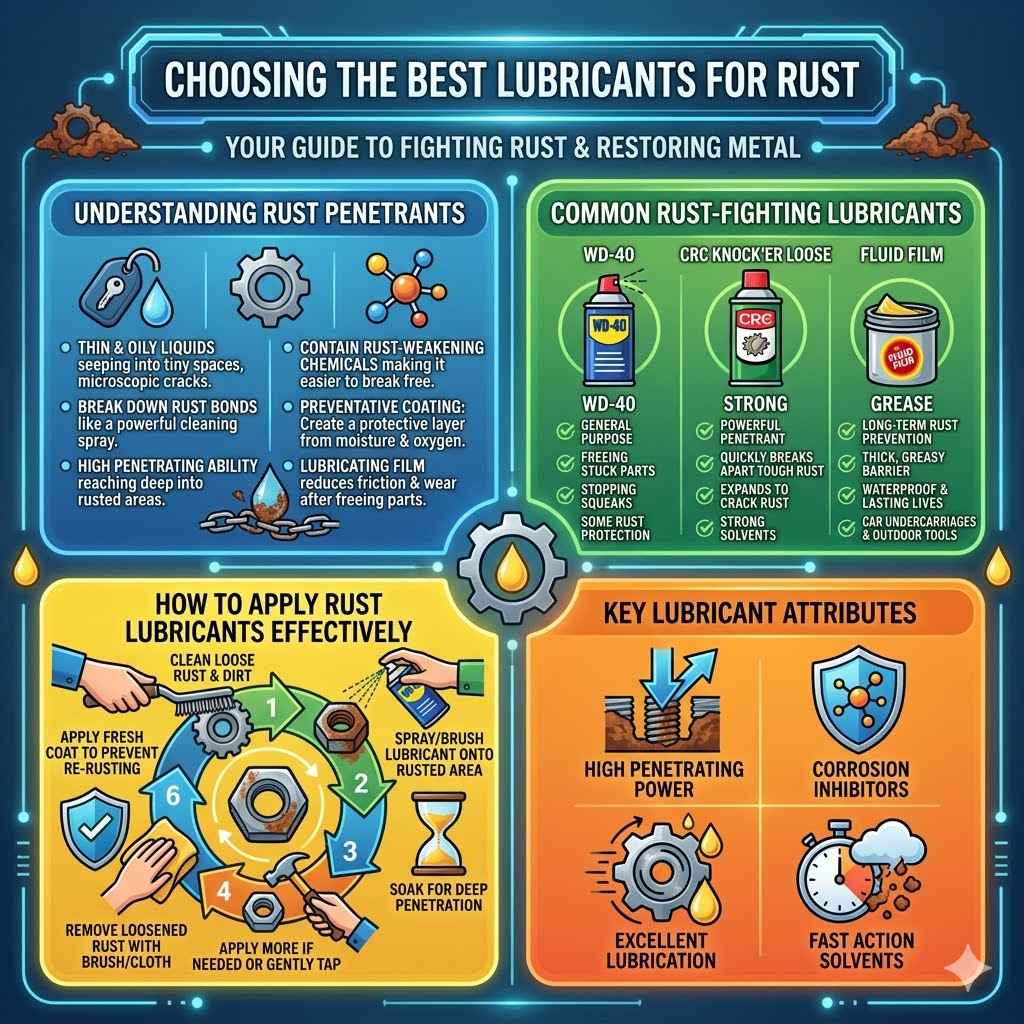
Rust penetrants are special liquids designed to get into the tiny spaces where rust has formed. They are usually thin and oily. This allows them to seep deep into metal, even into microscopic cracks.
Once inside, they work to loosen the rust’s grip on the metal. They do this by breaking down the chemical bonds that hold the rust together. Think of it like dissolving a tough stain with a cleaning spray.
Penetrating ability is crucial. The best penetrants are very thin. This helps them reach deep into rusted areas.
They often contain chemicals that weaken the rust. This makes it easier to remove or break free.
Corrosion inhibitors are important too. These chemicals help prevent new rust from forming. After you clean off the old rust, these inhibitors create a protective layer.
This layer shields the metal from moisture and oxygen. It’s like putting on a shield to keep future rust away.
Lubrication properties matter. While their main job is to fight rust, good penetrants also leave behind a lubricating film. This film helps the metal parts move freely after they’ve been freed from rust.
It reduces friction and wear.
Common Rust-Fighting Lubricants
Many products are available for dealing with rust. Some are general-purpose, while others are made for specific jobs. Knowing the difference helps you pick the right one.
For example, WD-40 is very popular. It’s great for freeing stuck parts and stopping squeaks. It also offers some rust protection.
Another type is CRC Knock’er Loose. This is a powerful penetrant. It’s designed to break apart tough rust very quickly.
It works by expanding slightly when it hits the rusted metal. This expansion helps to crack the rust. Then, its strong solvents get to work dissolving the rust.
For long-term rust prevention, products like Fluid Film are excellent. They create a thick, greasy barrier. This barrier is waterproof and lasts a long time.
It’s perfect for protecting metal that will be exposed to moisture. It’s often used on car undercarriages or tools stored outdoors.
How to Apply Rust Lubricants Effectively
Applying rust lubricants correctly makes a big difference. First, clean off any loose rust or dirt. A wire brush works well for this.
Then, spray or brush the lubricant directly onto the rusted area. Let it sit for a while. The longer it soaks, the better it can penetrate the rust.
For very stubborn rust, you might need to apply it more than once. You can also try gently tapping the rusted area. This vibration can help the lubricant seep deeper.
After the rust has loosened, use a brush or cloth to remove it. Then, apply a fresh coat of lubricant or a protective coating to prevent re-rusting.
Addressing Squeaky Brakes with Lubricants
Squeaky brakes are a common and annoying problem. They can be caused by several things, but often it’s a lack of lubrication or friction between brake parts. When brake pads rub against the rotor, or when other components aren’t greased, they can make noise.
This noise is usually a high-pitched squeal.
Finding the right lubricant for brakes is important because you don’t want to get it on the actual braking surfaces. That could make your brakes less effective. The goal is to lubricate the moving parts that don’t create friction for stopping.
This includes things like the brake caliper pins and the back of the brake pads.
Understanding Brake Lubricant Types
Brake lubricants are specifically made for the high-heat and high-pressure environment of a braking system. They are designed to withstand these conditions without breaking down or causing damage. They are typically silicone-based or ceramic-based.
Silicone-based lubricants are often clear or white. They are water-resistant and don’t conduct electricity. This makes them safe to use around electrical components.
They are also good at high temperatures. This is important because brakes get very hot.
Ceramic-based lubricants are usually a greyish color. They are also designed for high temperatures and heavy loads. They offer excellent lubrication and can last a long time.
Some mechanics prefer ceramic for its durability under extreme conditions.
Where to Apply Brake Lubricants
It is vital to know exactly where to put brake lubricant. You never want to put it on the brake pads or rotors. This is the part that creates friction to stop your car.
Getting lubricant there will make your brakes unable to work properly.
Caliper Pins: These metal rods allow the brake caliper to slide back and forth. They need a thin, even coat of brake lubricant. This lets the caliper move smoothly.
This prevents uneven pad wear and squeaking.
Pad Backing Plates: The brake pads have a metal backing. You can apply a small amount of lubricant to the edges of this plate. This helps reduce vibration that can cause squealing.
It creates a barrier between the pad and the caliper bracket.
Pad Contact Points: Where the brake pad edges touch the caliper bracket or the shims, a tiny bit of lubricant can help. This prevents metal-on-metal contact that creates noise. Always use a very small amount here.
Common Squeaky Brake Scenarios and Solutions
One common cause of squeaky brakes is dry caliper pins. If they aren’t lubricated, the caliper can stick. This leads to uneven braking and noise.
Applying brake lubricant to the pins allows the caliper to move freely.
Another scenario is when brake pads are new or have been
Sometimes, even with proper lubrication, a faint squeak can remain. This might be due to the specific material of the brake pads or rotors. In these cases, anti-squeal shims can be added to the back of the brake pads.
These shims help dampen vibrations. Sometimes, a special anti-squeal compound is applied between the pad and the shim.
DIY Brake Lubrication Steps
If you’re comfortable working on your car, you can lubricate your brakes yourself. First, jack up the car and remove the wheel. Then, locate the brake caliper.
You’ll see one or two bolts holding it together; these are the caliper pins.
Remove the caliper bolts. You might need a wrench. Carefully pull the caliper off the rotor.
It will hang by the brake line, so don’t let it dangle.
Slide the caliper pins out of their sleeves. Clean off any old grease or debris. Apply a thin layer of brake lubricant to the pins and inside their sleeves.
Apply a small dab of lubricant to the edges of the brake pad backing plates. Make sure not to get any on the friction material.
Reassemble the caliper. Put the caliper pins back in and tighten the bolts. Put the wheel back on and lower the car.
Pump the brake pedal a few times to seat the pads before driving.
Best Lubricants to Fix Rust and Squeaky Brakes Combined
Sometimes, the same vehicle might have both rust issues and squeaky brakes. This is especially common in older cars or those driven in harsh climates. Rust can form on brake components, and lack of lubrication can lead to squeaks.
It’s important to use the right product for each job.
For rust on suspension parts or other undercarriage components, a strong rust penetrant is ideal. For squeaky brake hardware, a dedicated brake lubricant is necessary. Using a general-purpose lubricant like WD-40 on brake caliper pins is often not recommended by manufacturers.
This is because it can break down quickly and attract dirt.
Multi-Purpose vs. Specialized Lubricants
Multi-purpose lubricants are versatile. They can handle many tasks, from freeing rusted bolts to silencing door hinges. They are convenient and often cheaper.
However, they might not perform as well as specialized products in demanding situations.
Specialized lubricants are formulated for very specific conditions. For example, brake lubricants are designed to handle extreme heat and pressure. Rust penetrants are formulated to break down stubborn rust.
While a multi-purpose lubricant might work in a pinch, a specialized product will often give better, longer-lasting results for that particular task.
Choosing Lubricants for Different Vehicle Areas
When working on a vehicle, think about what you’re lubricating. For engine components that get very hot, a high-temperature grease is best. For door hinges and latches that get rained on, a water-resistant lubricant is a good choice.
For rust on exhaust pipes or suspension parts, a penetrating oil is excellent for loosening them. Then, a high-temperature anti-seize compound can be applied to prevent future rust and make them easier to remove next time. For brake components, always stick to brake-specific lubricants on the designated areas.
Real-Life Examples of Lubricant Use
John had an old bicycle with a rusty chain and squeaky brake levers. He used a penetrating spray on the chain. After letting it soak, he wiped away the rust and then applied a bicycle chain lubricant.
For the brake levers, which were a bit stiff and noisy, he used a light silicone spray on the pivot points. The bike now rides and stops much more smoothly.
Another example is Sarah’s car. The hood hinges were rusty and stiff, making it hard to open. She sprayed them with a rust penetrant, let it sit, and then worked the hinges back and forth.
After cleaning them, she applied a more durable grease. Her brakes were also starting to squeak slightly. She followed the steps to apply brake lubricant to the caliper pins and pad backing plates, and the squeaking stopped.
Statistics on Lubricant Effectiveness
Studies show that using the correct lubricant can significantly extend the life of automotive parts. For example, a survey by an automotive parts retailer found that 65% of premature brake component failure was linked to improper lubrication or lack thereof. This highlights the importance of using the right product.
Another statistic from a product testing firm indicated that specialized rust penetrants can reduce the force needed to loosen rusted bolts by up to 70% compared to general-purpose oils. This means less effort and less risk of breaking the bolt.
| Problem Area | Recommended Lubricant Type | Key Benefits |
|---|---|---|
| Rusted Bolts/Parts | Penetrating Oil / Rust Penetrant | Breaks down rust, frees stuck components, prevents corrosion |
| Squeaky Brake Caliper Pins | High-Temperature Brake Lubricant (Silicone or Ceramic) | Ensures smooth caliper movement, prevents noise, withstands heat |
| Brake Pad Backing Plates | High-Temperature Brake Lubricant | Reduces vibration, prevents squeaking at contact points |
| Door Hinges / Latches | Water-Resistant Lubricant / Multi-Purpose Grease | Protects against weather, reduces friction, prevents rust |
| Exhaust System Components | High-Temperature Anti-Seize Compound | Prevents rust and seizing, allows for easier future removal |
Maintaining Your Vehicle with Lubrication
Regular maintenance is key to keeping your vehicle running smoothly and quietly. Lubrication plays a big role in this. By taking the time to apply the right lubricants to the correct parts, you can prevent many common problems.
This includes addressing rust before it becomes a major issue and silencing those annoying brake squeaks. It’s about preventative care. Small steps now can save you from bigger repairs and headaches later.
Think of it as giving your car a little TLC.
Preventative Maintenance Schedule
Creating a schedule for lubricating key areas of your vehicle can be very helpful. This isn’t something you need to do every week. Many areas only need attention once or twice a year, depending on your driving conditions.
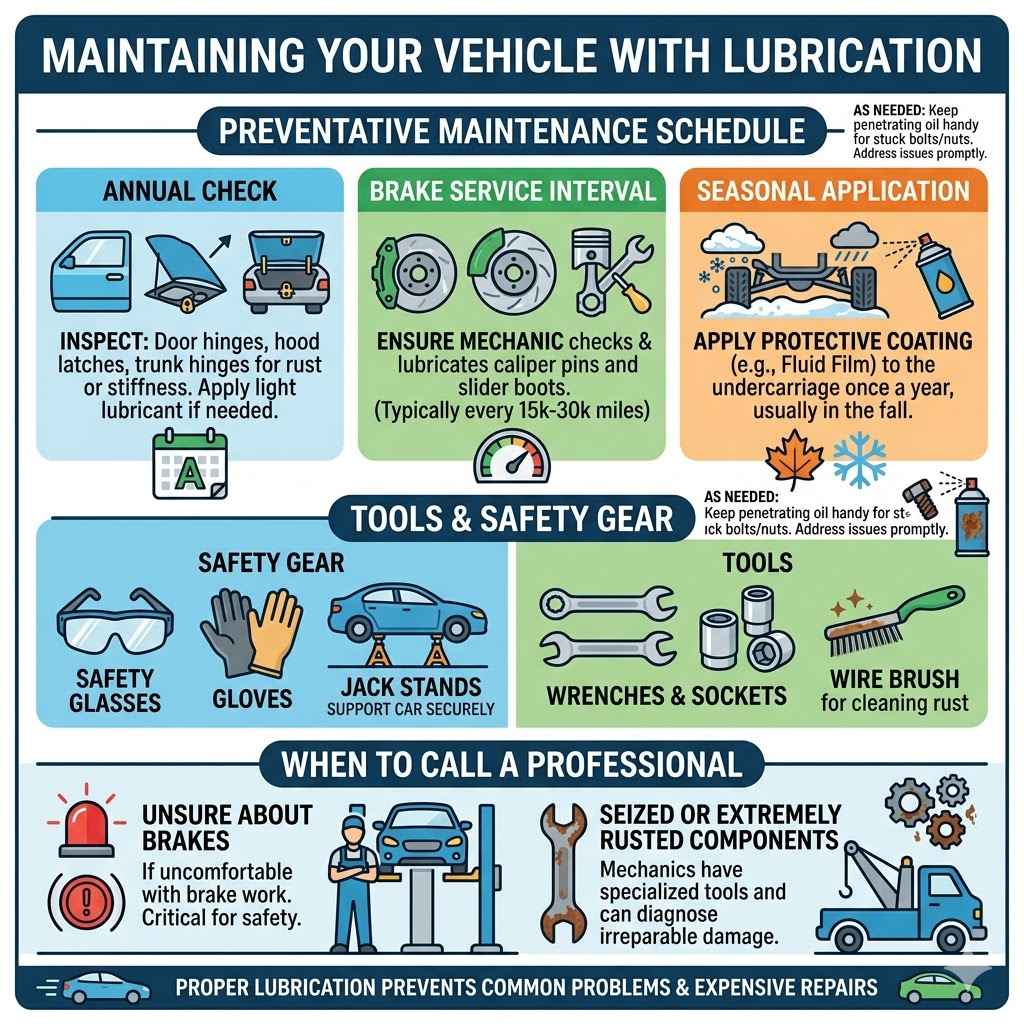
Annual Check: Once a year, inspect door hinges, hood latches, and trunk hinges for rust or stiffness. Apply a light lubricant if needed.
Brake Service Interval: Every time you get your brakes serviced (usually every 15,000-30,000 miles), ensure the mechanic checks and lubricates the caliper pins and slider boots. You can also check them yourself if you’re comfortable.
Seasonal Application: In areas with heavy road salt use or high humidity, consider applying a protective coating like Fluid Film to the undercarriage once a year, typically in the fall, to prevent rust.
As Needed: Keep a can of penetrating oil handy for any bolts or nuts that seem stuck due to rust. Address these issues promptly to avoid them becoming larger problems.
Tools and Safety Gear
When working with lubricants, having the right tools makes the job easier and safer. You’ll want a good set of wrenches and sockets if you’re working on brakes or suspension. A wire brush is essential for cleaning off rust.
Safety is also very important. Always wear safety glasses to protect your eyes from sprays and debris. Gloves will keep your hands clean and protected from chemicals.
If you’re lifting your car, use jack stands to support it securely. Never rely on just the jack.
When to Call a Professional
While many lubrication tasks are DIY-friendly, some jobs are best left to the experts. If you’re unsure about working on your brakes, it’s always safer to take your car to a qualified mechanic. Brake systems are critical for your safety.
Also, if you have extremely rusted or seized components that you can’t free with a good penetrating oil and some effort, a mechanic has specialized tools and knowledge to handle them. They can also diagnose if the rust has caused irreparable damage to the part.
Frequently Asked Questions
Question: Can I use WD-40 on my squeaky brakes?
Answer: While WD-40 can temporarily stop squeaks, it’s not ideal for long-term brake lubrication. It can attract dirt and may break down under high temperatures, potentially causing more issues. It’s best to use a lubricant specifically designed for brakes.
Question: How often should I lubricate my car’s door hinges?
Answer: You should lubricate your car’s door hinges about once or twice a year, or whenever you notice them becoming stiff or noisy. This helps prevent rust and ensures they open and close smoothly.
Question: What’s the difference between a rust penetrant and a lubricant?
Answer: A rust penetrant is designed to seep into rusted areas and break down the rust, freeing stuck parts. A lubricant’s main job is to reduce friction between moving parts. Some products have both properties, but specialized ones perform better.
Question: Should I lubricate the brake pads themselves?
Answer: No, you should never lubricate the friction material of the brake pads. Lubricant should only be applied to the metal backing plate of the pads and the caliper pins to prevent noise and ensure smooth operation.
Question: How long does brake lubricant last?
Answer: High-quality brake lubricants are designed to be durable. They should last for the typical service life of your brake pads, which can be tens of thousands of miles. However, extreme conditions might require more frequent checks.
Summary
Finding the Best Lubricants to Fix Rust and Squeaky Brakes involves understanding specialized products. For rust, penetrating oils break down corrosion, while for brakes, specific high-temperature lubricants ensure smooth, quiet operation without affecting stopping power. Regular application keeps your vehicle in top shape.