5 Best Racing Helmets for Beginners (2025): we compared
The best racing helmets for beginner drivers are the ones your rulebook accepts, usually SA2020 or FIA 8859-2015 depending on the series, then the one that fits your head correctly without spending money you need for HANS/FHR gear. Buy the wrong standard or a poor fit, and you can fail tech, waste cash, or end up with a helmet that’s unsafe and distracting on track. This guide covers the helmet rules, fit checks, budget picks, and the smart buy order for track days, autocross, drift, rally, and first club races.
This guide is part of our Race car types and specs series.
Best racing helmets for beginner drivers: top pick and quick answer
The top pick for most beginners is a full-face SA2020-rated helmet that fits well and leaves room in the budget for a HANS or other FHR device. That keeps you legal in many auto-racing rulesets, gives you better face protection than an open-face lid, and avoids the common mistake of overspending on carbon when your neck restraint still isn’t covered.
Quick picks
| Use case | Best certification | Helmet style | HANS/FHR need | Budget priority |
|---|---|---|---|---|
| Track day / HPDE | SA2020 or series-approved FIA | Full-face | High if the series requires it; otherwise plan ahead | Fit first, then keep funds for restraint gear |
| Autocross | Depends on club rules; often SA-rated or sometimes no helmet spec beyond club policy | Full-face preferred, open-face sometimes allowed | Usually not mandatory | Buy legal, then buy comfort and visibility |
| Drift | Series-specific; SA2020 or FIA in many events | Full-face preferred | Often optional at entry level, mandatory in some series | Ventilation and field of view matter a lot |
| Rally | Often FIA 8859-2015 or stronger series spec | Full-face | Frequently required or strongly preferred | Spend on homologation and comms compatibility |
| Club race | SA2020 or FIA per rulebook | Full-face | Usually mandatory | Helmet fit and HANS compatibility come before shell material |
For a first purchase, the safest default is simple: legal standard first, fit second, restraint gear third, premium shell material last. Track-day and club-race newcomers usually do best with a full-face helmet that passes tech, fits snugly without causing pain, and stays comfortable over typical session lengths.
How we chose
Rulebook legality came before brand reputation. If a helmet does not meet the event’s certification language, it is the wrong helmet no matter how expensive it is.
Fit and comfort came next, because a legal helmet that creates hot spots or neck fatigue becomes a distraction fast. I’ve seen that problem show up after one session, not five.
HANS/FHR compatibility was a major filter. Beginners often need to leave budget for a restraint device, so helmet choice cannot happen in a vacuum.
We also favored full-face helmets for most new drivers. Open-face lids still have valid uses, but they are not the default answer for wheel-to-wheel racing or many high-speed track-day groups.
What certification does your series require?
Your series rulebook decides the legal helmet, not the catalog. For many beginner track-day and club-racing drivers, Snell SA2020 or FIA 8859-2015 is the key check, and the correct label has to be inside the helmet so tech can verify it quickly.
Snell SA2020
Many beginner drivers should look for a Snell SA20xx-rated helmet that meets the current auto-racing rules for their series. The label is usually sewn or stickered inside the helmet, often near the liner or chin strap area, and tech inspectors want to see that exact approval, not a vague “racing” claim on the box. Future Snell updates may appear later, but the helmet must match the standard your sanctioning body lists today.
FIA 8859-2015
FIA 8859-2015 is another race-legal option in some series that accept FIA homologation for competition use. The homologation label is typically inside the helmet, and the approval date matters because some series accept only current or specific-date certifications. Retail availability and series acceptance are not the same thing, so the rulebook wins every time.
Snell M2020
Snell M2020 is a motorcycle standard, and it is often not interchangeable with auto-racing approval in many sanctioning bodies. A motorcycle helmet may be fine for a bike, yet still fail tech for an autocross, HPDE, or club race that asks for SA or FIA certification. Motorcycle helmets also differ in face shield design, venting, and intended use, which can affect track-day eligibility.
RaceQuip PRO25 SA2025 full face helmet: best for budget-minded club racers

This is for beginners who want a straightforward auto-racing helmet with current Snell SA2025 certification and a price that still leaves room for restraint gear. Based on the spec sheet, the Kevlar chin strap, Nomex interior, and HANS/HNR compatibility are the right kind of features for first-time club racers who need legality first.
The drawback is the obvious one: a beginner trying to stretch every dollar may still find that a helmet plus HANS setup eats the budget fast. It is also a full-face auto helmet aimed at serious competition use, so it is not the cheapest path if your local event only needs a basic helmet standard.
Conquer SA2025 full face helmet: best for entry-level racing on a tighter budget

This helmet suits beginners who want SA2025 approval without moving into premium pricing territory. The fiberglass composite shell and fire-retardant padded interior are the sort of features that matter more than decorative trim when the real goal is passing tech and staying comfortable in a short race weekend.
The honest drawback is that lighter composite shells still do not remove the need to verify fit, visor visibility, and HANS compatibility. A budget-friendly helmet can be the right call, but it is only right if the shape works for your head and the series accepts the certification.
LS2 Rapid III full face motorcycle helmet: best for motorcycle use, not auto racing

This is a sensible DOT and ECE motorcycle helmet, but that is exactly the point: it belongs in motorcycle use, not as a default answer for auto-racing tech. The polycarbonate shield, washable liner, and quick buckle are useful on the street or bike, yet they do not substitute for Snell SA or FIA approval where race rules demand it.
The drawback is eligibility. Many track days and nearly all organized auto-racing groups care about the specific approval label, and a motorcycle helmet can fail tech even if it is new and comfortable. Beginners should not assume DOT or ECE equals legal for racing.
TRIANGLE full face motocross helmet: best for dirt-bike use, not auto events
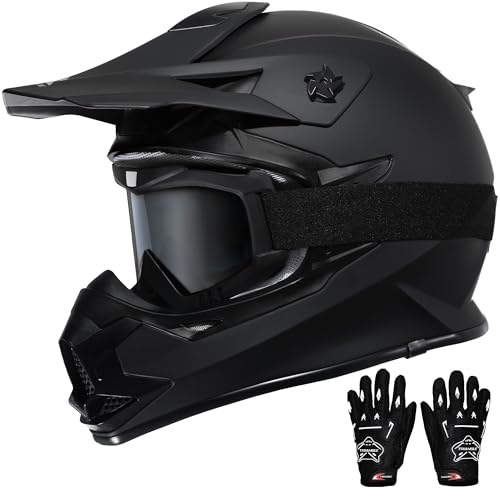
This kit is aimed at dirt-bike riders who need a full-face motocross helmet with airflow and accessories, not auto-racing drivers who need SA or FIA paperwork. The included goggles and gloves, plus the ventilation ports and washable liner, fit off-road use patterns far better than wheel-to-wheel or HPDE requirements.
The drawback is simple: dirt-bike certification and accessory bundles do not solve auto-tech rules. Beginners shopping for a car racing helmet should not let a complete off-road kit distract them from the question that matters, which is whether the event accepts that exact helmet standard.
Speedway Motors HANS H4S20PASFI Gen IV device: best for protecting your budget around the helmet

This is not a helmet, but it belongs in the same purchase conversation because budget planning starts with the neck restraint. The HANS device is the sort of FHR gear many club racers eventually need, and post anchors plus tether hardware are exactly why helmet compatibility matters when you buy.
The drawback is cost. A beginner who spends too much on a premium shell and then delays the restraint device has the order backward. If the series requires HANS or a similar FHR, the helmet and the device need to be planned together.
Track day helmets: best for HPDE and first club events
For HPDE and first club events, a full-face SA2020 helmet is usually the safest beginner choice because it gives you face protection, legal compliance in many organizations, and better isolation from debris, dust, and visor haze. A cheap helmet that passes the rulebook is better than an expensive one that does not.
What matters most on track
Field of view matters because beginners need to see mirrors, corner workers, and apex references without turning their head too much. Visor seal quality and anti-fog behavior matter just as much; a slightly foggy visor can be more distracting than a minor shell weight difference. Weight matters too, especially once you start running repeated 20 to 30 minute sessions and your neck begins to complain.
An entry-level helmet is enough when it meets the rules, fits snugly, and has a decent shield and liner. Spend more only if you need better ventilation, lower weight, or a helmet shape that fits your head better than the bargain option.
Which helmet style should beginners buy?
Beginners should usually buy a full-face racing helmet because it protects the chin and face, works well for wheel-to-wheel use, and fits the needs of most track-day and club-race rulebooks. Open-face helmets still have uses, but they give up front-face protection and are less universal for modern beginner motorsport.
Full-face vs open-face
Full-face helmets are the default for most beginners because they add chin-bar protection and usually handle debris, wind, and noise better. Open-face helmets can improve communication and feel less confining, but they reduce facial protection and are more often seen in vintage, marshal, or specific entry-level classes than in mainstream racing.
Where open-face still makes sense
Open-face helmets can be appropriate in some vintage series, parade laps, or classes that explicitly allow them. They also pair well with balaclavas and communication setups when the series or team environment calls for easier speech, but that does not make them the better first buy for most newcomers.
How to fit a racing helmet correctly
Measure head circumference in both centimeters and inches before ordering, then compare that to the manufacturer’s size chart rather than guessing from a street helmet size. The helmet should feel snug all the way around with even crown contact and cheek pad pressure that is firm, not painful. If it hurts in the shop, it usually hurts more after 30 minutes on track.
Fit checks that catch bad buys
- Measure the widest part of your head, usually about an inch above the eyebrows.
- Try the helmet on and check for even pressure on the crown.
- Make sure the cheeks are snug without biting the inside of your face.
- Move your head side to side and up and down to see if the shell shifts.
- Keep it on for several minutes to catch hot spots before you buy.
Common mistakes include choosing a size that is easy to remove, ignoring temple pressure, and assuming foam will “break in” enough to fix a poor fit. Some liner padding will settle slightly, but a helmet that moves on your head or creates hot spots is the wrong shape, not the right one.
Beginner helmet buying matrix
This matrix maps the use case to the legal standard, helmet style, HANS/FHR needs, and the order of spending. The logic is simple: match the rulebook first, then buy the helmet shape and fit that keep you focused, then reserve money for restraint gear and fire gear as required.
| Use case | Required certification | Helmet style | HANS/FHR compatibility | Spending priority |
|---|---|---|---|---|
| Track day / HPDE | Snell SA2020 or series-accepted FIA 8859-2015 | Full-face | Buy a model that can accept it if the event escalates to wheel-to-wheel | Fit, visor clarity, then leave money for restraint gear |
| Autocross | Club-specific; often less strict than road racing | Full-face preferred, open-face sometimes allowed | Usually not required | Legal compliance and comfort before shell material |
| Drift | Series-specific, often SA or FIA | Full-face preferred | Verify per event; some require it, some do not | Ventilation and visibility matter under heat and steering lock |
| Rally | Often FIA 8859-2015 or higher per rulebook | Full-face | Frequently important because of safety gear requirements | Homologation, comms, and restraint compatibility |
| Club race | SA2020 or FIA per the sanctioning body | Full-face | Usually required | Helmet and HANS together before premium material upgrades |
How much should a beginner racing helmet cost?
A beginner should spend enough to get the correct certification, the right fit, and a usable visor system, but not so much that a proper HANS or FHR device gets pushed out of the budget. Price often rises with lighter materials, better finish, and quieter or cleaner hardware, but none of that matters if the helmet is the wrong standard.
Where to spend first
Spend first on legality and fit. After that, spend on ventilation, visor quality, and a shell shape that does not create pressure points. Premium carbon or high-end composite shells can reduce fatigue, but they are a comfort upgrade for most beginners, not a first-line requirement.
If money is tight, an entry-level helmet with the correct certification is the smarter buy than a flashy shell with the wrong approval. The same budget logic applies to the HANS device and fire gear: buy the items your series requires before you chase lighter materials.
What helmet features matter most for novice racers?
For novice racers, the features that matter most are certification, fit, ventilation, visor clarity, and HANS/FHR compatibility. Fire resistance, chin-bar protection, and shell quality matter too, but they should be judged in the context of tech inspection and comfort over a session, not marketing language.
Helmet weight and shell material
Polycarbonate usually costs less, while fiberglass composite and carbon fiber usually cost more and can reduce weight. That lower weight can help neck comfort, especially in longer sessions, but a beginner should not buy a lighter shell before solving fit and legality. A heavier helmet that fits correctly is still better than a light one that moves around.
Ventilation, visor system, and fog control
Good ventilation is more than “more vents.” Airflow has to reach the head without making the visor noisy or leaky. Anti-fog performance depends on shield seal quality, airflow management, and how well the helmet matches your face shape. If the visor fogs every session, the helmet is a problem even if the certification is perfect.
HANS/FHR compatibility
HANS compatibility depends on the helmet’s ability to accept post anchors or work with a restraint system approved by your series. Shell shape and strap geometry matter, because a helmet that is technically certified can still be awkward or incompatible with the device you need. If your rulebook requires FHR use, buy both pieces with the rulebook open.
Which one should you buy?
Buy the SA2025 auto-racing helmet if you are entering serious club racing and want to keep your purchase aligned with current auto standards while preserving money for a HANS device. Buy the FIA-accepted route only if your series specifically asks for it. Buy the motorcycle or motocross helmets only for motorcycle or dirt-bike use, not as a stand-in for auto tech.
If your budget is tight and you still need a restraint device, prioritize the helmet that clears your series and leaves room for the HANS/FHR purchase. If your event requires FIA homologation, do not shop around it. If you run longer sessions and neck fatigue is already a concern, spend more on fit, ventilation, and lower weight before chasing cosmetic upgrades.
When should you replace a racing helmet?
Replace a racing helmet after any meaningful impact, visible shell damage, crushed liner, or a hit hard enough to raise doubt about the shell or energy-absorbing foam. Even if the outside looks fine, the inside can be compromised. If a helmet has been sitting unused for years, inspect the liner, straps, shield hardware, and label condition before bringing it back into service.
Age alone is not the only issue, but condition matters. Sun damage, loose stitching, degraded foam, and a faded or unreadable certification label are all reasons to retire a helmet or at least verify it against the current rulebook before the next event.
Frequently asked questions
What racing helmet should a beginner driver buy?
A beginner should buy the helmet that matches the sanctioning body first, then the one that fits correctly and leaves budget for a HANS or other FHR device if required. For most new track-day and club-race drivers, that means a full-face SA2020 or series-accepted FIA helmet with a clean visor and a snug, non-painful fit.
Do I need Snell SA2020 or FIA approval for track days?
Often yes, but it depends on the organizer and the event type. Many track days and club-racing groups require SA2020 or FIA 8859-2015, while some autocross clubs are less strict. The rulebook controls the answer, and tech inspectors will check the label inside the helmet.
What size racing helmet do I need?
Measure the circumference of your head in centimeters and inches, then compare it with the maker’s chart. The right size feels snug all around, with even crown contact and firm cheek pressure. If it hurts sharply or shifts side to side, the fit is wrong even if the size number looks close.
Is an open-face or full-face helmet better for beginners?
Full-face is better for most beginners because it protects the chin and face, works for more series, and usually handles debris and wind better. Open-face helmets still make sense in some vintage or communication-heavy uses, but they are not the default choice for most first-time track-day or club-race drivers.
Can I use a motorcycle helmet for racing?
Not automatically. A motorcycle helmet with DOT or ECE approval may be fine for riding, yet still fail auto-racing tech because many sanctions require SA or FIA approval. Always check the event rules before buying, because the wrong approval can leave a new helmet useless for your track day or race.
Products related to this article
Sponsored / affiliate links. As an Amazon Associate I earn from qualifying purchases. I may earn additional commission from eligible campaigns.