Drag Car vs Road Course Car
A drag car and a road course car chase different outcomes. Drag setups give up cornering, cooling margin, and braking balance to cut elapsed time in a straight line; road-course setups trade some launch grip for corner speed, aero balance, and heat control over a full lap. Pick the wrong path, and you spend money on parts that do little for elapsed time or lap time, while making the car harder to drive or harder to keep together. This guide compares those tradeoffs, and shows which parts are most important for each build.
Glossary: Aerodynamic drag = airflow resistance that slows the car; Drag racing = a straight-line motorsport focused on elapsed time; Downforce = vertical load created by airflow to increase tire grip; Splitter = front aero device that helps create front downforce; Diffuser = underbody exit shape that recovers airflow and helps reduce pressure beneath the car; Ground effect = underbody aero that uses the car’s floor and ride height to generate efficient downforce.
Authoritative note: This article draws on common rule-based setup logic used across drag racing and road-course competition: straight-line classes prioritize launch and traction, while road-course cars prioritize braking, heat control, and aero balance. Tire choice, ride height, and aerodynamic devices are class-dependent rather than universal.
| Factor | Drag Car | Road Course Car | Winner |
|---|---|---|---|
| Primary goal | Lowest elapsed time through launch and traction | Fastest lap time through repeatable cornering and braking | Tie |
| Launch traction | High priority; drag tires and geometry matter early | Useful, but secondary to balance through the lap | Drag Car |
| Cornering grip and braking | Usually a tradeoff | Core requirement | Road Course Car |
| Aero sensitivity | Usually lower priority | High priority, especially at speed and in braking zones | Road Course Car |
| Cooling demand | Often simpler, depending on pass length and power | Higher, because heat builds across repeated laps | Drag Car |
| Tire wear | Focused on keeping the tire hooked for a short run | Must survive sustained load and repeated corners | Road Course Car |
| Budget impact | Money goes to traction, power delivery, and safety | Money goes to suspension, brakes, aero, and cooling | Tie |
| Best use case | Street/strip and bracket drag | Time attack and HPDE | Tie |
Which parts matter most for each racing style?
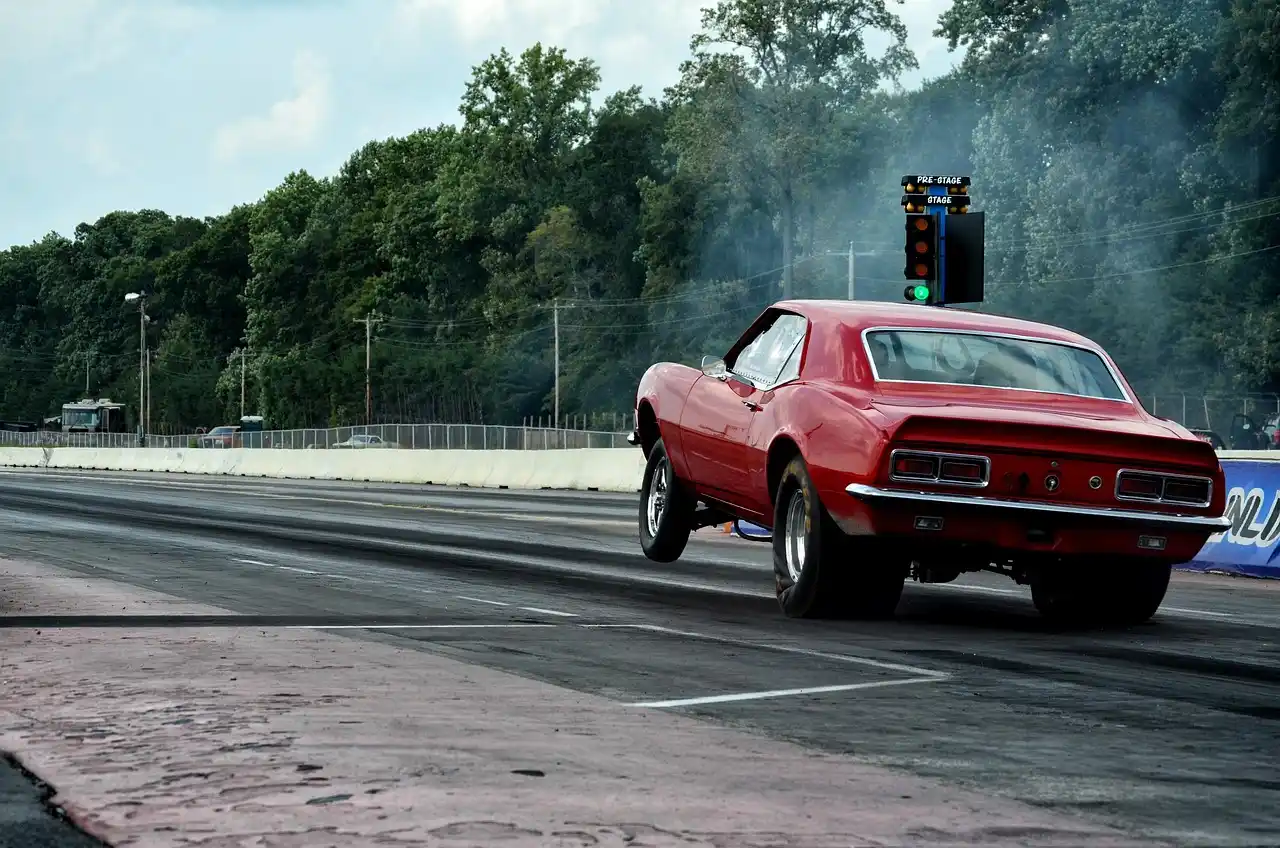
A drag car is built to accelerate hard in a straight line. A road course car is built to hold grip, brake repeatedly, and stay stable through corners. One rewards launch traction and power delivery. The other rewards aero balance, tire management, and cooling that survives a lap.
The track type decides what matters. Drag racing is straight-line and pass-based, while road courses stack turns, braking zones, and transitions that punish a loose setup. A car built for one discipline can carry dead weight in the other.
What parts move the needle first
For a drag car, the first parts are tires, suspension geometry, and the pieces that help the car leave the line cleanly. For a road course car, the first parts are tires, brake package, cooling, and aero balance. Power matters in both, but power without the right chassis usually turns into spin, heat, or wasted speed. Competition rulebooks for drag and road-race classes all reflect that same priorities shift.
Suppose a car has enough power to haze the tires in first gear but no traction aid. That car may feel strong on paper and still lose elapsed time because the launch is the part that counts most.
What is a drag car?
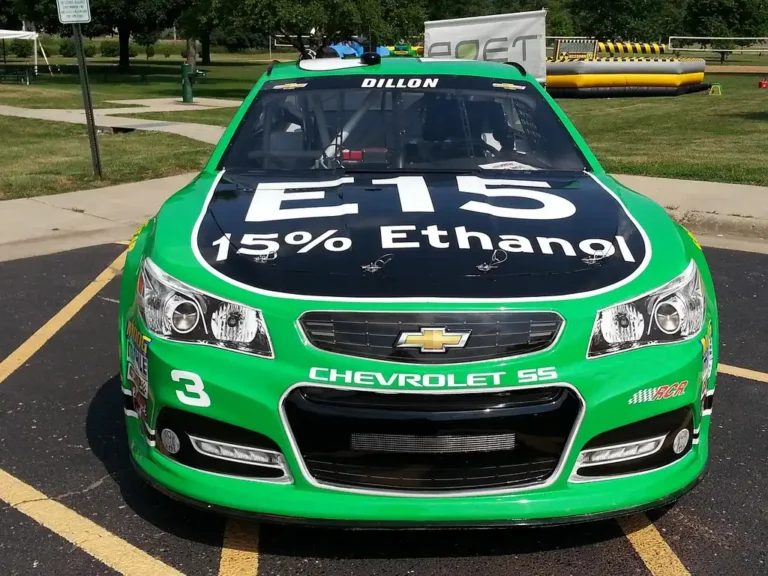
A drag car is built around short, straight runs where the goal is low elapsed time. That changes the parts list fast: launch traction, gearing, tire choice, and how the rear suspension plants the tire matter more than cornering stability or long-session cooling. Many drag categories regulate tire size, wheelbase, weight, and aero for that reason.
Drag racing classes vary widely, from street-adjacent builds to bracket and heads-up categories, including imported and competition setups. In bracket racing, index-based competition, and class racing, the winning recipe is still the same: put the power down early and keep the car pointed straight.
Launch traction and tire choice
Drag-specific tires and suspension geometry are common because the first feet of the run decide a lot of the result. A drag car often gives up some cornering stability and top-speed efficiency to get that launch bite. That is a fair trade when the event is judged by elapsed time.
A common first-timer mistake is fitting a big rear wing for looks on a car that only sees the strip. If the car already leaves well and the rules do not require it, that wing can add drag without improving elapsed time. In drag-only use, a wing angle increase can also soften mph at the stripe without helping the 60-foot if the car does not have enough power or rear instability to need it.
Why cornering and top-speed efficiency matter less
A drag car still needs control, but it does not need the same cornering grip or aero balance that a circuit car does. Top speed matters, yet the run is short enough that launch and shift execution often matter more than aerodynamic efficiency. That is why many drag builds tolerate parts that would be dead weight on a road course car.
What is a road course car?
A road course car is built for sustained cornering and braking, not one launch. It needs repeatable cooling, predictable tire behavior, and aero balance that works across turn-in, mid-corner, and braking. Road-race rules all emphasize safety, braking, and thermal management because lap time depends on repeatability as much as peak grip.
Road courses are longer circuits with more sharp turns, so a car that only makes power in a straight line usually gives that advantage back in the next braking zone. That is why lap-time cars spend money on chassis response before they spend money on peak power.
Cooling and tire management
Heat control matters because the car must survive repeated loads. Brake ducts, oil cooling, and airflow management are not decoration; they keep the car usable when lap after lap pushes temperatures up. Tire wear matters too, because a setup that chews the front tires early will slow itself down before the session ends.
A real-world failure case is a car that adds aggressive brake ducting without enough front airflow planning: brake temps may improve, but the added opening area can upset front balance or create duct packaging issues that interfere with splitter sealing. Another is a soft spring change that improves mechanical grip in one corner but allows excessive platform movement, which hurts aero consistency and can make the car slower everywhere else.
Why balance matters more than peak launch grip
A car that bites hard off the line but pushes wide in corners is the wrong tool for lap time. Road-course pace comes from a balanced platform that turns, stops, and puts power down without upsetting the chassis. Peak launch grip is useful, but it is not the main event.
How do drag and downforce change performance?
Downforce pushes a vehicle downward toward the road surface, which increases grip. Drag acts as aerodynamic resistance that slows the car and reduces top speed. Most aero parts generate both downforce and drag at the same time, so the setup question is not whether to add aero, but where the gain is worth the penalty. Tire and aero technical guidance, plus racing-product manufacturers, all treat ride height, sealing, and balance as key variables.
Rear wing, front splitter, and diffuser roles
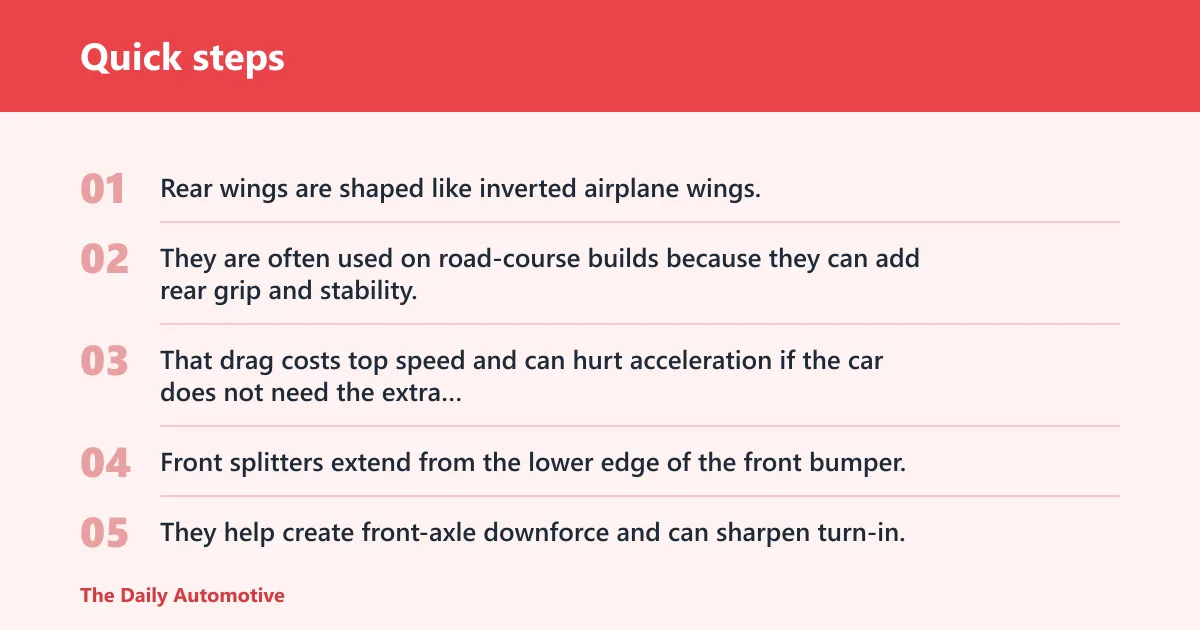
Rear wings are shaped like inverted airplane wings. They are often used on road-course builds because they can add rear grip and stability, especially at speed, but they also add induced drag. That drag costs top speed and can hurt acceleration if the car does not need the extra rear load.
Front splitters extend from the lower edge of the front bumper. They help create front-axle downforce and can sharpen turn-in, but they can also make the car more sensitive to ground clearance and ride height. A splitter that works on a smooth circuit may drag or scrape on an uneven street/strip car.
A diffuser speeds up airflow leaving from under the car. That lowers pressure beneath the vehicle and improves underbody efficiency, which is especially important for road-course aero. It is a poor place to spend money if the car never sees the sustained speeds and balance demands that make underbody aero useful.
Ground effect and ride-height sensitivity
Ground effect and underbody aerodynamics can generate large downforce efficiently, but they are sensitive to ride height and setup. That makes them generally more relevant to circuit cars than drag-only builds. If the car’s stance changes a lot under launch, braking, or curb strikes, the aero window gets narrow fast.
How does drag affect a car on a road course? It hurts top speed, and it can also blunt acceleration out of slower corners when the car needs to build speed again. The penalty is acceptable when the added downforce and balance improve lap time more than the drag costs.
Drag-road matrix
This matrix turns the choice into a setup decision. Read it as a parts-priority guide, not a styling guide.
| Decision factor | Drag Car | Road Course Car | Winner |
|---|---|---|---|
| Launch traction | Essential | Secondary | Drag Car |
| Top speed efficiency | More important than cornering, but still secondary to launch | Important, but often traded for downforce and stability | Tie |
| Cornering grip | Usually sacrificed | Essential | Road Course Car |
| Braking stability | Moderate priority | Essential | Road Course Car |
| Aero sensitivity | Lower priority | High priority | Road Course Car |
| Cooling demand | Short-run friendly | High and repeatable | Drag Car |
| Tire wear | Short-burst focus | Long-session durability matters | Road Course Car |
| Budget impact | Traction and power delivery eat budget first | Chassis, aero, and cooling eat budget first | Tie |
| Street/strip | Best fit | Compromise fit | Drag Car |
| Bracket drag | Best fit | Poor fit | Drag Car |
| Time attack | Poor fit | Best fit | Road Course Car |
| HPDE | Compromise fit | Best fit | Road Course Car |
Launch traction, cornering grip, and braking
Launch traction is where drag cars win. Cornering grip and braking are where road-course cars win. If the event starts and ends with one hard launch, the drag setup gets the payoff; if the event repeats turns and brakes over and over, the road-course setup earns its money.
Cooling, tire wear, and budget impact
Cooling demand drives the road-course bill upward because heat builds across a session. Tire wear follows the same pattern. Drag cars can spend less on those systems and more on the pieces that help them leave hard, which is why the budget shape is different even when the total spend is similar.
Picture a car with a large rear wing, sticky front tires, and race pads that are perfect for a 20-minute session. On a drag strip, some of that spending buys drag and extra load that never helps the elapsed time. On a road course, it may be exactly what keeps the car planted and repeatable.
Choose Drag Car if… / Choose Road Course Car if…
Choose Drag Car if… you care most about elapsed time, your events are street/strip or bracket drag, and your rules reward launch strategy more than cornering balance. It also makes sense if you want simpler cooling requirements and a parts list centered on traction, gearing, and weight transfer.
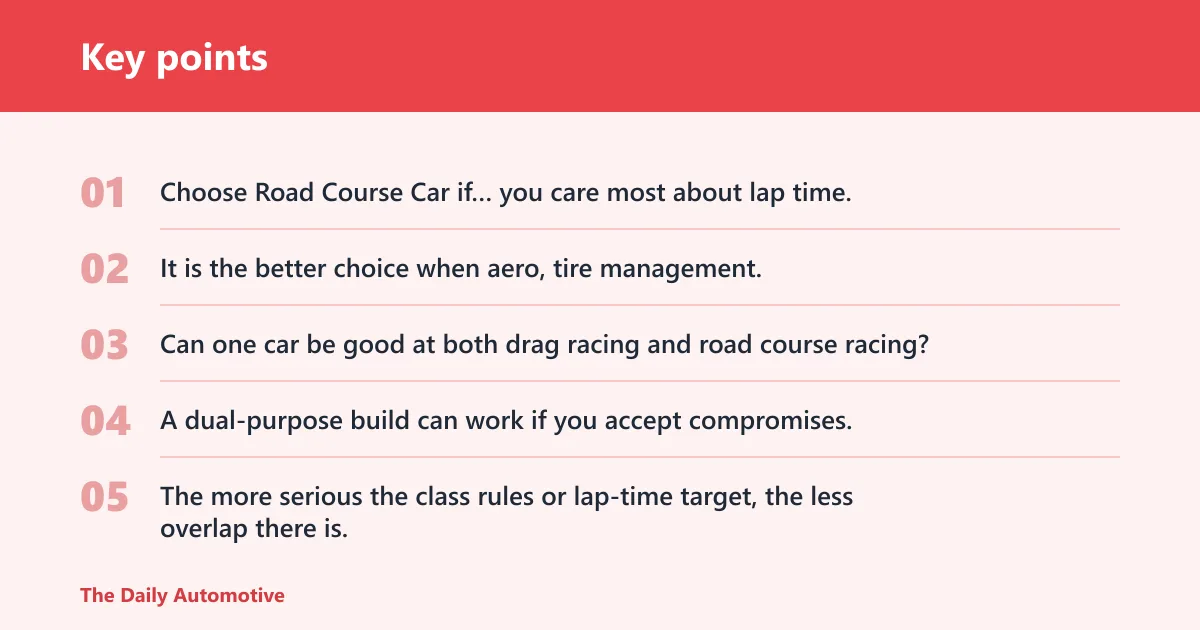
Choose Road Course Car if… you care most about lap time, your track day or time attack sessions are long enough to build heat, and you need repeatable braking and cornering balance. It is the better choice when aero, tire management, and cooling all matter as much as power.
Can one car be good at both drag racing and road course racing? Only up to a point. A dual-purpose build can work if you accept compromises, but each side demands parts that the other side may not use well. The more serious the class rules or lap-time target, the less overlap there is.
Where dual-purpose builds work
Dual-purpose cars make sense when the owner wants occasional strip runs and occasional HPDE sessions, not class-winning pace in both. A modest aero package, careful alignment, and a tire choice that does not overcommit to one side can keep the car usable in both places.
A practical example is a street/strip Mustang or Corvette that runs a mild front splitter, conservative rear wing angle, and a tire choice that can survive both the highway and the paddock. If the rear wing angle goes too high, straight-line speed can drop and the car may need more rear suspension tuning to stay calm under power. If the spring rate goes too stiff, the car may lose compliance on rough roads and become slower to launch or less stable in braking transitions.
Where they give away too much
They fail when the drag setup carries too much aero drag or when the road-course setup carries too little cooling and brake margin. A car that is tuned for one surface often gives away the other by design. That is not a flaw; it is the cost of focus.


What parts matter most for a drag car versus a road course car?
The priority list is different enough that money should be spent in a different order. For drag, start with traction, suspension, gearing, and launch control strategy. For road course, start with tires, brakes, cooling, suspension balance, and aero that works together instead of fighting itself.
- Decide the track type first.
- Match tire choice to that surface.
- Set suspension around the chosen tire.
- Add aero only where the track can use it.
- Spend on cooling when the session length demands it.
That order keeps dead weight out of the build. A big wing on a drag car or a drag tire on a circuit car can look purposeful and still be the wrong money choice.
How fast can a drag car go?
The answer depends on class, tire, power, and rules. In drag racing, the reference points are class-specific: street-adjacent combinations, bracket cars, and heads-up builds can range from modest elapsed times to the quickest professional-style categories, which are far quicker than that. Elapsed time is the real metric.
That is why drag builds can be extremely quick without being optimized for cornering or long-session cooling. Straight-line performance rewards a different set of parts. Class structure and rulebooks make that distinction explicit.
What drivetrain is best for drag racing?
Rear-wheel drive is the common choice because it separates steering from driving the rear tires and makes launch tuning more direct. The best drivetrain is the one that fits the class rules, tire choice, and power level without adding unnecessary complexity. For a drag build, the drivetrain should help put power down cleanly, not complicate the launch.
If the car is aimed at a street-adjacent class, reliability and repeatability usually matter as much as outright traction. In competition categories, the class rules often decide how far you can go before the setup stops making sense.
Is higher downforce always better for road course cars?
No. Higher downforce can improve grip, but it also usually adds drag, and that can hurt top speed and acceleration. The right amount is the one that improves lap time across braking, turn-in, and mid-corner without making the car too slow on the straights or too sensitive to ride height.
Road-course aero is a balance problem, not a maximum-number problem. If the car becomes nervous, bottoms out, or slows too much on the straights, more downforce may have gone past the useful point.
What is drag in racing?
Drag is aerodynamic resistance that slows the car and reduces top speed. Pressure drag is the largest contributor to overall drag, and it rises when aero parts that create downforce also disturb airflow. That is why wings and other downforce devices have to be chosen with the track in mind.
For a drag car, some drag can be acceptable if the launch payoff is worth it. For a road course car, the question is whether the downforce gain beats the speed loss across the whole lap.
What is a road drag?
If you mean a street/strip car, the phrase points to a mixed-use build with drag-style setup intentions rather than a true circuit or drag category. In practical terms, it means a car that may wear drag-oriented tires or suspension choices but still sees public roads. The tradeoff is obvious: more straight-line bite usually means less comfort, less cornering polish, or both.
If the goal is occasional strip use and street driving, keep the build conservative. Parts that demand perfect track conditions can be a poor fit for rough pavement and unpredictable temperatures.
Drag sports cars vs supercars
On paper, a supercar may bring speed, aero, and braking hardware, while a drag-style sports car may bring more tire, less drag, and a better launch strategy. But that comparison only matters if the event rewards the same traits. A supercar’s road manners do not automatically make it better at the strip, and a drag sports car’s launch setup does not automatically make it better on a road course.
Track type decides the winner. Straight-line events reward launch and traction; road courses reward balance and repeatability.
Two decision tables for choosing the right build
| Use case | Priority weight | Best recommendations | Notes |
|---|---|---|---|
| Street/strip | Launch 35, tire 25, cooling 15, brakes 10, aero 15 | Drag radial or street-legal drag tire, mild suspension tuning, conservative aero, repeatable cooling | Balance comfort and traction; avoid excessive wing angle |
| Bracket drag | Consistency 40, launch 30, drivetrain 15, safety 10, aero 5 | Stable tire pressure window, predictable suspension, drivetrain repeatability, legal safety gear | Consistency matters more than peak power |
| Time attack | Grip 30, brakes 20, aero 20, cooling 15, tire wear 15 | Splitter, rear wing, brake ducts, heat management, alignment tuned for front bite | Higher downforce is useful only if balance remains stable |
| HPDE | Safety 25, brakes 20, cooling 20, tire 20, chassis 15 | Fresh fluid, proper pads, manageable camber, durable tire, modest aero | Reliability and predictability beat peak setup aggression |
| Budget tier | Drag build focus | Road course build focus | Recommended path |
|---|---|---|---|
| Entry | Tires, alignment, basic suspension refresh | Brake pads, fluid, tires, alignment | Choose one discipline and keep aero simple |
| Mid | Suspension tuning, drivetrain support, safety upgrades | Cooling, brake ducts, aero balance, spring/damper refinement | Add the parts that solve the track’s main limitation |
| High | Dedicated drag tire package, weight transfer tuning, class-specific aero | Data-driven damper work, aero development, heat rejection, tire strategy | Optimize around rule set and surface, not appearance |
What is the best sample build path?
A sensible sample path is to define the event first, then build around the tire and chassis. For street/strip, begin with a tire that matches the surface, then tune suspension and gearing before adding aero. For time attack or HPDE, begin with brakes, cooling, alignment, and aero balance before chasing more engine power.
If the car starts as a dual-purpose platform, keep the first changes reversible. That makes it easier to find the point where a wing, splitter, spring rate, or tire compound starts to help one use case and hurt the other.
Frequently asked questions
What is the difference between a drag car and a road course car?
A drag car is tuned for straight-line acceleration and low elapsed time, while a road course car is tuned for cornering grip, braking stability, and repeatability over a lap. The drag car can sacrifice some cornering and cooling; the road-course car can sacrifice some launch bite to gain balance and heat control.
How does drag affect a car on a road course?
Drag slows the car on straights and can blunt acceleration out of slower corners, so it can cost lap time even if the car feels more planted. The penalty is worth it only when the added downforce and stability improve the full lap more than the extra resistance hurts speed.
Can one car be good at both drag racing and road course racing?
Yes, but only as a compromise. A dual-purpose car can be usable for both street/strip and casual HPDE days, yet it will give up some of the launch focus that drag racing wants and some of the aero, brake, and cooling focus that road-course driving demands.
Products related to this article
Sponsored / affiliate links. As an Amazon Associate I earn from qualifying purchases. I may earn additional commission from eligible campaigns.