Best Seat Covers for Dogs for SUVs (2026): We Compared
Choose seat covers by dog behavior and vehicle risk: active, muddy, or anxious dogs need a waterproof, nonslip hammock or full-bench cover with headrest anchors and seat anchors; calmer dogs can use lighter bench covers. A poor fit means stained upholstery, sliding covers, trapped dirt, and blocked seat belts. This guide compares styles, materials, attachment systems, and vehicle-specific layouts so you can pick the right cover for daily use, road trips, and SUV back seats.
Best seat covers for dogs, by use case
The best choice depends less on the label and more on how your dog moves. For muddy trips and SUV use, a hammock with door coverage is usually the safer bet; for shared back seats, a bench cover with seatbelt openings is easier to live with; for large dogs, a hard-bottom extender is the most stable option.
📊 Car and Driver tested dog seat covers in June 2026 with office dogs. Source: Best Dog Car Seat Covers for 2026.
Quick comparison
| Product | Badge | Best for | Price | ||
|---|---|---|---|---|---|
 |
Kurgo Heather Hammock Seat Cover, Charcoal, 55" Wide |Kurgo | Our pick | 55" wide · hammock style · charcoal | $71.83
Price as of 21 Oct 2026
|
View |
 |
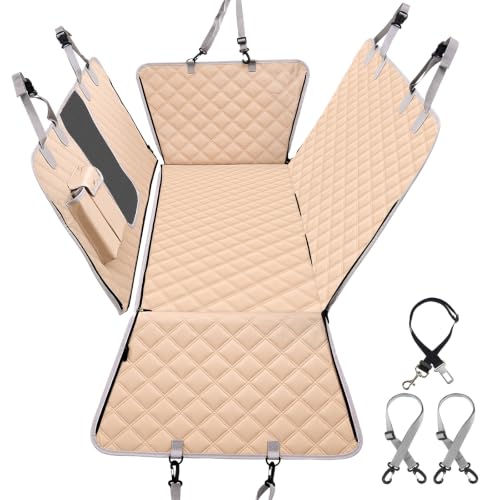
Dog Car Seat Cover, 600D Heavy Dute Car Seat Cover for DogsVictoper | Budget pick | 600D Oxford · waterproof TPU · black | $23.38
Price as of 21 Oct 2026
|
View |
 |
Bark Lover Dog Car Seat Covers for Back Seat, WaterproofBark Lover | Also great | 54"/60" sizes · convertible hammock & bench | $35.99
Price as of 21 Oct 2026
|
View |
 |
PetSafe Happy Ride Dog Safety Harness for Cars – Dog CarPetSafe | Also great | $6.29
Price as of 21 Oct 2026
|
View | |
 |
Kaiphy Dog Car Seat Cover, Back Seat Cover for Dogs Pet CarKaiphy | Pair with it | Waterproof bench · 4 safety belt openings · black | $15.97
Price as of 21 Oct 2026
|
View |
Use this as a fast filter, not a final decision. The details that matter are the attachment system, seat layout, and whether your dog pushes, digs, sheds, or leaks water onto the cabin.
How we chose
We compared published product details, manufacturer specs, and buyer feedback, then filtered for the failure modes that matter most in real use.
- Material and waterproofing: PU-coated and lined covers, plus where stitching and seams can still leak.
- Attachment system and fit: seat anchors, headrest straps, buckles, hooks, and whether the cover stays put under braking.
- Layout and vehicle compatibility: hammock, bench, and hard-bottom designs for sedans, compact SUVs, full-size SUVs, and trucks.
- Cleanup and ownership cost: wipe-clean surfaces versus machine-wash care, and whether a cheaper cover will need replacing sooner.
Kurgo Heather Hammock Seat Cover: best for muddy trips
This is a strong fit for active dogs that track in mud or fur and for owners who want better front-to-back containment. Its 55-inch width, waterproof 400D polyester, built-in seat anchors, and passenger-friendly front opening make it a practical daily driver for cars and SUVs.
The tradeoff is simple: hammock coverage helps protect the back seat and footwell, but it is still only as leak resistant as its seams and side gaps. It is also more cover than a calm dog needs if you want frequent rear-seat passenger use.
Victoper 600D heavy-duty seat cover: best for durable budget use
This suits owners who want a tougher-feeling cover at a lower price and need broad compatibility with sedans, SUVs, and trucks. The 600D Oxford cloth, waterproof TPU lining, mesh window, and multiple stability accessories are aimed at durability and daily mess control.
The drawback is that budget covers often depend on careful installation to stay flat, especially on leather seats or when a dog shifts hard under braking. The listing also emphasizes utility over cabin refinement, so the fit and finish may not feel as tailored as pricier covers.
Bark Lover convertible cover: best for mixed-use back seats
This is the most flexible option if you switch between hammock and bench use. Its zipper panel, two size choices, and quilted polyester with waterproof lining make it a good fit for owners who sometimes carry a dog and sometimes need a passenger-friendly rear seat.
The downside is that convertible designs add seams, zippers, and moving parts. Those are useful features, but they also create more points where water, dirt, or hair can collect if the cover is used as a catch-all for muddy dogs.
Kaiphy waterproof bench cover: best for shared rear seats
This is the best match for drivers who need the rear seat available for people as well as a dog. The four safety belt openings, non-slip backing, and four-layer waterproof construction make it easier to keep seat belts usable while still protecting the bench from dirt and spills.
The drawback is that a bench-style cover gives up some vertical containment compared with a hammock. If your dog climbs between seats, scratches at doors, or gets anxious and paces, you may want more side coverage than this layout provides.
Which seat cover fits your dog?
Start with behavior, then check the cabin. A waterproof cover that looks impressive on paper can still fail if the dog digs, the seat is leather, or the rear bench needs passenger access.
| Dog behavior | Vehicle type | Protection priority | Best cover style | Key feature to require | Common failure risk |
|---|---|---|---|---|---|
| Muddy swimmer | Full-size SUV | Water, sand, and seat-back protection | Hammock with side flaps | Door coverage and a sealed front edge | Side gaps letting wet fur reach bolsters |
| Anxious large dog | Sedan | Stable sleeping surface | Hard-bottom seat extender | Gap elimination between seat and front row | Flexing fabric that sags under weight |
| Frequent passenger use | Compact car | Seat access and restraint threading | Bench cover | Seatbelt openings and easy buckle access | Covering the belt latch or blocking a rider |
| Heavy shedder | Compact SUV | Hair containment and quick cleanup | Bench or hammock | Smooth top layer and machine-wash care | Hair embedding in textured fabric |
| Door-scratching dog | Any rear cabin | Panel and bolster protection | Hammock with door flaps | Zippered side extensions | Flaps that stop short of the door panel |
| Senior dog with stiff joints | SUV or truck | Easy entry and steady footing | Hard-bottom extender | Rigid surface and low step-in gap | Instability during climb-in or exit |
| Calm small dog | Sedan | Light mess control | Bench cover | Compact fit and simple straps | Overbuying bulky coverage you will not use |
| Digging or pacing dog | Truck rear seat | Attachment stability | Heavy-duty hammock | Seat anchors plus strong headrest straps | Anchors pulling loose during movement |
Common failure modes are predictable. Leather seats make slick surfaces worse, thin straps can slide, and side flaps that look complete in photos can still leave a gap where mud and claw marks reach the door.
Say your 70-pound shepherd rides in a compact SUV after beach trips. A bench cover with belt openings may look convenient, but if the dog climbs from seat to door and back again, a hammock with full side coverage will keep sand out of the seat cracks more reliably.
How waterproof and nonslip are they really?
Truly waterproof claims usually mean a waterproof shell or laminated backing, not a cabin that cannot leak anywhere. PU-coated materials and 600D Oxford or polyester shells can resist spills well, but stitching, seams, zipper lines, and side gaps can still let water reach the seat below.
What waterproof claims cover
Waterproof dog seat cover listings often use two common constructions: PU-coated polyester or 600D Oxford fabric with a waterproof TPU or similar inner layer. Both can block wet paws and puddled water on the surface, but neither guarantees full leak protection if liquid pools at seams or works under a flap.
Wipe-clean covers are usually faster for daily mud. Machine-washable covers are better when hair and odor build up, but wash care still does not fix a weak attachment system or a seam that leaks under pressure.
Why covers slide on leather or with hard braking
Nonslip backing helps, but it is not magic. Smooth leather, slick vinyl, and aggressive cornering can overwhelm a thin backing, especially if the seat anchors are missing or the headrest straps are loose.
Seat anchors hold the lower edge in the seat crack. Headrest straps support the top edge. Buckles or hooks keep the geometry tight. If any one of those fails, the cover can bunch up, exposing the upholstery and making the dog less stable.
What to require in the attachment system
- Seat anchors that tuck into the seat crease.
- Adjustable headrest straps with enough length for tall SUV seats.
- Buckles or hooks that do not slip under load.
- Side coverage that stays attached when the dog turns or scratches.
A common first-timer mistake is choosing a rear-seat cover for the waterproof label while overlooking whether the straps and seat anchors will actually keep it from sliding around. A cover can repel a spilled water bowl and still slide six inches on a leather bench during a sharp stop.
How to choose
Start with dog behavior, then choose the layout your cabin can tolerate. A digger or water-loving dog usually needs a hammock or hard-bottom extender; a calm rider with passengers in back can get by with a bench cover and belt openings; a large dog with joint stiffness may need the rigidity of a seat extender.
For compact cars, measure the rear bench width and make sure the cover will not block seat belts or door handles. For compact SUVs, check whether the rear bench is wide enough for a hammock without pulling the side flaps too tight. For full-size SUVs and trucks, look for larger coverage and stronger anchors, because more cabin space often means more opportunity for the cover to shift.
Choose 600D Oxford or similar reinforced fabric if scratch resistance matters more than a soft quilted feel. Choose quilted tops if you want comfort and easier hair pickup. Smooth tops usually clean faster than textured ones.
Cost of ownership matters. A cheap cover that tears, leaks at the seams, or loses its grip after a few months can cost more than a sturdier model that lasts through repeated muddy trips. If your dog is large, active, or wet often, paying more upfront is usually the better buy.
Hammock-style covers: best for active dogs
Hammock covers are the strongest all-around choice for dogs that move, scratch, or shed hard. They protect the bench, create a barrier over the footwell, and keep dirt from sliding off the seat and into the floor area.
When a hammock fits best
Pick a hammock when your dog rides in the back alone, when the dog climbs in wet, or when you want more control over loose hair and mud. It is especially useful in SUVs because the side coverage can bridge a deeper rear cabin better than a flat bench cover.
Car and Driver named the Ruff Liners Dog Hammock its top overall pick in June 2026, and it noted integrated door-panel covers for extra protection. Car and Driver also said the Kurgo Rover Hammock was easiest to install.
Where side flaps help
Side flaps or zippered extensions matter when the dog scrapes the door, leans against the bolster, or jumps in with muddy paws. They are one of the few features that address the damage most pages ignore: side panels, not just the seat cushion.
That said, side flaps need to sit long enough to cover the door contact zone. Short flaps can look complete and still leave the lower door area exposed.
Where hammock designs fail
They can be awkward if you carry a human passenger in the back seat. They can also feel oversized in small sedans, where the hanging front panel gets in the way of the cabin more than it helps.
Business Insider tested nine different dog seat covers in a 2015 BMW X1, which it described as a compact SUV. Its best hammock pick was the Frisco Quilted Water-Resistant Hammock Car Seat Cover, while its best full-coverage pick was the URPOWER Dog Car Seat Cover.
Bench covers: best for shared back seats
Bench covers are the best match when you still need the back seat for people, restraints, or regular use. They protect the cushion without turning the rear cabin into a full dog compartment.
Seatbelt openings and passenger use
Seatbelt openings matter more than many buyers expect. A single opening can work for one dog or one passenger-side buckle, while multiple openings are better if you carry a person, a restraint, or more than one attachment point.
Business Insider’s Frisco Quilted Water-Resistant Bench Car Seat Cover measured 59 inches wide, used a grippy nonslip backing, and had seat anchors and adjustable headrest straps. Business Insider also said it was machine washable on a gentle cycle.
Footwell coverage
Bench covers that extend into the footwell offer better dirt control, but they can reduce room for feet or storage bins. If the dog likes to tuck paws into the floor area, some extra coverage helps. If passengers use the rear seat often, too much drop can feel bulky.
Quilted versus smooth tops
Quilted tops feel softer and can make the back seat more comfortable for long rides. Smooth tops usually shed hair and mud faster. If your dog is a heavy shedder, smooth surfaces often clean with less effort.
Bench covers also make sense for dogs that ride calmly and do not scratch or pace. They are the least disruptive option when your main goal is preserving the seat while keeping the cabin usable.
Hard-bottom extenders: best for large dogs
Hard-bottom seat extenders are the best answer for large dogs that need a flatter, more stable place to lie down. By bridging the gap between seats, they create a cargo-like sleeping surface instead of a loose sling.
Gap elimination and support
The main advantage is support. A rigid base reduces sagging and can make entry and exit easier for older or heavier dogs. It also keeps toys, paws, and blankets from dropping into the footwell gap.
Are hard-bottom dog seat covers better for large dogs? Often yes, because they give big dogs more usable surface and less wobble. They are especially helpful when a dog shifts its weight during braking or turns.
SUV and cargo-area fit
These extenders work especially well in SUVs and some trucks, where the rear area can accept a larger flat platform. In compact cars, the bulk may be harder to fit, and the rigid base may reduce the remaining passenger space too much.
The tradeoff is that hard-bottom extenders are usually less compact to store and may take more setup time than a simple bench cover. If you switch vehicles often, that bulk matters.
Stability versus bulk
A hard-bottom extender is not the best choice for every dog. If your dog is small, calm, or rides only short distances, a simpler bench cover may be enough. If your dog is anxious, large, or unstable on soft fabric, the firmer platform is usually worth the extra space it takes.
What materials are best for durable dog seat covers?
For durability, 600D Oxford fabric is a common spec worth looking for. It is widely used because it resists scratches better than thin fabric and can be paired with a waterproof backing or lining. That said, 600D alone does not guarantee leak protection; the inner layer and stitching matter too.
PU leather-style surfaces can be easier to wipe clean, but they may show wear differently and can feel slicker under a dog’s paws. Polyester with waterproof lining is common in hammock and bench designs because it balances weight, cost, and cleanup.
If your dog is a digger, scratch resistance matters more than a soft feel. If your dog sheds heavily, a smooth finish may save time during cleanup. If your dog swims before every ride, prioritize waterproof layering and a tight fit over cosmetic detail.
How do you stop a dog seat cover from sliding around?
Start with the fit. Then secure the anchors. Most sliding problems come from loose straps, a cover that is too wide for the bench, or a slick seat surface such as leather or vinyl.
Practical fixes that matter
- Use the seat anchors in the crease, not on top of the cushion.
- Tighten the headrest straps so the cover cannot creep forward.
- Choose a cover with buckles or hooks that lock the lower edge in place.
- Match the cover style to the dog’s movement level; active dogs need more secure hardware.
If the dog brakes hard, corners often, or paws at the seat, the attachment system becomes more important than the fabric. A “non-slip” label is useful only if the cover has enough hardware to back it up.
How do I clean a waterproof dog seat cover after muddy trips?
For muddy trips, shake out loose dirt first, then wipe the surface before you think about washing. That keeps grit from grinding deeper into seams and zippers. If the cover is machine washable, use the care instructions and gentle cycle guidance from the maker, not heat-heavy drying that can stress coatings.
Waterproof covers often clean in layers: remove hair, wipe mud, and then wash when odor or residue builds up. Wipe-clean materials are faster for light messes; machine-washable covers are better when mud, saliva, and fur pile up over time.
Frequently asked questions
What is the best seat cover for dogs that is truly waterproof?
The closest answer is a cover with a waterproof shell or laminated backing, strong seams, and tight side coverage. PU-coated or TPU-lined 600D Oxford and polyester covers are common. Even then, seams and gaps can leak, so “truly waterproof” should mean spill resistant, not floodproof.
Do dog seat covers with nonslip backing actually stay in place?
They help, but only when paired with seat anchors, headrest straps, and secure buckles or hooks. On leather seats or during hard braking, nonslip backing alone can fail. A better attachment system matters more than the backing by itself.
Should I buy a hammock, bench cover, or hard-bottom extender for my dog?
Choose a hammock for active, muddy, or door-scratching dogs. Choose a bench cover if you still need rear-seat passengers or easy seatbelt access. Choose a hard-bottom extender for large dogs, anxious riders, or anyone who wants a flatter, more stable sleeping surface.
Which dog seat covers protect car doors and seat bolsters too?
Hammock designs with side flaps or zippered extensions offer the best door and bolster coverage. This matters most for dogs that lean, scratch, or jump in with wet paws. Bench covers usually protect the seat cushion well but leave the doors more exposed.
What size dog seat cover fits an SUV back seat?
Measure the rear bench width and compare it with the cover’s stated dimensions. SUV back seats vary more than many shoppers expect, and deeper cabins can leave gaps if the cover is too short. Car and Driver noted a two-size option for Ruff Liners, while Business Insider’s Frisco bench cover measured 59 inches wide.
Which seat cover is easiest to install and remove?
Simple bench covers are usually the quickest to install, especially if they use a small number of straps and no side panels. Car and Driver named the Kurgo Rover Hammock its easiest-to-install pick, but hammock styles generally take a bit more setup than a basic bench cover.
Products related to this article
Sponsored / affiliate links. As an Amazon Associate I earn from qualifying purchases. I may earn additional commission from eligible campaigns.