Waterproof Seat Covers for Cars: Types, Fit and Buying Guide
Choose waterproof seat covers by use case first: neoprene or coated fabric for daily spill protection, PVC or vinyl for hard-use cleanup, and only buy a set that matches your seat shape, airbag layout, and headrest count. A poor fit can block airbags, slip under braking, and let water reach the seat foam. This guide covers cover types, fit checks, safety constraints, and the buying details that matter most.
Quick picks by need
The cleanest overall pick here is the CAR PASS front-seat neoprene cover for drivers who want spill protection, airbag compatibility, and a lower price than full custom-fit leather-style sets. The right choice still depends on seat shape, heat, and whether you need only the front row or the full cabin.
| Need | Best fit type | Why it fits that use | Tradeoff to watch |
|---|---|---|---|
| Daily spills and commuting | Neoprene | Waterproof or highly water-resistant surface, common airbag-compatible designs, good for routine messes | Can run warmer and may be less breathable |
| Heat, wipe-down cleanup, heavy grime | Vinyl | Easy to clean and durable for muddy clothes or work gear | Can feel sticky in heat and may crack over time |
| Budget install and lighter use | Polyester | Usually lighter, easier to install and remove, and often less expensive | May need more upkeep and usually offers less wet-weather confidence than coated options |
| Gym bags, sweat, fast swaps | Towel-style | Often uses anti-slip backing, can be machine washable in some listings, and is quick to pull off | Usually front-seat focused and not the best all-weather full-cabin solution |
Which waterproof seat cover fits your use?
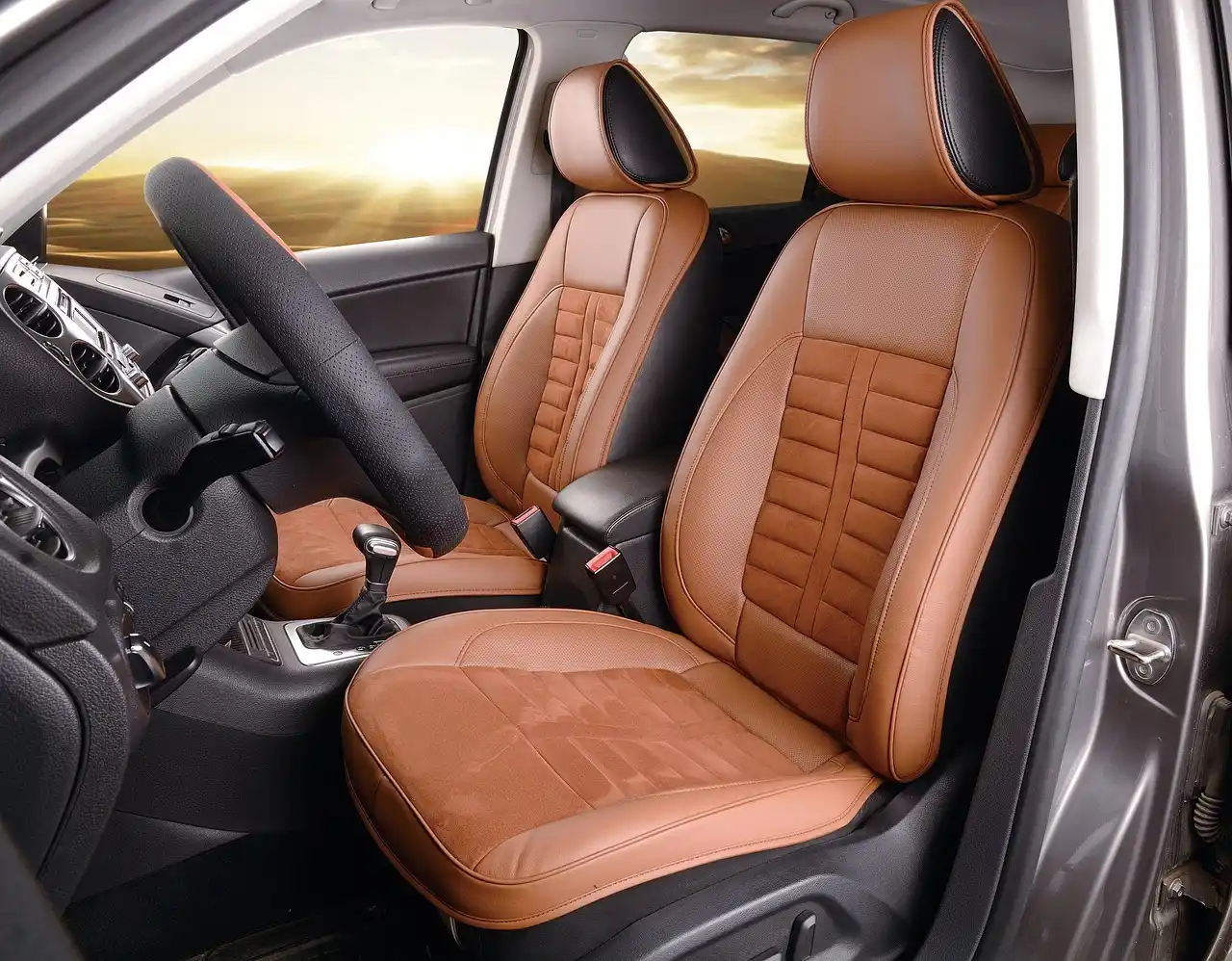
Match the cover to the mess you actually expect. For commuting and family use, a neoprene or coated-fabric cover usually makes the most sense. For gym use, pet hair, and fast cleanup, towel-style covers are easier to live with. For hard-use work vehicles, vinyl is often the simpler wipe-down choice.
Commuting and daily driving
For daily use, choose a cover that balances spill defense with comfort. Neoprene is the safer all-around pick when you want water resistance, sweat resistance, and a front-seat design that often keeps airbag zones open. Polyester can work for lighter protection, but it is better when the mess risk is moderate rather than constant.
Families and food spills
Families usually need coverage that handles cups, snack crumbs, wet clothes, and quick wipe-downs. Full sets make more sense when you want the rear bench protected too, because front-seat-only covers leave the back seat exposed. Look for seams that sit flat and for openings that do not let liquid run into the foam.
Pets and muddy gear
For pets, the main problems are fur, claws, and wet paws. Neoprene and vinyl both handle wipe-down cleanup well, while anti-slip backing helps the cover stay put when a dog jumps in and out. If the back seat carries crates, muddy boots, or weekly hardware-store runs, check whether you need rear-seat coverage instead of only front protection.
Gym bags, sweat, and quick swaps
Towel-style covers make sense when your main issue is sweat after workouts or quick changes between uses. Some models use a three-layer construction, and some listings say they are machine washable. They are practical for front seats, but they are not the strongest choice for long-term, all-season interior protection.
Neoprene seat covers
Neoprene is synthetic rubber, and listings often describe it as waterproof or 100% waterproof. It is a strong fit when you want spill resistance, sweat resistance, and a cover that stays presentable after regular use. The tradeoff is comfort: it can run warmer than polyester or a towel-style cover.
What they handle well
Neoprene is a common premium choice because it handles drinks, wet clothing, and day-to-day messes without feeling as hard as vinyl. Cars Techie lists CAR PASS full sets as 100% waterproof neoprene, and the front-seat version is a 2-piece item with separate headrest covers, which helps simplify installation and fit.
Where they can feel hot
Neoprene can feel less breathable than lighter fabrics. That matters on long drives, in hot climates, or for anyone who gets into the car sweaty after work or the gym. If cabin heat is your biggest complaint, a towel-style cover or a lighter polyester option may feel better.
Heated-seat and airbag checks
Some neoprene seat covers work with heated seats, and some do not. Check the maker’s listing for your exact model before buying. Airbag-compatible side stitching is also important for front seats, because the cover should not interfere with deployment zones or cover the side seam area the airbag needs to open through.
Vinyl seat covers
Vinyl suits buyers who want easy cleanup and a lower-cost material than many neoprene or leather-style options. It is durable and straightforward to wipe off, which is why it is often chosen for work trucks, messy cargo runs, and vehicles that see wet boots or garden soil.
Why buyers choose vinyl
Vinyl is a practical choice when cleaning speed matters more than softness. You can usually wipe it down quickly after spills, and it stands up well to dirt and grime. That makes it attractive for drivers who do not want to scrub fabric after every muddy errand.
Comfort and heat tradeoffs
Vinyl can feel sticky in summer and less comfortable on long drives. It also traps heat more readily than polyester. If your car sits in direct sun, that tradeoff becomes obvious fast, so vinyl works best when cleanup is the priority and comfort is secondary.
When cracking becomes a concern
Over time, vinyl may crack, especially if it sees repeated heat cycling and sun exposure. That makes it a better fit for buyers who want a low-cost, easy-clean cover and are willing to replace it sooner than a tougher custom-fit option.
Polyester seat covers
Polyester is the budget-friendly, lightweight option in this group. It is usually easier to install and remove than heavier materials, and it tends to resist sun discoloration better than neoprene. The tradeoff is that it often needs more maintenance if your vehicle sees regular spills.
Budget and weight advantages
Polyester appeals when you want a lower-cost cover that is simple to live with. It is often easier to fold, move, and reinstall than a thicker waterproof layer. For drivers who swap covers seasonally or only need light protection, that convenience matters.
Fit and maintenance tradeoffs
Because polyester is lighter, it can shift more if the straps and anchors are not adjusted well. It may also need more frequent cleaning than vinyl or neoprene after mud, sweat, or pet hair. The upside is that it can be less fussy in the sun than neoprene.
Best use cases
Polyester is best when the goal is budget protection, simpler installation, and decent everyday coverage rather than maximum spill resistance. It is a sensible option for a second vehicle, a work commuter, or a driver who wants a cleaner seat without paying for a heavier-duty build.
Towel-style seat covers
Towel-style covers are common for sweat, gym use, and quick removal. Some listings use a three-layer construction and some are machine washable, which makes them useful for front seats that need fast cleanup after workouts, beach days, or wet clothing.
Sweat and gym use
These covers are a strong match for drivers who sit down after exercise or outdoor activity. They absorb sweat, protect the seat from moisture, and are easy to pull off when the mess stays on the top layer. That makes them less bulky than many full waterproof covers.
Machine-washable convenience
Some towel-style listings can go straight into the wash, which is a real benefit for repeat use. Anti-slip backing is important here, because a towel cover that slides around gets annoying quickly. Look for that backing if you drive daily instead of only using it for short trips.
Front-seat focus
Most towel-style options are front-seat focused. That suits solo drivers, commuters, and gym users, but it leaves rear passengers uncovered unless you buy separate rear protection. For family use or pet transport, a broader set may be a better match.
Seat cover fit table
Fit failure is where many “waterproof” covers disappoint. Water often sneaks past seams, stitching, openings, and loose edges, then into the seat foam. A cover can also shift if the seat shape, headrest count, or strap layout does not match the vehicle.
| Cover type | Spill defense | Breathability | Heated-seat suitability | Airbag compatibility | Install effort | Best-use scenario |
|---|---|---|---|---|---|---|
| Neoprene | High, often listed as waterproof | Moderate to low | Check the listing; some models are not suitable | Often yes when side stitching is built in | Moderate | Daily spill protection, commuting, family use |
| Vinyl | High for wipe-down cleanup | Low | Check the listing; heat buildup can be a problem | Varies by design | Moderate | Work vehicles, muddy gear, easy cleaning |
| Polyester | Moderate | Higher than neoprene or vinyl | Often easier around seat heat, but still check the listing | Varies by cut | Low to moderate | Budget protection, lighter use, simpler installation |
| Towel-style | Moderate for sweat and short-term moisture | High | Usually easier to live with, but verify the exact model | Usually front-seat only; verify the design | Low | Gym use, quick swaps, washable front-seat coverage |
How do you choose the right fit?
Start with measurements and seat layout, not material. Universal-fit covers still need the right seat width, headrest shape, and strap path. A good fit keeps the cover from bunching, slipping, or blocking controls, and it helps the waterproof layer stay where it should.
Measure the seat and headrest
Universal-fit seat covers are designed for cars, SUVs, trucks, and vans, but they are not one-size-fits-all. Measure the seat base, backrest, and headrest before buying. If the listing expects a separate headrest cover, make sure your vehicle has the same count and shape.
Check bucket versus bench layout
Bucket seats and bench seats need different coverage. A front-seat cover that fits a bucket seat will not solve a rear bench, and a bench cover may not sit correctly on two separate seats. That mismatch is a common cause of loose edges and poor spill protection.
Look for straps, anchors, and anti-slip backing
Straps and anchors help keep the cover tight, while anti-slip backing reduces movement and bunching. That matters most on daily drivers, family cars, and vehicles that see frequent braking and turning. The same source describes Gorla Gear as a universal-fit, anti-slip seat cover, which is the kind of design cue to look for in any listing.
Confirm airbag and heated-seat compatibility
Front seats need airbag-compatible design, usually through side stitching or reserved airbag zones. Heated-seat compatibility is separate from airbag safety. Do not assume one implies the other. Check the maker’s listing for your exact trim, because some products are fine with heaters and others are not.
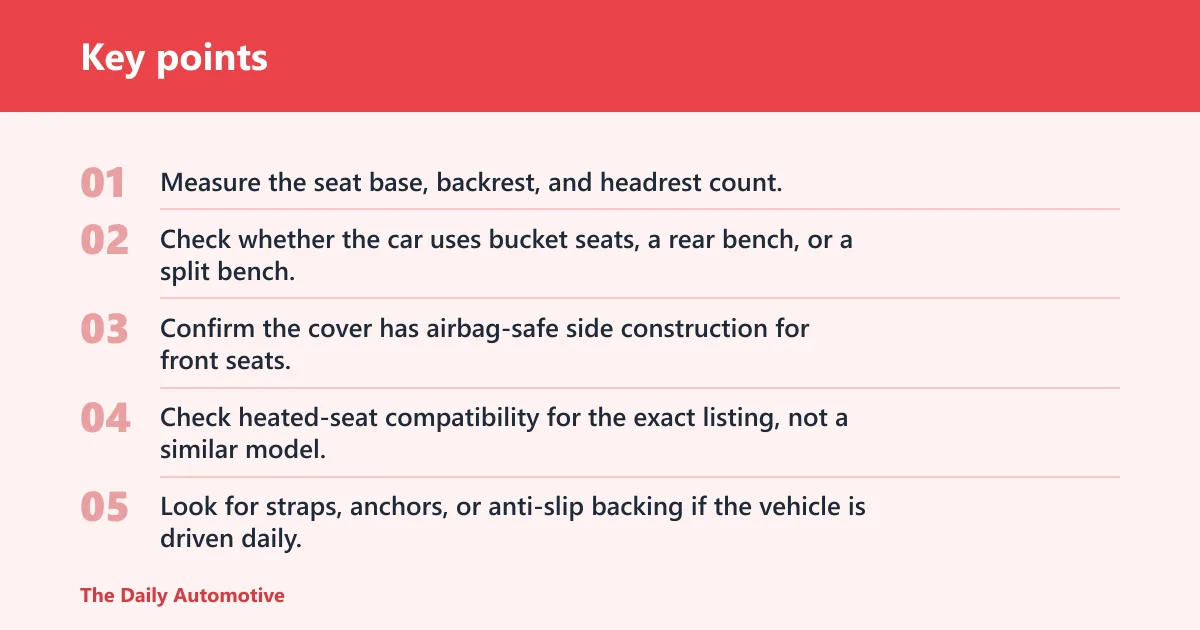
- Measure the seat base, backrest, and headrest count.
- Check whether the car uses bucket seats, a rear bench, or a split bench.
- Confirm the cover has airbag-safe side construction for front seats.
- Check heated-seat compatibility for the exact listing, not a similar model.
- Look for straps, anchors, or anti-slip backing if the vehicle is driven daily.
Say your SUV has split rear seats and one loose headrest cover is missing from the package. The cover may still install, but fit will be uneven, and water can reach the exposed foam at the uncovered section. That is a fit problem, not a material problem.
Suppose your commuter car has heated front seats and you buy a neoprene cover without checking the listing. The cover may feel too insulating for the heater or may not be approved for the seat’s heat output. The safer move is to verify heated-seat compatibility before purchase.
What should you avoid before buying?
Avoid treating waterproofing as automatic. The weak points are usually seams, stitching, openings around the headrest, and edges that pull away from the seat. Avoid any cover that ignores your airbag layout, seat controls, or seat shape, because those details are where fit problems turn into daily annoyances.
Loose headrests and bad openings
Separate headrest covers can help fit, but only if the listing matches your vehicle’s headrest count and shape. If the opening is too loose, the cover shifts and water can track underneath. That is especially common when a universal-fit model is stretched beyond its intended shape.
Seat-mounted controls and zipper conflicts
Some seats have side controls, toggles, or lumbar switches that a generic cover can obstruct. Zippers and seams can also interfere with those controls. Check the listing for access to sliders, latches, and climate controls if your seat uses them.
Front-seat-only versus full-set confusion
Front-seat-only covers are common and are often the easiest place to start. But if you carry children, pets, or groceries in the rear, a front-only purchase leaves part of the cabin unprotected. Full sets cost more and take longer to install, yet they make sense when the rear seat gets regular use.
Cleaning instructions that do not match the material
Cleaning depends on the material and the maker’s instructions. Neoprene and vinyl usually clean with wiping, while some towel-style covers can be machine washed. Polyester often needs more routine maintenance. Follow the listing instructions and the vehicle manual, especially around heated seats and airbag zones.
Our picks by need
Daily spill protection: CAR PASS front-seat neoprene

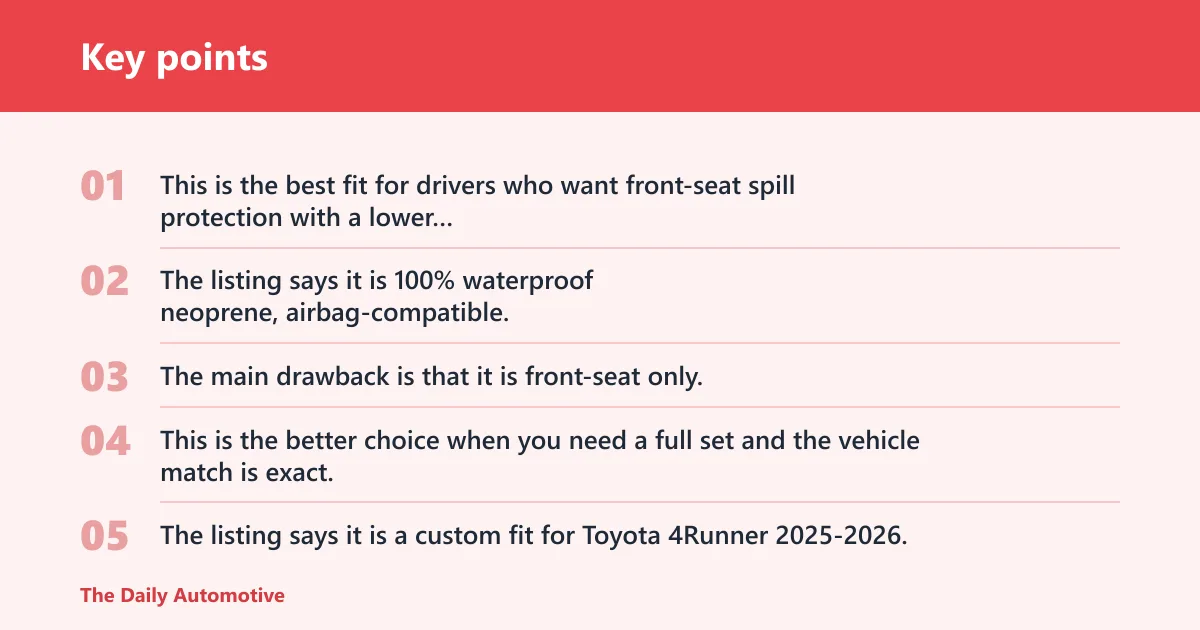
This is the best fit for drivers who want front-seat spill protection with a lower purchase price than a custom full set. The listing says it is 100% waterproof neoprene, airbag-compatible, and uses separate headrest covers for easier setup. The main drawback is that it is front-seat only, so the rear row needs separate protection if you want full-cabin coverage.
Custom full-set coverage: Coverado for Toyota 4Runner

This is the better choice when you need a full set and the vehicle match is exact. The drawback is obvious: it is much more specialized, so it is not a general answer for mixed vehicle fleets.
Mistakes to avoid
Do not buy by material name alone. A waterproof label does not tell you whether seams, stitching, or openings are protected well enough for real use. It also does not tell you whether the cover clears heated seats, airbag zones, or seat-mounted controls.
Do not assume universal-fit means the same thing on every car. Measurements still matter, and a strap layout that works on one bucket seat may bunch on another. Do not skip the rear-seat decision either; front-only coverage is common, but it is not enough for every driver.
Do not overrate the strongest-looking material if comfort matters. Vinyl can be easier to clean, but it can feel sticky in heat. Neoprene can protect well, but it may run warm. Towel-style covers are convenient, but they are not the right answer for every vehicle or season.
Frequently asked questions
What is the best waterproof seat cover for cars?
The best waterproof seat cover depends on use. Neoprene is usually the strongest all-around choice for daily spill protection, while vinyl works well for heavy cleanup and towel-style covers suit gym use. The right answer still depends on seat shape, airbag layout, and whether you need front-only or full-set coverage.
Are neoprene seat covers really waterproof?
Many neoprene covers are listed as waterproof or 100% waterproof, but seams, stitching, and openings still matter. Water can reach the seat foam if the cover does not fit tightly. Check the exact listing for coverage details, and do not assume every neoprene product handles heat or seat shape the same way.
How do I choose the right fit for my car seat cover?
Measure the seat base, backrest, and headrest count, then match those details to the listing. Check whether your car uses bucket seats or a rear bench, and confirm airbag and heated-seat compatibility. Anti-slip backing and secure straps matter because they reduce shifting during normal driving.
Will waterproof seat covers work with side airbags?
They can, but only if the cover is designed for it. Look for side stitching or a reserved airbag zone on front seats, and do not buy a generic cover that blocks deployment. This is a safety issue, so the maker’s listing and vehicle manual should both agree.
How do I clean waterproof car seat covers?
Cleaning depends on the material. Vinyl and many neoprene covers usually wipe clean, while some towel-style covers are machine washable. Polyester often needs more routine maintenance. Follow the listing instructions, and if the cover is on a heated seat, make sure cleaning does not damage the finish or backing.
Should I buy front-seat covers or a full set?
Buy front-seat covers if your mess risk is mostly limited to the driver and passenger seats. Choose a full set if you regularly carry kids, pets, or gear in the back seat. Front-only is simpler and cheaper; full-set coverage protects more of the interior but takes more setup.
Products related to this article
Sponsored / affiliate links. As an Amazon Associate I earn from qualifying purchases. I may earn additional commission from eligible campaigns.