Door Sill Plate Replacement Cost / Price / How Much
Door sill plate replacement usually costs about $80 to $350 per door, but factory-lit, stainless, or molded trim can push dealer quotes above $500. Skipping a cracked or loose sill plate can leave exposed metal, let water in, and add labor later. This guide breaks down the price drivers, fitment types, and the hidden charges that change your final bill.
Door sill plate basics
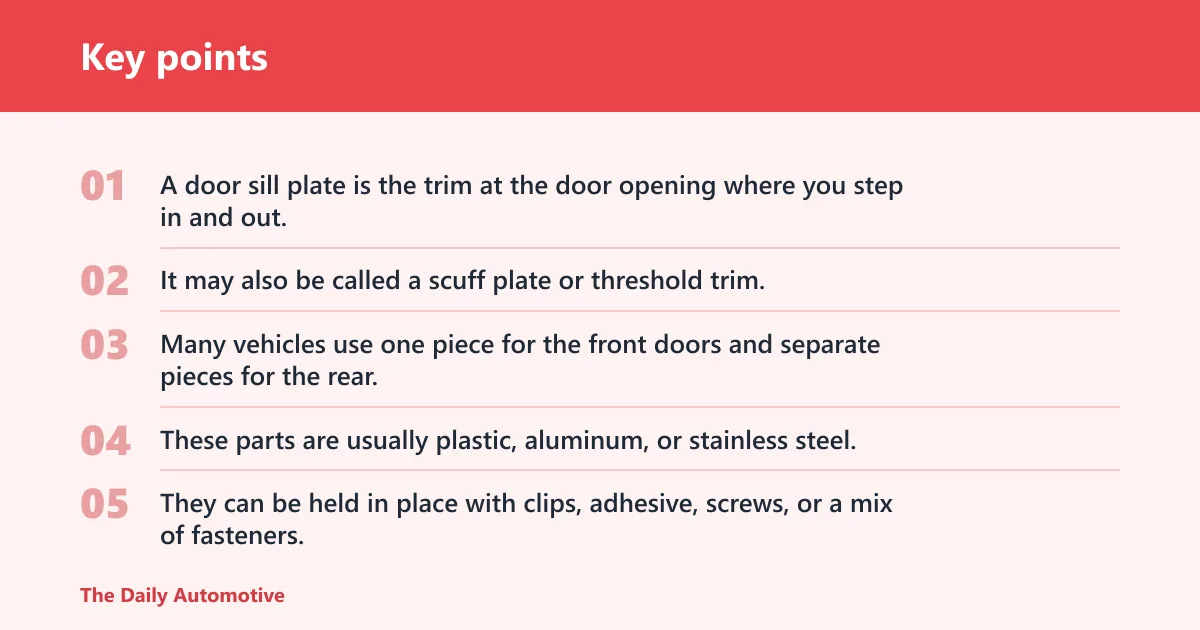


A door sill plate is the trim at the door opening where you step in and out. It may also be called a scuff plate or threshold trim. Many vehicles use one piece for the front doors and separate pieces for the rear, while some use a single long trim section per side.
These parts are usually plastic, aluminum, or stainless steel. They can be held in place with clips, adhesive, screws, or a mix of fasteners. That attachment method matters because it changes both part price and labor time.
On some vehicles, the sill plate also hides the edge of the carpet and protects the painted threshold area beside the weather seal. That means removal can expose adjacent trim, broken retainers, or scratched paint if the clips release hard.
Door sill plate pricing worksheet
Use this worksheet to estimate your bill before you request quotes. Start with the vehicle type, then add the part type, installation method, and any hidden add-ons. The total below is a planning estimate, not a fixed quote.
| Cost factor | Low estimate | Medium estimate | High estimate |
|---|---|---|---|
| Compact or midsize vehicle, one plain snap-in sill plate | $80 | $150 | $220 |
| OEM part with dealer fitment lookup | +$40 | +$90 | +$180 |
| Aftermarket part, model-specific or universal | +$20 | +$60 | +$110 |
| Adhesive-backed or screw-retained trim | +$30 | +$70 | +$130 |
| Illuminated sill plate with wiring work | +$120 | +$220 | +$400 |
| Broken clips, retainers, or clip kit | +$10 | +$35 | +$80 |
| Wiring repair or adjacent trim damage | +$0 | +$75 | +$200 |
| Estimated total per door | $80 to $150 | $180 to $350 | $350 to $600+ |
Use the low column for a simple snap-in plastic plate on an older vehicle with easy access. Use the middle column for a better-matched replacement with some trim removal. Use the high column for illuminated, stainless, or dealer-sourced trim that needs wiring or extra labor.
How much does replacement cost?
Most single-door sill plate replacements are commonly reported to land between about $80 and $350, with the final number affected by part style, fastening method, and shop labor rate. Full-vehicle pricing is higher because front and rear pieces may both need replacement, and each side can require its own clips or wiring work.
A one-door job at an independent shop may stay under $200 if the part is non-illuminated and the clips are reusable. A full set on a luxury model can rise quickly when the trim is metal, color-matched, or lighted.
One door versus multiple doors
Replacing one door sill plate is cheaper than replacing all four or all six pieces on a larger vehicle. Shops often price by the side or by the individual opening, so ask whether the quote covers one door, one side, or the entire vehicle. That detail changes the total more than most owners expect.
Say your front driver sill plate is cracked and the matching rear piece is faded. If the vehicle uses separate trim for each opening, replacing both at once may cost less in labor than two separate visits, even though the part total rises.
OEM vs aftermarket price differences
OEM door sill plates usually cost more than aftermarket pieces because they are built to the vehicle’s exact fitment and finish. Dealer parts departments can confirm compatibility with a VIN lookup, which helps with brushed, painted, or illuminated variants that are easy to mismatch.
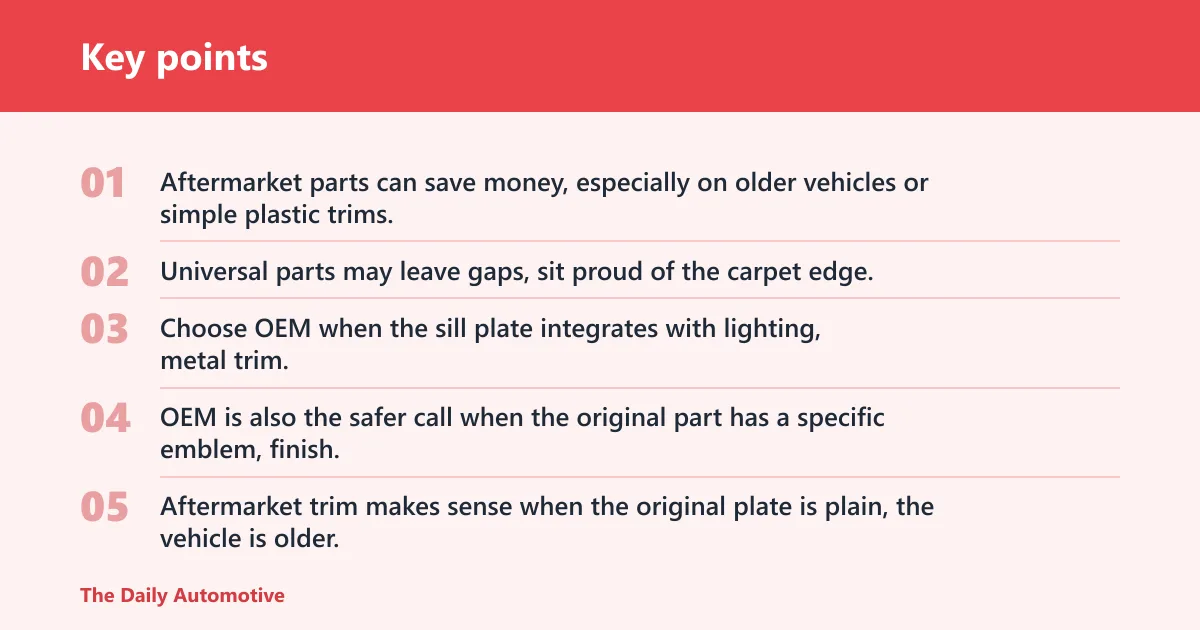
Aftermarket parts can save money, especially on older vehicles or simple plastic trims. The tradeoff is fitment quality. Universal parts may leave gaps, sit proud of the carpet edge, or rely on adhesive that does not hold as cleanly as factory-style clips.
When OEM fitment is worth it
Choose OEM when the sill plate integrates with lighting, metal trim, or a complex shape that follows the door opening closely. OEM is also the safer call when the original part has a specific emblem, finish, or molded contour that must match adjacent trim.
Where aftermarket parts can save money
Aftermarket trim makes sense when the original plate is plain, the vehicle is older, or cosmetic perfection is less important than getting the opening covered again. For many common sedans and crossovers, a model-specific aftermarket plate can cut part cost sharply.
That said, cheap universal parts can create more work. If the adhesive bond fails or the edges do not align, the “saved” part cost can disappear into extra labor and rework.
What drives labor charges?
Labor is often the less visible part of door sill plate replacement cost. A simple snap-in trim piece may take little time, while adhesive-backed, screw-retained, or illuminated trim can require careful removal, cleanup, and reassembly. Regional labor rates and shop type also move the total.
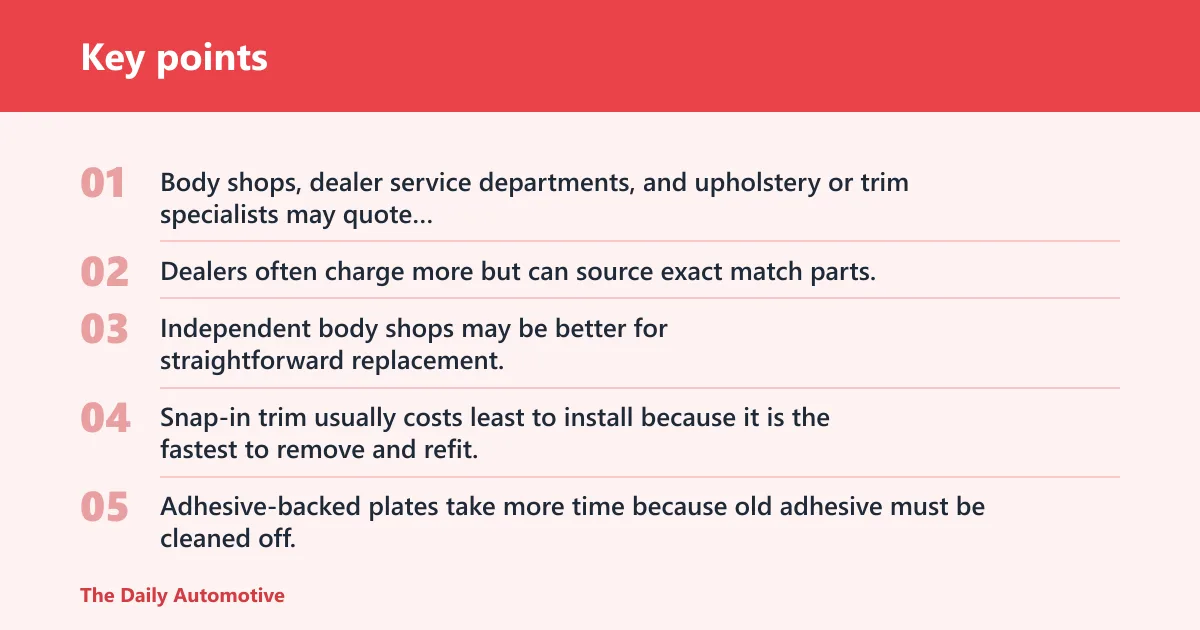
Body shops, dealer service departments, and upholstery or trim specialists may quote differently for the same job. Dealers often charge more but can source exact match parts. Independent body shops may be better for straightforward replacement, while upholstery or trim shops can be a smart fit for interior-matching work.
Snap-in, adhesive-backed, and screw-retained trim
Snap-in trim usually costs least to install because it is the fastest to remove and refit. Adhesive-backed plates take more time because old adhesive must be cleaned off. Screw-retained trim adds another step if the fasteners are hidden under weather seals or carpet edges.
Illuminated sill plates add labor
Illuminated door sill plates use LEDs or a lighted emblem, and that wiring changes the job. A technician may need to route a loom, connect to a power source, and test the lights after installation. That extra work raises both labor and parts cost, especially if the loom needs repair.
Suppose a luxury crossover has a lit front sill plate on one side that no longer comes on. If the plate itself is damaged and the connector is corroded, the bill can include the trim piece, a connector repair, and extra diagnostic time before the panel goes back in.
Region, shop type, and trim removal risk
Labor rates vary by region, and urban shops often charge more than small-town facilities. Trim removal risk matters too. If the sill plate sits under tight weather seals or next to painted rocker trim, a careful job takes longer because the technician has to avoid scratching surrounding surfaces.
Can you repair instead of replace?
Sometimes, yes. A sill plate with scratches, scuffs, or light discoloration can often be cleaned, refinished, or re-secured instead of replaced. If the trim is still straight and the mounting tabs are intact, repair can cost much less than a full new part.
Replacement makes more sense when the plate is cracked, delaminated, badly warped, or missing clips. A loose plate that rattles or lifts at the edge may also need replacement if the retainers are broken and the part will not stay seated.
When re-securing makes sense
If the plate only popped loose, a shop may be able to reinstall it with new clips or fresh adhesive. That is usually the least expensive route when the trim itself is intact and the mounting surface is clean.
When refinishing makes sense
Minor cosmetic damage can sometimes be hidden with polishing, scuff repair, or refinishing on metal trim. That works best on stainless or brushed surfaces with shallow marks. Deep gouges, broken corners, and stretched plastic usually do not refinish well.
Can I replace a door sill plate myself?
Yes, if the part is a simple snap-in piece and you can confirm the correct fitment. DIY can save money on labor, clips, and shop markup. It becomes a poor fit for illuminated trim, adhesive-heavy replacements, or vehicles that need extensive interior trim removal.
Basic hand tools may be enough for a simple job, but special pry tools help reduce damage to the weather seal and surrounding trim. You also need to confirm the exact part number, because a front-left plate may not fit the rear opening even when the shape looks close.
- Match the part number by VIN or exact trim package.
- Check whether the plate uses clips, adhesive, screws, or wiring.
- Remove the old trim slowly to avoid bending retainers.
- Inspect the mounting surface for broken clips, residue, or corrosion.
- Test-fit the new piece before final installation.
- Press or fasten the part evenly so the edge sits flush.
- Verify that the door closes cleanly and the trim does not rub.
A common first-timer mistake is buying a visually similar trim piece without checking the fastening method. A plate that looks correct online can still fail to match the clip pattern or the light connector, which turns a cheap part into a return and a second labor charge.
Door sill plate replacement cost by type
Here is a practical way to estimate the final bill by trim type. The figures below are general planning ranges, not fixed national prices. The same source rates, region, and vehicle design still matter.
| Trim type | Typical part cost | Typical labor cost | Common total per door |
|---|---|---|---|
| Basic plastic, snap-in | $20 to $60 | $40 to $90 | $60 to $150 |
| Aluminum or stainless, non-illuminated | $50 to $150 | $60 to $120 | $110 to $270 |
| OEM, vehicle-specific fitment | $60 to $220 | $60 to $150 | $120 to $370 |
| Illuminated or wired trim | $120 to $350 | $100 to $250 | $220 to $600+ |
Hidden add-ons can move any row upward. A broken clip kit may be small money. A damaged connector or scratched rocker trim can add a lot more.
Frequently asked questions
How much does door sill plate replacement cost?
Most single-door replacements cost $80 to $350. Simple snap-in plastic trim stays near the low end, while OEM, stainless, or illuminated pieces cost more. Dealer quotes can climb past $500 when wiring, finish matching, or extra trim removal is involved.
What is the average price to replace a door sill plate?
A reasonable average for a common car or crossover is about $150 to $250 per door when both part and labor are included. That average assumes a straightforward replacement, not a lighted plate or a part that needs special ordering or wiring repair.
Do OEM door sill plates cost more than aftermarket ones?
Usually, yes. OEM parts are built for exact vehicle fitment and often cost more because they come through dealer channels and are matched by VIN. Aftermarket trim can be cheaper, but fitment gaps, finish mismatch, or weaker adhesive can erase part of the savings.
What affects the cost of replacing door sill plates?
Part type, fastening method, illumination, and hidden damage drive the bill most often. OEM fitment, broken clips, adhesive cleanup, connector repair, and adjacent trim scratches all add cost. The same source rates also vary by region and by whether the job goes to a dealer, body shop, or trim shop.
Can a cracked or peeling sill plate be repaired instead of replaced?
Sometimes. Light scuffs, loose edges, and minor finish wear can often be cleaned, refinished, or re-secured. Cracks, missing tabs, delamination, and broken clips usually point to replacement because the part will not stay flat or safe to step on for long.
How long does door sill plate replacement take?
A simple snap-in replacement may take about 15 to 30 minutes per door. Adhesive-backed or illuminated trim can take much longer because of cleanup, wiring, and testing. If the technician finds broken retainers or damaged nearby trim, the job can extend well past an hour.
Products related to this article
Sponsored / affiliate links. As an Amazon Associate I earn from qualifying purchases. I may earn additional commission from eligible campaigns.