Best Serpentine Belt Brand: Gates, Continental, Bando & More Compared
A serpentine belt is not a one-size-fits-all part — the exact length and rib count are specific to your engine, so no single belt is “the best” across every car. What actually varies between brands is construction quality, noise level, and how long the belt lasts before it needs replacing again. This guide compares six current products from the brands that consistently rank highest in independent belt reviews, cross-referencing manufacturer data against aggregated buyer feedback — not in-house lab testing. Our top picks: Gates for the brand most likely to meet or exceed OEM spec across the board, and Dayco if you want solid quality at the lowest price.
Quick Answer
Gates, Continental, Bando, ACDelco, and Dayco are consistently the top-rated serpentine belt brands, each meeting or exceeding OEM specifications. There is no single “best” belt across all vehicles because length and rib count are vehicle-specific — pick your brand for quality, then order the exact part number that matches your engine.
Quick Picks
- Best Overall Brand: Gates Micro-V — meets or exceeds OEM spec.
- Best Premium/Quiet: Continental Elite — upgraded compounding for less noise.
- Best Budget: Dayco — solid quality at the lowest typical price.
- Best Companion Tool: DURATECH Tension Tool Set — for a DIY swap.
How These Belts Are Grouped
Rather than ranking six belts on one scale, we grouped them by what actually differs between brands at the same fitment size — noise level, longevity claims, load capacity, and price — since the belt length and rib count itself is dictated by your engine, not by brand choice. The six categories below cover the situations a car owner is most likely to run into:
- Best Overall Brand: Gates Micro-V
- Best Premium/Quiet: Continental Elite
- Best Heavy-Load: Bando
- Best Long-Lasting: ACDelco Gold Heavy Duty
- Best Budget: Dayco
- Best Companion Tool: DURATECH Tool Set
Comparison Table: All 6 Picks at a Glance
| Award | Brand | Known For | Typical Price* | Verdict |
|---|---|---|---|---|
| Best Overall | Gates | Meets/exceeds OEM spec | $20-$35 | Safe default across most vehicles |
| Best Premium/Quiet | Continental Elite | Upgraded noise/durability compounding | $20-$30 | Worth it if noise bothers you |
| Best Heavy-Load | Bando | High tensile cords, OEM awards | $15-$25 | Good for high-accessory-load engines |
| Best Long-Lasting | ACDelco Gold Heavy Duty | Claims up to 60% longer life | $18-$28 | Good middle-ground value/lifespan |
| Best Budget | Dayco | Reliable at a lower price point | $12-$20 | Good quality without paying premium |
| Best Companion Tool | DURATECH Tool Set | Tensioner release for DIY install | $20-$30 | Makes a self-install actually feasible |
*Prices fluctuate by exact belt length/rib count and retailer — treat these as ballpark ranges.
Full Reviews: 6 Serpentine Belt Picks Worth Buying
Best Overall Brand: Gates Micro-V
Best Overall • Approx. $20-$35
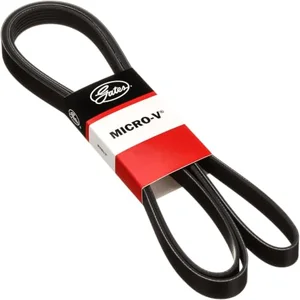
Gates K060882 Micro V Serpentine Drive Belt
| Construction | EPDM |
| OEM Relationship | Major factory belt supplier |
| Availability | Nearly every length/rib count |
| Warranty | Varies by retailer |
- Gates is one of the most widely OEM-supplied belt manufacturers — many factory-original belts are Gates under a different label
- Wide availability across nearly every belt length and rib count
- Not the cheapest option — budget brands like Dayco can be a few dollars less for a comparable everyday belt
This is the safe default pick if you’re not sure which brand to choose — confirm the exact part number for your engine (length and rib count) using your VIN or the belt routing diagram under your hood, then order the Gates equivalent. See our guide on how to fix a squealing or squeaking belt if you’re not yet sure the belt itself is the problem.
Best Premium/Quiet: Continental Elite
Best Premium/Quiet • Approx. $20-$30
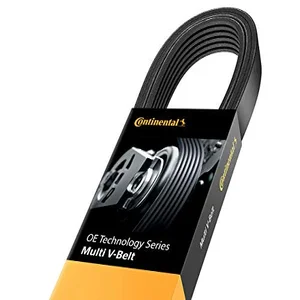
Continental Elite 4060930 OE Technology Multi-V Belt
| Construction | EPDM, upgraded compounding |
| Noise Level | Reduced vs. older designs |
| Durability Tier | Comparable to Gates |
| Availability | Wide |
- Continental’s more recent construction and compound upgrades have genuinely improved on their older designs
- Noticeable reduction in belt noise/squeal compared to some competitors
- Similar durability tier to Gates — the real differentiator is noise reduction, which matters most if your old belt was loud
Worth the small upgrade over Gates if a noisy old belt was your original complaint.
Best for Heavy Accessory Loads: Bando
Best Heavy-Load • Approx. $15-$25
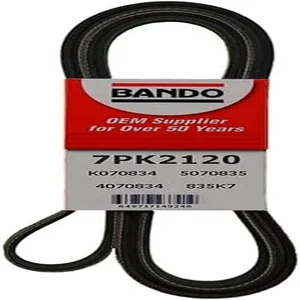
Bando 7PK2120 OEM Quality Serpentine Belt
| Construction | High tensile cord |
| OEM Awards | Honda, Toyota, Nissan, VW |
| Best For | Multiple belt-driven accessories |
| Availability | Good |
- Bando has won OEM production awards from Honda, Toyota, Nissan, and VW
- Tensile-cord construction is built to resist stretching under high accessory loads
- Slightly less brand recognition among US DIYers compared to Gates or ACDelco, though the OEM track record is real
A good fit for engines with multiple belt-driven components (AC compressor, power steering, alternator) all pulling on one belt.
Best Long-Lasting Value: ACDelco Gold Heavy Duty
Best Long-Lasting • Approx. $18-$28
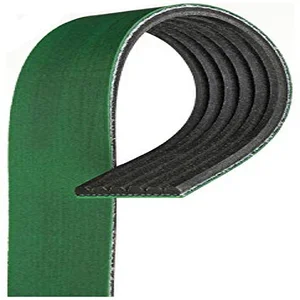
ACDelco Gold K060930HD Heavy Duty V-Ribbed Serpentine Belt
| Construction | EPDM, heavy-duty line |
| OEM Relationship | GM factory supplier |
| Longevity Claim | Up to 60% longer (mfr.) |
| Availability | Good |
- ACDelco is GM’s OE supplier, and the Heavy Duty line is marketed specifically around extended service life
- Good middle ground between the premium Gates/Continental tier and the budget Dayco option
- The “60% longer” claim is a manufacturer figure — treat it as directional rather than a guaranteed number
A sensible pick between the premium and budget tiers, especially for drivers wanting some extended-life assurance without paying Gates or Continental prices.
Best Budget: Dayco
Best Budget • Approx. $12-$20
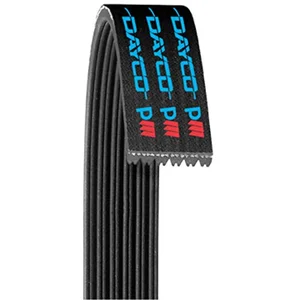
Dayco 5060840 Serpentine 6-Rib Belt
| Construction | EPDM |
| Example Length | 84 in. |
| Price Tier | Budget |
| Availability | Good |
- Consistently recommended as the best value pick across independent belt comparisons
- Solid, dependable construction without the premium-brand price tag
- Not marketed around a specific longevity or noise-reduction claim the way the premium picks are
A reliable, no-frills belt rather than a specialty one — the right call when price is the priority.
Best Companion Tool: DURATECH Serpentine Belt Tool Set
Best Companion Tool • Approx. $20-$30
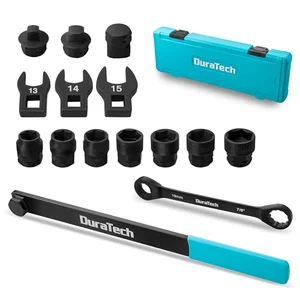
DURATECH 15-Piece Universal Ratcheting Serpentine Belt Tool Set
| Purpose | Releases spring-loaded tensioners |
| Piece Count | 15 |
| Best For | DIY belt swap |
| Type | Tool, not a belt |
- A serpentine belt swap requires releasing the automatic tensioner, which most standard wrench sets can’t reach or leverage properly
- Makes a DIY swap realistic instead of frustrating
- An accessory, not a belt — you’ll still need one of the belt picks above alongside it
Without a dedicated tensioner tool, releasing the spring-loaded tensioner is the single biggest obstacle to a DIY belt swap.
How We Picked These
We haven’t run these belts through a lab — no controlled tension/wear testing, no decibel-meter noise comparison. What we did instead: cross-referenced each brand’s manufacturer-published construction claims (materials, tensile strength, OEM supply relationships) against independent belt-review roundups and aggregated buyer feedback, and grouped picks by what actually differs between brands (noise, longevity claims, load capacity) rather than pretending one universal belt beats all others regardless of vehicle. This is a genuinely useful, honestly-sourced buyer’s guide — not a hands-on lab review, and we’re not pretending otherwise.
Buying Guide: What Actually Matters
1. Get Your Exact Part Number First
Belt length and rib count are specific to your engine and even which accessories it’s equipped with (AC, power steering, etc. can change the routing and length). Look up your part number by VIN or check the routing diagram sticker often found under the hood before choosing a brand — the brand comparisons above only matter once you’ve confirmed the correct size.
2. EPDM Has Mostly Replaced Neoprene
Most modern serpentine belts use EPDM (ethylene propylene diene monomer) rubber rather than older neoprene compounds, because EPDM resists heat and ozone-related cracking significantly better over the belt’s service life. All of the brands in this roundup use EPDM construction in their current lineups — if you find an unusually cheap belt that doesn’t specify its material, that’s worth a second look.
3. Don’t Assume Cracking Is the Only Warning Sign
A squealing belt is an early warning sign, not just noise to tolerate. Waiting until a belt actually snaps can strand you and, on some engines, cause additional damage if the belt drives the water pump. Note that modern EPDM belts often do not crack visibly the way older neoprene belts did — instead they wear gradually, losing rib material until they start slipping, so squealing and reduced grip can be the only warning signs even on a belt that looks fine at a glance. See our guide on diagnosing a squealing belt for how to tell whether it’s the belt itself or a failing pulley/tensioner.
4. Replace the Tensioner if It’s Original and High-Mileage
A worn automatic tensioner is a common reason a brand-new belt still squeals or wears prematurely. If your car is high-mileage and the tensioner has never been replaced, budgeting for a new tensioner alongside the belt is often worth it rather than reusing a weak spring that will just wear the new belt faster.
5. Check for a Warranty — It Signals Manufacturer Confidence
Many budget aftermarket belts skip a warranty entirely, while established brands often back their belts with coverage in the 3-year/36,000-mile range. A warranty is not just a safety net — it is a signal the manufacturer trusts its own construction and compound. All of the branded picks above are backed by a warranty; a suspiciously cheap belt with none, or one that will not name its rubber compound, is a real red flag worth skipping.
Frequently Asked Questions
What is the best serpentine belt brand overall?
Gates is the most consistently recommended overall brand, since it’s a major OEM supplier and is widely available in nearly every length and rib count. Continental, ACDelco, Bando, and Dayco are all also well-regarded, each with a slightly different strength (noise, longevity, load capacity, or price).
Does it matter which brand of serpentine belt I use?
Yes, to a degree — construction quality, noise level, and expected lifespan vary between brands even at the same fitment size. That said, fitment (correct length and rib count for your engine) matters far more than brand choice.
How long do serpentine belts typically last?
Most quality belts from major brands are rated for roughly 60,000 to 90,000 miles under normal conditions, though heat, age, and pulley/tensioner condition can shorten that significantly.
Can I install a serpentine belt myself?
Yes, on most vehicles. The main challenge is releasing the spring-loaded automatic tensioner, which a dedicated serpentine belt tool set makes much easier than trying to improvise with a standard wrench.
Should I replace the tensioner with the belt?
If the tensioner is original and the car is high-mileage, replacing it alongside the belt is often worth doing — a worn tensioner can cause a new belt to squeal or wear out faster than it should.
Conclusion
Belt fitment is not optional — confirm your exact part number before shopping by brand. Once you know your size, Gates is the safest overall pick for quality and availability, Continental Elite is worth the small upgrade if noise bothers you, and Dayco is a solid choice if price is the priority. Pair whichever belt you choose with a tensioner tool (and a fresh tensioner, if yours is original and high-mileage) for a swap that actually lasts.
Products related to this article
Sponsored / affiliate links. As an Amazon Associate I earn from qualifying purchases. I may earn additional commission from eligible campaigns.