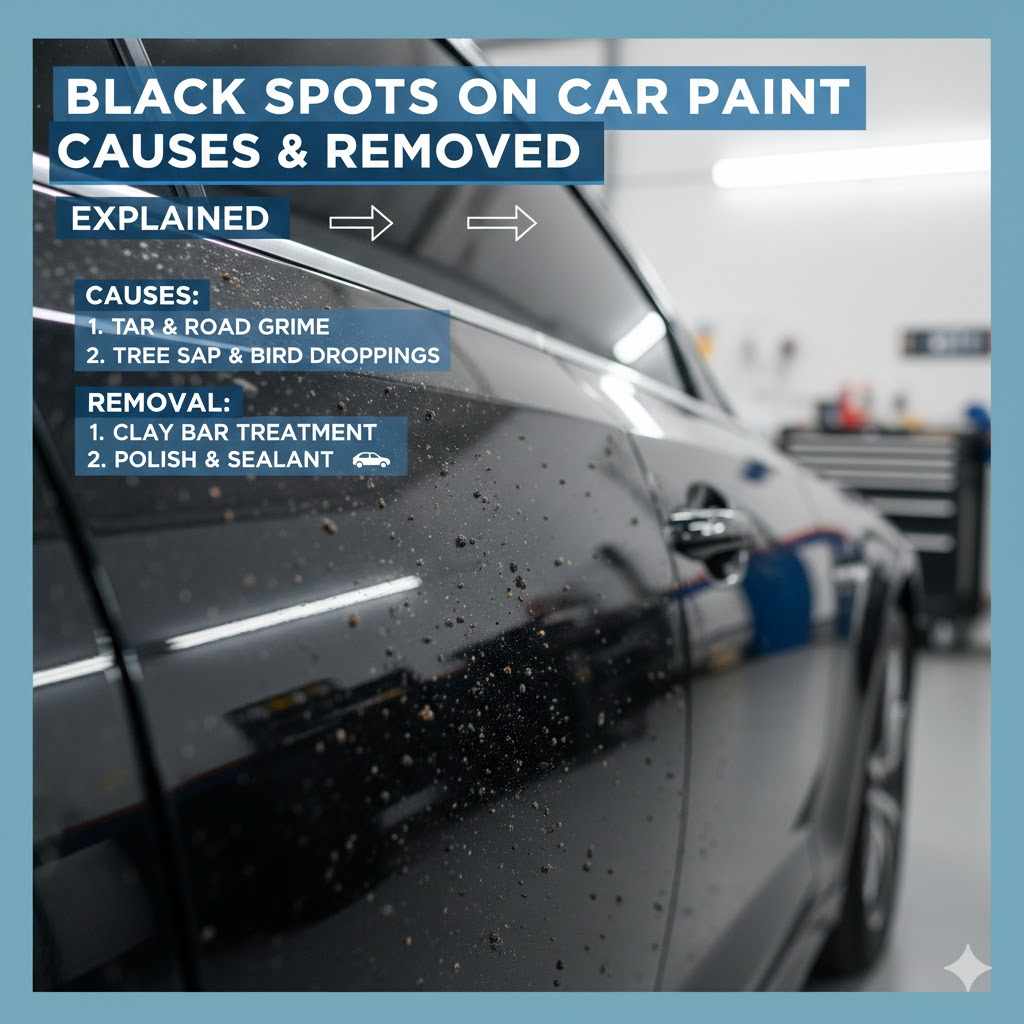
Black Spots on Car Paint: Causes & Removal Explained
Dealing with Black Spots on Car Paint: Causes & Removal can be frustrating, especially if you’re new to car care. These dark blemishes can pop up seemingly out of nowhere, leaving your car looking less than its best. But don’t worry! This is a common problem, and figuring out what causes it doesn’t have to be hard. This guide will explore the common culprits behind those annoying spots and provide a simple, step-by-step solution to get your car’s paint looking shiny again. Now let’s get started and make your car look great.
What Are Black Spots and Why Do They Appear?
Black spots on car paint aren’t just one thing; they can be caused by various external factors. These spots often appear as tiny, dark specks, but their appearance varies. Some may be raised, while others sit flush with the paint’s surface. Recognizing the source is the first step toward effective removal. Understanding the different kinds of black spots helps choose the correct method of removal, preserving the integrity and gloss of your vehicle’s finish.
From environmental contaminants to imperfections from the manufacturing, these spots can arise anytime. It’s useful to be familiar with the main sources of such blemishes and their unique characteristics.
Environmental Contaminants That Cause Black Spots
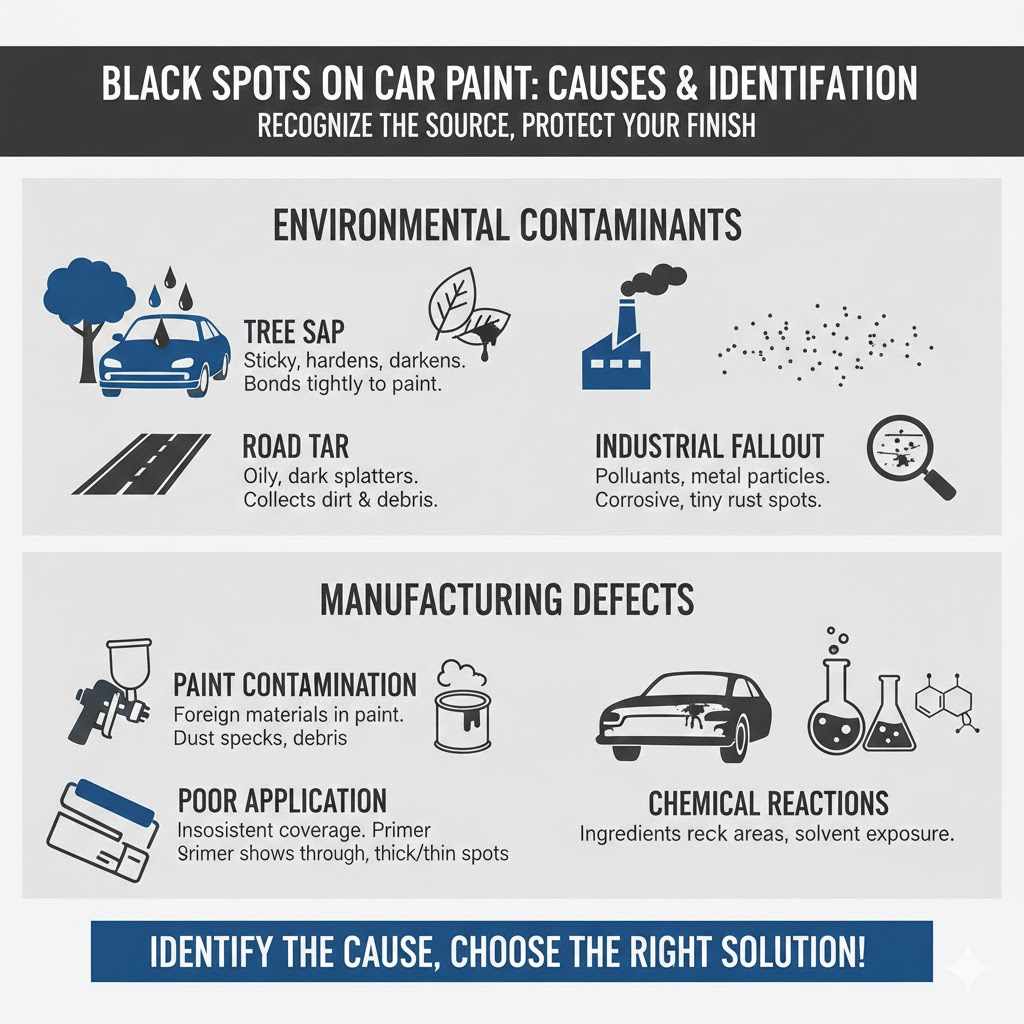
External factors play a big part in creating black spots on car paint. Things in the environment constantly assault your car’s surface. These include everything from tree sap to industrial fallout. Regular exposure can lead to the formation of these unsightly spots. The nature of these contaminants differs in both composition and adherence to the paint. Recognizing these types of environmental factors helps decide how to remove those spots effectively. Let’s explore the primary environmental elements that contribute to black spots, and how they react with your car’s paint.
Tree Sap: Tree sap is very sticky and can bond tightly to your car’s paint. Sap is rich in sugars and resins, so it hardens and darkens over time. It can be particularly stubborn to remove, especially if left for an extended period. The longer the sap remains, the more it integrates with the paint.
Consider this scenario: You park your car under a tree for a few hours. When you return, you find small, dark spots scattered across the hood and roof. These are likely sap, which has dripped onto your car from above.
Road Tar: Road tar is a product of asphalt and commonly splatters onto vehicles. Tar is made of dark, oily substances. It is prone to sticking to the surface and creating black spots. The texture of tar is usually sticky and can collect dirt and other debris.
Here’s a real example: You’re driving on a recently paved road, and you notice dark, round spots on your car’s lower panels. These spots are likely tar, kicked up from the road surface.
- Industrial Fallout: Industrial fallout includes pollutants and small metal particles emitted by factories. These pollutants will often settle on vehicles. They can bond with the paint and cause black spots, which sometimes look like tiny rust spots. The chemical composition of industrial pollutants can be corrosive, which can damage the paint finish.
Manufacturing Defects and Their Role in Black Spots
Besides environmental causes, defects in the paint job during the manufacturing process can also cause black spots. Some problems arise from the way paint is applied to the car’s surface at the factory. These are a different category of causes that contribute to the appearance of blemishes on your vehicle. It is important to know about these issues. Understanding them can help determine whether the spots are the result of poor application, contaminants, or other factory flaws. A car’s paint job is done in multiple stages. Any problem in these processes might result in these issues.
Paint Contamination: Paint contamination occurs when foreign materials mix into the paint. Dust particles or other pollutants can contaminate the paint. This leads to the appearance of black spots. It is important for manufacturers to maintain a clean environment during the painting process.
For instance, small pieces of dust or debris enter the paint. These particles dry into the paint. This creates tiny black spots or specks.
- Poor Application: Uneven application of paint can create areas with inconsistent coverage. This can result in the appearance of dark spots. If the paint is too thin in some areas, the primer underneath may show through. If the coat of paint is too thick, there may be imperfections as well.
- Chemical Reactions: Chemical reactions within the paint itself can sometimes lead to black spots. The chemicals in the paint might not always work well together. Certain reactions within the paint will cause dark areas to appear. Exposure to specific solvents or substances during manufacturing can also start chemical reactions.
Identifying the Type of Black Spots on Your Car Paint
Identifying the kind of black spot is important before beginning removal. Different spot types may require different approaches. Some spots may simply wash off, while others may require specialized cleaning or polishing. This stage is key to determining the best course of action. It enables a better-informed strategy for dealing with the spots. It prevents you from using ineffective methods. Knowing the type of spot reduces the chance of damaging your car’s paint. Accurate assessment helps choose the most suitable products and techniques. This also ensures the best results.
Visual Inspection and Spot Identification
Start with a visual inspection to understand what you’re dealing with. Move around your car in good lighting, and look at the spots up close. Check whether the spots are raised, flat, or embedded in the paint. You can often tell a lot just by looking carefully. This careful examination is the initial step in assessing the nature of the spots. Make sure the area is clean for the most accurate view.
Spot Texture: Run your fingers lightly over the spots to assess their texture. Are they raised, or are they flush with the surface? Raised spots might indicate things like sap, tar, or other built-up debris. Spots that are flush could be embedded contaminants or paint imperfections.
Spot Color: Pay close attention to the color of the spots. Are they a uniform black, or do they have different colors? The color can help in identifying the source. If the spots have a reddish tint, they might be rust. Dark brown spots could be residue from exhaust or pollution.
For example, if the spots are raised and black with a sticky feel, they might be tree sap. If they are flat and dark with a slightly oily texture, they might be tar.
- Spot Size and Distribution: Notice the size and distribution of the spots. Are they small and scattered, or are they large and clustered together? Are they spread over a large area or are they localized? These details will provide clues about the source. Widespread tiny spots might be industrial fallout, while concentrated areas might indicate contact with a specific source, such as a construction site.
Simple Tests to Determine Spot Origin
Sometimes you need to do a few basic tests to identify the black spots on your car paint. These tests can help you distinguish between various kinds of contaminants. These tests involve some simple tools that might be available to you. These tests help you understand the spots. This means knowing what kind of spot you’re dealing with. Once you know the origin of the spot, you can decide how to remove it without damaging your car’s paint.
Water Test: Try pouring some water over the spots. If they bead up, it’s likely that the spots are contaminants. This indicates the spots are not part of the paint itself. Water alone can remove some contaminants, especially those from the environment.
Clay Bar Test: A clay bar is designed to remove surface contaminants. After you clean your car, gently rub a clay bar over the spots. The clay bar will grab onto any contaminants. If the spots are removed, it suggests they are surface-level. If the spots remain, they may be embedded or part of the paint itself.
Real-life example: You suspect the spots are road tar. You spray the spots with a dedicated tar remover, and they start to dissolve. This confirms that the spots are, in fact, tar.
- Solvent Test: Use a solvent, such as rubbing alcohol, on a small, hidden area of the spots. Apply it with a soft cloth. If the spots dissolve or begin to fade, it’s likely they are an external contaminant. If there is no change, it could be paint-related. Always test in a hidden area first. This step helps to ensure you don’t damage the visible paint.
Removing Black Spots on Car Paint: Step-by-Step Guide
After finding the type of spots you have, you’re ready to remove them. The removal process depends on the type and severity of the spots. Using the right products and techniques can make the process easy. Start with the gentlest methods, and move to more aggressive options if required. Proper preparation will guarantee a safe and effective removal process, without doing any damage to your car’s paint. This step-by-step method will guide you through the process, providing clear instructions for a successful outcome. Always remember to work in a shaded area and follow the manufacturer’s directions for any products you use.
Preparation and Cleaning
Proper preparation is crucial for removing black spots. Starting with a clean surface ensures that you don’t trap dirt. This will also make the process more effective. This stage involves washing the car, inspecting the spots, and gathering all the necessary equipment and supplies. Doing it right will safeguard the paint and help the removal methods. Proper preparation can speed up the process and improve your final results.
Wash Your Car Thoroughly: Start by washing your car with car wash soap. This gets rid of loose dirt and debris. Wash the whole car, using a good quality car shampoo. Rinse it thoroughly to ensure all soap is removed.
Practical Scenario: You wash your car to remove loose dirt. You spot a few remaining dark spots that weren’t removed by the wash. These are what you are going to focus on.
Inspect the Spots: After washing, carefully inspect the remaining black spots. Identify their type and assess their size, number, and distribution. Make sure you know what types of black spots you are working on.
Gather Your Supplies: Collect the supplies you need, depending on the spot type. You might need a clay bar, detailing spray, tar remover, rubbing alcohol, microfiber cloths, and polish. Having everything ready saves time.
Real-world example: After washing, you find tree sap spots. You prepare tar remover, a clay bar, and microfiber cloths.
Spot Removal Techniques
When you have the correct knowledge, you can begin the removal process. The process you pick will depend on the type of spots on your car. You should use the mildest methods available first. If gentle methods don’t work, move to the next step. Each method builds on the one before it. This way, you can remove the black spots, and protect your car’s paint. Be patient, and don’t skip steps. This can ensure a safe and successful removal process.
Using a Clay Bar: Start with a clay bar if the spots are on the surface. Spray detailing spray on the area. Then, gently rub the clay bar back and forth. The clay bar will grab onto any contaminants, lifting them from the paint.
For example: You find that the black spots are tar. You spray detailing spray on the area, and carefully glide the clay bar over the area. The tar is removed easily.
- Applying Tar and Sap Removers: If the spots are tree sap or tar, use a specialized remover. Apply the remover to a microfiber cloth. Gently wipe the affected area. Always follow the product instructions.
- Using Rubbing Alcohol or a Solvent: For other contaminants, try rubbing alcohol. Apply it to a microfiber cloth and gently rub the spots. Test it first in a hidden area. Never apply solvents directly to the paint.
Paint Protection and Aftercare
When you are done removing the black spots, the final step involves protecting the paint and taking care of your car. Proper aftercare will help prevent future spots from occurring. Regular maintenance is key to keeping your car’s paint looking its best. Aftercare helps to keep your car looking great for a long time. These steps help protect your car’s paint and maintain its shine and integrity.
- Waxing or Sealing: After removing the spots, protect your car’s paint with wax or sealant. Apply a thin, even coat of wax to the car’s surface. Wax provides a protective barrier against future contaminants and UV rays. Waxing adds shine and gloss to the paint.
- Regular Washing and Maintenance: Wash your car every couple of weeks to remove dirt and debris. Make sure you use a pH-balanced car wash soap. Avoid using harsh chemicals. Check the car for spots and address them promptly.
- Parking in Protected Areas: If possible, park your car in a garage or under a cover to protect it. Avoid parking under trees or near construction sites. You should be cautious of your surroundings. This can reduce exposure to contaminants.
Understanding Common Car Paint Problems
Black spots are a common problem. Other paint issues can happen as well. Knowing about these problems can help you maintain your car’s appearance. It can also help you take care of any problems promptly. It’s helpful to be familiar with the various paint problems. This is important to determine what kind of issue you’re facing. This knowledge is important for keeping your car’s paint finish in good shape.
Types of Paint Damage
Car paint can experience many kinds of damage. These range from surface issues to severe damage that impacts the structure of the paint. You must know these types of damage to ensure a good result. Understanding these types of damage will help you find the appropriate way to address the issue. Being aware of the different types of damage can also help prevent them, and protect the car’s value.
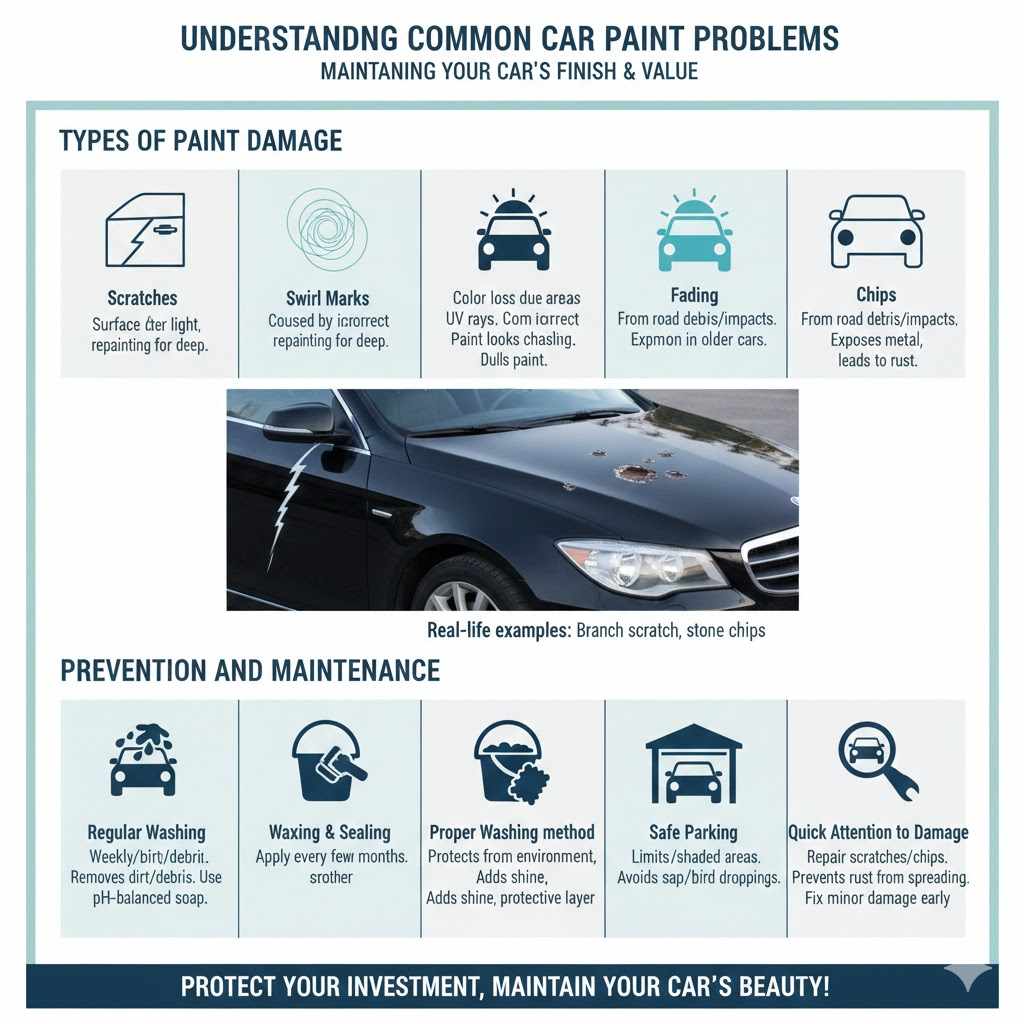
Scratches: Scratches are one of the most common issues. They happen when something scrapes across the car’s surface. They can range from light surface scratches to deep cuts. The severity determines the repair needed. Light scratches are removed by polishing. Deep scratches might require painting.
For example, a branch scratches along the side of the car. This makes a visible line.
Swirl Marks: Swirl marks are tiny scratches. These are caused by incorrect washing or polishing. They often appear as circular patterns on the paint surface. These marks make the paint look dull.
Fading: Over time, the car’s paint can fade. This is caused by exposure to the sun’s UV rays. The color becomes less vibrant and can look chalky. This problem is common in older vehicles.
Chips: Paint chips are small areas of paint that have been removed. They can occur from road debris, rocks, or other impacts. Chips expose the bare metal. This can lead to rust.
Real-life example: Small stone impacts make chips appear on the front of the hood.
Prevention and Maintenance
Preventing damage to car paint involves regular maintenance and cautious habits. You can take steps to protect your car. This can help prevent damage. Taking care of your car’s paint includes regular cleaning, protection, and being careful in various situations. It involves making sure your car’s paint stays looking its best. This can also save you time and money on repair costs in the future.
Regular Washing: Wash your car every week or two. This removes dirt and debris that can damage the paint. Use a pH-balanced car wash soap. Avoid harsh chemicals.
Waxing and Sealing: Apply a coat of wax or sealant every few months. This protects the paint from environmental factors. Wax adds a protective layer and gives it a shine. Sealants can last for a longer period of time.
For instance: Wax your car every three months for optimum paint protection.
- Proper Washing Techniques: Use the two-bucket wash method. This keeps your wash mitt clean and prevents scratches. Rinse your car thoroughly to get rid of any loose dirt.
- Safe Parking: If you can, park in a garage or shaded area. This limits the exposure of your car to the sun. Avoid parking under trees where sap or bird droppings can damage the paint.
- Quick Attention to Damage: Repair any scratches or chips immediately to avoid rust. Get minor damage fixed quickly. This prevents the problem from getting worse.
Frequently Asked Questions
Question: Can I use household cleaners to remove black spots?
Answer: It’s generally not a good idea to use household cleaners on your car’s paint. These cleaners can be too harsh and may damage the paint’s finish. It is best to stick to car-specific products.
Question: How often should I wax my car?
Answer: It’s a good idea to wax your car every three to six months. Waxing protects the paint and keeps it looking its best.
Question: Are all black spots caused by the environment?
Answer: No, not all black spots are caused by the environment. Some can be due to manufacturing defects. These issues can result from contamination during the paint application process.
Question: Can I use a pressure washer to remove black spots?
Answer: You can use a pressure washer, but be careful. Don’t point the nozzle too close to the paint. This might damage the paint. Use the correct tips for a safer wash.
Question: What’s the best way to prevent black spots?
Answer: The best method to prevent black spots is by protecting your car’s paint. You can do this by parking in protected areas, washing your car regularly, and using wax or sealants to create a protective barrier.
Final Thoughts
The journey to eliminate those Black Spots on Car Paint: Causes & Removal is achievable. We’ve explored the diverse culprits behind these blemishes. You’ve learned how to identify the type of spots you have. You know what you need to remove them. By sticking to the step-by-step guidance provided, you can bring your car’s paint back to its former beauty. Remember, patience and proper preparation are key.
Make sure you use the right cleaning products, and you’ll find those annoying dark spots will disappear. This means your car will look better and last longer. So grab your supplies, follow the steps, and enjoy the satisfaction of a shining, spot-free vehicle.