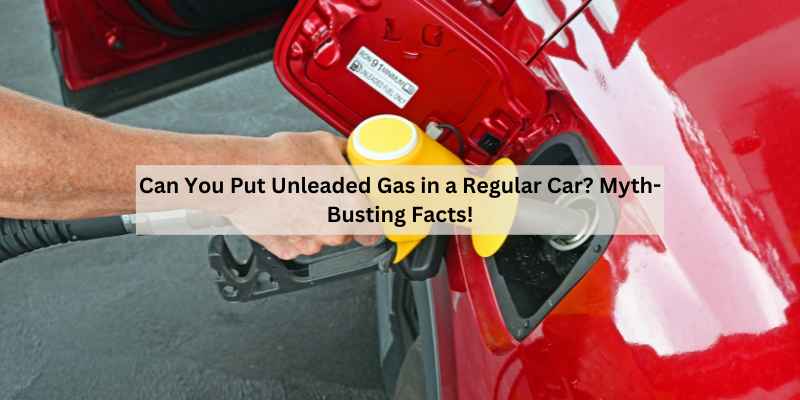
Can You Put Unleaded Gas in a Regular Car? The Real Answer
You’re at the pump, staring at the three handles. Regular, Plus, Premium. Your car takes regular, but you’ve heard someone say ‘premium is better for the engine.’ Or maybe you grabbed the green handle by accident and filled a rental with E85. Most drivers never think about fuel chemistry until that moment of doubt.
Here’s the thing: the question ‘can you put unleaded gas in a regular car’ has a simple answer, but it hides a few traps. Almost every gas pump in the US dispenses unleaded fuel, so the real question is about octane and ethanol content. This guide clears up the confusion, shows you how to spot a flex-fuel vehicle, and tells you exactly what to do if you already pumped the wrong stuff.

You’ll walk away knowing the difference between a wasted $10 and a costly engine repair.
Before we get into the weeds, one product worth keeping in your trunk or garage: STA-BIL Storage Fuel Stabilizer. If you let a car sit for a month or more, ethanol in regular gas can absorb water and turn into a gummy mess that clogs fuel injectors. A few ounces of stabilizer before storage keeps the fuel fresh. It’s a cheap insurance policy for seasonal vehicles or any car that sits idle.
What Does ‘Unleaded’ Actually Mean Today?
Leaded gasoline was the standard in the US for decades. It boosted octane and lubricated valve seats, but it also poisoned people and damaged catalytic converters. The Clean Air Act and subsequent regulations banned leaded fuel for on-road vehicles by 1996. You cannot buy leaded gas at a normal station anymore.
So when the pump says ‘unleaded,’ it’s not a special feature. It’s just gasoline. Every grade at the pump is unleaded. That means the phrase ‘can you put unleaded gas in a regular car’ is technically asking if you can put gasoline in a gasoline car. The answer is yes, obviously.
The confusion comes from older language. People who grew up in the 70s and 80s remember ‘unleaded only’ stickers on fuel doors. That sticker meant ‘don’t put leaded gas in this car.’ Today, that sticker is meaningless because leaded fuel doesn’t exist at retail pumps.
Octane Ratings Explained (Without the Jargon)
Octane rating measures a fuel’s resistance to knocking. Knocking happens when the air-fuel mixture ignites prematurely in the cylinder, creating a pinging sound and potentially damaging the pistons. Higher octane fuel resists that premature ignition better.
Regular gas in the US is typically 87 octane. Mid-grade is 89. Premium is 91 to 93. Your car’s engine is designed to run on a specific octane, and the owner’s manual tells you which one.
Here’s the key point: octane is not a measure of energy content. Premium fuel doesn’t contain more energy than regular. It just tolerates more compression before igniting. If your car is designed for 87, putting 93 in it doesn’t make it faster, cleaner, or more efficient. It just costs more.
Your engine’s computer adjusts timing and fuel delivery based on sensor data. If you put premium in a regular car, the computer detects the higher knock resistance and may advance the timing slightly. The result is a negligible power difference, maybe 1-2 horsepower, which you won’t feel from the driver’s seat.
Can You Put Unleaded Gas in a Regular Car? (The Short Answer)
Yes. If your car is a standard gasoline vehicle, you can put regular unleaded (87 octane) in it. That’s what it’s designed for. You can also put mid-grade or premium unleaded in it without causing damage. The engine will run fine, and the fuel system will handle it.
The only real danger is ethanol content, not octane. Most regular gas in the US is E10, which means it contains up to 10% ethanol. That’s safe for virtually every car built after 1980. Some stations sell E15 (15% ethanol) for newer vehicles. The EPA has approved E15 for cars from 2026 and newer, but some manufacturers still warn against it.
The fuel you need to avoid is E85, which contains 51% to 83% ethanol. That’s a completely different fuel, and putting it in a non-flex-fuel vehicle can cause serious damage. We’ll cover that in detail below.
What Happens If You Put Premium in a Regular Car?
Nothing bad. This is the reverse scenario, and it’s a common worry. Your car calls for 87, but you accidentally fill it with 93. The engine will run, and it won’t knock. You might even notice slightly smoother idle in some cars, though that’s usually placebo.
The only downside is the cost. Premium fuel typically costs 50 to 80 cents more per gallon than regular. If you fill a 15-gallon tank, that’s an extra $7.50 to $12 per fill-up. Do that for a year, and you’ve wasted hundreds of dollars for zero benefit.
One thing to note: if your car has a turbocharger, premium fuel can provide a small performance benefit. Many turbocharged cars are tuned to run on premium, even if the manual says regular is acceptable. But for a naturally aspirated engine, premium is pure waste.
If you accidentally put premium in a regular car, don’t bother draining the tank. Just drive normally and fill with regular next time. The fuel will mix, and the engine will adjust.
What About E85 or Flex-Fuel? (The Real Danger)
E85 is the fuel that will ruin your day. It’s a high-ethanol blend sold at many stations, often with a yellow handle or a yellow label. E85 is designed for flex-fuel vehicles (FFVs), which have special fuel system components that can handle the corrosive nature of high-ethanol fuel.
Putting E85 in a regular car is a mistake that can cost you thousands. The ethanol can damage fuel lines, seals, and the fuel pump. It can also cause the engine to run dangerously lean, because E85 has less energy per gallon than gasoline. The engine computer will try to compensate, but it can’t add enough fuel to prevent overheating and potential engine knock.
Here’s a real-world example: a friend of mine grabbed the yellow handle at a station in Ohio, thinking it was diesel. It was E85. He realized the mistake after filling his 2026 Honda Accord. The car ran rough for about 10 seconds before he shut it off. He had the tank drained and the fuel system flushed. The bill was $450. If he had driven it for miles, the damage could have been much worse.
E15 is a gray area. It’s 15% ethanol, which is slightly more than the standard E10. Many stations sell it as ‘Unleaded 88’ because it has an 88 octane rating. If your car is from 2026 or newer, the EPA says it’s safe. But some manufacturers, including Toyota and Volkswagen, explicitly state that E15 will void the warranty. Check your owner’s manual before using it.
How to Know If Your Car Is Flex-Fuel (Check These 3 Spots)
Flex-fuel vehicles are designed to run on any blend from E0 to E85. They have stainless steel fuel lines, ethanol-compatible seals, and a fuel composition sensor. Here’s how to check if your car is one of them:
- Check the gas cap or fuel door. Most FFVs have a yellow gas cap or a yellow ring around the fuel filler. Some have a sticker that says ‘E85’ or ‘Flex-Fuel.’
- Look for a badge on the trunk or tailgate. Many manufacturers put a small ‘Flex-Fuel’ or ‘E85’ emblem on the back of the vehicle. It’s subtle, but it’s there.
- Check the owner’s manual. Look in the fuel section. If it lists E85 as an approved fuel, you have an FFV. If it doesn’t mention E85, don’t use it.
You can also check your VIN online. A quick search with your VIN will tell you the exact fuel type your vehicle was manufactured to accept. This takes about two minutes and gives you a definitive answer.
You Already Misfueled – Now What? (Emergency Steps)
You realized the mistake after the pump clicked off. Here’s what to do, in order:
- Do not start the engine. This is the most important step. If the engine hasn’t run, the wrong fuel is still in the tank and hasn’t circulated through the fuel system. Starting the engine will pull the bad fuel into the fuel lines, injectors, and engine.
- Put the nozzle back and pay for the fuel. Don’t try to siphon it out yourself. You’ll likely swallow fuel or make a mess.
- Call a tow truck. Have the car towed to a mechanic. The cost of towing and draining the tank is typically $100 to $200. That’s a lot cheaper than a new fuel pump and injectors.
- Tell the mechanic exactly what happened. They’ll drain the tank, flush the fuel lines, and replace the fuel filter if needed. The fuel filter is a consumable part, and it will catch most of the contamination.
- If you already started the engine and it’s running rough, turn it off immediately. Do not try to ‘drive it out’ or add premium fuel to dilute the E85. That makes it worse.
If you accidentally put E15 in a car that’s not rated for it, the same steps apply, but the risk is lower. A single tank of E15 will likely cause a check engine light and rough running, but it may not cause permanent damage. Draining is still the safe move.
Will the Wrong Fuel Void My Warranty?
Yes, it can. The Magnuson-Moss Warranty Act protects consumers from having a warranty denied for using aftermarket parts, but it doesn’t protect you from using the wrong fuel. If you put E85 in a non-flex-fuel car and it damages the engine, the manufacturer can deny your warranty claim. The damage is considered misuse, not a defect.
Even E15 can void your warranty if the manufacturer explicitly prohibits it. Toyota, for example, states in its owner’s manuals that using E15 is not approved and will void the powertrain warranty. The same goes for Volkswagen and several other brands.
Your best defense is the owner’s manual. Read the fuel section and follow it exactly. If the manual says ’87 octane or higher,’ you can safely use 87, 89, or 91. If it says ‘premium required,’ use 91 or higher. If it doesn’t mention E85, don’t use E85.
If you’re leasing a car, the stakes are higher. The leasing company can charge you for repairs caused by misfueling. That’s a bill you don’t want to argue about.
Practical Fueling Checklist for Everyday Drivers
Here’s a simple routine to follow every time you pull into a station:
- Check the handle color. Yellow usually means E85. Black or green is regular gasoline. Don’t rely on color alone, but it’s a good first clue.
- Read the label on the pump. Look for the octane rating and the ethanol content. Most pumps list ‘Contains up to 10% ethanol’ on the side.
- Know your car’s requirement. If you’re unsure, check the owner’s manual or the sticker inside the fuel door. It will say ‘Unleaded fuel only’ or ‘Premium unleaded required.’
- If you drive a rental, verify the fuel type before pumping. Rental cars are almost always regular gas, but some are flex-fuel. The rental agreement usually states the required fuel type.
- When in doubt, use 87 octane. For 95% of cars on the road, that’s the correct choice. You won’t damage a premium-required car with one tank of 87, but you’ll hear knocking. Just don’t make a habit of it.
One last thing: don’t put diesel in a gas car, and don’t put gas in a diesel car. That’s a different disaster entirely, and it requires a full fuel system replacement in most cases. If you’ve done that, don’t start the engine and call a tow immediately.
Frequently Asked Questions
Can I mix premium and regular gas?
Yes. Gasoline blends are completely miscible, meaning they mix evenly. If you put 5 gallons of regular and 5 gallons of premium in a 10-gallon tank, you’ll get roughly 90 octane. The engine will run fine. There’s no chemical reaction or separation. Mixing fuels is only a problem if you mix gasoline with diesel or E85.
Is 88 octane (E15) safe for my car?
It depends on the year and manufacturer. The EPA allows E15 for cars from 2026 and newer, but some automakers disagree. Toyota and Volkswagen explicitly warn against it and will void the warranty if damage occurs. If your car is older than 2026, do not use E15. If it’s newer, check the owner’s manual. When in doubt, use 87.
How can I tell if I accidentally put diesel in my gas car?
The engine will start and run very rough, then stall. The car will produce thick white smoke from the exhaust. If you realize the mistake before starting, don’t start the engine. Diesel in a gas engine can cause catastrophic damage because diesel doesn’t ignite the same way as gasoline. Call a tow truck and have the tank drained.
Does premium gas clean my engine better than regular?
No. The detergents in premium fuel are not significantly different from those in regular fuel. All gasoline sold in the US must meet the EPA’s minimum detergent standards. Some brands add extra detergents to all their grades, not just premium. If you want a clean fuel system, use a brand that advertises ‘Top Tier’ detergent gasoline, which is available in regular grade.
What does the check engine light mean after misfueling?
It means the engine computer detected a problem. Likely causes are a lean fuel mixture (too much ethanol), misfires, or a faulty fuel composition sensor. If you misfueled with E85, don’t ignore the light. Have the car diagnosed and the fuel system drained. If you used E15 and the light comes on, it may clear after you burn through the tank and refill with regular, but it’s safer to have it checked.
What to Do Next: A Quick Recap
You now know the difference between octane and ethanol, and you know the real danger is E85, not premium fuel. Let’s wrap this up with the points that actually matter:
- All gas at US pumps is unleaded. The ‘unleaded’ label is historical, not a warning.
- Regular 87 octane is the correct fuel for most cars. Premium is only required for high-performance or turbocharged engines.
- Putting premium in a regular car is a waste of money, but it won’t cause damage. Just don’t make it a habit.
- E85 is the fuel to fear. It will damage a non-flex-fuel vehicle’s fuel system and engine. Check for a yellow gas cap or FFV badge.
- If you misfuel with E85, do not start the engine. Call a tow truck and have the tank drained. Expect a $150 to $300 bill for the service.
- Using the wrong fuel can void your powertrain warranty. Read the owner’s manual and follow it.
- If your car sits for weeks or months, add a fuel stabilizer like STA-BIL Storage Fuel Stabilizer to prevent ethanol-related gumming and corrosion.
For more fuel-related guidance, check out our article on what happens if you put regular gas in a premium car. And if you’re wondering about E85 gas in a regular vehicle, we’ve covered that too. Drive safe, and read the pump label before you squeeze the handle.
Products related to this article
Sponsored / affiliate links. As an Amazon Associate I earn from qualifying purchases. I may earn additional commission from eligible campaigns.