Can I Still Start My Car Without a Key Fob? Local Hacks
Sometimes you might find yourself in a bit of a pickle. Your car key fob is acting up, or maybe you’ve lost it! You might wonder, Can I Still Start My Car Without a Key Fob?
Local Hacks might seem complicated for beginners, but it doesn’t have to be. This guide is here to make it super simple. We’ll walk you through easy steps to get your car running again.
Ready to find out how? Let’s go!
Understanding Your Car’s Key Fob System
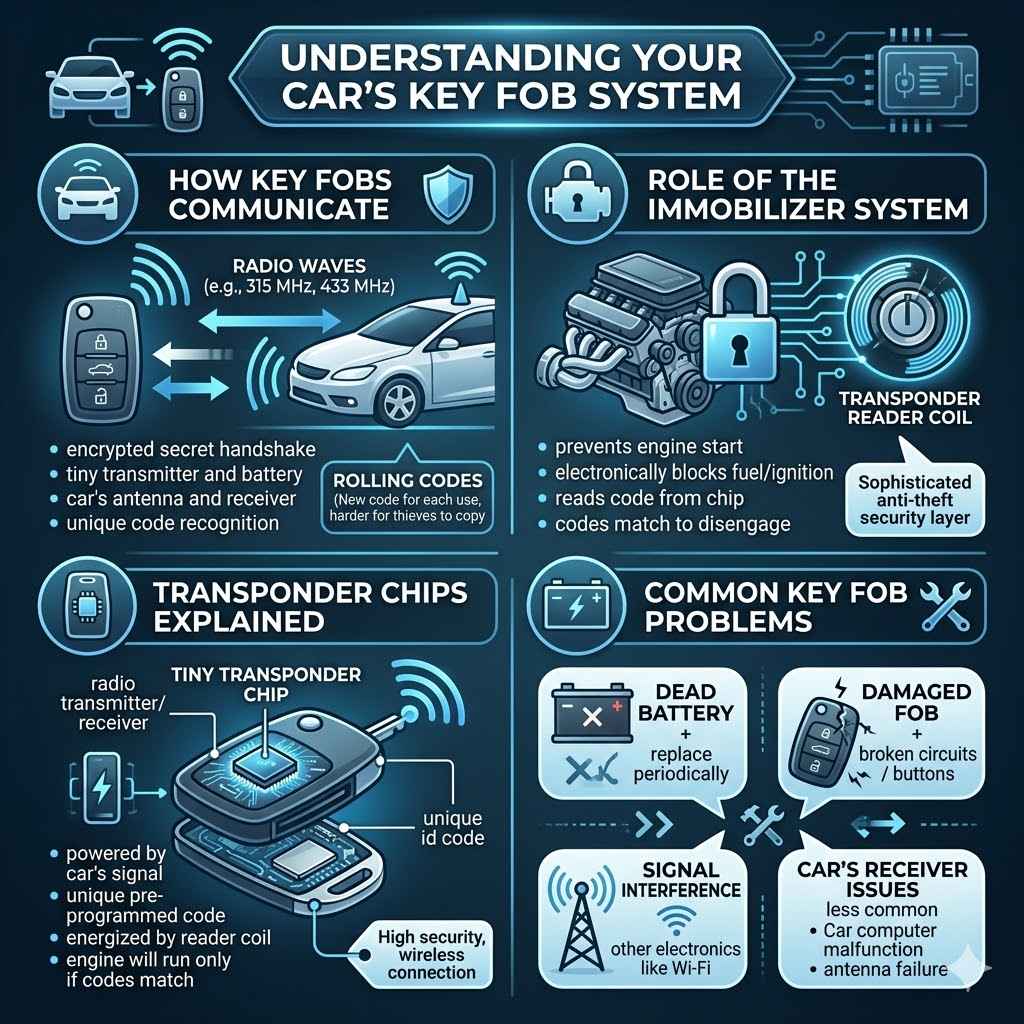
Your car’s key fob system is a marvel of modern engineering, designed for convenience and security. It’s not just a simple switch; it’s a complex interplay of radio frequencies, digital codes, and immobilizer technology. Understanding the basics of how it works can demystify the process of starting your car, especially when the fob isn’t cooperating.
This section will break down the core components and their functions, making it easier to grasp what happens behind the scenes when you press that button or insert your fob.
How Key Fobs Communicate
Key fobs communicate with your car using radio waves. When you press a button on the fob, it sends out a specific radio signal. This signal contains a unique code that your car’s receiver is programmed to recognize.
It’s like a secret handshake between your fob and your vehicle. The code is encrypted to prevent unauthorized access, meaning only your specific fob can unlock and start your car. This technology is a significant upgrade from older car keys.
This communication uses a specific frequency, often around 315 MHz or 433 MHz, depending on the car manufacturer and region. The fob contains a small transmitter and a battery to power it. The car has an antenna and a receiver module that picks up the signal.
When the correct code is received, the car’s computer system is activated. This allows it to proceed with functions like unlocking doors or authorizing the ignition.
The codes are not static. Modern key fobs use rolling codes, also known as hopping codes. Each time you use the fob, it generates a new, random code from a sequence.
This makes it much harder for thieves to copy your fob’s signal. The car’s computer keeps track of the sequence, so it knows which code to expect next. This advanced security feature is why a simple copy of your fob’s initial code won’t work.
The Role of the Immobilizer System
The immobilizer system is a crucial anti-theft device built into most modern cars. It prevents the engine from starting unless the correct key or key fob is present. This system works by electronically preventing the engine’s fuel supply or ignition from engaging.
It’s a passive system that monitors for the right signal from the key fob.
When you insert your key fob into the ignition slot or press the start button with the fob nearby, the car’s immobilizer reads a transponder chip embedded within the fob. This chip contains a unique electronic code. If this code matches the code stored in the car’s immobilizer module, the system disengages, and the car is allowed to start.
If the codes don’t match, or if no valid signal is received, the engine will not start, even if the key turns or the start button is pressed.
This system is a major reason why you can’t just hotwire modern cars like older models. The immobilizer effectively “locks” the engine at an electronic level. It’s a sophisticated layer of security that relies entirely on the correct key fob communicating with the car’s computer.
Without that communication, the engine is essentially rendered inoperable.
Transponder Chips Explained
A transponder chip is a tiny electronic component found inside your car’s key fob. It’s essentially a small radio transmitter and receiver. This chip holds a unique identification code that is programmed specifically for your vehicle.
It doesn’t require a battery of its own; it is powered wirelessly by a radio signal from the car when the key is near the ignition or in the ignition slot.
The car’s immobilizer system has a reader coil, usually located around the ignition cylinder or in the dashboard. When the key fob is brought close to this coil, the coil sends out a radio frequency signal. This signal energizes the transponder chip, causing it to transmit its unique code back to the car.
The car’s computer then compares this received code with the pre-programmed code it has on file.
If the codes match, the immobilizer system allows the engine to start. If they don’t match, or if the chip is damaged or missing, the immobilizer will prevent the engine from running. This is why even if you can physically turn the key or push the start button, the car won’t turn over without the correct transponder signal.
The security of this system is paramount.
Common Key Fob Problems
Several issues can prevent your key fob from working correctly. These problems range from simple fixes to more involved repairs. Understanding these common issues can help you troubleshoot and potentially resolve the problem without needing immediate professional help.
Dead Battery: This is the most frequent cause of a non-working key fob. The small battery inside the fob needs to be replaced periodically.
The battery powers the transmitter inside the fob, allowing it to send signals to your car. Over time, batteries deplete, especially with frequent use. If the battery is weak, the signal may not be strong enough for the car to detect, or it might fail altogether.
Replacing the battery is usually a straightforward process, often involving a small screwdriver to open the fob casing.
Damaged Fob: Physical damage to the key fob, such as dropping it, can disrupt its internal components. This can include broken circuits or damaged buttons.
When a fob is dropped, the internal circuit board, the battery connection, or even the antenna could be compromised. Even a seemingly minor crack can lead to issues. If the fob has been exposed to moisture or extreme temperatures, this can also cause internal damage.
Sometimes, the damage is visible, like a cracked casing, while other times it’s internal and harder to detect without opening the fob.
Signal Interference: Other electronic devices or even certain environmental conditions can interfere with the radio signals between the fob and your car.
Strong radio signals from nearby electronics, such as powerful Wi-Fi routers or other remote control devices, can sometimes jam or interfere with the fob’s signal. Parking in areas with a lot of electronic activity, like busy parking garages or near radio transmission towers, can also cause this. In some cases, even physical obstructions like thick walls or large metal objects can weaken the signal.
Car’s Receiver Issues: Less commonly, the problem might lie with the car’s receiver system rather than the fob itself.
The car’s receiver module, which picks up the fob’s signal, can also malfunction. This could be due to electrical problems within the car, a faulty antenna, or issues with the car’s computer system that processes the fob’s signal. Diagnosing these issues typically requires specialized tools and knowledge of the car’s electronics.
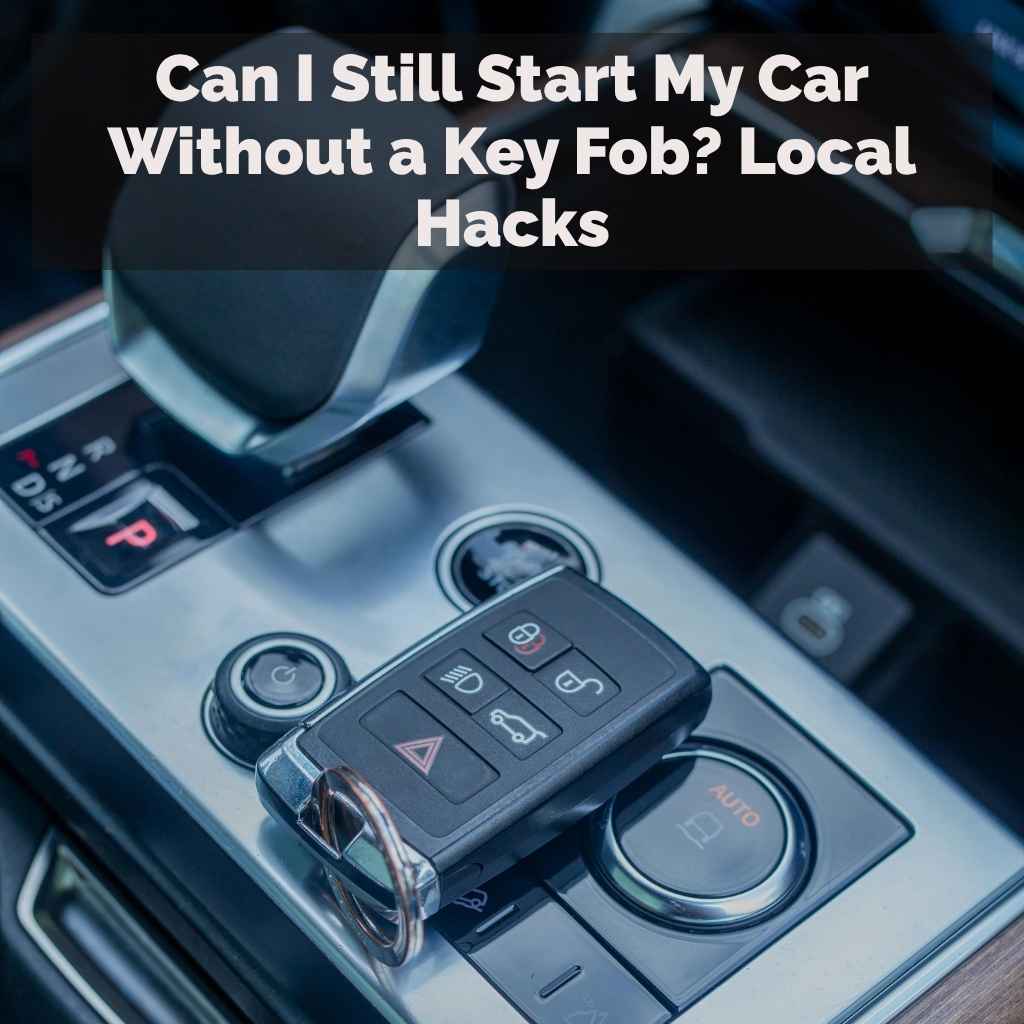
Can I Still Start My Car Without a Key Fob? Local Hacks
The question of Can I Still Start My Car Without a Key Fob? Local Hacks is one many drivers face when their primary method of ignition fails. Fortunately, for many vehicles, there are indeed workarounds and emergency procedures that can get you moving again.
These methods often involve directly interacting with the car’s ignition system or bypassing certain electronic checks. It’s important to note that these are often temporary solutions and not recommended for everyday use.
These hacks typically exploit the basic mechanical and electrical functions of older ignition systems or specific bypass procedures designed into some vehicles for emergency situations. While modern cars are designed to be more secure, many still retain some level of manual override capability, though accessing it might require a bit of know-how. This section will explore some of these ingenious, often DIY, solutions that have helped people out of a bind.
Emergency Start Procedures by Manufacturer
Some car manufacturers build in specific emergency start procedures for when the key fob is not recognized or is unavailable. These are often hidden or require a specific sequence of actions. Researching your specific car model and year is key to finding out if such a procedure exists for your vehicle.
These procedures vary greatly. Some might involve holding the fob in a particular spot on the steering column, while others might involve a sequence of pressing buttons or turning the key. They are designed as fail-safes, ensuring that a driver isn’t stranded indefinitely.
It’s always a good idea to consult your car’s owner’s manual, as it might detail these emergency steps.
For example, some vehicles might allow you to place the key fob directly on top of the start button if the battery is too weak to register. This allows the car to read the passive RFID signal from the fob chip, bypassing the need for active Bluetooth or radio transmission. Other cars might have a hidden slot to insert the fob for a direct connection.
The “Bypass” Method for Older Cars
For older cars that rely more on traditional ignition switches and less on sophisticated electronic systems, starting without a key fob (or even a physical key in some extreme cases) is more feasible, though it involves directly manipulating the ignition wires. This is a technique often seen in movies but is also a real, albeit risky, method.
This method involves identifying the correct wires in the steering column that control the battery, ignition, and starter motor. By carefully stripping and connecting these wires in the correct sequence, you can manually power the car’s systems and engage the starter. This requires a good understanding of automotive electrical systems and is not recommended for the average driver due to the risk of electrical damage or fire.
Typically, you would find three main wires: a constant power wire (battery), an ignition wire, and a starter wire. First, connect the battery wire to the ignition wire to power up the car’s accessories and dashboard lights. Then, momentarily touch the starter wire to the battery wire to crank the engine.
Once the engine starts, you disconnect the starter wire but leave the battery and ignition wires connected.
Identifying Ignition Wires
Locating the correct ignition wires is the most critical and dangerous step in this process. These wires are usually found behind the steering column shroud, where the ignition switch is located. They are typically color-coded, but these codes can vary significantly between car makes and models.
You might need to consult a wiring diagram specific to your vehicle for accurate identification.
A common approach involves using a test light or a multimeter to determine which wire is which. The constant power wire will always have 12 volts. The ignition wire will have 12 volts only when the key is turned to the “on” or “accessory” position.
The starter wire will have power only when the key is turned to the “start” position.
The process generally involves removing the plastic cover around the steering column to expose the ignition switch assembly and its wiring harness. Once exposed, you need to carefully identify the wires based on their function. Incorrect identification and connection can lead to blown fuses, damaged electronic components, or even a fire hazard.
Using a Spare Key or Valet Key
Many vehicles come with a spare key or a valet key. The spare key is usually a fully functional duplicate of your primary key fob, containing the same transponder chip and buttons. A valet key, on the other hand, might have limited functionality.
It typically can unlock the doors and start the car but may not have remote functions like trunk release or alarm activation.
If your main key fob is lost or not working, finding your spare key is often the easiest and safest solution. This key bypasses all the complex procedures and potential risks associated with other methods. It’s designed to be the backup, ensuring you can always access and operate your vehicle under normal circumstances.
Some valet keys are physical keys that don’t have a transponder chip, but these are typically for older vehicles. For modern cars with immobilizers, even a valet key will likely have a transponder chip to communicate with the car’s security system. Always check what kind of spare or valet key came with your car.
It’s worth remembering that even if your spare key is a physical key without buttons, it might still contain a transponder chip that the car needs to start. So, if your car requires a specific key to start (no push-button start), the physical spare key should work if it has the correct transponder. For push-button start cars, the spare key might be a fob with a slot or a specific area to place it.
The “Hidden” Key Slot for Fobs
Many modern cars with push-button start systems have a hidden slot or area where you can place your key fob if the battery is dead or the fob isn’t being recognized wirelessly. This is a crucial feature that many drivers are unaware of. This slot is designed to allow the car’s immobilizer system to read the transponder chip directly through a wired connection or a more powerful short-range reader.
This slot is often located in the center console, in the armrest storage compartment, or near the steering column. Its exact location can vary by manufacturer and model. Consulting your owner’s manual is the best way to find out where this hidden key slot is in your specific vehicle.
It’s a simple yet effective solution that many overlook.
When you place the fob in this designated spot, the car’s system can establish a direct communication link with the transponder chip, bypassing the need for the fob’s battery to power the wireless transmission. This allows the car to authenticate the key and start the engine, even if the fob itself is low on power or experiencing minor wireless issues. It’s a lifesaver when you’re in a pinch.
Locating the Hidden Slot
Finding this hidden key slot is usually a matter of checking your owner’s manual or carefully inspecting common areas in your car’s interior. Look in places where you might store other items, such as the center console, the glove box, or under the armrest. Some manufacturers even place a small symbol near the slot to indicate its purpose.
For instance, in some vehicles, the slot might be integrated into the cup holder area or a small cubby. In others, it could be a specific indentation on the dashboard or steering column. The key is that the slot is positioned to be in close proximity to the car’s transponder reader, enabling a strong, reliable connection.
If you can’t find it in your manual, try searching online for your car’s make and model along with terms like “key fob slot” or “emergency start location.” You’ll often find forums or videos where other owners have documented its location. This simple step can save you a lot of potential trouble.
When to Call a Professional
While these local hacks and emergency procedures can be helpful, they are not always the best or safest solution. If you’re uncomfortable with any of these methods, or if your car is particularly new and complex, it’s always wise to call a professional. Automotive locksmiths and dealerships have the tools and expertise to diagnose and fix key fob issues without damaging your vehicle.
If you’ve tried basic troubleshooting like replacing the battery and your fob still doesn’t work, or if you’re dealing with a newer car with advanced security, professional help is often necessary. They can reprogram key fobs,
Moreover, if you’re facing a critical situation, like needing to get to a hospital, attempting complex hacks can be too time-consuming and risky. A professional can often reach you quickly and provide a reliable solution. They also carry spare parts and diagnostic equipment that a typical car owner wouldn’t have.
This ensures a faster and more effective resolution.
Statistics on Key Fob Issues
Key fob problems are more common than many people realize. The reliance on these electronic devices for vehicle access and ignition means that any malfunction can leave drivers stranded. Understanding the prevalence of these issues can help put your situation into perspective.
According to a survey, approximately 15% of car owners have experienced a key fob malfunction at least once. This means that out of every 100 car owners, about 15 have faced the inconvenience of a dead battery, a broken fob, or a communication error. This highlights how common these issues are in everyday driving.
Another statistic suggests that battery
| Problem Type | Percentage of Issues |
|---|---|
| Dead Battery | 40% |
| Physical Damage | 25% |
| Signal Interference | 15% |
| Car System Malfunction | 10% |
| Other/Unknown | 10% |
These figures underscore the importance of basic maintenance and awareness. Knowing how to replace a key fob battery or where to find the emergency key slot can save drivers significant time and frustration. The data also indicates that while electronic issues are frequent, simple physical solutions often resolve the majority of problems encountered.
Benefits of Having a Spare Key Fob
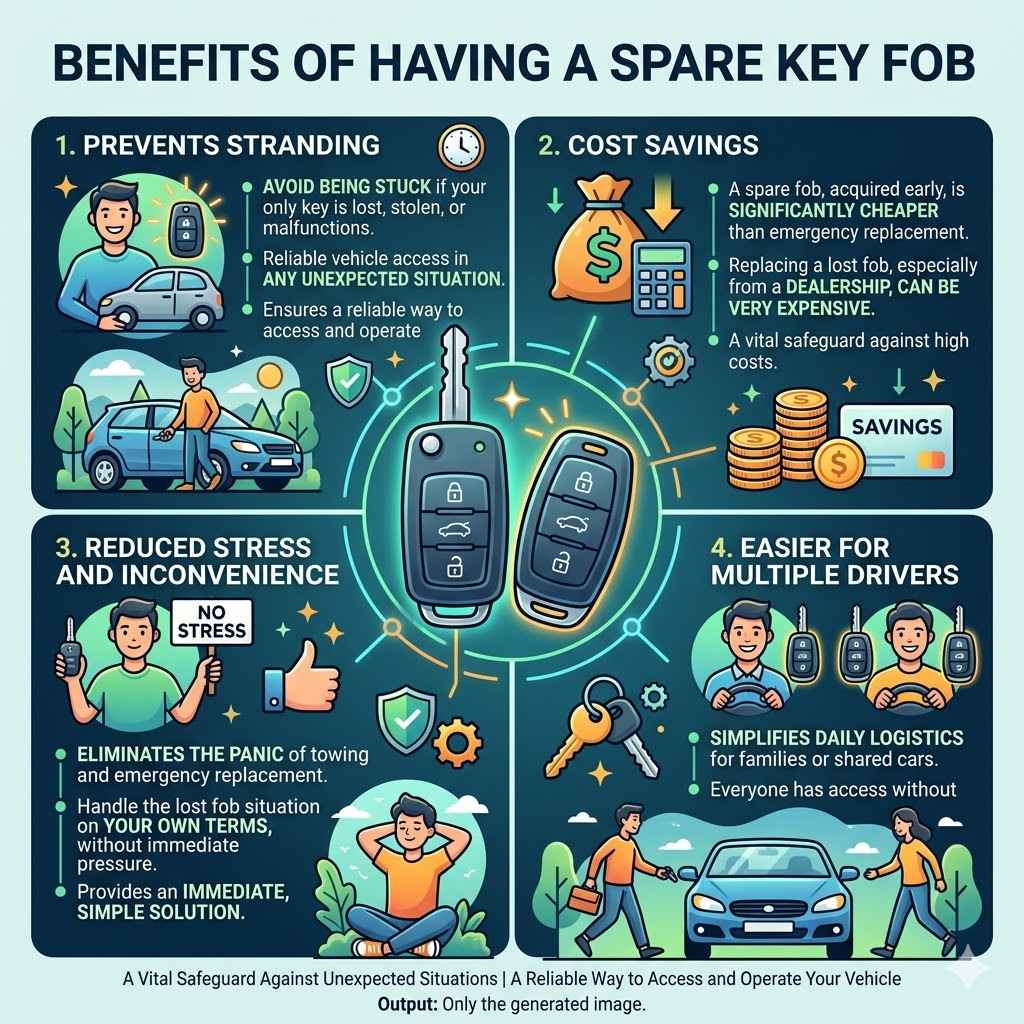
Having a spare key fob is not just a convenience; it’s a vital safeguard against unexpected situations. Losing your only key fob can lead to significant stress, expense, and downtime. A spare key fob ensures you always have a reliable way to access and operate your vehicle, no matter what happens to your primary one.
Prevents Stranding: The most obvious benefit is that a spare key fob prevents you from being stranded if your primary fob is lost, stolen, or malfunctions.
Imagine you’re on a trip, and your only key fob suddenly stops working. Without a spare, you’d be stuck until you could arrange for a
Cost Savings: Replacing a lost key fob can be very expensive, especially from a dealership. Having a spare means you avoid the high cost of emergency replacement services.
Dealerships often charge hundreds of dollars for a new key fob and programming. A spare key fob, especially if acquired when you first buy the car or through a less urgent purchase, is significantly cheaper. This can represent a substantial saving in the long run, especially if you were to lose your primary fob.
Reduced Stress and Inconvenience: Dealing with a lost key fob is stressful. You have to arrange for towing, find a locksmith or dealership, and wait for the replacement.
The mental burden of losing a primary key fob can be immense. You might worry about security if it was stolen, or simply feel frustrated by the inability to use your own vehicle. A spare fob eliminates this stress by providing an immediate, simple solution.
You can handle the lost fob situation on your own terms, without the immediate pressure.
Easier for Multiple Drivers: If multiple people drive the car, having more than one fob ensures everyone has access without needing to constantly share or coordinate.
For families or shared vehicles, having multiple fobs simplifies daily logistics. Each driver can have their own fob, making it easy for anyone to use the car when needed. This avoids the common scenario of one person needing the car and having to wait for the other person to return the fob, leading to smoother daily routines.
Frequently Asked Questions
Question: Can I start my car if the key fob battery is dead?
Answer: Yes, in many modern cars with push-button start, you can still start your car by placing the dead key fob in a specific hidden slot or area. This allows the car’s immobilizer system to read the transponder chip directly, bypassing the wireless signal that requires battery power.
Question: How do I find the hidden key slot in my car?
Answer: The best way to find the hidden key slot is to check your car’s owner’s manual. If you don’t have it, look for a small symbol near the start button or in common storage areas like the center console or armrest. Online searches for your car model and “key fob slot” can also help.
Question: Is it safe to try starting my car without a key fob using wire manipulation?
Answer: Trying to start your car by directly manipulating ignition wires is generally not recommended for most drivers. It requires knowledge of automotive electrical systems and carries risks of electrical damage, fire, or voiding your car’s warranty. It’s best left to professionals or for extreme emergencies on older vehicles.
Question: What should I do if my key fob is completely lost?
Answer: If your key fob is completely lost, your safest and most recommended option is to contact a professional automotive locksmith or your car dealership. They can provide a replacement key fob, program it to your vehicle, and ensure your car’s security system is functioning correctly.
Question: How often should I replace my key fob battery?
Answer: Key fob batteries typically last between 2 to 4 years, but this can vary based on usage and battery quality. If you notice your fob’s range decreasing or it sometimes fails to work, it’s a good indicator that the battery needs replacing soon.
Conclusion
Dealing with a car that won’t start due to key fob issues can be stressful. Fortunately, for many situations, there are practical solutions. Understanding your car’s system, knowing about emergency start procedures, and having a spare key fob are key.
These steps can help you overcome common problems and keep you moving.