Can Low Engine Oil Prevent Car From Starting
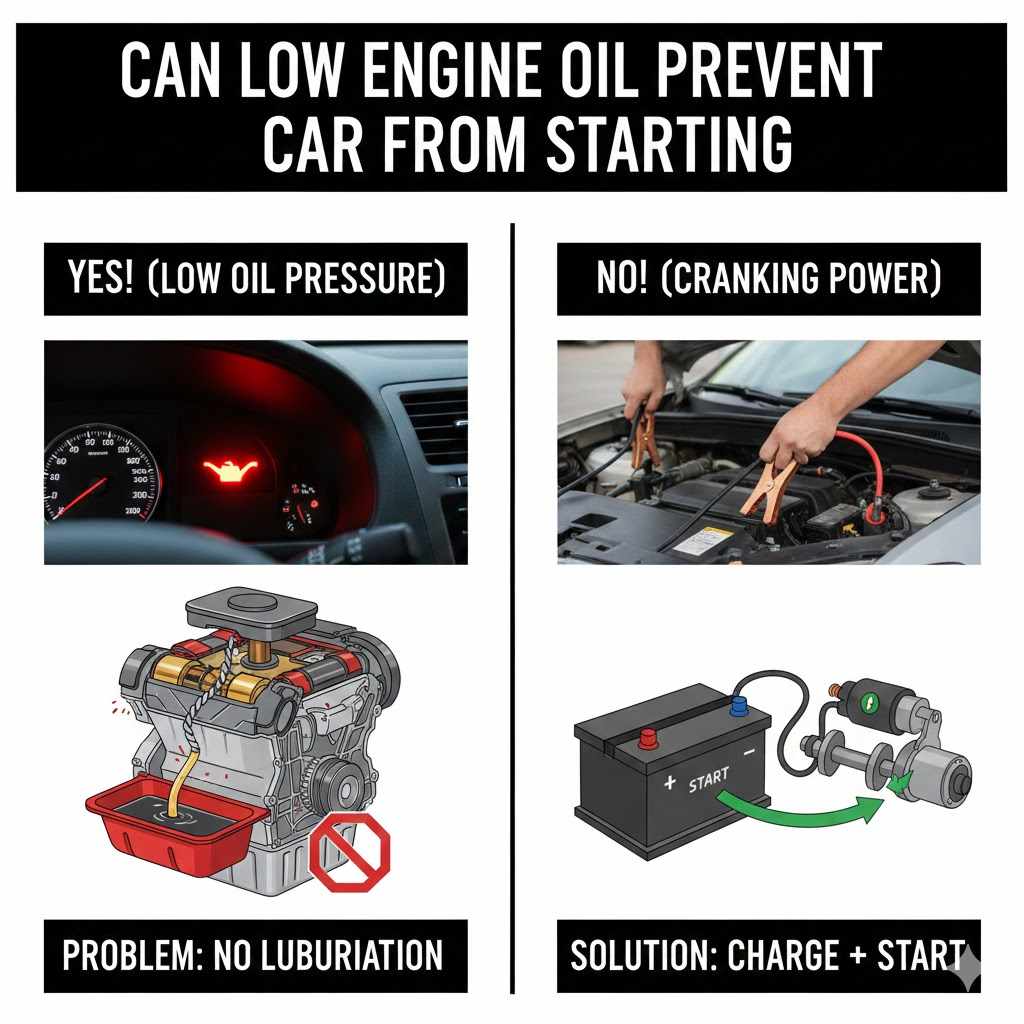
Many drivers wonder: Can low engine oil prevent your car from starting? This can be a puzzling question for new car owners. It sounds like a serious issue, and you might worry about expensive repairs.
But don’t fret! We’ll break down exactly why this happens and what you can do about it. This guide offers simple, step-by-step help to get your car running again.
Why Low Engine Oil Stops Your Car
Engine oil is like the lifeblood of your car’s engine. It does several important jobs that are vital for the engine to work. When the oil level gets too low, these jobs can’t be done properly, and this can stop your car from starting.
It’s a common and often scary problem for many people, especially those new to car maintenance.
The Crucial Role of Engine Oil
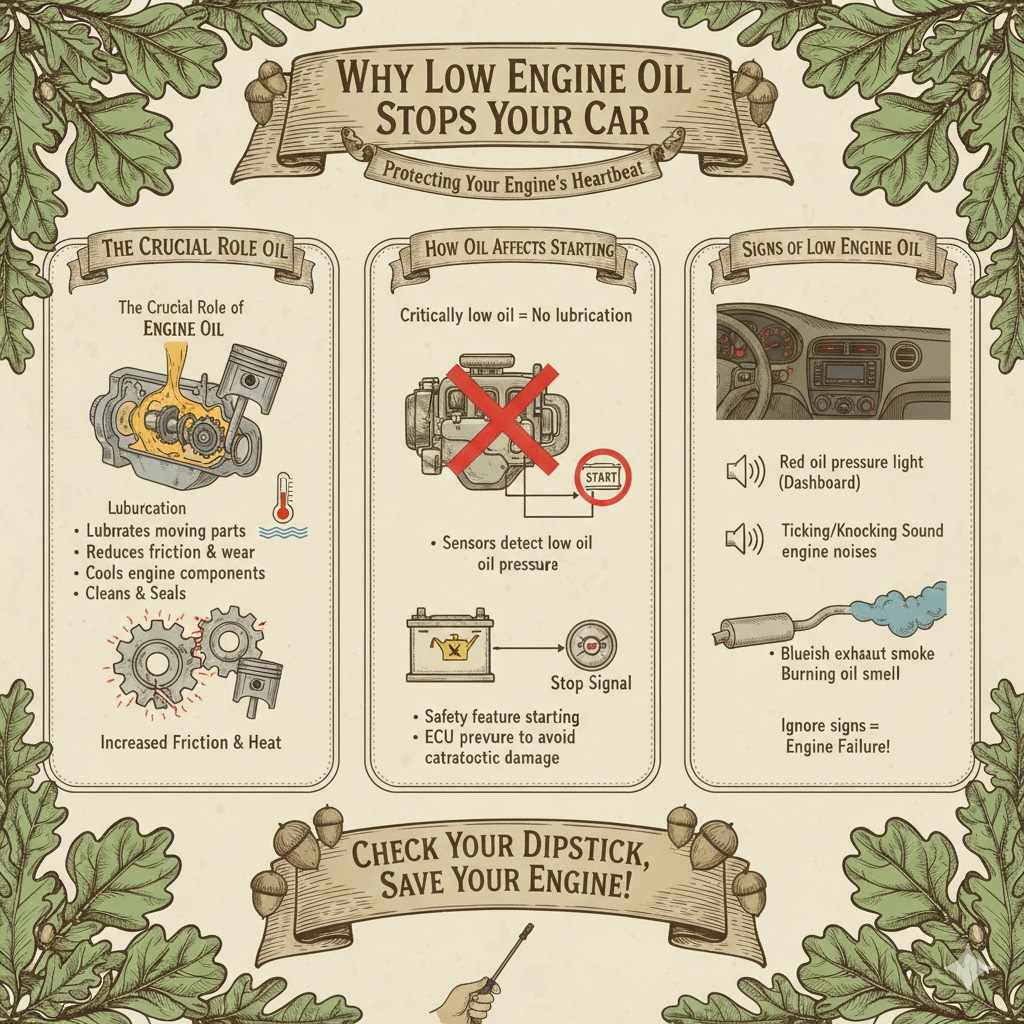
Engine oil has many roles that keep your car’s engine running smoothly and safely. It lubricates moving parts, reduces friction, and helps prevent wear and tear. It also helps to cool the engine by carrying heat away from hot components.
Plus, oil keeps the engine clean by picking up dirt and debris, and it can even help seal the gaps between piston rings and cylinder walls, which is important for compression.
Without enough oil, these essential functions suffer. The metal parts inside the engine don’t get enough lubrication. This causes them to rub against each other much harder than they should.
This friction creates a lot of heat and can even cause parts to seize up. Think of it like trying to slide two dry pieces of metal together; it’s hard, noisy, and damaging. The engine’s computer systems often detect this lack of lubrication or the resulting damage and will prevent the engine from starting to avoid even worse problems.
How Low Oil Affects Starting
When your car’s engine oil level is critically low, the engine’s internal components don’t get the necessary lubrication. This leads to increased friction between parts like the crankshaft, camshaft, and pistons. This friction can make it very difficult for the engine to turn over.
In some cases, the engine might try to start, but it will sound rough and uneven. If the oil level is extremely low, the engine may not be able to rotate at all, or the system might actively prevent it from trying to start to protect itself from severe damage.
Modern cars have sensors that monitor oil pressure. If the oil pressure drops too low because of insufficient oil, these sensors will send a signal to the car’s computer. This signal can trigger warning lights on the dashboard and, in many vehicles, will actively prevent the engine from starting.
This is a safety feature to stop drivers from running their engines without proper lubrication, which could lead to catastrophic engine failure and very expensive repairs. So, the answer to Can Low Engine Oil Prevent Your Car From Starting? is a definite yes.
Signs of Low Engine Oil
Before your car completely refuses to start, there are usually signs that your engine oil is low. The most common sign is a red oil pressure warning light on your dashboard. This light looks like an oil can with a drip coming out.
You might also notice a persistent ticking or knocking sound coming from the engine, especially when it’s running. Some people report a burning smell if the oil is very low and leaking onto hot engine parts. If you see a blueish smoke coming from your exhaust pipe, it can also indicate oil is burning inside the engine.
Ignoring these signs can lead to the ultimate problem: your car not starting. If you see the oil pressure light, it’s crucial to stop driving immediately and check your oil level. Don’t wait for the engine to start making strange noises or for it to stop working altogether.
Early detection and topping up the oil can save you a lot of trouble and money. It’s much easier to add oil than to repair engine damage caused by running on too little.
What Happens When Your Car Won’t Start Due to Oil
When your car doesn’t start and you suspect it might be due to low engine oil, it’s a good idea to understand the underlying issues. The engine needs a certain amount of oil to function. This oil acts as a lubricant, coolant, and cleaner for the engine’s moving parts.
If there isn’t enough oil, these parts can’t move freely, and the engine can get damaged. This is why the car’s safety systems might prevent it from starting.
The Lubrication Breakdown
The primary job of engine oil is to create a thin film between moving metal parts. This film stops them from touching directly. Think of it like a slippery barrier.
When oil levels are low, this barrier becomes weak or breaks entirely in certain areas. This leads to metal-on-metal contact. This contact causes friction, which generates heat.
It also causes wear on the metal surfaces. Over time, this wear can make parts fit loosely or even seize up.
For example, the crankshaft rotates very quickly inside the engine. It’s supported by bearings that are bathed in oil. If the oil level is too low, these bearings don’t get enough oil.
They start to grind, creating noise and heat. The pistons also move up and down in their cylinders, lubricated by oil. Without enough oil, the pistons can scrape against the cylinder walls, causing damage.
This damage can lead to a loss of compression, which is essential for the engine to run.
Engine Protection Systems
Modern cars are equipped with advanced computer systems that monitor various engine functions. One of these functions is oil pressure. Oil pressure is the force with which the oil is pushed through the engine.
Low oil levels directly cause low oil pressure. The engine’s computer, often called the Engine Control Unit (ECU), has a threshold for acceptable oil pressure. If the oil pressure drops below this threshold, the ECU will take action to protect the engine.
This protection can manifest in several ways. The most common is the oil pressure warning light illuminating on your dashboard. However, for more severe drops in oil pressure, the ECU can prevent the engine from starting altogether.
It might also cut fuel to the engine or shut it down if it’s already running. This prevents the engine from running in a condition where it’s likely to suffer severe, irreparable damage. So, the car not starting is actually a sign that the vehicle’s safety features are working correctly.
Common Failure Points
When an engine runs low on oil, several specific components are at high risk of damage. The main bearings and rod bearings that support the crankshaft are particularly vulnerable. These bearings rely on a constant supply of pressurized oil.
Without it, they can quickly overheat and seize, locking up the crankshaft. The camshaft and its bearings also suffer without adequate lubrication.
The timing chain or belt, which synchronizes the engine’s valves and pistons, can also be affected. If the tensioners for these components are oil-actuated, they may not function correctly. This can lead to the timing being off, causing valves to hit pistons.
Piston rings and cylinder walls are also susceptible to damage, leading to loss of compression and oil burning. Essentially, any moving part within the engine needs oil to function and survive. When that oil is missing, failure is imminent.
How To Check Your Engine Oil Level
Checking your car’s engine oil is a fundamental maintenance task that every driver should know how to do. It’s a simple process that can prevent major problems and answer the question Can Low Engine Oil Prevent Your Car From Starting?. Knowing how to check it allows you to be proactive about your car’s health and avoid getting stranded.
Steps for Checking the Oil
First, make sure your car is parked on a level surface. This is important for an accurate reading. Let the engine cool down for at least 10-15 minutes after turning it off.
Open the hood and locate the engine oil dipstick. It usually has a brightly colored handle, often yellow or orange. Pull the dipstick all the way out.
Wipe the dipstick clean with a rag or paper towel. Then, re will be markings, usually two dots or lines labeled “add” and “full” or “min” and “max.” The oil level should be between these two marks. If the oil is below the “add” mark, you need to add oil. If it’s at or above the “full” mark, the level is good.
You should also look at the color and consistency of the oil. Fresh oil is typically amber or light brown. If the oil is very dark, black, or looks sludgy, it might be time for an oil change.
Sludge can indicate oil breakdown or contamination. If you see small metal particles in the oil, that’s a serious sign of internal engine wear.
Adding Engine Oil
If you find that your engine oil is low, you’ll need to add more. First, locate the oil fill cap. It usually has an oil can symbol or the words “engine oil” on it.
Remove the cap. It’s usually a twist-off cap. Using a funnel, slowly add the correct type of oil for your car.
Check your car’s owner’s manual for the specific type and viscosity of oil recommended. Adding the wrong type of oil can also cause problems.
Start by adding about half a quart (or half a liter) at a time. Wait a few minutes for the oil to settle down into the oil pan. Then, recheck the dipstick.
Continue adding small amounts and checking the dipstick until the oil level is between the “add” and “full” marks. Be careful not to overfill the engine. Overfilling can be just as bad as having too little oil and can damage seals and other engine components.
Once the level is correct, securely replace the oil fill cap and the dipstick.
When to Seek Professional Help
While checking and adding oil is a simple DIY task, there are times when you should call a mechanic. If you have to add oil frequently, even after topping it up, it could mean you have an oil leak or the engine is burning oil. These are issues that need professional diagnosis and repair.
A mechanic can identify the source of the leak or determine if internal engine damage is causing oil consumption.
If the oil warning light stays on even after adding oil, or if it comes on suddenly while you’re driving, you should stop driving immediately and have your car towed to a mechanic. This could indicate a serious issue with oil pressure, such as a faulty oil pump or a blocked oil passage. Don’t try to drive with an oil pressure warning light on, as it can quickly lead to catastrophic engine failure.
Preventing Low Oil Issues
The best way to avoid the problem of your car not starting due to low engine oil is through regular maintenance. Proactive care ensures your engine has the lubrication it needs to run smoothly and efficiently. This simple approach saves you time, money, and frustration in the long run.
Regular Oil Changes
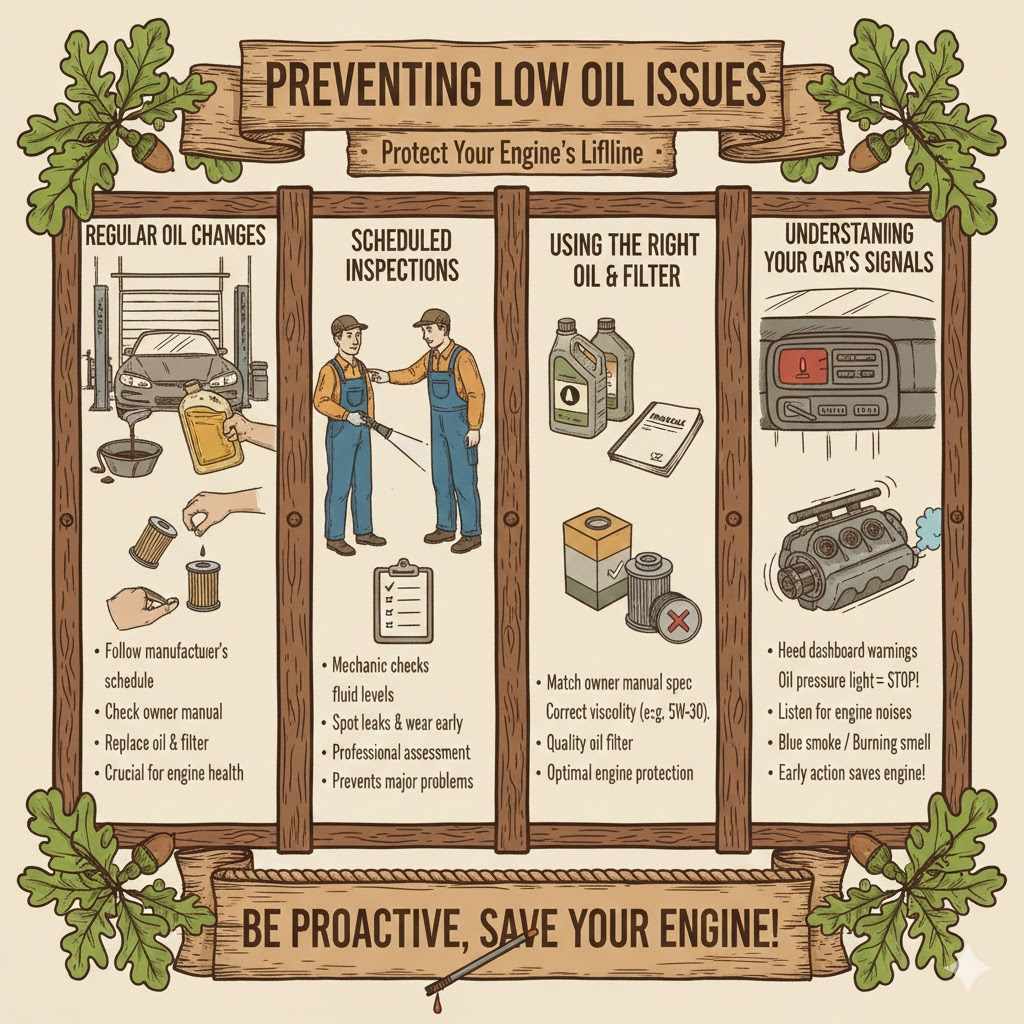
Follow your car’s manufacturer’s recommendations for oil change intervals. These are usually found in your owner’s manual. Factors like your driving habits (e.g., frequent short trips, driving in dusty conditions, heavy towing) can influence how often you should change your oil.
Older cars or those with higher mileage might benefit from more frequent changes.
During an oil change, a mechanic will drain the old oil and
Scheduled Inspections
Have your car inspected by a qualified mechanic at recommended intervals. These inspections often include a check of fluid levels, including engine oil. Mechanics can spot potential issues like oil leaks, worn engine components, or other problems that could lead to low oil levels before they become critical.
These inspections can also identify signs of wear that might not be visible to the average car owner. For instance, a mechanic might notice a small oil drip from a gasket or seal that you wouldn’t see during a quick visual check. Catching these issues early often means simpler and less expensive repairs.
Using the Right Oil and Filter
Always use the type and viscosity of engine oil recommended in your car’s owner’s manual. The manual will specify things like “5W-30” or “10W-40.” Using the wrong oil can affect lubrication, fuel efficiency, and engine wear. The oil needs to be thin enough to flow easily when cold but thick enough to protect parts when hot.
Similarly, use a quality oil filter. A good oil filter effectively removes contaminants without restricting oil flow. Cheap or incorrect filters can lead to poor filtration and potentially reduce oil pressure.
It’s worth investing a little more in the right oil and filter to protect your engine.
Understanding Your Car’s Signals
Pay attention to your car’s dashboard warning lights and any unusual sounds or smells. The oil pressure warning light is a critical indicator that should never be ignored. If it illuminates, stop driving as soon as it’s safe to do so and check your oil level.
If your car starts making knocking or ticking sounds, or if you notice smoke, these are also important signals that something is wrong with the engine.
Learning to recognize these signs can save your engine from severe damage. It’s better to err on the side of caution and get your car checked out if you suspect any issues. Early intervention can often prevent a small problem from turning into a major, costly repair.
Being an attentive car owner is key to preventing issues like your car not starting due to low oil.
Frequently Asked Questions
Question: Can a car start with no oil at all?
Answer: It is extremely unlikely and highly dangerous for a car to start with absolutely no oil. Modern cars have sensors that detect critically low oil pressure and will prevent the engine from starting to avoid immediate catastrophic damage. Even if it managed to turn over for a split second, the metal components would grind against each other, causing severe, irreparable harm very quickly.
Question: How long can a car run on very low oil?
Answer: This varies greatly depending on the car’s make and model, the type of engine, and how low the oil level is. It could be a few minutes or a bit longer. However, running an engine on very low oil is incredibly damaging.
It’s not recommended to run it at all, as internal wear begins almost immediately, and major component failure is imminent.
Question: What happens if you overfill your engine oil?
Answer: Overfilling engine oil can also cause problems. The excess oil can foam, reducing its ability to lubricate properly. It can also increase oil pressure, potentially damaging seals and gaskets, leading to leaks.
In some cases, the crankshaft can whip the excess oil into foam, which doesn’t lubricate as well. It can also cause oil to get into the combustion chambers and be burned, leading to blue smoke and fouled spark plugs.
Question: Is it bad to add different types of oil to my car?
Answer: It’s best to stick to the oil type recommended by your car’s manufacturer. If you need to top up your oil and don’t have the exact same type, you can often mix different brands of the same viscosity grade (e.g., mixing two different 5W-30 oils). However, mixing conventional and synthetic oils should generally be avoided, though many modern oils are synthetic blends and are designed to be compatible.
Always check your owner’s manual.
Question: How often should I check my engine oil if I drive a lot?
Answer: If you drive frequently or cover a lot of miles, it’s a good practice to check your engine oil at least once a month. Many people prefer to check it every other time they fill up their gas tank. This ensures you catch any potential issues early, especially if your car tends to consume oil over time.
Conclusion
Low engine oil can indeed prevent your car from starting because essential parts won’t get the lubrication needed to move. Ignoring warning signs like the oil light can lead to serious engine damage. Regularly checking your oil level and performing timely oil changes are key steps to keeping your car running smoothly.
This simple maintenance protects your engine and ensures it starts reliably.