Aftermarket Safety Features for Cars: Cameras & Sensors
Federal law has required a backup camera on every new car, truck, and SUV under 10,000 lbs built since May 1, 2018 — but there’s still no law requiring anyone to add one to an older vehicle. Aftermarket safety upgrades close that gap: backup cameras, dash cams, and radar-based blind-spot sensors bring 2018-and-newer visibility tech to a car that predates it, usually for well under $200. Below is what each one actually does, what’s legal where you drive, and specific units worth buying.
Do You Legally Need a Backup Camera on an Older Car?
No. Under FMVSS 111, every new car, truck, and SUV under 10,000 lbs built on or after May 1, 2018 must ship with a rearview camera — but that rule is tied to the vehicle’s manufacture date, not the date it’s sold or registered. A car built before that cutoff was never required to have one, and there’s no federal law forcing you to retrofit an older vehicle. An aftermarket camera, dash cam, or blind-spot sensor is entirely optional on any car that predates the mandate, which is exactly why the products below exist.
AUTO-VOX OEM Rear View Mirror Camera with 9.35''1080P Monitor
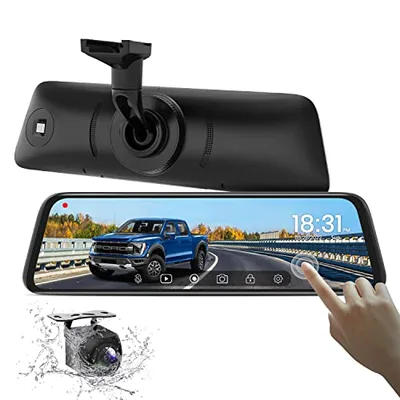
The AUTO-VOX OEM Rear View Mirror Camera with 9.35”1080P Monitor is a solid option if you’re shopping for a rear view mirror backup camera. The backup camera with a 9.35″ monitor displays a wider corner view to easily read important details like road signs and vehicle number plates.
Pros:
- The backup camera with a 9.35″ monitor displays a wider corner view to easily read important details like road signs and vehicle number plates.
- The backup camera for car uses AHD technology which presents 1080P clear colors and vivid pictures to make you drive safely during day and night.
- Compared with a wireless backup camera, the rearview mirror backup camera delivers a stable image without any interference and lag under 33ft.
Cons:
- Colors and finishes may appear slightly different in person than in product photos.
Beyond its core design, this pick is a straightforward, currently available choice in this category—an easy swap if you were considering an older listing that’s no longer sold.
To buy this product, click here.
7-inch Wireless Backup Camera For Truck
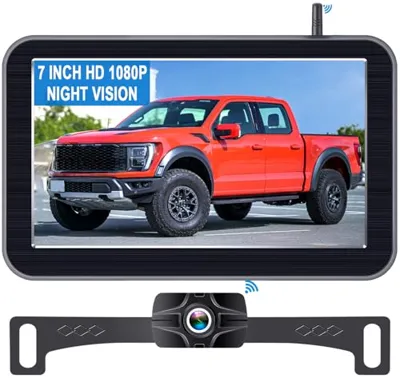
The 7-Inch Wireless Backup Camera is ideal for truck owners, pickup drivers, and those who frequently tow trailers or navigate large vehicles. If you prioritize parking safety and need reliable towing assistance, this camera is designed to simplify your driving experience and enhance safety.
Pros:
- HD 1080P resolution provides clear images for precise maneuvering.
- Night vision capability ensures visibility in low-light conditions.
- IP69K waterproof rating guarantees durability in harsh weather.
- DIY grid lines for customizable parking assistance.
- Supports two channels for additional camera integration.
Cons:
- Installation may require technical expertise for some users.
- Higher price point compared to basic backup cameras.
If you are not sure where a factory or aftermarket camera would even be mounted on your specific vehicle, our guide on finding your car’s backup camera covers the common mounting spots. This backup camera boasts an impressive HD 1080P resolution, making it easier for drivers to see obstacles and navigate tight spaces with precision. The night vision feature is a game-changer for those who drive in dim conditions, ensuring that safety is maintained regardless of the time of day. With DIY grid lines, users have the flexibility to adjust the camera’s guidelines to suit their specific parking needs, providing a tailored and convenient parking aid.
Durability is a standout feature, thanks to its IP69K waterproof rating. This makes the camera resilient to water, dust, and varying weather conditions, ensuring long-lasting performance. The two-channel support allows for the integration of an additional camera, offering an expanded view for comprehensive coverage and enhanced safety during towing and parking. Overall, the LeeKooLuu backup camera delivers a robust solution for anyone seeking improved visibility and safety on the road.
To buy this product, click here.
Blaupunkt Orlando750 Car Stereo

If your car did not come with wireless CarPlay from the factory (check our guide on whether your car supports wireless CarPlay first), the BLAUPUNKT ORLANDO750 Car Stereo is the perfect choice for tech-savvy drivers who seek seamless integration of their mobile devices with their vehicle’s entertainment system. Ideal for those who frequently use navigation apps, enjoy streaming music, or want to stay connected while driving, this car stereo offers a modern solution to enhance your driving experience.
Pros:
- Wireless Apple CarPlay and Wireless Android Auto for convenient connectivity.
- Large 6.9″ Touchscreen for easy navigation and control.
- Versatile Bluetooth and USB Playback options.
- Built-in EQ Presets to customize audio experience.
- Comprehensive Safety Features for enhanced driving safety.
Cons:
- Installation may require professional assistance.
- Bluetooth connectivity can be inconsistent in certain environments.
The BLAUPUNKT ORLANDO750 stands out with its wireless connectivity options, allowing you to access your favorite apps and features without the clutter of cables. The Wireless Apple CarPlay and Wireless Android Auto enable you to use your phone’s functionalities hands-free, making it safer and more convenient to manage calls, messages, and navigation while on the road.
The 6.9″ Touchscreen is not only aesthetically pleasing but also user-friendly, ensuring that all controls are easily accessible. With additional features like Bluetooth and USB Playback, you have multiple options to play your favorite tunes. The EQ Presets allow you to tailor the sound to your liking, enhancing your audio experience significantly. Moreover, the Safety Features ensure that you remain focused on the road, minimizing distractions and promoting a safer driving environment.
To buy this product, click here.
Aftermarket Dash Cams: The Safety Feature This List Was Missing
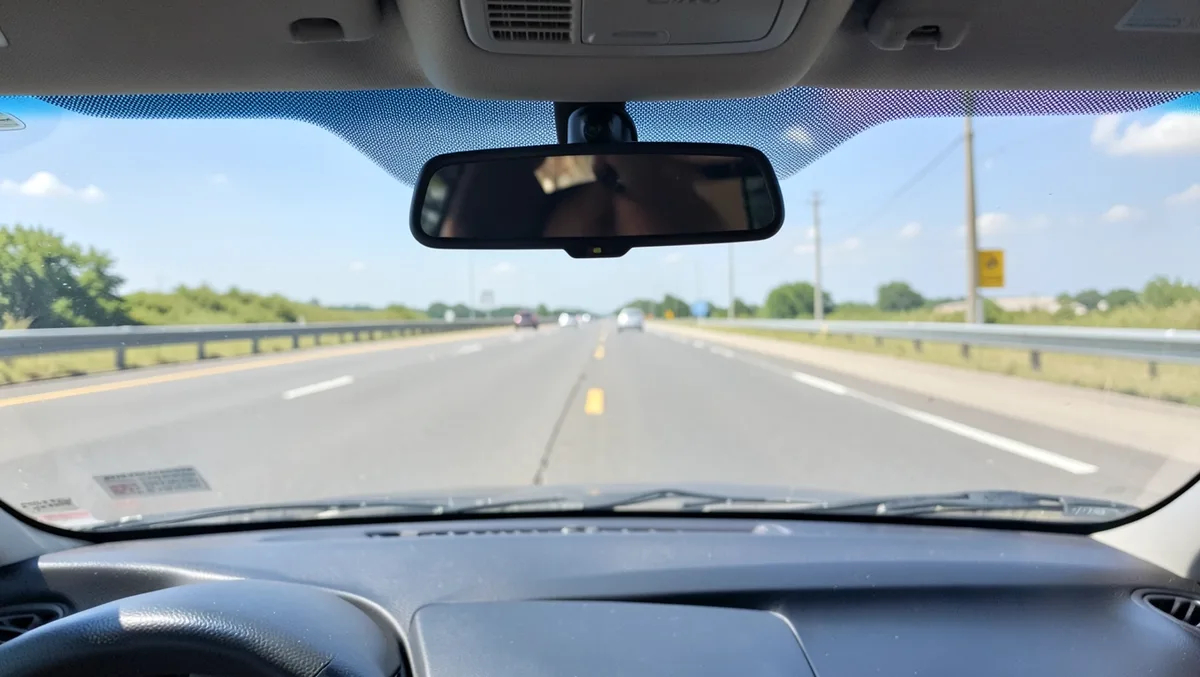
A dash cam records what happens through the windshield — and often the cabin — continuously, giving you footage that a backup camera or blind-spot sensor never captures. That matters most after a collision or a hit-and-run, when footage is the difference between a settled claim and a he-said-she-said dispute. Dash cams are legal to use in all 50 states, but two details actually trip people up: where you mount it and whether it records audio. Most states require the camera to sit within roughly the top five inches of the windshield, usually right behind the rearview mirror, so it doesn’t block your view of the road. Recording in-cabin audio without every passenger’s consent is illegal in about a dozen two-party-consent states, so check your state’s rule before you turn the microphone on. Look for a forward-facing lens rated for at least 1080p and a loop-recording function that automatically locks footage when it detects a sudden impact — that’s the feature that actually matters in a crash, not resolution alone. For a closer look at how one popular dual-channel model performs in daily use, see our DDPAI 4K Dash Cam (Z60) review.
Blind-Spot Sensors: How Aftermarket Radar Kits Work
A factory blind-spot monitor uses small radar sensors tucked into the rear bumper or side mirrors to track vehicles approaching from behind and to the side, then lights up a warning icon in the mirror when something is sitting where your mirrors can’t show you. Aftermarket blind-spot kits work on the same principle: radar units bolt onto or replace the rear bumper, and the system triggers an alert — usually an LED in the side mirror plus an audible chime — when it detects a vehicle in the zone you can’t see. They’re a genuinely useful add-on for older cars and base trims that skipped this feature at the factory, though independent testing has generally found aftermarket kits a step behind factory-installed systems at rejecting false alarms. Treat the warning light as a helpful backup, not a substitute for an actual shoulder check before you change lanes.

Frequently Asked Questions
What Is a Rearview Mirror Camera?
A rearview mirror camera clips onto or replaces your factory mirror and adds a built-in monitor that shows a live feed from a rear-mounted camera, giving you night vision and a wider field of view than a standard mirror alone. It’s a straightforward way to see what’s directly behind your car when parking or backing out of a tight spot.
How Does a Wireless Backup Camera Work?
A wireless backup camera mounts near your license plate and transmits video over a short-range wireless signal to a dashboard-mounted monitor, so there’s no cable running through the trunk and cabin. Most units switch on automatically when you shift into reverse and add night vision plus a waterproof housing for year-round use.
Do You Legally Need a Backup Camera on an Older Car?
No. FMVSS 111 has required a backup camera on every new car, truck, and SUV under 10,000 lbs built since May 1, 2018, but that rule only applies to vehicles as they’re manufactured — there’s no law requiring you to retrofit one onto a car built before that date. An aftermarket backup camera is optional, not mandatory, no matter how old your vehicle is.
Is It Legal to Use a Dash Cam?
Yes, dash cams are legal to use in all 50 states, though two rules trip people up: most states require the camera mounted within roughly the top five inches of the windshield so it doesn’t block your view, and recording in-cabin audio without every passenger’s consent is illegal in about a dozen two-party-consent states. Mounting a forward-facing lens behind the mirror and leaving the microphone off keeps you compliant almost everywhere.
What Are the Benefits of a Modern Car Stereo?
A modern aftermarket stereo adds wireless Apple CarPlay or Android Auto, so you can use turn-by-turn navigation and make hands-free calls without picking up your phone — genuinely a safety upgrade, not just an entertainment one. Bluetooth, USB playback, and adjustable EQ presets round out the convenience side.
Are Aftermarket Safety Features Reliable?
Reliability depends heavily on the brand. Established camera and sensor manufacturers test for waterproofing, night-vision performance, and signal stability, and their listings carry real buyer reviews you can check before ordering. Independent testing has found aftermarket blind-spot systems in particular are usually a step behind factory-installed versions at rejecting false alarms, so treat any aftermarket alert as a helpful backup, not a replacement for checking your mirrors.
How Do You Choose the Right Backup Camera?
Match the camera to how you actually use the car: a wired camera gives a more stable, lag-free image and suits a vehicle you’re keeping long-term, while a wireless model installs faster and is easier to move to a different vehicle later. Beyond that, prioritize a genuine night-vision sensor and an IP68/IP69K waterproof rating over a marginally higher resolution number.
Conclusion
Aftermarket safety tech has come a long way from the days when a rearview mirror camera was the only option for an older car. A rearview mirror camera or wireless backup unit adds the exact visibility that federal law now requires on every car built since 2018, a dash cam gives you a permanent record if something goes wrong on the road, and a radar-based blind-spot sensor covers the one angle mirrors alone can’t. None of these require dealership money or a factory trim upgrade — most install in an afternoon and work on nearly any car, truck, or trailer combination. Whichever combination fits your budget, pairing at least a backup camera with a dash cam covers the two biggest blind spots — literally and legally — that an older vehicle has.
Products related to this article
Sponsored / affiliate links. As an Amazon Associate I earn from qualifying purchases. I may earn additional commission from eligible campaigns.