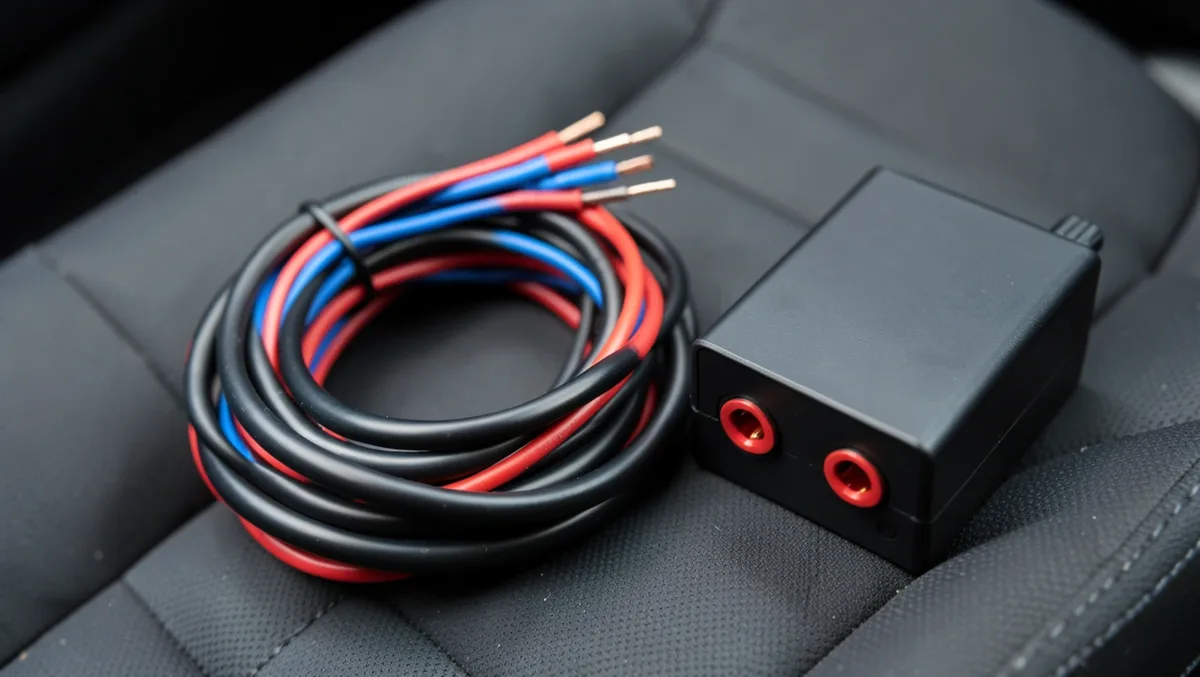
Audio Converter for Car: Best Line Output Converter Picks
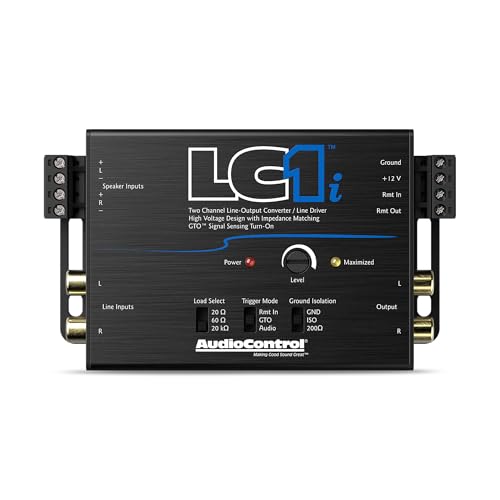
A line output converter (LOC) takes the high-level speaker signal from your factory car stereo and converts it into a low-level RCA signal an aftermarket amplifier or subwoofer can use.
You need one any time you want real power behind a factory head unit that has no built-in RCA preamp outputs, which is the case on most non-premium trims. Most LOCs run $20 to $30 and mount out of sight behind the dash or under a seat. The three models below cover the main use cases: a budget 2-channel unit with a remote gain knob, a version that adds automatic amp turn-on, and a model built for factory systems that need a speaker emulator to avoid tripping a dash warning.
How to Choose the Right Line Output Converter
Not every LOC fits every setup. Check these four things against your car before you buy:
- Channel count: a 2-channel LOC feeds one amp (a mono sub amp, or one stereo pair); a 4-channel unit is worth it if you’re running amps on both the front and rear speakers.
- Input voltage range: factory systems that already push a lot of power — BMW, GM Bose, some Ford Sync setups — can overload a basic LOC. Look for a converter rated for a wide input range, or add an inline speaker-level attenuator.
- Remote gain knob: useful if you want to adjust bass level from the driver’s seat instead of pulling a panel every time.
- Speaker emulator: needed if disconnecting a factory speaker to route it through the LOC trips an error message on the dash — the emulator keeps the factory amp “seeing” a normal speaker load.
If you’re wiring this in as part of a bigger amp install, see our guide on how to wire car audio the right way. Want to test the new amp before it’s permanently mounted? Here’s how to bench-test a car amp on a wall plug at home safely.
Scosche Loc2sl Line Output Converter With Remote Control Knob
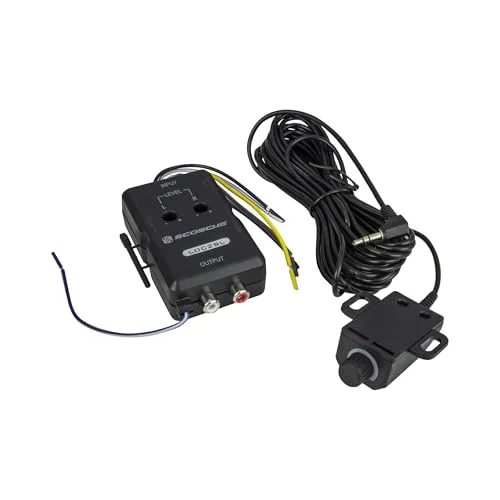
The Scosche LOC2SL is the simplest of the three picks here: a 2-channel converter with a small remote gain knob you mount near the dash, so you can dial the bass level up or down without pulling a panel every time. It’s the one to grab if you’re adding a single amp — for a sub or a 2-channel front stage — to a factory head unit with no RCA outputs at all.
Pros:
- Easy Installation process simplifies setup for all users.
- Remote Control Knob allows for convenient adjustments.
- High/Low RCA Converter provides versatile connectivity options.
- Enhances sound quality for a superior audio experience.
Cons:
- May require additional components for complex systems.
- Limited to 2-channel audio conversion.
Physically it’s small enough to tuck behind a stereo or under a seat, and the remote knob is the real selling point — most 2-channel LOCs at this price only give you a screw-adjustable trim pot inside the box itself, so you’d have to guess-and-check the level with the cover off. At roughly $20, it’s the least expensive of the three converters here; the tradeoff is that it only handles 2 channels, which is fine for one amp but not enough for a full front-and-rear system.
Kicker 46kisloc2 K-series Stereo Line-output Converter
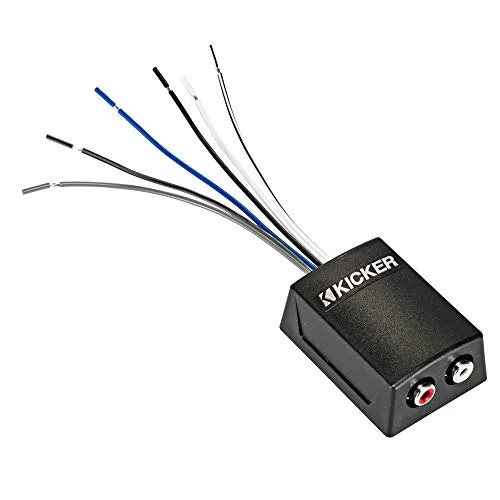
The Kicker 46KISLOC2 skips the remote knob and instead focuses on a cleaner connection: a compact 2-channel converter with its own remote turn-on output, so it switches your amplifier on and off with the stereo automatically instead of needing a separate remote-turn-on wire tapped into the fuse box.
Pros:
- Easy installation process for quick setup
- Compact design fits easily in tight spaces
- Provides remote turn-on output for convenience
- Durable construction ensures long-lasting use
Cons:
- May require additional wiring for some installations
- Limited compatibility with certain vehicle models
That built-in turn-on signal is the main reason to pick this one over a bare-bones LOC — it removes a whole extra wiring step that trips up a lot of first-time installers. The tradeoff is the same as the Scosche: no remote gain adjustment, so you set the level once with a screwdriver and leave it. At around $20, it’s priced the same as the Scosche, so the choice mostly comes down to a dash-reachable gain knob (Scosche) versus an automatic amp turn-on (Kicker).
Ds18 V2hl.v2 Hi/lo Converter 2-channel With Speaker Emulator
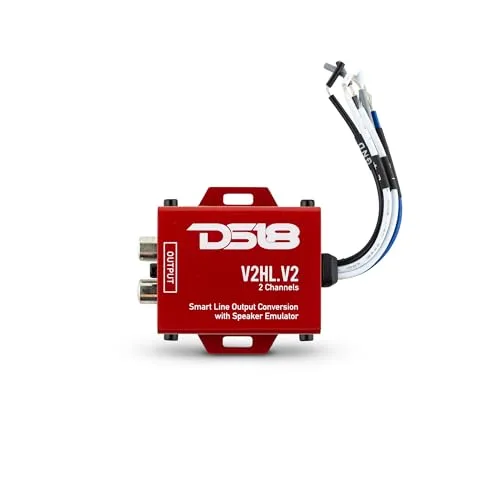
The DS18 V2HL.V2 is built for a problem the other two don’t solve: some factory amps monitor speaker-wire resistance and throw a dash warning, or mute themselves, the moment you disconnect the factory speaker to route sound through an LOC instead. This converter includes a built-in speaker emulator that keeps the factory amp “seeing” a normal speaker load, so you can bypass the factory speakers without tripping that error.
Pros:
- High-Level Speaker Signal conversion to Low-Level for enhanced audio integration.
- Smart line Output design ensures accurate sound reproduction.
- 2-Channel Input and Output for versatile connectivity options.
Cons:
- Installation may require technical expertise or professional assistance.
- Limited to 2-Channel conversion, not suitable for multi-channel systems.
Beyond the emulator, it’s still a straightforward 2-channel high-to-low converter — the same core job as the other two, just with that extra safeguard built in. At roughly $30, it costs about $10 more than the Scosche or Kicker, which is the price of not having to troubleshoot a dash warning light after the install. If your factory system doesn’t throw that warning when you unplug a speaker, you don’t need this feature and can save the money with either of the other two.
Frequently Asked Questions
What Is A Line Output Converter For Cars?
A line output converter transforms high-level speaker signals into low-level signals. This allows you to connect an aftermarket amplifier to a factory car stereo. It’s essential for enhancing your car audio system without replacing the head unit.
How Does A Car Audio Converter Work?
A car audio converter receives high-level speaker signals from the stereo. It then converts them into low-level RCA signals. These RCA outputs can then be connected to external amplifiers, improving sound quality and bass performance.
Is Installation Of Audio Converters Difficult?
Installing an audio converter is generally straightforward. Most converters come with clear instructions and necessary hardware. Basic knowledge of car audio systems and wiring helps. However, professional installation is recommended for optimal performance.
Do Audio Converters Improve Sound Quality?
Yes, audio converters can enhance sound quality significantly. They allow better integration of amplifiers and subwoofers. This results in clearer sound, improved bass, and overall enhanced audio performance. It’s ideal for audiophiles seeking a richer listening experience.
Can I Use A Converter With Any Car Stereo?
Most line output converters are compatible with a wide range of car stereos. They are designed to work with both factory and aftermarket systems. However, always check compatibility with your specific car model and stereo before purchasing.
Conclusion
All three of these line output converters do the same core job — turning your factory stereo’s speaker-level signal into an RCA output an amplifier can use — the differences are in the extras. Pick the Scosche LOC2SL for a dash-reachable gain knob, the Kicker 46KISLOC2 for automatic amp turn-on with one less wire to run, or the DS18 V2HL.V2 if your factory system needs a speaker emulator to avoid a dash warning. Whichever you choose, expect a straightforward install behind the dash or under a seat, and a noticeably cleaner, more powerful sound once your new amp is wired in.
Products related to this article
Sponsored / affiliate links. As an Amazon Associate I earn from qualifying purchases. I may earn additional commission from eligible campaigns.