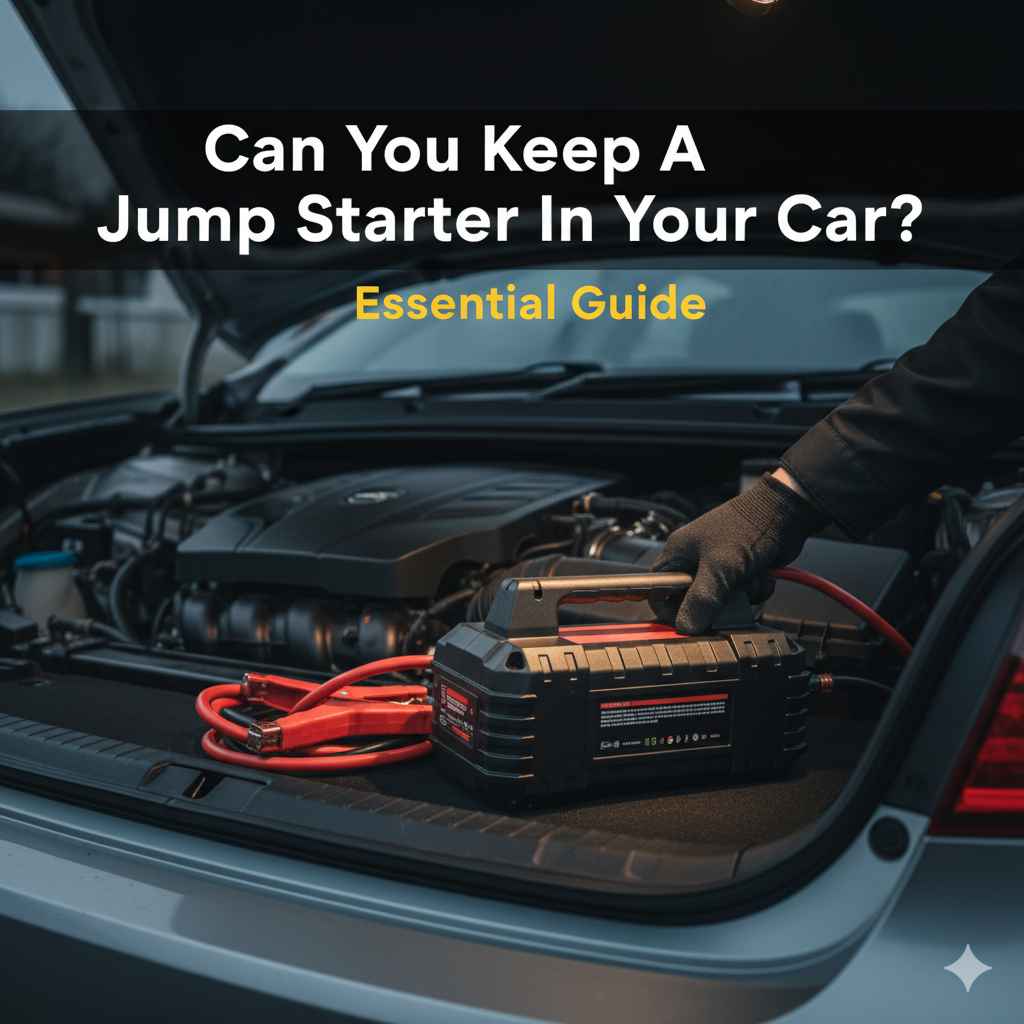
Can You Keep A Jump Starter In Your Car: Essential Guide
Yes, you absolutely can and should keep a jump starter in your car. It’s a portable, safe, and incredibly convenient device that can save you from being stranded with a dead battery. Think of it as your personal roadside assistant, ready to get you back on the road quickly and easily, without needing another car or a tow truck.
We’ve all been there: you’re rushing out the door, hop into your car, turn the key, and… nothing. Just a disheartening clicking sound or complete silence. A dead car battery is one of the most common and frustrating car problems, especially when you’re in a hurry or in an unfamiliar place. It can feel like a real emergency, leaving you stressed and unsure of what to do next. But what if there was a simple, reliable solution you could keep right in your trunk? That’s where a portable jump starter comes in. This guide will walk you through everything you need to know about keeping one of these lifesavers in your vehicle, making those dead battery moments a thing of the past.
Let’s dive in and make sure you’re always prepared!
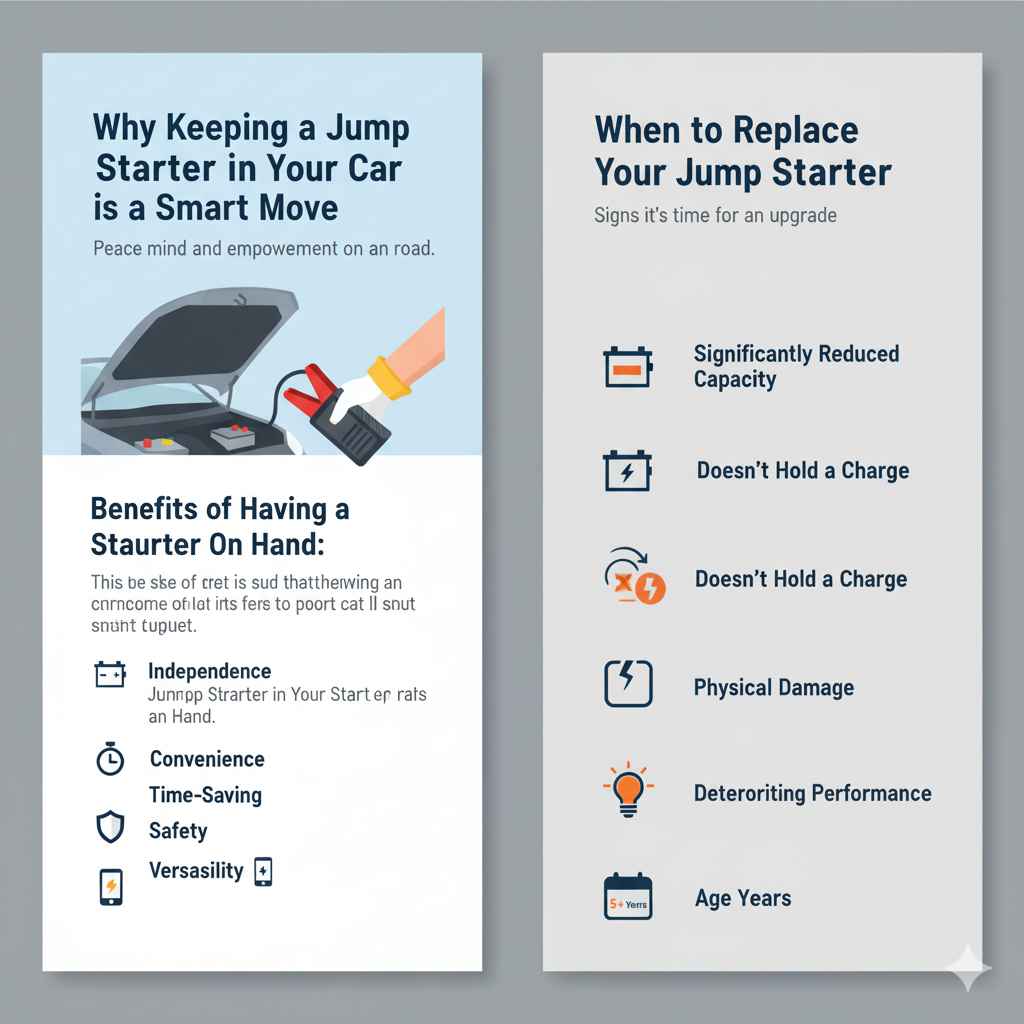
Why Keeping a Jump Starter in Your Car is a Smart Move
Think about the peace of mind that comes with knowing you can handle a dead battery yourself. No more waiting for roadside assistance, no more asking strangers for help (which can sometimes be awkward or even unsafe), and no more missed appointments or important events. A portable jump starter empowers you to take control of the situation.
They’ve become incredibly popular for good reason. Unlike the old-school jumper cables that require a second working vehicle, jump starters are self-contained units. They pack a powerful punch in a compact size, making them ideal for keeping in your car, truck, or even SUV.
Benefits of Having a Jump Starter On Hand:
- Independence: You don’t need another car to help you.
- Convenience: Easy to use and store.
- Time-Saving: Get your car started in minutes.
- Safety: Reduces the need to flag down strangers.
- Versatility: Many can also charge your phone or other devices.
Understanding Portable Jump Starters
Before we get into the specifics of keeping one in your car, let’s quickly cover what a portable jump starter actually is. At its core, it’s a battery pack designed to deliver a jolt of power to your car’s dead battery, enough to start the engine.
These devices have evolved significantly. Modern jump starters are compact, lightweight, and packed with safety features. They typically consist of a high-discharge lithium-ion battery, internal circuitry for safety, and a set of jumper cables with clamps. Many also come with additional features like:
- LED Flashlights: Essential for working in low light conditions.
- USB Ports: For charging smartphones, tablets, and other electronic devices.
- DC Output Ports: To power other 12V accessories.
- Built-in Testers: Some can even test your car’s battery health.
How They Work (Simplified):
When your car battery is dead, it can’t provide the necessary voltage to crank the engine. A jump starter acts as a temporary, powerful battery. You connect its clamps to your car’s battery terminals (positive to positive, negative to negative), and it delivers a surge of amps directly to help start your engine. Once your car is running, its alternator takes over, recharging the battery.
Can You Keep A Jump Starter In Your Car? The Definitive Answer
Yes, you can keep a jump starter in your car. In fact, it’s highly recommended! Unlike traditional lead-acid batteries that can be sensitive to extreme temperatures and require careful handling, modern lithium-ion portable jump starters are designed to be stored in a vehicle’s environment.
Manufacturers build these devices with operating temperatures in mind, and they are engineered to withstand the typical fluctuations a car experiences. However, there are a few best practices to follow to ensure its longevity and reliability.
Factors to Consider for Storage:
While generally safe, extreme temperatures can still affect the battery performance and lifespan of any electronic device, including your jump starter.
- Heat: Prolonged exposure to very high temperatures (like a car in direct sunlight during summer) can degrade the battery faster.
- Cold: Extreme cold can temporarily reduce the battery’s output capacity, meaning it might not deliver as much power as it would in mild temperatures.
Best Practices for Car Storage:
To maximize the lifespan and ensure your jump starter is ready when you need it, consider these tips:
- Avoid Direct Sunlight: Don’t leave it sitting on your dashboard or a place that gets intense, direct sun.
- Choose a Moderate Location: The trunk or under a seat is often a better spot than the glove compartment if it’s exposed to direct sun.
- Keep it Charged: A jump starter is useless if its own battery is dead. Follow the manufacturer’s recommendations for charging frequency, usually every 3-6 months.
- Use a Protective Case: Most jump starters come with a case. Use it to protect the device from dust, moisture, and bumps.
Choosing the Right Jump Starter for Your Car
Not all jump starters are created equal. When selecting one to keep in your car, consider these key features:
1. Cranking Amps (CA) and Peak Amps (PA):
These ratings indicate how much power the jump starter can deliver.
CA: The steady current a battery can deliver for 30 seconds at 0°F.
PA: The maximum current it can deliver for a short burst.
You’ll want a jump starter with enough power for your specific vehicle. A good rule of thumb is:
- Smaller gasoline engines (under 4.0L): 300-500 CA
- Larger gasoline engines (over 4.0L) and diesel engines: 500-1000+ CA
Always check your car’s manual for specific battery requirements if you’re unsure. For instance, a typical car battery needs a significant electrical current to overcome cold temperatures and internal resistance to start the combustion engine.
2. Battery Capacity (mAh or Wh):
This tells you how much power the jump starter holds, which also determines how many times you can jump-start a car on a single charge and how well it can charge your other devices.
3. Safety Features:
Look for built-in protections like short-circuit, reverse polarity, over-current, and over-temperature protection. These are crucial for preventing damage to your car or the jump starter itself.
4. Portability and Size:
Since it will live in your car, you want something that fits comfortably without taking up too much space. Most are designed to be compact.
5. Additional Features:
Do you want a built-in flashlight? USB ports for your phone? Consider what extras would be most useful for you.
Popular Types of Jump Starters:
There are a few main types you’ll encounter:
| Type | Pros | Cons |
|---|---|---|
| Lithium-Ion Jump Starters | Lightweight, compact, hold charge well, multiple uses (charging devices), fast charging. | Can be more expensive, performance can be affected by extreme cold. |
| Jump Starter Packs (Lead-Acid) | Often more powerful for bigger engines, less affected by extreme cold, generally cheaper. | Heavy, bulky, require charging more often, less versatile than lithium. |
How to Store Your Jump Starter Safely and Effectively
Proper storage is key to ensuring your jump starter is always ready and performs at its best when you need it most.
Recommended Storage Locations:
- Car Trunk: Often the best place. It’s usually the most temperature-stable part of the car, away from direct sunlight and extreme interior heat.
- Under a Back Seat: Another good option if the trunk is full or inaccessible.
- Under a Car Seat: If it fits securely and won’t slide around, this can work.
Avoid:
- Direct sunlight on the dashboard.
- Areas prone to excessive moisture or getting wet.
- Leaving it loose where it could become a projectile in case of sudden braking.
Charge Level Maintenance:
This is arguably the most critical aspect of maintaining your jump starter. These devices use rechargeable batteries, and like any battery, they lose charge over time. Most manufacturers recommend checking and topping up the charge every 3 to 6 months. Some advanced jump starters even have battery level indicators to make this easy.
A battery manager IC (Integrated Circuit) plays a vital role in modern battery packs. This chip monitors voltage, current, and temperature to prevent overcharging, over-discharging, and other issues, ensuring the battery remains healthy. You can learn more about the importance of these circuits in battery management systems on resources like Electronics Tutorials.
Temperature Considerations:
While designed for car environments, don’t push your luck with extremes. If your car is going to sit in a blast furnace for days, or freeze solid for weeks, bringing the jump starter inside might be a good idea for optimal longevity. However, for everyday use and most typical weather conditions, leaving it in the car is perfectly fine.
For example, if you live in a region with very extreme seasonal temperature swings, consider a jump starter specifically rated for a wider temperature range. Look for specifications related to operating temperature (e.g., -4°F to 140°F / -20°C to 60°C).
How to Use a Jump Starter (Step-by-Step)
One of the best things about jump starters is how easy they are to use. Here’s a simple guide, but always refer to your specific jump starter’s manual for detailed instructions.
Before You Start:
- Ensure your jump starter is adequately charged (check its indicator lights).
- Turn off your car’s ignition and remove the key.
- Open the hood and locate your car’s battery.
- Identify the positive (+) and negative (-) terminals on the battery. They are usually marked.
The Hook-Up:
- Connect the RED clamp to the POSITIVE (+) terminal of your car’s battery.
- Connect the BLACK clamp to the NEGATIVE (-) terminal of your car’s battery.
- Important Safety Note: Ensure the clamps do not touch each other or any other metal parts of the car once connected to the battery.
Starting Your Car:
- Connect the other end of the jumper cables to your jump starter unit. The order usually doesn’t matter here, but check your manual.
- Turn on the jump starter unit.
- Start your car’s engine. It should crank and start within a few seconds.
- If it doesn’t start, wait 30 seconds and try again for up to 5 attempts. If it still won’t start, there might be another issue with your car.
Disconnecting:
- Once the engine is running, turn off the jump starter unit.
- Remove the BLACK clamp from the negative terminal.
- Remove the RED clamp from the positive terminal.
- Disconnect the cables from the jump starter unit.
After Starting:
Let your car run for at least 15-30 minutes to allow your car’s alternator to recharge the battery. Driving the car is the best way to do this. It’s also a good idea to get your car battery tested at an auto parts store to ensure it’s not near the end of its life.
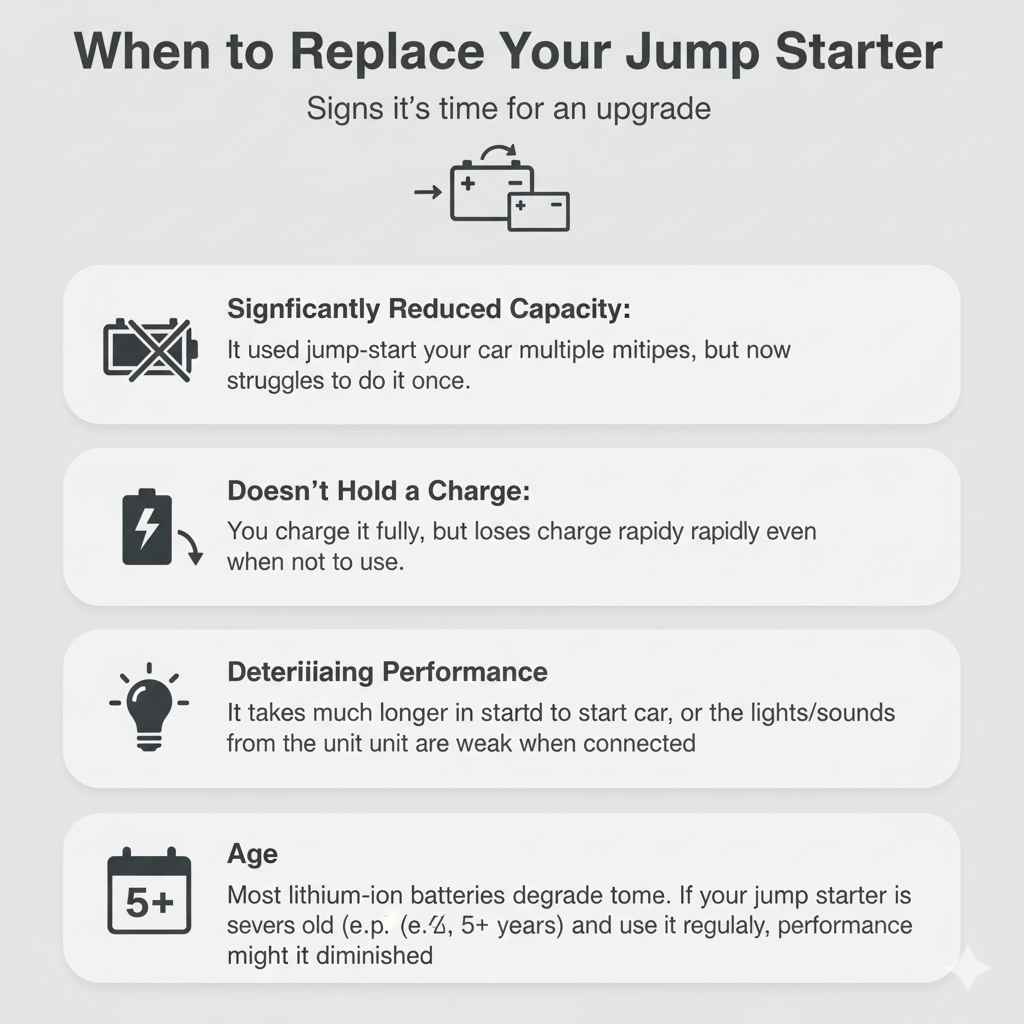
When to Replace Your Jump Starter
Even the best jump starters have a lifespan. Here are signs it might be time for a replacement:
- Significantly Reduced Capacity: It used to jump-start your car multiple times, but now struggles to do it once.
- Doesn’t Hold a Charge: You charge it fully, but it loses charge rapidly even when not in use.
- Physical Damage: Cracks, swollen battery casing, or damaged cables.
- Deter-iorating Performance: It takes much longer to start your car, or the lights/sounds from the unit are weak when connected.
- Age: Most lithium-ion batteries degrade over time. If your jump starter is several years old (e.g., 5+ years) and you use it regularly, its performance might be diminished.
FAQ Section
Q1: How often should I charge my jump starter?
A: Most manufacturers recommend checking and charging your jump starter every 3 to 6 months. Always refer to your specific model’s manual for the best recommendation.
Q2: Can a jump starter damage my car’s electronics?
A: Modern jump starters have safety features like reverse polarity and short-circuit protection specifically to prevent damage. However, it’s crucial to connect the clamps correctly (positive to positive, negative to negative) and follow the manufacturer’s instructions to be safe.
Q3: Will a jump starter work on a completely dead battery?
A: Yes, that’s their primary purpose! They are designed to provide enough power to start an engine even when the car battery has no charge left.
Q4: Can I store my jump starter in extreme cold?
A: While they are built for car environments, extremely cold temperatures can temporarily reduce a jump starter’s power output. If you live in a very cold climate, consider bringing it inside if you anticipate needing it in sub-zero temperatures, or choose a model specifically rated for extreme cold.
Q5: How long does a jump starter last?
A: The lifespan of a jump starter depends on its build quality, how often it’s used, and how well it’s maintained. Typically, a good quality jump starter can last anywhere from 3 to 5 years, or even longer with proper care.
Q6: What size jump starter do I need for a truck or SUV?
A: For larger engines found in trucks and SUVs, especially diesel engines, you’ll need a jump starter with higher cranking amps (CA) and peak amps (PA), generally in the 500-1000+ CA range. Always check your vehicle’s manual for specific recommendations.
Q7: Are jump starters safe to use in the rain?
A: Most jump starters are designed for outdoor use and have some level of water resistance. However, it’s best to avoid using them in heavy rain or wet conditions where the clamps could short out. Dry conditions are always ideal for safety.
Conclusion
Keeping a portable jump starter in your car is one of the most practical and empowering steps you can take for everyday driving confidence. It’s a small investment that can save you significant time, stress, and money. By choosing the right model, understanding how to store it properly, and knowing how to use it safely, you’ll be well-prepared to handle a dead battery situation without a second thought.
No more roadside anxiety. No more missed appointments. Just the freedom of knowing that with a simple device tucked away in your car, you’re ready for whatever the road (or your battery) throws at you. So, get that jump starter charged, find a safe spot in your vehicle, and hit the road knowing you’re prepared!