Why Don’T New Rally Cars Have Mudflaps? The Real Reason
It seems odd that modern rally cars, designed for rough, muddy tracks, often don’t have traditional mudflaps. This change isn’t about cutting corners; it’s a smart adaptation to racing technology, aerodynamic needs, and evolving rules. We’ll explore the key reasons behind this shift.
The Aerodynamics Story
Think about what mudflaps do. They are like little shields. They try to stop mud, stones, and water from flying everywhere.
This is good for the car behind. It’s also good for keeping the car’s body clean. But in high-speed racing, things get complicated.
Airflow is super important. Mudflaps can disrupt this airflow.
When a rally car zooms around a corner, air rushes over and under it. This air helps keep the car stuck to the ground. It also helps cool the engine and brakes.
Mudflaps, especially older, wider designs, can create drag. Drag is like wind resistance. It slows the car down.
It can also make the airflow messy.
This messy air can lift the car. It can make it harder to steer. It can even make the brakes work less well.
Race engineers spend huge amounts of time shaping every part of the car. They want air to flow smoothly. This helps the car go faster and handle better.
Adding bulky mudflaps can undo all that careful work.
So, they look for other ways to manage the spray. They design the car’s body differently. They use special vents.
They shape the wheels and tires. The goal is to guide the air and debris away from the car’s critical parts. This often means letting some spray happen, but in a controlled way.
It’s a trade-off. A little more mess for better speed and control.
Aerodynamics: The Invisible Force
What it is: How air moves around a car.
Why it matters: Affects speed, handling, and cooling.
Mudflaps’ effect: Can create drag and disrupt smooth airflow.
Modern approach: Car body design guides air instead.

Weight Matters, Too
Every ounce counts in a race car. This is especially true in rallying. Cars have to be nimble.
They need to accelerate quickly. They need to brake hard. Adding extra weight slows them down.
Mudflaps, though they might seem small, add up.
Think about the material they are made from. They need to be tough to withstand impacts. This often means thick rubber or sturdy plastic.
Then there’s the mounting hardware. Brackets, bolts, and fasteners all add more weight. For a professional rally team, shaving off even a few pounds can make a difference.
When you’re racing against the clock, every bit of performance counts. A lighter car can accelerate faster. It can change direction more quickly.
It uses less fuel. It puts less strain on the tires. This means longer tire life, which is a big deal in a long rally stage.
So, when teams look at the whole car, they ask: “Does this part help us win?” If a mudflap adds weight but doesn’t significantly improve safety or performance, it might get removed. They might find other, lighter ways to protect the car. This could be through underbody protection or specialized coatings.
It’s a constant battle to optimize. Every component is scrutinized. Mudflaps, historically a common feature, are now on the chopping block if they don’t serve a crucial purpose.
The drive to be lighter, faster, and more efficient means that even familiar parts can be left behind.
Quick Scan: Weight vs. Function
Mudflaps: Add weight, may not improve performance.
Lighter Car: Faster acceleration, better handling.
Weight Savings: Improve tire life, reduce fuel use.
Team Goal: Every gram matters for competitive edge.
Rule Changes and Safety
The world of professional motorsports is heavily regulated. The Fédération Internationale de l’Automobile (FIA) sets the rules for rallying. These rules cover everything from engine size to safety equipment.
Over the years, these rules have evolved. Some changes have made traditional mudflaps less necessary.
One key area is driver and co-driver safety. Cars are built with incredibly strong roll cages. The cockpits are designed to protect the occupants.
Advanced safety gear, like fireproof suits and helmets, are mandatory. These measures often provide enough protection against flying debris that might have once been a bigger concern.
Also, the rules about car design have changed. In some categories, there are strict limits on how wide a car can be. Or how much it can stick out from the body.
Mudflaps often stick out quite far. They can violate these dimensions. This forces teams to find alternatives.
Think about the type of debris on a rally stage. It’s mostly dirt, gravel, and small stones. Large rocks are a bigger hazard.
The car’s underbody and suspension are designed to handle these. Modern tires also have better protection built into them. They are less likely to pick up and throw small stones far.
The rules also focus on preventing dangerous situations. For example, they might ban certain types of projections that could catch on something. Or that could cause injury in a crash.
If mudflaps are deemed a potential hazard in some way, the rules will reflect that. It’s all about making the sport as safe as possible.
This means teams must work within the rules. If the rules don’t require mudflaps, or even discourage them, then they won’t be used. The focus shifts to meeting safety standards in other ways.
This often involves advanced materials and stronger chassis design.
Contrast: Old vs. New Safety Focus
Myth: Mudflaps are always essential for safety.
Reality: Modern car design and driver gear offer high protection.
Myth: Debris is the biggest danger to the car.
Reality: Rule compliance and structural integrity are key.
Myth: Mudflaps directly improve driver safety.
Reality: Safety is now built into the car’s core structure and rules.
Tire Technology Advancements
Tires are the only part of the car that touches the ground. They play a massive role in grip, speed, and how debris is handled. Modern rally tires are not like the tires you see on a regular car.
They are highly specialized.
These tires are designed to grip on loose surfaces. They can dig into dirt and gravel. They are also built to be tough.
They can withstand cuts and punctures better than ever before. This toughness means they are less likely to shred and throw large pieces of debris.
Also, the tread patterns are engineered. They help clear mud and water away from the contact patch. This keeps the tire gripping the surface.
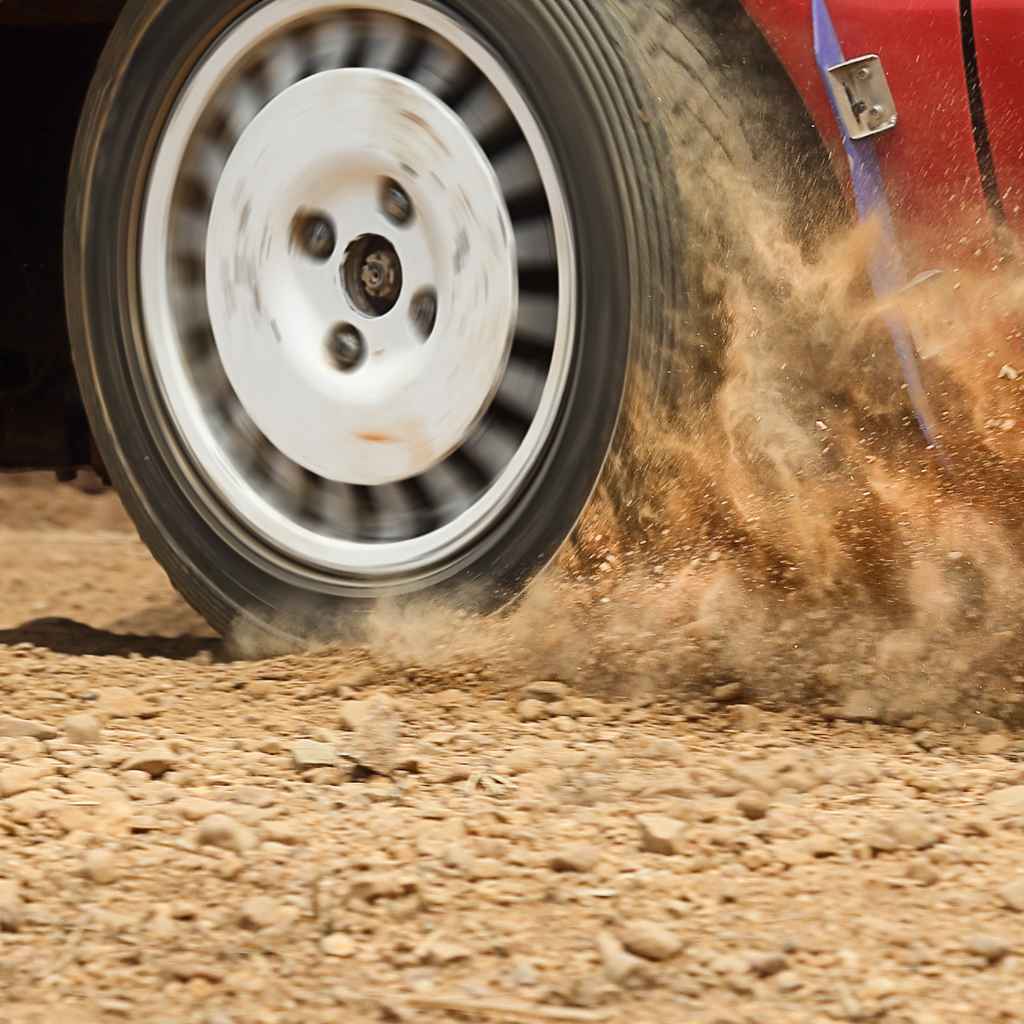
But they also influence how debris is thrown. The way the tread blocks are shaped and spaced can direct spray outwards and backwards, rather than sideways.
Think about how a tire spins. It’s a very fast rotation. The pattern on the tire acts like a centrifugal pump.
It flings things outwards. Tire designers work with car designers. They make sure the tire’s fling pattern works with the car’s body shape.
The goal is to get debris away from the car and its suspension.
This advanced tire technology reduces the need for mudflaps to catch spray. The tires themselves are doing a better job. They are managing the debris more effectively.
This is another reason why the old-fashioned mudflap is becoming less common. The technology has moved on.
Teams also select specific tires for specific stages. A tire that works well on a dry, dusty stage might be different from one used on a wet, muddy track. This careful selection means they can fine-tune the car’s performance.
It also helps manage the spray for that particular condition.
Observational Flow: Tire Impact on Spray
Start: Tire contacts loose surface (mud, gravel).
Action: Tire tread digs in, rotates rapidly.
Effect: Centrifugal force and tread pattern fling debris outwards.
Design Goal: Direct spray away from car body and suspension.
Outcome: Reduced need for mudflaps to catch spray.
Suspension and Undercarriage Protection
Rally cars are not built for smooth roads. They take a beating. The suspension system is crucial.
It allows the wheels to move up and down. This keeps the tires in contact with the ground on bumpy terrain. It also absorbs shocks from impacts.
The undercarriage of a rally car is heavily protected. There are strong skid plates. These are made of tough materials like aluminum or carbon fiber.
They cover the engine, gearbox, and fuel tank. They prevent rocks and debris from hitting these vital parts. This protection is far more robust than what mudflaps offer.
When a car hits a bump or a rock, the suspension works hard. The movement of the wheels and suspension components can kick up a lot of dirt. Without mudflaps, this spray goes outwards and backwards.
The underbody protection is designed to catch anything that might get underneath.
The geometry of the suspension itself is also important. Engineers design it so that when the wheels turn or compress, they push debris away from the car’s sensitive areas. This is a more integrated approach than just hanging a flap.
It’s part of the overall car design.
The materials used for protection are very strong. They are designed to take direct hits. Mudflaps, while offering some protection, are not usually as robust.
They can get torn off easily. Or they can snag on obstacles. The focus has shifted to building a stronger, more protected chassis from the ground up.
This means the car’s core structure is designed to handle the harsh environment. The suspension and undercarriage are designed as a team. They work together to keep the car moving forward, even on the roughest stages.
Mudflaps are often seen as an add-on. These modern cars have their protection built-in.
Stacked Micro-Sections: Underbody Protection
Skid Plates: Robust shields for engine and gearbox.
Material Strength: Made from tough aluminum or carbon fiber.
Suspension Geometry: Designed to deflect debris away.
Integrated Design: Protection is part of the car’s structure.
Durability: Built to withstand direct impacts.
The Evolution of Rally Cars
Rally cars have changed a lot since the early days. Back then, cars were often based on everyday models. They were modified to be tougher.
Mudflaps were a common and practical addition. They helped protect the car and following vehicles from thrown debris.
Today’s rally cars are purpose-built machines. They use advanced engineering. They have specialized materials.
They are designed from scratch for performance in tough conditions. This evolution means that components that were once essential might not be needed anymore.
Think about the transition from Group B cars to Group A. Or the move to the World Rally Car (WRC) regulations. Each step brought new technologies.
Each step pushed the boundaries of what was possible. This included how cars interacted with their environment.
Modern aerodynamics is a huge factor. We use wind tunnels. We use computer simulations.
We shape every curve and angle to work with the air. Mudflaps can disrupt these carefully crafted airflows. So, they are often removed.
The focus is on cleaner lines and better air management.
Weight reduction is another big driver. Every component is evaluated. If it doesn’t contribute to performance or safety, it’s a candidate for removal.
This relentless pursuit of optimization means that even familiar features can disappear.
The sport itself has become more professional. Teams have huge budgets. They employ specialists in every field.
This level of expertise means they can solve problems in more sophisticated ways. Instead of relying on a simple mudflap, they engineer complex aerodynamic solutions.
This constant evolution is what makes rally exciting. The cars are always getting better. The technology is always advancing.
It’s a cycle of innovation. Mudflaps are just one small piece of that larger story. They represent a past era of rally car design.
Card Grid: Rally Car Evolution
Early Rally Cars
Based on production models. Mudflaps were common.
Modern Rally Cars
Purpose-built, high-tech machines.
Aerodynamics
Crucial for speed and handling. Mudflaps can interfere.
Weight Savings
Every gram counts. Mudflaps add unnecessary weight.
Rule Changes
Regulations often dictate design, sometimes omitting mudflaps.
Tire Tech
Advanced tires manage debris better.
When Are Mudflaps Still Used?
While many top-tier rally cars skip mudflaps, they haven’t disappeared entirely. You’ll still see them in certain situations. And for good reason.
They serve important purposes when other factors come into play.
Firstly, in lower racing classes or national championships, the rules might still require them. Some regulations focus on keeping costs down. Or they aim to ensure a level playing field.
In these cases, mudflaps might be a mandated part of the car.
Secondly, for rally raids or endurance events, mudflaps can be very useful. These events often involve extremely long stages. They can traverse diverse terrain, including deep mud and water crossings.
The sheer volume of spray in these conditions can be overwhelming. Mudflaps help protect the car’s body and suspension from constant battering.
Think about events like the Dakar Rally. Cars there often have more robust protection. This can include wider mudflaps or splash guards.
The goal is to keep the car running for thousands of miles. Preventing damage from debris is a key part of that strategy.
Also, some teams might choose to run mudflaps for aesthetic reasons. Or they might believe it adds a certain level of protection they want. It’s a personal choice or team strategy.
Especially if they are not competing at the absolute highest professional level where every fraction of a second is critical.
Finally, in some older or vintage rally events, authenticity is important. Cars are often kept as close to their original specification as possible. If the original car had mudflaps, they will likely be kept on for historical accuracy.
So, while the trend in top-flight rally has moved away from mudflaps, they still have a role. Their use depends on the rules, the type of event, and the team’s specific goals and strategies. They are not obsolete, just less common at the elite level.
Split Insight Panel: Mudflap Scenarios
Rule Requirements: Mandated in certain racing classes.
Rally Raids: Essential for endurance and extreme conditions.
Team Preference: Optional for added protection or appearance.
Vintage Events: Used for historical accuracy.
What This Means for You
If you’re a rally fan, understanding these changes helps appreciate the sport more. It shows the constant innovation happening. It’s not just about faster engines.
It’s about smarter design and technology.
When you watch a modern rally car, notice its shape. See how the body panels flow. Look at the tires.
You’ll see that the car itself is designed to manage debris. The engineers have found ways to channel the spray. It’s a sophisticated system.
For amateur racers or track day enthusiasts, this knowledge can be useful too. You might be tempted to add mudflaps to your car for protection. But consider the potential downsides.
Will they hurt your car’s aerodynamics? Will they add too much weight?
Sometimes, the best solution isn’t an add-on. It’s about understanding how your car works. It’s about making smart choices in your setup.
Maybe it’s about using better tires. Or ensuring your car’s underbody is protected.
It’s also about knowing the rules for your specific competition. If mudflaps are required, then use them. If they are not, weigh the pros and cons carefully.
The goal is always to improve performance and safety. Sometimes that means going without traditional parts.
The absence of mudflaps on many rally cars is a sign of progress. It’s a testament to how far engineering has come. It shows that solutions are often more complex than they appear.
It’s about the whole car working together as one. Not just adding parts.
Quick Fixes & Tips
If you’re building a rally car or a performance vehicle, think about these points:
- Consult the Rulebook: Always check what’s required or allowed for your specific event or class.
- Prioritize Aerodynamics: Understand how adding parts can affect airflow. Sometimes less is more.
- Evaluate Weight: Consider the impact of every added component.
- Tire Choice Matters: Select tires that suit the terrain and help manage debris.
- Undercarriage Protection: Invest in robust skid plates and guards for vital components.
- Seek Expert Advice: Talk to experienced builders and racers.
Frequent Questions
Why did rally cars used to have mudflaps?
In older rally cars, mudflaps were a practical way to prevent large amounts of mud, stones, and water from being thrown backwards. This protected the following cars and helped keep the car’s bodywork cleaner. They were a simple, effective solution for the conditions of the time.
Are mudflaps banned in WRC?
Mudflaps are not strictly banned in WRC. However, the regulations for World Rally Cars (WRC) and other top classes often have strict rules about bodywork dimensions. Mudflaps can easily exceed these limits, making them impractical or illegal to fit on these specialized cars.
Do rally cars need mudflaps for street use?
Most rally cars are not street legal. If you were to adapt a rally car for street use, you might consider mudflaps for practicality. They can help reduce spray and protect your car and others from road debris.
However, this depends on local laws and your personal preference.
How do rally cars deal with mud without mudflaps?
Rally cars manage mud through advanced aerodynamics, specialized tire designs that help channel debris, and robust undercarriage protection. The car’s body shape is engineered to direct airflow and spray away from critical areas. Strong skid plates protect the underside.
Can mudflaps hurt a rally car’s performance?
Yes, mudflaps can hurt performance. They create aerodynamic drag, which slows the car down. They can also disrupt the smooth airflow that helps keep the car stable and cool.
For top-level racing, every bit of performance matters, so any negative impact is avoided.
What are the alternatives to mudflaps for debris protection?
Alternatives include advanced aerodynamic bodywork, specialized tire tread patterns, and robust underbody skid plates. Some cars might use smaller, integrated splash guards that are less obtrusive than traditional mudflaps. The focus is on integrated design rather than add-on parts.
Conclusion
The absence of mudflaps on many new rally cars is a clear sign of how much the sport has evolved. It’s about advanced engineering, better understanding of forces, and stricter rules. These cars are now designed as a complete system.
They manage spray through aerodynamics and tire tech. It’s a fascinating look at performance and innovation in motorsports.
Products related to this article
Sponsored / affiliate links. As an Amazon Associate I earn from qualifying purchases. I may earn additional commission from eligible campaigns.