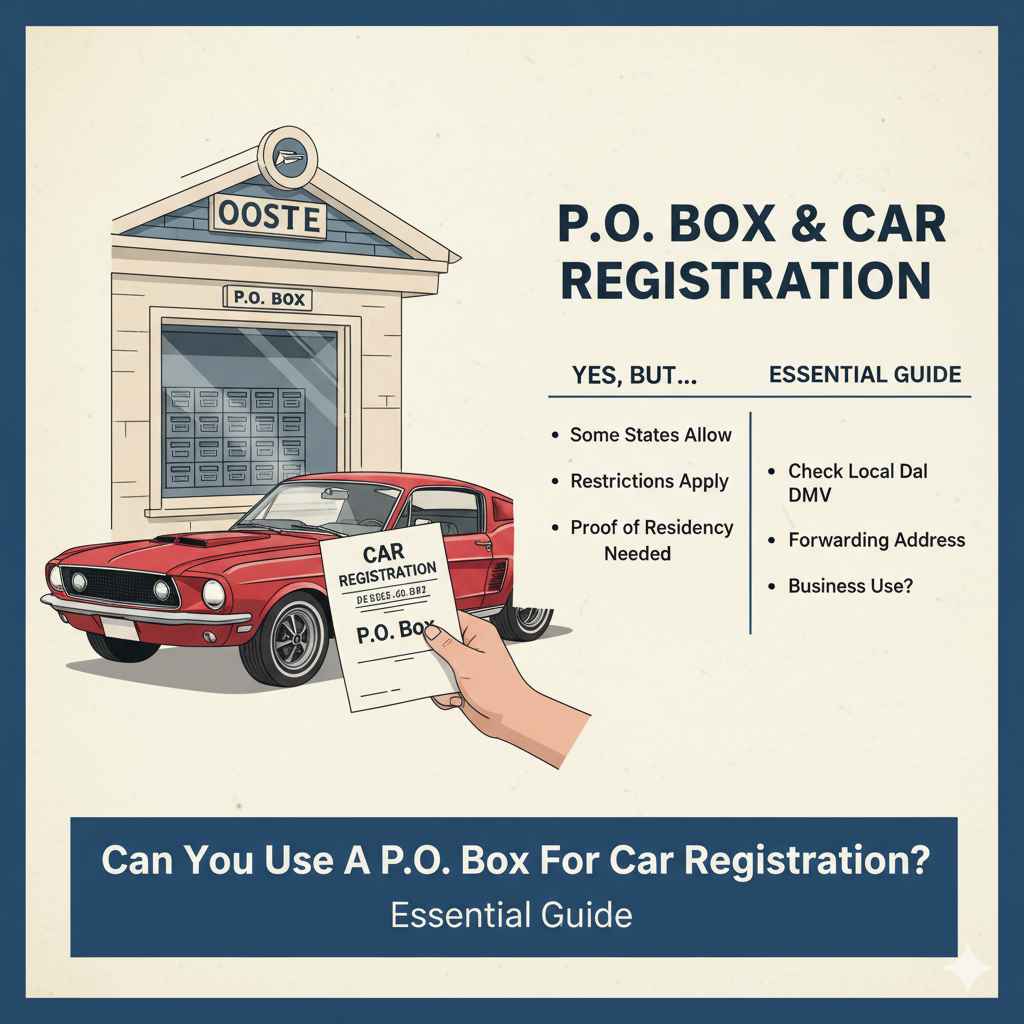
Can You Use A P.O. Box For Car Registration? Essential Guide
Can you use a P.O. Box for car registration? In most cases, no, a P.O. Box cannot be used as your primary address for car registration. State motor vehicle agencies typically require a physical residential address for registration purposes. We’ll explore why and what your options are.
Registering your car is a necessary step for every driver, but sometimes the address requirements can feel a bit confusing. You might be wondering if you can use your convenient P.O. Box instead of your home address. This is a common question, especially if you receive most of your mail at a P.O. Box or if you have privacy concerns. The good news is, it’s not as complicated as it might seem, and we’re here to break it all down for you. We’ll clearly explain the rules, why they exist, and what you can do to meet the requirements for your car registration smoothly.
By the end of this guide, you’ll understand exactly why states require a physical address and what alternatives might be available if you’re not comfortable using your home address directly for official documents. Let’s get started on making this process clear and stress-free!
Why States Require a Physical Address for Car Registration
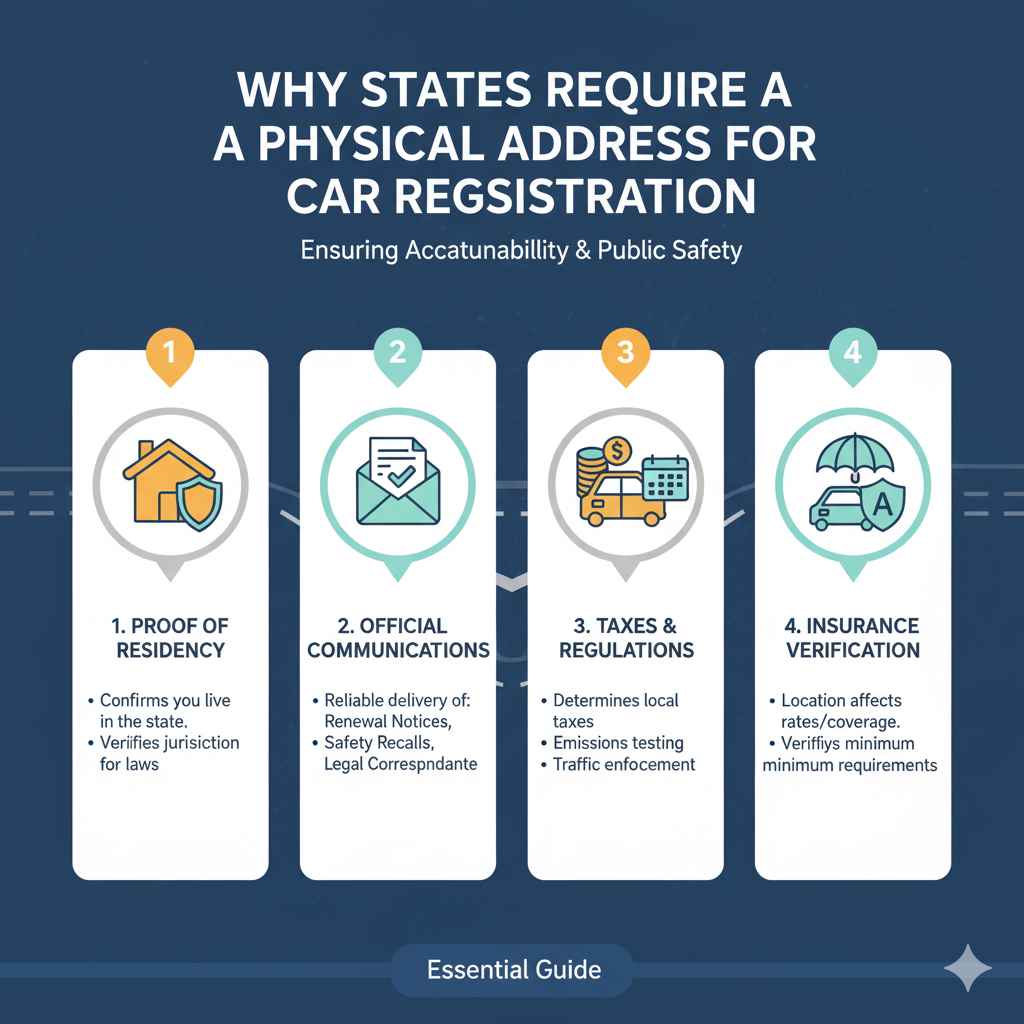
When you register your vehicle, you’re essentially telling your state government that you own and operate a car. This process is crucial for several important reasons. The primary one is to ensure that official documents and communications from the Department of Motor Vehicles (DMV) or equivalent agency can reach you reliably. Think of things like renewal notices, important safety recalls, or any legal correspondence related to your vehicle. These need to get to your actual location.
Furthermore, your physical address is used to determine which jurisdiction’s laws apply to your vehicle. This includes things like local taxes, emissions testing requirements, and even traffic enforcement. Having a physical address helps authorities verify that you reside within the state and that your vehicle is being operated legally within its borders. It’s all about accountability and ensuring public safety.
Another key reason is related to insurance. Car insurance companies need accurate residential information precisely because your location impacts your insurance rates and coverage. They also use this information to verify that you meet the state’s minimum insurance requirements. A P.O. Box doesn’t confirm where you physically live and park your car, which is essential for these verifications.
Understanding P.O. Boxes and Their Limitations for Official Use
A P.O. Box, or Post Office Box, is a unique mailbox located at a U.S. Post Office. It’s a convenient way to receive mail, especially if you have a home that’s difficult to find, if you’re concerned about mail theft, or if you simply prefer to keep your home address private. However, a P.O. Box is not considered a residential address. It’s a delivery location, but it doesn’t confirm a person’s physical presence or domicile in a particular area.
Because of this distinction, most government agencies, including any state’s Department of Motor Vehicles (DMV), require a physical street address for official purposes like vehicle registration, driver’s license applications, and tax filings. They need to know where you live, not just where you want your mail sent. This is critical for tracking residency, ensuring tax collection, and verifying compliance with local laws and regulations.
Think of it this way: your driver’s license needs to show where you live so law enforcement can identify you. Similarly, your car registration needs to prove your car is registered in a specific locality where you can be contacted. A P.O. Box doesn’t fulfill this requirement reliably.
Can You Use a P.O. Box for Car Registration? The General Rule
The short answer is: generally, no, you cannot use a P.O. Box as your primary address for car registration. State motor vehicle agencies across the United States require a physical residential address for the registration of a vehicle. This physical address is crucial for several reasons, including legal notifications, insurance verification, and tax purposes.
When you register a vehicle, you are declaring that you are a resident of that state and that you operate a vehicle within its boundaries. A P.O. Box, by its nature, is a mailing address and does not confirm a physical residence. Therefore, it doesn’t meet the legal definition of a residential address required by most DMVs.
For example, the Federal Motor Carrier Safety Administration (FMCSA) outlines that states have specific requirements for vehicle registration, and a physical address is almost universally among them. You’ll need to provide a street address where you actually live. This could be a house, an apartment, or any other location that serves as your domicile.
Why the Strict Policy?
The stringent requirement for a physical address for car registration is rooted in law enforcement, public safety, and administrative efficiency. States need to be able to verify residency for a multitude of reasons, and your vehicle registration is a key document in that process.
- Legal Notifications: If there are any legal issues, recalls, or violations related to your vehicle, or if law enforcement needs to contact you, they must be able to do so reliably. A physical address ensures that official mail, such as traffic citations or safety recall notices, can be delivered to your actual place of residence.
- Proof of Residency: Vehicle registration is often used as proof of residency for insurance purposes, local taxes, and sometimes even for voting. A P.O. Box cannot serve as proof of where you physically live.
- Insurance Requirements: Car insurance premiums and coverage are heavily influenced by your residential location. Insurers need to know your actual address to accurately assess risk and ensure you comply with state insurance laws. A mailing address like a P.O. Box doesn’t provide this necessary information.
- Taxation: Some states levy taxes based on vehicle ownership and residency. A physical address helps determine the correct tax jurisdiction.
- Law Enforcement: In the event of an accident, theft, or other incident, law enforcement needs to be able to locate a vehicle owner and their registered vehicle.
These requirements are established by state laws and regulations. For instance, the District of Columbia Department of Motor Vehicles, like most other states, mandates a physical address for registration.
What to Do If You Cannot Use a P.O. Box (And Your Options)
It’s understandable to want to keep your home address private or to prefer using a P.O. Box for mail. If the DMV requires a physical address for your car registration and you’re unable or unwilling to use your home address, here are some common options and considerations:
1. Use Your Physical Residential Address
This is the most straightforward and legally compliant method. If you own a home or rent an apartment, this is the address you’ll typically use. It’s where you reside, receive personal mail, and are generally reachable.
2. Use a Family Member’s or Friend’s Physical Address (with permission)
If privacy is a concern and you have a trusted family member or friend whose address you can use, you might be able to register your vehicle at their physical location. However, this is only permissible if they explicitly give you permission and if you can genuinely receive mail and legal notices there. Be sure to discuss this with them beforehand and understand any implications it might have for them.
3. Mail Forwarding Services (with a physical address component)
Some services offer a physical street address that can receive mail and packages. This address is often a commercial mail receiving agency (CMRA) or a virtual mailbox service. They then forward your mail to your preferred location or P.O. Box. When registering your car, you would provide the physical street address that the service offers. It’s crucial to verify with your state’s DMV if they accept addresses from these types of services, as some may have specific rules about them.
For example, some services provide a real street address that looks like a residential or business address, which is more likely to be accepted by the DMV than a P.O. Box. Always check the terms of service and ensure the provider explicitly allows use for official government documents.
4. Alternative Mailbox Services (that offer a physical address)
Similar to mail forwarding services, some private mailbox companies provide a physical street address rather than a P.O. Box number. These can sometimes be accepted by DMVs because they resemble a real street address. However, again, verification with your specific state’s DMV is essential. Look for services that clearly state they offer a street address and not just a mailing box.
5. Re-evaluate Your Privacy Concerns
Understand what kind of information is shared and how it’s used. While your physical address is linked to your registration, it’s typically for official purposes only and not generally made public in an easily searchable way. Most states have laws protecting personal information collected during the registration process. Research your state’s specific privacy policies regarding vehicle registration information.
Can You Use Your Business Address?
In some cases, you might be able to use a business address for car registration, but this typically applies only if the vehicle is registered to the business itself, not to you personally. If the car is a company vehicle, then the business’s physical location would be the appropriate address for registration.
However, if you are registering a personal vehicle, using your business address for personal registration is generally not allowed. State DMVs differentiate between personal residency and business operations. They need to know where you, the individual owner and operator, reside. Using a business address for a personal vehicle registration can be seen as misrepresentation and could lead to penalties.
If you run a home-based business, your home address is still considered your residential address. A P.O. Box associated with your business also cannot be used for your personal vehicle registration. Always clarify with your state’s DMV if there are any specific provisions for using commercial addresses for personal vehicles, though this is rare.
How to Find Your State’s Specific DMV Requirements
Motor vehicle regulations, including those for registration, vary significantly from state to state. The best way to get accurate and up-to-date information is to consult your state’s official Department of Motor Vehicles (DMV) or equivalent agency website. These sites are usually easy to find by searching for “[Your State] DMV” or “[Your State] Department of Transportation vehicle registration.”
Look for sections on “Vehicle Registration,” “New Resident Registration,” or “Required Documents.” Most state DMV websites provide detailed checklists and FAQs to guide you through the process. They will explicitly state what type of address is required and what documentation you need to provide as proof.
Here’s a quick guide to finding the right information:
- Search Online: Type “[Your State] DMV” into a search engine.
- Navigate to the Official Site: Look for a government domain (e.g., .gov).
- Find the Registration Section: Browse for “Vehicle Registration,” “Registering a Vehicle,” or similar links.
- Check Address Requirements: Look for information on “proof of residency” or “required address.”
- Contact Them Directly: If you’re still unsure, don’t hesitate to call or visit your local DMV office. They can provide definitive answers for your specific situation.
Here are links to a few state DMV sites as examples:
- California DMV Vehicle Registration
- Texas DMV Vehicle Registration
- New Jersey MVC Vehicle Registration
What About Your Driver’s License?
The rules for your driver’s license address are often very similar to those for vehicle registration. Your driver’s license is also a form of identification that state agencies use to verify your residency. Therefore, in most states, you cannot use a P.O. Box as your permanent address on your driver’s license either.
When you get a driver’s license or update your address on it, the DMV typically requires a physical street address to confirm where you live. This helps ensure that law enforcement and other official bodies can contact you and verify your legal residence. If you move, you are usually required by law to update your driver’s license address within a specific timeframe, and again, a physical address is needed.
Some states might allow you to list a P.O. Box as a mailing address in addition to your physical residential address, but the physical address will remain the primary one for official purposes. Always check your specific state’s regulations regarding driver’s license addresses.
Consequences of Providing Incorrect Address Information
Providing false or misleading information when registering your vehicle or applying for a driver’s license can have serious consequences. This is because inaccurate address information undermines the entire system of legal notification and accountability that these documents are designed to uphold.
Here’s what could happen:
- Fines and Penalties: You could face significant fines for misrepresenting your address. These penalties vary by state and can range from a few hundred to several thousand dollars.
- Registration/License Suspension: Your vehicle registration or driver’s license could be suspended or revoked. This means you could be legally prohibited from driving.
- Difficulty Receiving Important Mail: You might miss critical notices about your vehicle’s registration renewal, safety recalls, traffic tickets, or insurance requirements, which could lead to further penalties and unresolved issues.
- Legal Trouble: In severe cases, intentionally providing a false address could be considered fraud, leading to more significant legal complications.
It’s always best to be honest and accurate with the information you provide to the DMV. If you have concerns about privacy, explore the legitimate alternatives discussed earlier, rather than risking penalties by providing incorrect details.
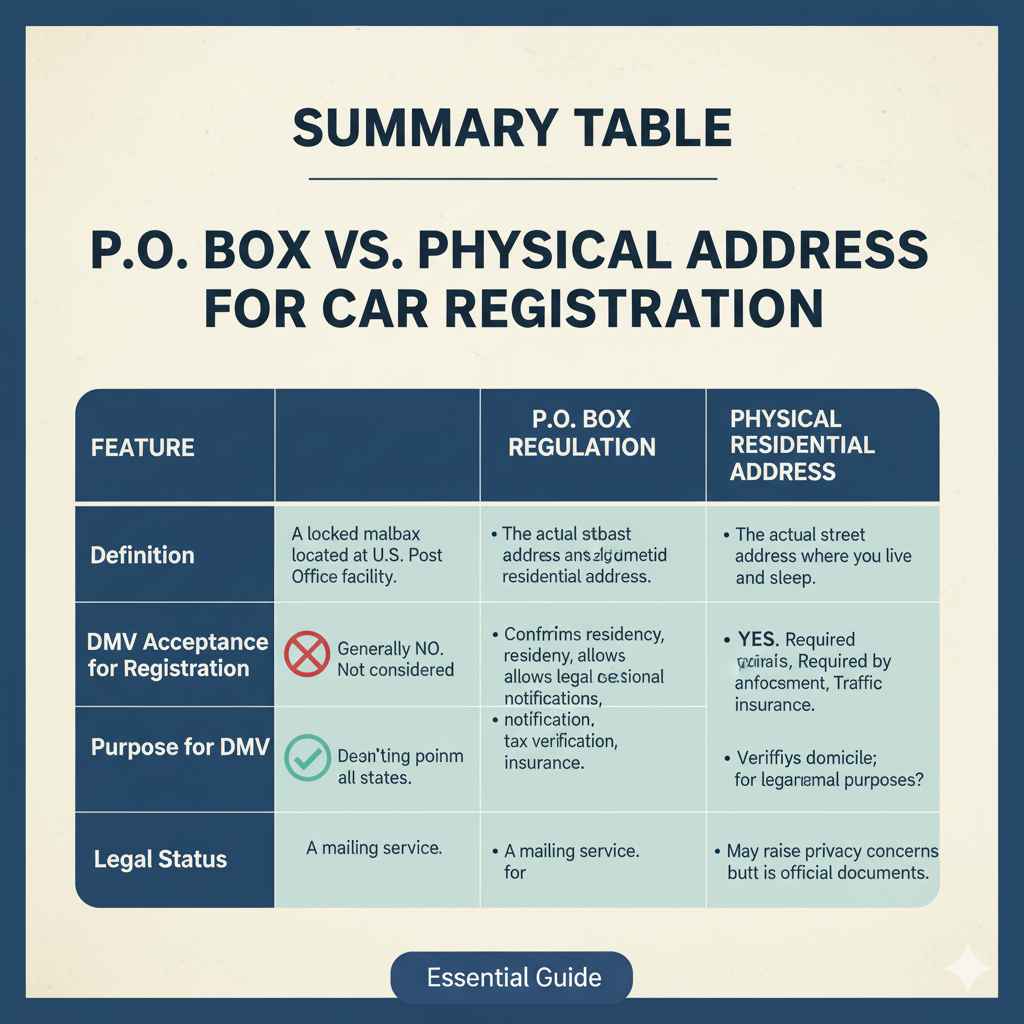
Summary Table: P.O. Box vs. Physical Address for Car Registration
To quickly summarize the key differences and why a physical address is necessary, here’s a helpful table:
| Feature | P.O. Box | Physical Residential Address |
|---|---|---|
| Definition | A locked mailbox located at a U.S. Post Office facility. | The actual street address where you live and sleep. |
| DMV Acceptance for Registration | Generally NO. Not considered a valid residential address. | YES. Required by almost all states. |
| Purpose for DMV | Only a mailing point, doesn’t confirm residency. | Confirms residency, allows legal notifications, tax verification, insurance. |
| Legal Status | A mailing service. | Proof of domicile; required for legal and governmental purposes. |
| Privacy | Offers more privacy for mail delivery. | May raise privacy concerns for some, but is legally required for official documents. |
Frequently Asked Questions (FAQ)
Q1: Can I use my P.O. Box for my car insurance address?
A: Typically, no. Similar to car registration, insurance companies require your physical residential address. This is because your location impacts your insurance rates and risk assessment. They need to confirm where you legally reside and where the vehicle is primarily kept.
Q2: What if I live in an RV or am often traveling?
A: Many RV owners and frequent travelers establish a physical domicile in a specific state or utilize a mail forwarding service that provides a real street address in a state that doesn’t require physical residency for registration (like South Dakota or Texas, though rules can change). Some people use a trusted family member’s address. You must still establish a legal residence somewhere to register your vehicle and driver’s license.
Q3: Will the DMV accept a virtual mailbox address?
A: It depends on the specific virtual mailbox service and your state’s DMV. Some virtual mailbox services provide a legitimate street address that might be accepted. However, the DMV needs to be satisfied that this address is a valid representation of your physical residence for legal and official purposes. Always confirm with your state’s DMV before relying on such a service for registration.
Q4: I rent a room. Can I use that address for registration?
A: Yes, if you rent a room and it is your primary dwelling, that physical address can and should be used for your car registration and driver’s license. It signifies your residency. You may need to provide documentation like a lease agreement or a letter from the property owner.