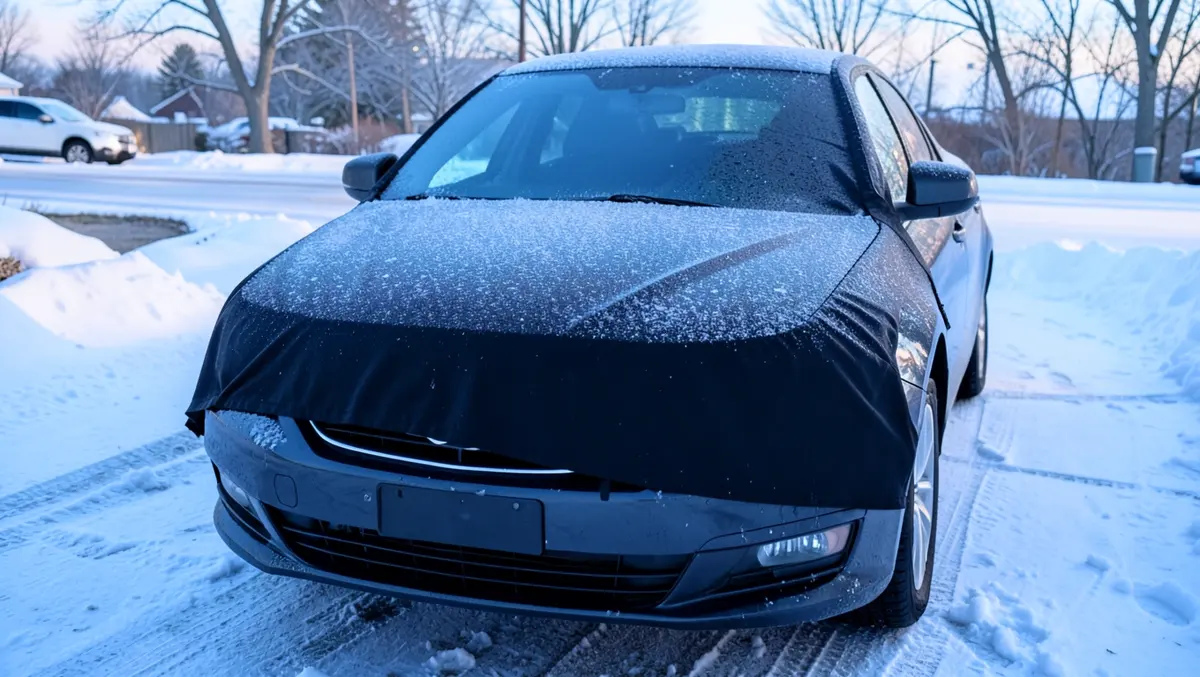
Best Car Hood Cover for Winter: 3 Windshield Snow Picks
The best car hood cover for winter is a full windshield-and-hood cover with wind straps for exposed parking, or a magnetic model only on steel roofs and hoods. Pick the wrong type and snow can lift the cover, scratch paint, or leave your windshield frozen solid. This guide compares three winter windshield snow picks by climate, parking exposure, and frame material so you can choose the one that stays put.
Quick comparison
| Product | Badge | Best for | Price | ||
|---|---|---|---|---|---|
 |
EcoNour Windshield Cover for Ice and Snow, Car Front windowEcoNour | Our pick | 69 x 42 in · heavy-duty 600D · universal fit | $29.99
Price as of 30 Oct 2026
|
View |
 |
Motor Trend 6-Series Heavy Duty Car Cover Waterproof AllMotor Trend | Also great | $83.90
Price as of 30 Oct 2026
|
View | |
 |
Zettum Car Windshield Cover for Ice and Snow – 600DZettum | Also great | 70 x 50 in · 600D · side mirror cover | $33.99
Price as of 30 Oct 2026
|
View |
 |
MyRainier Windshield Cover for Ice and Snow, Premium OxfordMyRainier | Pair with it | Oxford hood cover · padded · reinforced straps | $35.99
Price as of 30 Oct 2026
|
View |
Use this comparison to match the cover type to your parking spot and climate. Start with wind, then snow load, then your vehicle’s frame material. The right choice depends less on price than on how hard the wind hits your car, how often snow piles up overnight, and whether your vehicle has steel frames where magnets can actually hold.
How we chose
Selection is based on manufacturer specs, listing details, and published buyer feedback, with attention to material, retention method, fit range, and coverage.
The main filters were cold-weather fabric durability, wind retention, windshield and mirror coverage, and compatibility with steel, aluminum, or non-metallic frames.
We also favored products that explain fit clearly, because a cover that is too short at the edges will lift in wind long before the center panel fails.
Winter cover decision matrix
This matrix helps you choose by climate first, then by fit. A cover that looks similar on a product page can perform very differently once wind, drifting snow, and freeze-thaw cycles start working at the edges.
| Cover type | Wind exposure | Snow frequency | Frame material | Needed protection | Best fit |
|---|---|---|---|---|---|
| Magnetic edge cover | Strong on sheltered streets; weaker in open lots if the vehicle body is not steel | Good for regular snowfall, but edge lift can start after repeated loading | Best on steel-framed vehicles | Glass-first protection with faster daily use | Drivers who park on metal-bodied vehicles and want quicker install and removal |
| Strap-on full-coverage cover | Strong in exposed parking because straps add retention when magnets are not an option | Best for frequent snow, drifting, and ice storm conditions | Works on steel, aluminum, and non-metallic frames | Glass, wipers, and mirrors | Drivers in open parking, harsh wind, or mixed-material vehicles |
| Heavy-duty 600D Oxford cover | Moderate to strong depending on straps, door flaps, or magnet layout | Good all-around choice for daily snow and sleet | Best when fit matches the vehicle shape closely | Windshield protection with reliable cold-weather fabric | Budget-to-midrange buyers who want a durable daily winter cover |
Car hood cover checklist
- Measure windshield width and height before you buy.
- Check whether your car, SUV, van, or truck fits a standard size or needs XL.
- Confirm whether the body has steel door frames if you want magnetic retention.
- Look for strap anchors or door-jamb straps if magnets are not usable.
- Choose full-coverage designs if you want wiper and mirror protection.
- In exposed parking, favor tighter edge retention over loose throw-over designs.
Heavy-duty 600D Oxford cover: best for most drivers
This EcoNour cover is the best all-around pick for drivers who want a heavy-duty winter windshield cover without moving into premium pricing. It uses 600D Oxford fabric, covers the windshield and wiper blades, and uses door flaps plus a strap for installation. The listed price is $29.99.
That 600D Oxford fabric matters because it is a heavy-duty woven polyester commonly used in budget-to-midrange covers, and it is a sensible choice when the cover has to deal with freezing temperatures, sleet, and repeated use. The 69″ x 42″ size also fits into the standard-size range many sedans, crossovers, and smaller trucks need.
The main drawback is that this is still a windshield-first design, so buyers who need mirror coverage or deeper side sealing should look at a full-coverage option instead. If your parking spot is open and windy, confirm that the door-flap setup gives enough edge hold for your vehicle shape.
Why 600D Oxford fabric matters
600D Oxford fabric is the common heavy-duty material choice here because it balances weather resistance with everyday handling. In winter, that matters more than flashy extras if the cover has to survive freezing nights, thawed mornings, and snow sitting on top of it.
Best fit for budget-to-midrange buyers
Choose this type if you want a practical cover that stops scraping and defrosting every morning without paying for full-coverage features you may not need. It is a good middle-ground pick for drivers who park in ordinary street or driveway exposure.
What to check before you buy
Check windshield width and height, then confirm that the cover’s 69″ x 42″ layout matches your vehicle’s glass and roofline. A common first-timer mistake is buying by body style alone and discovering that a tall windshield or broad roofline leaves gaps at the corners.
Magnetic edge cover: best for steel frames
This Zettum cover is the best fit for drivers whose vehicles have steel frames and who want stronger edge retention than a loose throw-over design. It uses 600D Oxford cloth with PU coating, includes side mirror coverage, and uses quick-release buckles to stay put. The listed price is $33.99.
Embedded neodymium magnets are the feature that matters most here. The listing notes magnetic retention, and the compatibility note is simple: magnetic covers work best on steel-framed vehicles. That can make a big difference in wind, because edge hold is what keeps snow from getting under the cover and lifting it.
The drawback is equally simple. Magnets are not the right answer for aluminum or non-metallic frames, and even on steel, repeated freeze-thaw cycles can make a cover more prone to edge lift if the fit is loose. The 70″ x 50″ size is generous, which helps many vehicles, but a loose fit can still catch wind.
How embedded neodymium magnets help
These magnets are sewn into the edge area, where they help resist wind lift better than a plain draped cover. That can matter on open parking decks, corner lots, or driveways that catch gusts from the side.
When magnets struggle in real winter use
Magnetic retention is less useful when snow piles along the edges and the cover begins to bridge over ice. Once that happens, wind can get under the cover anyway, and a strong gust can work at the same seam over and over. That is where fit and material stiffness matter as much as magnet count.
Safety notes for aluminum and non-metallic frames
Do not buy a magnetic cover just because the edge retention sounds strong. If the vehicle has aluminum panels, non-metallic trim, or uncertain frame material, check the manufacturer’s listing for your model and choose straps or a full-coverage design instead.
Full-coverage strap-on cover: best for wipers and mirrors
This MyRainier cover is the premium-style choice for drivers who want a windshield-and-hood layout with more winter protection than a basic glass cover. It extends onto the hood, uses padded double-sided Oxford fabric, and relies on reinforced straps to hold position. The listed price is $35.99.
Full-coverage designs matter in ice-storm climates because they protect wipers and side-view mirrors, not just the glass. That reduces the chance of frozen rubber damage and makes the morning cleanup shorter when ice clings to the blades, mirror housings, and lower windshield edge.
The drawback is fit complexity. A cover that extends farther across the body needs better strap placement and a vehicle shape that matches the panel layout. If the hood is unusually high, the roofline is uneven, or the car has a non-metallic frame, you need to verify compatibility before ordering.
Why full-coverage designs matter in ice storms
These covers help block snow from settling on wipers, mirror caps, and the lower edge of the windshield. That is useful when wet snow turns to ice overnight, because frozen wipers can tear rubber or stick to the glass.
Strap anchors and door-jamb straps
Strap-secured covers are the better answer when magnets are not an option. A strap system through closed doors can anchor the cover more securely than a loose throw-over design, especially in gusty weather or on vehicles that do not have steel surfaces where magnets can hold.
Side-mirror pockets and dual-layer insulation
Side-mirror pockets help seal the edges and protect the mirrors at the same time. Dual-layer insulation traps air, which reduces ice bonding and can make removal easier after a hard freeze. That extra layer is worth looking for when winter is long and repeated thaw cycles are part of the forecast.
What size should you buy?
The right size is the one that matches your windshield dimensions and your vehicle shape, not just the badge on the tailgate. For many sedans and compact crossovers, standard sizes around 59 x 41 inches are common, while larger layouts around 70 x 41 inches fit more SUVs and small trucks. Measure first.
How to measure windshield width and height
- Measure the widest point of the windshield across the glass.
- Measure the height from the top edge to the lower edge near the hood line.
- Check whether mirrors, A-pillars, or a steep roofline need extra edge coverage.
- Compare those numbers with the cover’s listed dimensions, not just the vehicle class.
- If the fit is borderline, favor the size that covers the edges without stretching the material tight.
Say your SUV has a 70-inch-wide windshield and a tall roofline. A 59 x 41 inch cover may leave the corners exposed, while a larger layout with mirror pockets and straps is more likely to stay put through a snowy night.
Picture a small truck parked nose-out in an open lot during a freeze-thaw cycle. A cover that fits only by vehicle label may sag at the corners after the first wet snowfall, then freeze into a lifted edge that wind can catch the next morning.
Sedan, crossover, and small-truck fit checks
For sedans, check the glass shape and lower edge more carefully than the roof badge. For crossovers, the roofline and mirror placement often matter more than the nameplate. For small trucks, look for XL coverage and a strap system that can hold against a broader hood and larger windshield opening.
Are magnetic covers safe in winter?
Magnetic covers are generally safe when the vehicle has steel-framed contact points and the cover is sized correctly. The issue is not safety alone but compatibility. On the wrong frame material, magnets do little; on the right frame, they can improve wind resistance and reduce edge lift.
Where magnets work best
Magnets work best on steel-framed vehicles with clean contact surfaces and a reasonably close fit. They are especially useful when parking is exposed but not extreme, because the magnets can help hold the edges before wind starts to pry them up.
When to choose straps instead
Choose straps when the vehicle has aluminum body panels, non-metallic frames, or a shape that leaves gaps near the edge. Strap anchors and door-jamb straps are more secure than a loose cover when snow is heavy or when gusts push across the parking space from one side.
Freeze-thaw and edge-lift failure cases
A magnetic cover can struggle after repeated freeze-thaw cycles because snow melts, refreezes, and stiffens the edge. Once a lip lifts, wind gets underneath it more easily, and the problem can spread across the cover. In that case, better fit and stronger anchors matter more than more magnets.
Which one should you buy?
Choose the EcoNour 600D Oxford cover if you want the best all-around balance of price, durability, and daily winter use. Choose the Zettum magnetic cover if your vehicle has steel-framed contact points and you want stronger wind resistance with side mirror coverage. Choose the MyRainier full-coverage option if you need wiper protection, hood coverage, and more secure strap retention in harsh ice-storm weather.
If wind exposure is your biggest problem, favor straps or magnets over a loose drape. If snow loads are frequent, move toward full-coverage and dual-layer designs. If your vehicle has aluminum or non-metallic framing, skip magnetic retention and check strap or door-jamb systems instead.
A premium custom-fit cover can be worth it when the vehicle has an uneven roofline, a large windshield, or mirror placement that makes generic sizing sloppy. If your car is a common sedan or crossover with predictable glass dimensions, a well-sized heavy-duty cover is usually the smarter buy.
Frequently asked questions
What is the best car hood cover for winter?
The best car hood cover for winter is a full windshield-and-hood cover with straps if you park in exposed wind, or a magnetic cover only if your vehicle has steel-framed contact points. Heavy-duty 600D Oxford fabric is the best all-around material choice for most buyers who want durability and cold-weather performance.
Do magnetic windshield covers work in high wind?
Yes, but only when the vehicle material lets the magnets hold properly. Embedded neodymium magnets improve edge retention on steel-framed vehicles, yet high wind can still lift a loose fit or a cover that has already started to ice at the edges. In open lots, straps can be the safer choice.
Are magnetic snow covers safe for my car?
They are safe when the cover matches the vehicle’s frame material and fits without excessive tension. Magnetic covers work best on steel-framed vehicles, and they are not the right choice for aluminum or non-metallic panels. Check the manufacturer’s listing for your model before buying.
What size windshield snow cover do I need for my SUV?
Measure the windshield width and height, then compare those numbers with the cover listing. Many standard sizes are around 59 x 41 inches, while XL options are often around 70 x 41 inches. For SUVs, the roofline and mirror placement matter too, so do not choose by class alone.
Should I choose a magnetic cover or a strap-on winter windshield cover?
Choose magnetic if your vehicle has steel-framed contact points and you want quicker setup with better edge hold. Choose strap-on if the car has aluminum or non-metallic frames, or if your parking spot gets hard wind. Strap anchors and door-jamb straps are the better fallback when magnets cannot hold.
Will a windshield cover protect my wipers and side mirrors too?
Only if the design is built for that. Full-coverage windshield covers protect wipers and side-view mirrors, while simpler glass-only covers usually do not. If you live in an ice-storm climate, that extra protection can matter because it reduces frozen rubber damage and mirror icing.
What material is best for a car snow cover in freezing weather?
600D Oxford fabric is the best all-around material choice for many winter covers because it is heavy-duty and commonly used in budget-to-midrange products. Premium designs may add padding, dual-layer insulation, or side-mirror pockets, which can help when snow is wet and temperatures swing above and below freezing.
Are expensive custom-fit winter covers worth it?
They can be, especially if your vehicle has an uneven roofline, a large windshield, or a frame that makes universal sizing sloppy. Vehicle-specific sizing reduces edge lift and gaps. If your vehicle is common and the fit is straightforward, a well-made universal cover may be enough.
Products related to this article
Sponsored / affiliate links. As an Amazon Associate I earn from qualifying purchases. I may earn additional commission from eligible campaigns.