Trike Rack for Car: Tested & Reviewed (3 Picks)
For most buyers, the best hitch-mounted trike rack is the one that matches your heaviest trike first, then your wheelbase, then your loading method; the three top picks split those jobs by weight, wheelbase, and loading ease. If you miss that order, bent parts, tire rub, poor fit, or a rack that is hard to load safely can follow. This guide ranks three trike racks for cars, SUVs, trucks, and RVs by the failure mode each one handles best.
Best trike rack picks
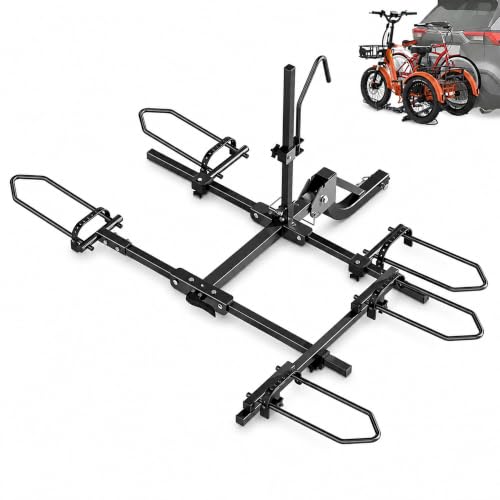


The top pick is the Mooncool folding hitch trike rack because it covers the most common adult-trike fit band, accepts fat tires up to 5 inches, and still keeps storage simpler than a fixed rack. It is the best starting point for buyers who need one rack to solve size fit and day-to-day handling at the same time.
Mooncool folding hitch trike rack
Best for: long wheelbases and fat tires. The Mooncool rack supports up to 170 pounds, fits wheelbases between 42 inches and 59 inches, and fits fat tires up to 5 inches wide. That combination makes it the strongest match for many e-trikes and cargo-style adult trikes, where width and length cause the first fit problems.
It is also the best of these three for buyers who need a rack that folds for storage. Folding matters when you park in a garage, a narrow driveway, or a shared building lot, and it can help with rear access when the rack is stowed.
Young Electric rack
Best for: heavier loaded weight. Mechanic Insider rates the Young Electric rack at 250 pounds total and describes it as RV approved. That higher rating matters when the trike is not the whole load: battery, basket, locks, tools, and cargo can push the real carried weight well above the frame-only number.
Choose this one when weight is the main risk and your vehicle setup can support the hitch load. The hitch rating and rear clearance still control the final fit.
H&ZT trike hitch rack
Best for: a simpler 170-pound option when the trike is not oversized. The H&ZT trike hitch rack is also rated to 170 pounds, so it belongs in the same general weight class as the Mooncool rack. It is the fallback pick for buyers who do not need the Mooncool’s longer wheelbase and fat-tire coverage.
If your trike is standard width and shorter than the common long-wheelbase band, a 170-pound rack can be enough. If the trike is a fat-tire e-trike or cargo trike, check the cradle width first.
Quick picks
| Pick | Best for | Key spec | Loading method | Problem solved best |
|---|---|---|---|---|
| Mooncool folding hitch trike rack | Long wheelbase, fat tires, storage | 170 pounds; 42 to 59 inches; tires up to 5 inches | Tray-style support with folding design | Wheelbase mismatch |
| Young Electric rack | Heavier loaded setups and RV use | 250 pounds total; RV approved | Heavy-duty hitch carrier | Overload |
| H&ZT trike hitch rack | Standard adult trikes | 170 pounds | Hitch-mounted platform | Basic fit at the 170-pound level |
Trike rack fit checklist
Use this checklist before you buy. A rack can share your hitch size and still miss on wheelbase, tire width, hatch clearance, or folded depth. Measure the trike and the vehicle, then compare both to the rack spec sheet.
| Measurement field | What to measure | Mooncool | Young Electric | H&ZT |
|---|---|---|---|---|
| Hitch size | Receiver opening on your vehicle | Pass if you have a 2-inch hitch receiver | Pass if you have a 2-inch hitch receiver | Pass if you have a 2-inch hitch receiver |
| Maximum loaded weight | Trike frame + battery + basket + cargo + accessories | Pass if total load stays within 170 pounds | Pass if total load stays within 250 pounds | Pass if total load stays within 170 pounds |
| Trike wheelbase | Front wheel center to rear axle centerline, per maker method | Pass if the trike falls between 42 and 59 inches | Pass only if the rack maker lists your wheelbase as supported | Pass only if the rack maker lists your wheelbase as supported |
| Tire width | Actual tire width at the widest point | Pass if tires are 5 inches wide or narrower | Pass only if the cradle width matches your tire width | Pass only if the cradle width matches your tire width |
| Rear hatch clearance | Space from hitch to hatch, bumper, tailgate, spare tire, or bodywork | Pass if the folded rack clears the rear of the vehicle | Pass if the rack clears the rear of the vehicle | Pass if the rack clears the rear of the vehicle |
| Folded depth | Distance the rack occupies when folded up | Pass if stowed depth still allows parking and rear access | Pass if stowed depth still allows parking and rear access | Pass if stowed depth still allows parking and rear access |
| Loading method | How you raise or roll the trike onto the rack | Pass if you can lift or guide the trike without strain | Pass if you can manage the load without a ramp | Pass if you can manage the load without a ramp |
Will a trike rack fit my 2-inch hitch receiver?
Many trike racks use a 2-inch hitch receiver, so that is a common first compatibility check for cars, SUVs, trucks, and many RV setups. A matching hitch size helps, but it does not guarantee fit. You still need enough rear clearance for the rack, enough wheelbase room for the trike, and enough capacity for the loaded weight.
Hitch size and receiver class
Start with the receiver opening. If your vehicle does not have a 2-inch hitch receiver, most hitch-mounted trike racks will not fit without an adapter or a different rack type. For this product class, the hitch size is the main mount standard.
Vehicle rear clearance checks
Measure from the hitch pin hole to the furthest rear obstacle: hatch, tailgate, bumper corner, spare tire, or rear door swing. A folded rack can still block access if that distance is too short. On trucks and some SUVs, the issue is often not the hitch; it is the bodywork behind it.
SUV and RV notes
Yes, a trike rack can work on an SUV or RV, but only if the receiver rating, rear clearance, and rack spec all line up. RV use needs extra caution because rear overhang and movement can be harder on the rack. The rack must be rated for the load, and the vehicle must have enough clearance in travel and parked positions.
What causes trike rack fit problems?
Three fit failures show up again and again: the rack is overloaded once the trike is fully loaded, the wheelbase is too long for the tray, or the tires are wider than the cradle. A rack that seems close on paper can still fail at the last step if you skip one of those checks.
Overweight after cargo and battery are added
Weight ratings should be compared to the real loaded trike, not the bare frame. Add the battery, rear basket, locks, cargo, and any mounted accessories before you compare the total to the rack rating. A 170-pound rack can be fine for a lighter adult trike, but not for a loaded e-trike that passes that limit once everything is installed.
Wheelbase too long for the tray
Wheelbase is a common miss because the trike may look compact from the side but still stretch beyond the rack’s support points. The Mooncool’s 42-inch to 59-inch fit range matters because many adult trikes, especially cargo setups, sit in that band. Tire setup can change usable length, so measure the trike in its final riding configuration.
Tire width wider than the cradle
Fat-tire compatibility is not a marketing line. It is a cradle-width check. The Mooncool is listed for tires up to 5 inches wide, which is a useful benchmark for e-trikes and cargo trikes. If your tire is wider than the rack’s support channel, you can get poor seating, side rub, or strap trouble.
Picture a cargo trike with a 5-inch rear tire and a basket already mounted. A rack that clears the wheelbase may still fail if the cradle is too narrow for the tire and the basket pushes the total load past the limit.
How do you keep a trike rack steady?
Use anti-wobble hardware, tie-down straps, and locking pins as part of the rack system, not as extras. They reduce sway, pin movement at the hitch, and help keep the trike seated on the tray during highway driving. Stability starts at the receiver and continues through every contact point.
Anti-wobble hardware
An anti-wobble system reduces movement between the rack shank and the hitch receiver. That matters at speed, in crosswinds, and over rough pavement. If a rack does not control hitch play well, the whole load can shift more than the buyer expects.
Tie-down straps and locking pins
Straps hold the frame and wheels in place. Locking pins help keep the rack attached and can reduce the chance of accidental movement. Use both. A solid hitch mount still needs secondary security points, especially with a trike’s wider rear stance.
When folding designs matter
Folding designs help when storage space is limited and when you want the rack out of the way after unloading. They can also help with rear access when stowed. A folding rack is not a cure for poor fit, but it can make daily handling less awkward.
Say your garage has a narrow opening and the rack would protrude several inches when stowed. A folding design can make the difference between parking inside and leaving the rack outside, as long as the folded depth still clears the hatch and bumper.
How much weight can a trike rack hold?
Use the rack’s rating against the fully loaded trike, not the bare frame. For these picks, the Mooncool and H&ZT are rated to 170 pounds, while the Young Electric rack is rated to 250 pounds total. If your trike’s battery, basket, and cargo push the load above that number, move to a higher-capacity rack.
Rated capacity versus loaded trike weight
Competitor pages often stop at the capacity number. That is not enough. The real number is the sum of the trike frame plus the battery, cargo, accessories, and anything left in the basket. Buyers should compare that total to the rack’s rating with some margin left over.
Why e-trikes need a margin
E-trikes and cargo trikes are the fastest way to misread capacity, because the battery and accessories are part of the load. If the total comes close to the limit, vibration and road motion matter more. A larger margin gives you more room for the real-world load you will carry.
When ramps help
Loading ramps matter most for heavier trikes and for buyers who load alone. A ramp reduces lifting effort and can keep the trike upright while you roll it into place. If you need to muscle the trike onto the rack by yourself, ramp support should move up your list.
What should you check before buying a trike carrier?
Start with the heaviest version of your trike, then check wheelbase, tire width, rear clearance, folded depth, and the loading method. That order catches the most common failure modes before you buy. If you only match hitch size, you may still end up with a rack that cannot carry your trike safely or fit your vehicle.
- Measure the receiver: confirm a 2-inch hitch receiver.
- Weigh the loaded trike: include battery, basket, cargo, and accessories.
- Measure the wheelbase: compare it to the rack’s supported range.
- Check tire width: verify cradle width for fat tires.
- Measure rear clearance: make sure the rack clears the hatch or tailgate.
- Check folded depth: confirm the stowed rack will not block access or parking.
- Choose the loading method: decide whether you need a folding tray, a ramp, or both.
A common first-timer mistake is buying for the frame weight alone and ignoring the battery and cargo. Another is matching the 2-inch hitch and assuming the rest will work. The better move is to treat fit as a measurement problem, not a guess.
Frequently asked questions
What is the best trike rack for a car?
For most buyers, the Mooncool folding hitch trike rack is the best starting point because it covers a 42-inch to 59-inch wheelbase, accepts tires up to 5 inches wide, and supports up to 170 pounds. If your loaded trike is heavier than that, move up to the 250-pound Young Electric rack.
Can a trike rack fit fat tires and long wheelbases?
Yes, if the rack is built for both. The Mooncool is listed for wheelbases between 42 inches and 59 inches and fat tires up to 5 inches wide. That is the kind of fit range you want for many e-trikes and cargo trikes, where wheelbase and tire width are the two main fit risks.
Is a folding trike rack worth it?
Usually yes, if storage space or rear access matters. A folding rack can be easier to park in a garage or shed, and it may leave more room behind the vehicle when stowed. It does not replace proper capacity or fit checks, but it can solve a real daily-use problem.
Can I use a trike rack on an SUV or RV?
Yes, provided the hitch rating, rear clearance, and rack capacity all match the load. The Young Electric rack is described as RV approved, but that does not override vehicle limits. SUVs and RVs can still run into clearance problems, so measure from the hitch to the rear obstacle before you buy.
How do I keep a trike rack from wobbling on the highway?
Look for an anti-wobble system, use the locking pin, and secure the trike with tie-down straps. These parts reduce movement at the hitch and keep the frame seated on the rack. If a rack lacks wobble control, highway motion can be more noticeable, especially with a wide trike body.
Products related to this article
Sponsored / affiliate links. As an Amazon Associate I earn from qualifying purchases. I may earn additional commission from eligible campaigns.