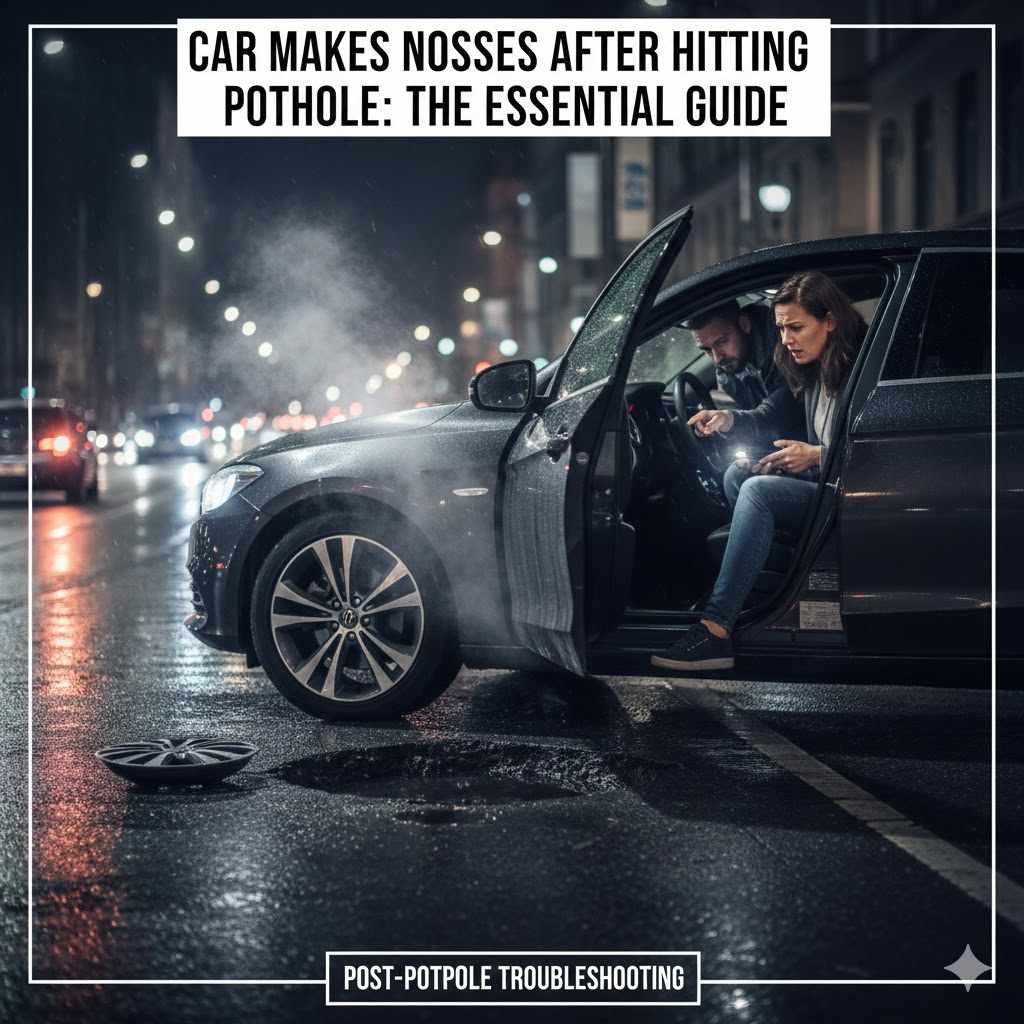
Car Makes Noises After Hitting Pothole: The Essential Guide
If your car makes noises after hitting a pothole, it most likely indicates damage to your tires, wheels, suspension, or alignment. Common sounds like clunking, hissing, or grinding are serious warnings. For your safety, pull over, inspect the vehicle, and avoid driving if the noise is severe or the car handles poorly.
That sickening “THUMP!” is a sound every driver dreads. One second you’re cruising along, and the next, you’ve hit a pothole that felt like a crater. Your heart sinks, and then you hear it—a new, unwelcome noise. A clunk, a rattle, a hiss. It’s a frustrating and scary moment, but don’t panic. This is a very common problem, and you’ve come to the right place to figure it out.
My name is Md Meraj, and I’m here to help you understand what those noises mean and what you should do next. We’ll walk through this together, step by step, using simple language. This guide will give you the confidence to check your car safely, identify the likely problem, and make a smart decision about repairs. Let’s get your car back to running smoothly and quietly.
Why Potholes Are So Harmful to Your Car
Before we dive into the noises, it helps to understand why potholes are such a big deal. Think of your car’s suspension as its legs and ankles. It’s designed to absorb small bumps and give you a smooth ride. When you hit a pothole, especially at speed, you’re forcing the wheel and suspension to travel a long way down and then slam back up in a fraction of a second.
This violent impact sends a massive shockwave through the tire, wheel, suspension, and steering components. These parts are strong, but they aren’t designed for such a sudden, harsh force. The energy has to go somewhere, and it often results in bent, broken, or misaligned parts—which is when the strange noises begin.
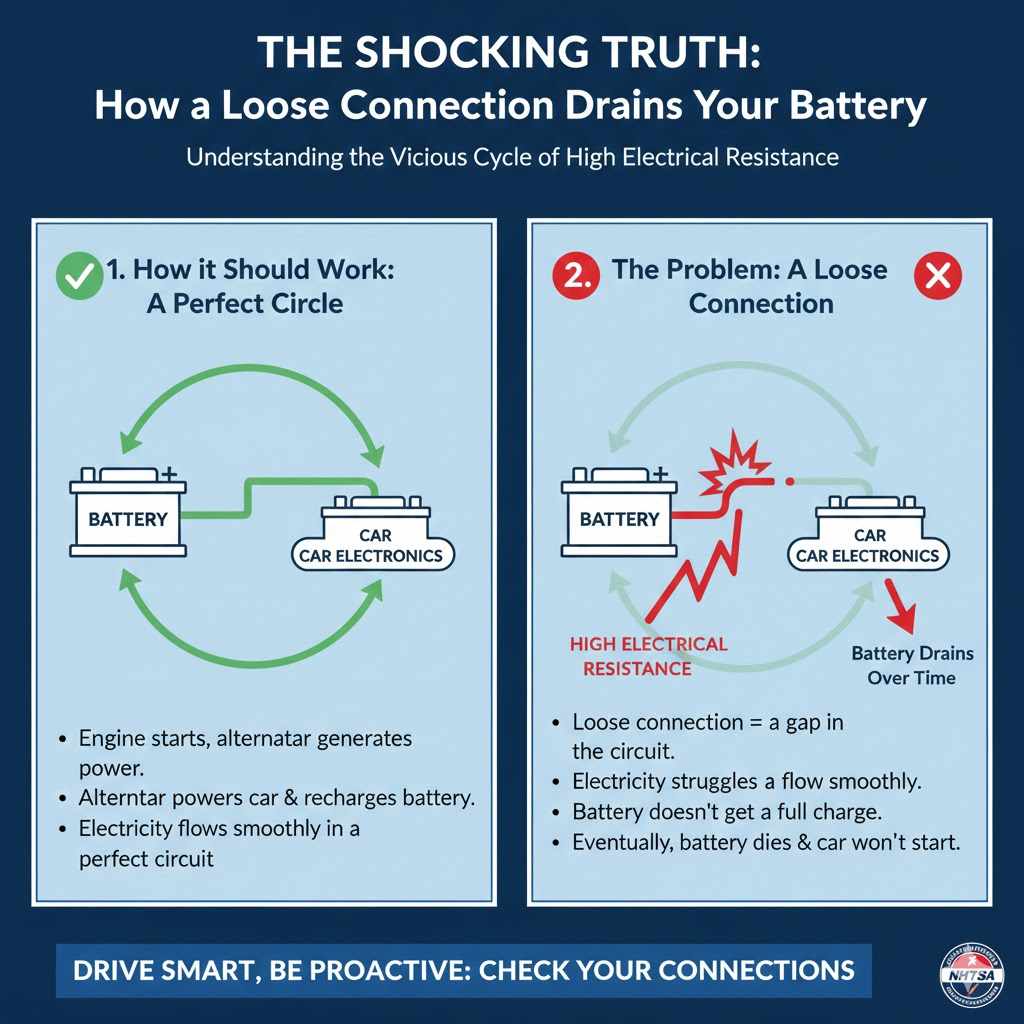
Decoding the Noises: What Is Your Car Trying to Tell You?
A new noise is your car’s way of telling you something is wrong. Learning to identify the sound is the first step toward finding the solution. Let’s break down the most common noises you might hear after a pothole encounter.
Clunking, Knocking, or Banging
This is one of the most common and concerning sounds. A clunking or rattling noise, especially when you go over bumps or turn, usually points to a problem with your suspension system.
- What it sounds like: A loose, heavy metal-on-metal sound. It can be a single “clunk” on a bump or a continuous “rattle” on a rough road.
-
Likely Causes:
- Damaged Struts or Shocks: These are the main absorbers in your suspension. When damaged, they can’t control the bouncing, leading to a knocking sound.
- Broken Ball Joint or Tie Rod End: These are critical pivot points that connect your wheels to the steering and suspension. A broken one is very dangerous and causes a distinct clunking, especially when turning.
- Damaged Control Arm: This arm connects the wheel hub to the car’s frame. If it’s bent or its bushings are damaged, you’ll hear clunking.
- Broken Sway Bar Link: This part helps reduce body roll when you turn. A broken link will often make a clunking or rattling sound over bumps.
Hissing Sound
If you hear a hissing sound, the culprit is almost always your tire. This sound requires immediate attention.
- What it sounds like: The classic sound of air escaping. It might be constant or you may only hear it when the wheel is in a certain position.
-
Likely Causes:
- Punctured Tire: The edge of the pothole may have been sharp enough to puncture your tire.
- Damaged Tire Sidewall: The impact can pinch the tire against the wheel rim, creating a small cut or tear in the sidewall.
- Bent Wheel Rim: If the wheel rim is bent, it may no longer form a perfect seal with the tire, allowing air to slowly leak out.
Grinding, Scraping, or Rubbing
A grinding or scraping noise is a sign that two metal parts are making contact when they shouldn’t be. This sound can get worse when you turn or apply the brakes.
- What it sounds like: A harsh, metallic scraping noise, like dragging a piece of metal on pavement.
-
Likely Causes:
-
- Bent Brake Dust Shield: This thin metal plate sits behind your brake rotor. A pothole can easily bend it so it rubs against the rotor, creating a loud scraping sound. This is a common and often simple fix.
- Damaged Wheel Bearing: The wheel bearing allows your wheel to spin freely. A hard impact can damage it, leading to a grinding or humming noise that gets louder with speed.
–
- Loose or Damaged Underbody Panel: The plastic shields under your car can be knocked loose and drag on the ground.
- Damaged Brake Component: In some cases, the impact could knock a brake caliper or pad out of place.
-
Vibration or Rumbling
While not strictly a “noise,” a new vibration you can feel in the steering wheel or through the seat is a major red flag after hitting a pothole.
- What it feels/sounds like: A shudder, wobble, or low-frequency rumbling that often gets worse as you increase your speed.
-
Likely Causes:
- Bent Wheel (Rim): This is a very common outcome. The wheel is no longer perfectly round, causing a noticeable wobble or vibration as it spins.
- Tire Bubble: The impact can break the internal cords in the tire’s sidewall, allowing air to create a bulge or “bubble.” This is extremely dangerous and can lead to a sudden blowout.
- Wheel Alignment Is Off: The pothole can knock your wheels out of alignment, causing vibrations and making the car pull to one side.
To make it easier, here’s a quick-reference table summarizing the sounds:
| Noise You Hear | Most Likely Cause | Seriousness Level | Recommended Action |
|---|---|---|---|
| Clunking / Banging | Suspension Damage (Struts, Ball Joints, Control Arm) | High – Potentially Unsafe | Stop driving if severe. Have it towed or drive very cautiously to a mechanic immediately. |
| Hissing | Tire Puncture / Damaged Rim | High – Immediate Attention | Pull over safely. Check your tire. Change to the spare if necessary. |
| Grinding / Scraping | Bent Brake Shield / Damaged Wheel Bearing | Medium to High | Visually inspect. If it’s just a dust shield, you may be able to bend it back. Otherwise, see a mechanic soon. |
| Vibration / Rumbling | Bent Wheel / Tire Bubble / Misalignment | High – Especially a Tire Bubble | Pull over and inspect your tires for bubbles. If you see one, do not drive. A bent wheel or alignment needs professional service ASAP. |
Your Step-by-Step Pothole Damage Checklist
Okay, you’ve hit the pothole and you hear a noise. What do you do right now? Follow these steps to assess the situation safely.
- Pull Over Safely: Your first priority is safety. Find a safe, level spot away from traffic, like a parking lot. Turn on your hazard lights. Don’t stop abruptly in the middle of the road.
-
Perform a Visual Inspection: Get out of the car (if it is safe to do so) and walk around it. Pay close attention to the tire and wheel that took the hardest hit.
- Check the Tire: Look for any obvious signs of damage. Is it flat? Do you see a bulge or bubble on the sidewall? Are there any cuts or gashes?
- Check the Wheel: Look at the metal rim of the wheel. Can you see any cracks, dents, or bends along the edge? A bent rim can cause a tire to lose air and create vibrations.
- Look Underneath the Car: Carefully look under the car near the affected wheel. Do you see anything hanging down, dragging, or leaking? Check for dripping fluids (other than water from the A/C).
- Listen Closely: If the initial visual check seems okay, get back in the car. With the engine off, have a friend gently rock the car up and down on the corner that hit the pothole. Listen for any creaks or clunks.
-
The Slow Driving Test: If you see no major visual damage and the car feels safe, drive slowly (under 10 mph) in the safe area. Turn the radio off and roll down the windows.
- Listen: Can you pinpoint where the noise is coming from? Does it change when you turn or speed up?
- Feel: Does the steering wheel shake or vibrate? Does the car pull to the left or right? Is the steering wheel no longer centered when you’re driving straight?
This initial check will give you valuable information. If you find a tire bubble, a bent wheel, or hear loud clunking and grinding, it’s best to call for a tow truck. Driving on a severely damaged component is not worth the risk. For more information on tire safety, the National Highway Traffic Safety Administration (NHTSA) provides excellent resources.
The Most Common Pothole Problems: A Deeper Look
Let’s explore the most common types of damage in a bit more detail so you can speak confidently with a mechanic.
1. Tire and Wheel Damage
Your tires and wheels are the first line of defense, so they take the most abuse.
- Sidewall Bubble: This is a clear sign that the internal structure of the tire is damaged. The tire is unsafe and must be replaced immediately.
- Bent Rim: A steel wheel might just bend, which can sometimes be repaired. An aluminum alloy wheel is more likely to crack, which means it must be replaced. A bent rim will cause vibrations and can prevent the tire from holding air.
2. Wheel Alignment Problems
Your car’s wheel alignment is the precise setting of angles for your wheels to ensure they are parallel to each other and perpendicular to the ground. A hard pothole impact can easily knock these angles out of spec.
- What is it? Think of it as your car’s posture. When alignment is off, the car doesn’t track straight.
- Symptoms: The car pulling to one side, a crooked steering wheel even when driving straight, and uneven tire wear over time.
- The Fix: A mechanic uses a specialized machine to measure and adjust the suspension components, which is a routine and relatively inexpensive fix.
3. Suspension System Damage
This is where those scary clunking and banging noises usually come from. Your suspension is a complex system of links, arms, joints, and shock absorbers.
- Shocks and Struts: These control the bounce and keep your tires planted on the road. A hard hit can cause their internal seals to fail, leading to fluid leaks and a bouncy, uncontrolled ride.
- Ball Joints and Tie Rods: These are the “joints” that allow your wheels to pivot and steer. A damaged one can cause clunking sounds, sloppy steering, and in a worst-case scenario, can separate and cause a complete loss of control of that wheel. This is why clunking noises must be taken very seriously.
4. Exhaust System Damage
Your exhaust pipe runs along the bottom of your car, making it vulnerable. A deep pothole can cause the car to “bottom out,” hitting the exhaust on the pavement. This can dent the pipe, break the hangers that hold it in place, or even crack the muffler. The result is often a loud rattling or roaring sound.
Repair Costs: What to Expect
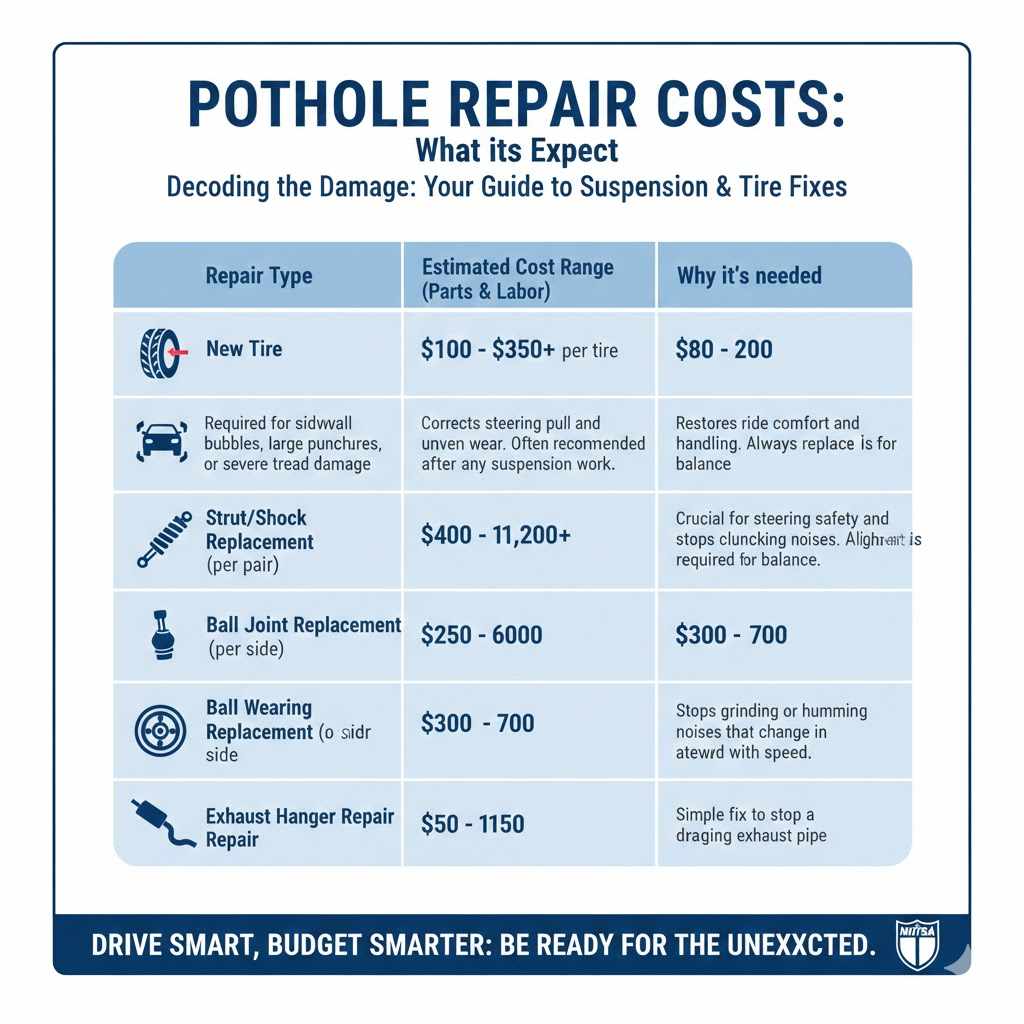
Repair costs can vary widely based on your car’s make and model, your location, and the extent of the damage. Here is a table with general estimates to give you an idea of what to expect.
| Repair Type | Estimated Cost Range (Parts & Labor) | Why it’s needed |
|---|---|---|
| New Tire | $100 – $350+ per tire | Required for sidewall bubbles, large punctures, or severe tread damage. |
| Wheel Alignment | $80 – $200 | Corrects steering pull and prevents uneven tire wear. Often recommended after any suspension work. |
| Strut/Shock Replacement (per pair) | $400 – $1,200+ | Restores ride comfort and handling. Always replaced in pairs for balance. |
| Ball Joint Replacement (per side) | $250 – $600 | Crucial for steering safety and stops clunking noises. Alignment is required afterward. |
| Wheel Bearing Replacement (per side) | $300 – $700 | Stops grinding or humming noises that change with speed. |
| Exhaust Hanger Repair | $50 – $150 | A simple fix to stop a rattling or dragging exhaust pipe. |
Frequently Asked Questions (FAQ)
1. Is it safe to drive my car if it’s making noise after a pothole?
It depends on the noise. A hissing tire or loud, metallic clunking means you should stop driving immediately. A slight vibration or faint scraping might be drivable for a short distance to a repair shop, but do so slowly and cautiously. When in doubt, call for a tow. Your safety is always the top priority.
2. Can hitting a pothole cause a check engine light?
It’s less common, but possible. A severe jolt can sometimes damage a sensor, like an ABS wheel speed sensor or an oxygen sensor on the exhaust. If your check engine light comes on after a major impact, have the codes scanned by a mechanic to identify the problem.
3. How can I avoid pothole damage in the future?
Prevention is key! Keep your tires properly inflated, as this provides a better cushion. Be vigilant and scan the road ahead, leaving plenty of following distance so you can see and react to potholes. Avoid swerving suddenly, but safely slow down and steer around them when possible. If you can’t avoid one, slow down as much as possible before you hit it, but don’t brake during the impact, as this can increase the damage.
4. Will my car insurance cover pothole damage?
In many cases, yes. Pothole damage is typically covered under the collision portion of your auto insurance policy. However, you will have to pay your deductible. You should weigh the cost of the repair against your deductible to decide if filing a claim makes sense. For more info, you can check with a reliable resource like the Insurance Information Institute.
5. What’s the difference between a shock and a strut?
This is a great question! Both are dampers that control your car’s bouncing. A shock absorber is a standalone part. A strut is a structural part of the suspension that combines the damper with a coil spring and provides support for the vehicle. Most modern cars use struts in the front and either shocks or struts in the rear.
6. My steering wheel is crooked after hitting a pothole. What does that mean?
A crooked steering wheel is a classic sign that your wheel alignment is off. The impact has pushed one of your wheels out of its correct position. It’s not immediately dangerous for a short, slow drive to a shop, but it needs to be fixed to prevent major tire wear and ensure proper handling.
7. How long can I wait to get the noise checked out?
You should get it checked as soon as possible. Noises are warnings. Ignoring them can lead to a small problem becoming a much bigger, more expensive, and potentially dangerous one. A damaged ball joint, for example, could fail completely, causing you to lose control of the car. Don’t delay—get it inspected promptly.
Conclusion: Trust Your Senses and Take Action
Hearing a new noise after hitting a pothole is stressful, but you are now equipped with the knowledge to handle it. Remember the key steps: pull over safely, perform a careful inspection, and listen to what your car is telling you. The sounds of clunking, hissing, and grinding are not just annoyances; they are critical messages about the health and safety of your vehicle.
Never ignore these warnings. While some issues, like a bent brake shield, can be minor, others involving your tires, suspension, or steering are serious safety concerns. By addressing the problem quickly, you not only protect yourself and your passengers but also prevent more costly repairs down the road.
You’ve taken a great first step by reading this guide. Now you can approach a mechanic with confidence, describe the sound accurately, and understand the necessary repairs. Taking care of your car is taking care of yourself, and you’ve got this.