How to Get Sand Out of Car Carpet Fast (No Water Needed)
Use a vacuum with a crevice tool first for loose sand; if it stays packed in seams or carpet fibers, switch to a rubber brush or detailing brush and vacuum again, dry only. Left alone, sand grinds into fibers, abrades trim, and keeps tracking back into the cabin. This guide gives a fast, dry decision tree for carpet, mats, seams, and footwells.
Sand cleanup matrix
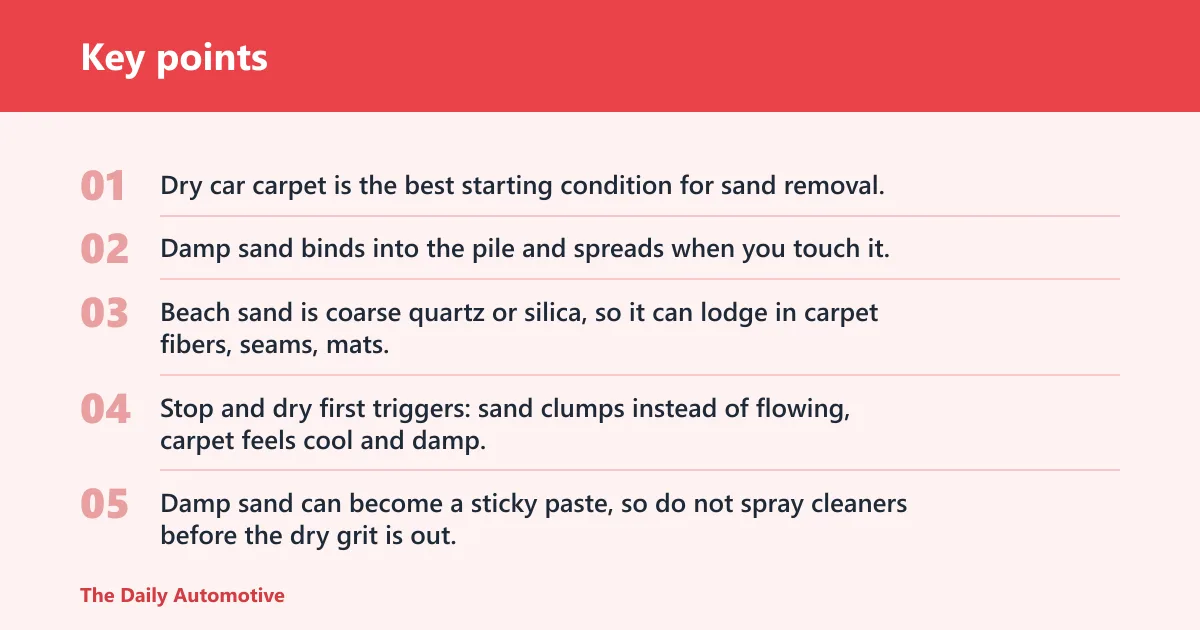


Dry car carpet is the best starting condition for sand removal. Dry fibers let grit lift more easily. Damp sand binds into the pile and spreads when you touch it. Beach sand is coarse quartz or silica, so it can lodge in carpet fibers, seams, mats, and footwells.
| Severity | Tool order | Estimated minutes per footwell | Best method for carpet | Best method for seams | Best method for mats | Fail-safe for damp sand |
|---|---|---|---|---|---|---|
| Light | Shake mat, brush pile, vacuum | 3–5 | Stiff nylon brush in cross-hatch passes, then vacuum | Crevice vacuum tool | Shake outside, then vacuum front and back | Stop and dry first if grains darken together or clump on contact |
| Moderate | Shake mat, brush, rubber blade on edges, vacuum | 6–10 | Brush pile, then vacuum after each section | Rubber pet hair blade, then crevice tool | Brush tread lines, then vacuum both sides | Stop and dry first if the vacuum leaves wet-looking streaks or paste-like residue |
| Heavy | Shake mat, brush, vibration, rubber blade, vacuum, repeat | 12–20 | Mechanical agitation first, then repeated vacuum passes | Rubber blade, then crevice tool twice | Shake, brush grooves, vacuum, then recheck underside | Stop and dry first if sand smears, sticks to the brush, or feels tacky |
Stop and dry first triggers: sand clumps instead of flowing, carpet feels cool and damp, a towel or shoe soaked the area, the grain sticks to the brush, the vacuum leaves paste in seams, or the backing still feels wet. Damp sand can become a sticky paste, so do not spray cleaners before the dry grit is out.
Why dry sand comes out faster
Dry carpet fibers open more easily under agitation, so the sand can move up and out instead of sinking deeper. Once grit is damp, it binds to the pile, bridges across seams, and sticks in the backing. That makes vacuuming less effective and raises the chance of packing the mess tighter.
How dry carpet fibers release grit
Carpet pile works like a field of small hooks. A stiff nylon carpet brush, used in cross-hatch passes, lifts the pile in two directions and exposes grains hidden lower in the fibers. That gives the vacuum a cleaner path and cuts repeat passes.
Why damp sand clumps in the pile
When sand picks up moisture from towels, shoes, or humid air, it can bind into heavier clusters. Those clusters do not sift out well. They smear, cling to trim, and can look loose on top while still sitting deep in the fibers below.
Where beach sand hides first
The first hiding spots are usually the car footwell, mat edges, seat rails, door sills, and cargo seams. The hatch opening is another common trap. These spots catch tracked-in sand because movement pushes grains into corners where a wide vacuum head cannot reach.
What is the fastest dry-clean tool order?
A common dry order is mats first, then carpet pile, then seams and corners. Start by removing the mats, shaking them outside the car, and clearing loose debris. After that, work the carpet in a set sequence so you do not keep scattering grit back into the footwell.
Start with mats and loose debris
Pull the mats out before cleaning the cabin. Shake them away from the vehicle, then vacuum both sides if the sand sits in the grooves. On carpeted mats, a short brush pass helps release grains from the texture before suction.
Brush the pile in cross-hatch passes
Use the stiff nylon carpet brush with north-south passes first, then east-west passes. That cross-hatch brushing pattern opens the pile and pulls sand toward the surface instead of pushing it in one direction. Keep strokes short in the footwell, where pedals and trim reduce working room.
Use the rubber blade on edges and seams
A rubber pet hair blade or squeegee works well on carpet edges, seams, and corners. The rubber creates friction that pulls grains out where bristles miss them. It is especially useful beside trim, around seat tracks, and at the edge of a mat lip.
Finish with the crevice vacuum and wet/dry vacuum
Use the crevice vacuum tool for seams, seat rails, and tight trim gaps. Then bring in a high-CFM wet/dry vacuum with a crevice tool after the sand has been loosened. Suction works better after agitation, not before it.
- Remove the mat and shake it outside the car.
- Brush the footwell carpet in cross-hatch passes.
- Work the rubber blade along edges, seams, and corners.
- Vacuum the loosened sand with a crevice tool.
- Repeat in the footwell if grains remain in the pile or rails.
Say your driver-side footwell has a half-inch layer of dry beach sand after a beach parking day. A brush-first pass lifts the pile, the rubber blade strips the edge line, and the crevice tool clears the seam beside the seat rail. That sequence is faster than trying to vacuum the whole area at once.
How do you get sand out of seams and footwells?
Use narrow tools and short passes in the footwell, because that is where sand settles deepest. Seat rails, trim gaps, and door-sill corners hold grit longest, so you need a tool that fits the opening instead of one that only skims the surface. Repeat the edges before you move on.
Seat rails and trim gaps
Seat rails collect sand because the track channel traps grains along its edges. A crevice vacuum tool gets into those narrow spaces better than a wide head. If grains remain, use the rubber blade to loosen the line first, then vacuum again with the narrow attachment.
Door sills and footwell corners
Door sills and footwell corners collect sand when shoes drag it inward. A stiff brush can flick grit away from the corner, but the final pickup should be the crevice tool. Keep the nozzle at the corner line and work from the back toward the opening.
Cargo seams and mat edges
In hatchbacks and wagons, the cargo seams near the hatch opening trap sand and hide it under the mat lip. Use the rubber blade on the edge line, then vacuum the seam. Pull the cargo mat out as well, because loose sand often sits underneath the mat rather than on top of it.
Brush, blade, or vacuum?
Each tool has a different job. The brush opens the pile, the rubber blade frees edge grit, and the vacuum removes what is already loose. For heavy loads, none of them wins alone. The fastest dry cleanup comes from using them in order, matched to the part of the car you are cleaning.
Best tool for carpet pile
The stiff nylon carpet brush is best for the carpet pile because it lifts the fibers and moves sand upward. Use medium-stiff synthetic bristles and cross-hatch passes. If the pile is deep or the sand is packed, add vibration before you vacuum.
Best tool for seams and trim
The rubber pet hair blade is best for seams and trim because it reaches where bristles lose contact. It is also useful in corners, around seat rails, and beside the console. After the blade loosens the grains, the crevice vacuum tool should finish the job.
Best tool for loose sand on mats
For loose sand on mats, shake first, then use a vacuum. Rubber floor mats usually release sand faster than carpeted mats. Carpeted mats may need a brush pass before suction so the grains do not stay trapped in the grooves.
Picture a cargo area with sand only along the hatch opening and the mat edges. The brush would be slower than a rubber blade there, because the problem is edge packing, not deep pile. A quick seam pass, then vacuum, is the better route.
What should I do if the sand is damp, not dry?
Stop and dry the area first. Damp sand can become a sticky paste, and that paste spreads when brushed or vacuumed too early. Drying the carpet completely before cleaning is the safest starting point, especially if towels, shoes, or humidity added moisture to the pile.
Stop before you spread it
If the grains clump, stick to the brush, or leave a dark smear, treat the area as damp. Do not spray cleaner yet. Do not scrub harder. Keep the cabin open to air out, and wait until the carpet and backing feel dry before restarting the dry-clean sequence.
Dry the area first
Move mats out of the cabin and leave the doors or hatch open if conditions allow. A fan or dry airflow helps more than a wet product at this stage. The goal is to get the fibers dry enough that the sand breaks free instead of binding to them.
When to hold off on vacuuming
Hold off on vacuuming if the sand looks like paste, if the carpet backing still feels cool and wet, or if the vacuum would pull damp grit into the hose. Wait until the area is dry enough that the grains move freely. Then restart with brushing and suction.
Common mistakes that slow cleanup
The biggest mistakes are simple: vacuuming too early, using the wrong brush, and skipping the hidden areas. Sand often looks gone from the center of the footwell while still sitting in seams, on mat undersides, or beside seat rails. That leftover grit is what keeps coming back.
Vacuuming before loosening packed grit
A vacuum can remove loose sand well, but packed sand needs agitation first. If you start with suction alone, the nozzle may skim over the top and leave the grains embedded. Brush or vibrate the area first, then use the vacuum to capture what has been lifted.
Pushing sand deeper with the wrong brush
A soft brush or a broad wipe can drive grains farther into the pile. Use a stiff nylon carpet brush instead, and keep it moving in cross-hatch passes. The goal is to open the pile, not flatten it.
Skipping seams, rails, and mat undersides
Seat rails, door sills, and mat undersides hold sand longer than the open carpet surface. If you skip them, the car will keep shedding grains every time someone gets in. Check those spots again before you call the job done.
Frequently asked questions
How do I get sand out of car carpet fast without using water?
Use a dry sequence: remove mats, brush the carpet in cross-hatch passes, loosen seams with a rubber blade, then vacuum with a crevice tool. That order is faster than vacuuming alone because it lifts embedded grains before suction. Keep the carpet dry the whole time.
What is the fastest way to remove beach sand from car mats and carpet?
The fastest path is to take the mats out first, shake them, and clean the carpet by area rather than all at once. Start in the footwell, then move to seat rails, door sills, and cargo seams. Finish with a crevice vacuum on the narrow spots.
Can I vacuum sand out of car carpet, or does it need brushing first?
You can vacuum loose sand right away, but packed sand usually needs brushing first. A stiff nylon brush opens the pile and exposes grains that a nozzle might miss. For seams and tight trim, brush or rubber-blade first, then use the crevice vacuum tool.
What tool gets sand out of car carpet best: brush, rubber blade, or vacuum?
No single tool is best everywhere. The brush works best on carpet pile, the rubber blade works best on edges and seams, and the vacuum finishes the job. For heavy buildup, use all three in order so you do not leave grit hidden in the footwell.
How do I clean sand from car seams and seat rails?
Use the rubber blade to loosen the edge line, then move in with the crevice vacuum tool. Seat rails and tight trim gaps hold sand longest, so take a second pass if needed. Do not spray cleaner first, because wet grit turns sticky and gets harder to remove.
Products related to this article
Sponsored / affiliate links. As an Amazon Associate I earn from qualifying purchases. I may earn additional commission from eligible campaigns.
 nekhfs Car Carpet Cleaner Scrub Tool, Automotive Carpet Cleaning Brush for Interior Detailing, Floor Mat Dirt Remover, Deep Cleaning Accessory for Cars, Trucks, SUVs and RVs
 Car Vacuum Cleaner, Portable Handheld Mini Vacuum Cleaner, Portable Car Vacuum Cleaner with Inflator Function Light, Small Vacuum for Car, RV, Boats, Travel, DC12V 120W