Does Your Car Need an Alignment After New Tires? (What Mechanics Say)
You don’t always need a wheel alignment after new tires, but mechanics strongly recommend getting one checked. If your alignment is off, new tires will start wearing unevenly within weeks — wasting your investment. A standard alignment costs $50–$100 and takes 30–60 minutes. Most tire shops include a free alignment check with new tires if you ask.
This guide covers when an alignment is necessary, what the signs of misalignment look like, what happens during the process, and how much it costs — so you can make an informed decision at the tire shop.
⚡ Quick Answer: Do You Need Alignment After New Tires?
Recommended, not mandatory. If your previous tires showed uneven wear, or if you’ve hit potholes recently, get an alignment with your new tires. If the old tires wore evenly and the car drives straight, ask the shop for a free check first — only pay for the adjustment if readings are out of spec. Misalignment decreases tire life by 15,000–30,000 miles and fuel economy by up to 10%.
What Is Wheel Alignment and Why Does It Matter?
Wheel alignment — also called tire alignment — is adjusting the angles of your wheels so they sit correctly relative to the road and each other. There are three angles mechanics measure: camber, toe, and caster.
- Camber — the tilt of the wheel when viewed from the front (inward or outward). Too much camber causes inner or outer edge wear.
- Toe — whether the wheels point inward or outward when viewed from above. Incorrect toe causes feathered tire edges and is the fastest cause of tire wear.
- Caster — the angle of the steering pivot axis. Positive caster helps the steering wheel self-center after turns and stabilizes the car at highway speeds.
When these angles drift out of spec, your car may pull to one side, your tires wear unevenly, and your fuel economy drops. According to tire industry data, misalignment can reduce tire lifespan by 15,000–30,000 miles and cut fuel economy by up to 10%.
Do You Need an Alignment After New Tires?
Not always — but it’s strongly recommended in most cases. Here’s the honest breakdown: if your existing alignment is within spec and your old tires wore evenly, you may not need an immediate alignment. But if your old tires showed uneven wear patterns (more worn on one side, or feathered edges), that’s proof alignment was already off — and new tires won’t fix that, they’ll just suffer the same fate.
Most major tire retailers — Firestone, Pep Boys, Les Schwab — recommend an alignment check with every new set of tires. Many include a free check, and you only pay $50–$100 if adjustment is actually needed. That’s smart insurance on a $400–$1,000 tire purchase.
Should You Get Alignment Before or After New Tires?
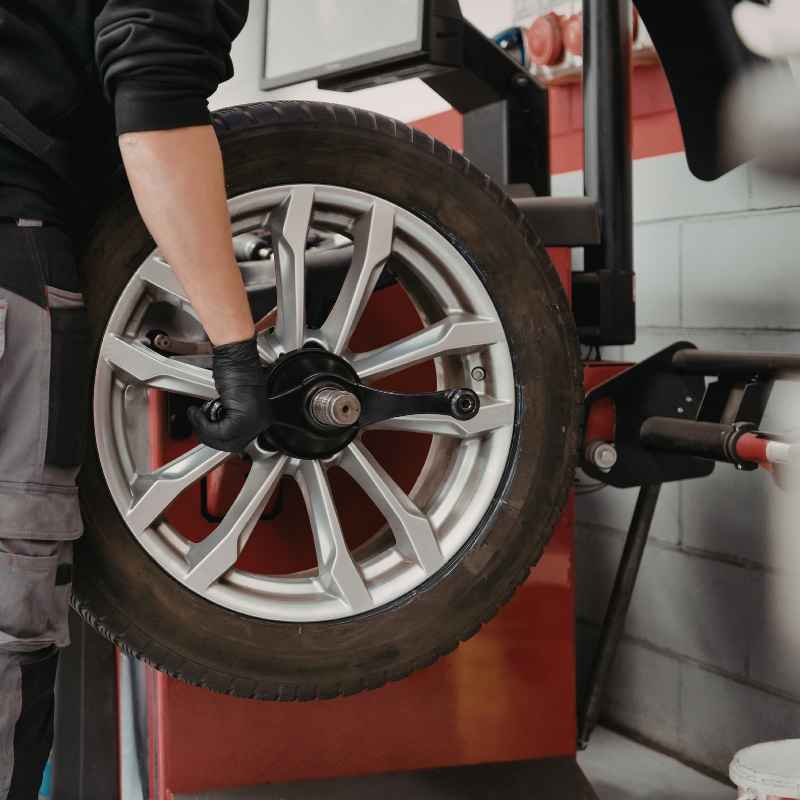
Get the alignment done after the new tires are installed, not before. Here’s why: the new tires sit at a slightly different height than worn tires, which changes the suspension geometry. An alignment done on worn tires won’t be accurate once new tires are on. Install first, align second — that order gives you the most accurate result and the longest tire life from your new set.
Exception: if your car has a bent suspension component or a severely misaligned front end, fix those issues before installing new tires — otherwise you’ll scratch the new tires during the alignment adjustment.
Signs Your Car Needs an Alignment
These are the clearest indicators that alignment is off — check for them before and after new tire installation:
- Car pulls to one side — let go of the steering wheel on a flat, straight road. If it drifts left or right, alignment is almost certainly off.
- Uneven tire wear — more wear on one side of the tread, or feathered/sawtooth edges. This is the most reliable physical evidence of misalignment.
- Steering wheel off-center — if the wheel sits crooked when you’re driving straight, toe alignment is likely out of spec.
- Vibration through the steering wheel — especially at highway speeds. (Note: this can also be a wheel balance issue.)
- Squealing tires during turns — tires scrubbing sideways due to toe misalignment.
If any of these symptoms appear after getting new tires, get an alignment before the uneven wear pattern sets in permanently.
When Should You Get an Alignment?
- After installing new tires — protects your investment from day one.
- After hitting a significant pothole or curb — impact forces can shift alignment angles immediately.
- Every 12 months or 12,000–15,000 miles — as a preventive check even without symptoms.
- After suspension or steering repairs — any time tie rods, struts, or control arms are replaced, alignment must be reset.
- When you notice symptoms — don’t wait; early correction is cheaper than replacing tires prematurely.
Most tire shops offer a free alignment check with new tires — ask for this before agreeing to a paid alignment. Only authorize the adjustment if the computer shows readings outside the manufacturer’s tolerance range.
How New Tires and Alignment Work Together
New tires are a fresh start — they have full tread depth and no wear patterns yet. If alignment is correct when they go on, they’ll wear evenly across the full width of the tread for their entire lifespan. If alignment is off even slightly, the tire scrubs at an angle against the road with every mile, shortening its life significantly.
Think of alignment as setting up the foundation. New tires on a misaligned car is like building on a crooked slab — the structure starts deteriorating immediately. Get alignment right at installation, and your tires will go the distance their warranty promises.
What Happens During an Alignment?
The process is straightforward and takes 30–60 minutes. The mechanic puts the car on an alignment rack and attaches electronic sensors (targets) to each wheel. These sensors feed real-time angle data to a computer that compares your car’s camber, toe, and caster readings against the manufacturer’s specifications.
Where readings are outside tolerance, the mechanic adjusts the relevant suspension components — typically the tie rods (for toe) or camber bolts and eccentric bolts (for camber). After adjustment, the car gets a test drive to confirm the steering wheel is centered and the car tracks straight. You’re given a printout showing before-and-after readings — keep this for your records.
Alignment Costs and Service Options
| Service | Average Cost | Notes |
|---|---|---|
| Alignment check only | Free–$30 | Often free with new tire purchase — ask first |
| Standard 4-wheel alignment | $75–$100 | Most common; covers all four wheels |
| 2-wheel (front-end) alignment | $50–$75 | Only adjusts front wheels; adequate for most FWD cars |
| Lifetime alignment package | $150–$200 | Worth it if you keep the car 3+ years |
| Alignment + suspension repair | $200–$1,000+ | Only if bent/worn suspension components need replacement first |
The best deal: buy four tires and negotiate a free alignment check (not adjustment — check) as part of the package. Pay for the adjustment only if the readings show you’re actually out of spec.
DIY Alignment: Is It Worth Trying?
DIY toe alignment using a string and ruler is technically possible, and some experienced enthusiasts do it for minor adjustments. You measure the distance between the front and rear of the tires on both sides, then adjust tie rods until the measurements match. However, it’s hard to get precise results without a flat surface and proper measuring tools.
Camber and caster require professional equipment to measure accurately. For most drivers, the $75–$100 cost of a professional alignment is money well spent versus the risk of incorrect DIY adjustment — especially on new tires.
Other Factors That Affect Alignment
New tires aren’t the only trigger for alignment issues. These common situations can knock your alignment out of spec:
- Worn suspension parts — shocks, struts, ball joints, and tie rod ends all affect alignment when they wear. If these need replacement, fix them before aligning.
- Potholes and curb strikes — impact forces can shift alignment angles immediately. Car noises after hitting a pothole are a strong signal to check alignment.
- Lowering or lifting the car — any ride height change alters suspension geometry and requires a fresh alignment.
- Heavy loads regularly — consistent cargo weight stresses the suspension and can gradually pull alignment out of spec.
Benefits of Aligning After New Tires
- Longer tire life — proper alignment prevents uneven wear patterns, adding 15,000–30,000 miles to tire lifespan.
- Better fuel economy — misaligned wheels create rolling resistance; correct alignment can improve MPG by up to 10%.
- Safer handling — eliminates pulling, improves straight-line stability, and ensures predictable steering response.
- Protects suspension components — correct alignment reduces stress on tie rods, ball joints, and control arm bushings.
Maintenance Tips to Keep Alignment in Check
- Avoid potholes and curbs — reduce speed on rough roads to minimize impact forces.
- Inspect tire wear monthly — catch misalignment early before it destroys the tread.
- Rotate tires every 6,000–8,000 miles — even wear across axles reduces alignment stress and reveals patterns sooner.
- Request alignment check at each rotation — many shops do this for free; it takes 5 minutes to run the computer check.
- Address suspension noises promptly — clunks or squeaks from the front end often indicate worn parts that affect alignment.
Common Mistakes to Avoid
Skipping alignment to save $75–$100 is a false economy — a set of tires wearing unevenly for 20,000 miles costs far more in early replacement. Another common mistake: assuming new tires will “fix” the ride quality issues caused by misalignment. New tires will wear to the same uneven pattern within a few thousand miles if the root cause isn’t corrected.
Also avoid: authorizing a paid alignment without seeing the printout. Always ask to see the before-adjustment readings — if all angles are within the green range on the computer, you don’t need to pay for an adjustment.
Conclusion
New tires need a solid foundation to perform and last. A $75–$100 alignment check at installation is the smartest protective step you can take for a $400–$1,000 tire purchase. Ask for a free check first, review the readings, and only pay for adjustment if numbers are out of spec. Your tires, fuel economy, and steering will all be better for it.
Frequently Asked Questions
Do I always need an alignment after new tires?
Not always, but it’s strongly recommended. If your old tires wore evenly and the car drives straight, ask for a free alignment check first. Only pay for the adjustment if the computer shows angles outside the manufacturer’s tolerance. If the old tires showed uneven wear, get the alignment done — the problem won’t fix itself.
How can I tell if my car needs an alignment?
The clearest signs: the car pulls to one side when you let go of the steering wheel on a flat road; the steering wheel sits off-center when driving straight; or you see uneven tread wear (more worn on one side, or feathered edges). Any of these after new tire installation means get an alignment immediately.
How much does an alignment cost?
A standard 4-wheel alignment costs $75–$100 at most tire shops. An alignment check (no adjustment) is often free with a new tire purchase — always ask. Lifetime alignment packages run $150–$200 and are worth it if you plan to keep the car 3+ years.
Can I drive with bad alignment?
Yes, but it’s expensive in the long run. Misalignment causes tires to wear unevenly — shortening tire life by 15,000–30,000 miles — and reduces fuel economy by up to 10%. Severe misalignment also affects handling, which is a safety concern, particularly in emergency maneuvers.
How often should I check my alignment?
Every 12 months or 12,000–15,000 miles as a routine check, and immediately after hitting a significant pothole, curb strike, or if you notice any pulling or uneven wear symptoms.
Should you get alignment before or after new tires?
After. New tires sit at a different height than worn tires, which changes suspension geometry slightly. Getting alignment done on new tires gives you the most accurate setup for their actual ride height and ensures maximum tire life from day one.
Can I do an alignment at home?
Toe alignment only, using a string-and-ruler method. Camber and caster require professional computer equipment. For most drivers, the $75–$100 shop cost is worth the accuracy — especially on new tires. DIY toe adjustment without proper tools risks making alignment worse.