Car Mirror for Baby: How to Choose a Safe One
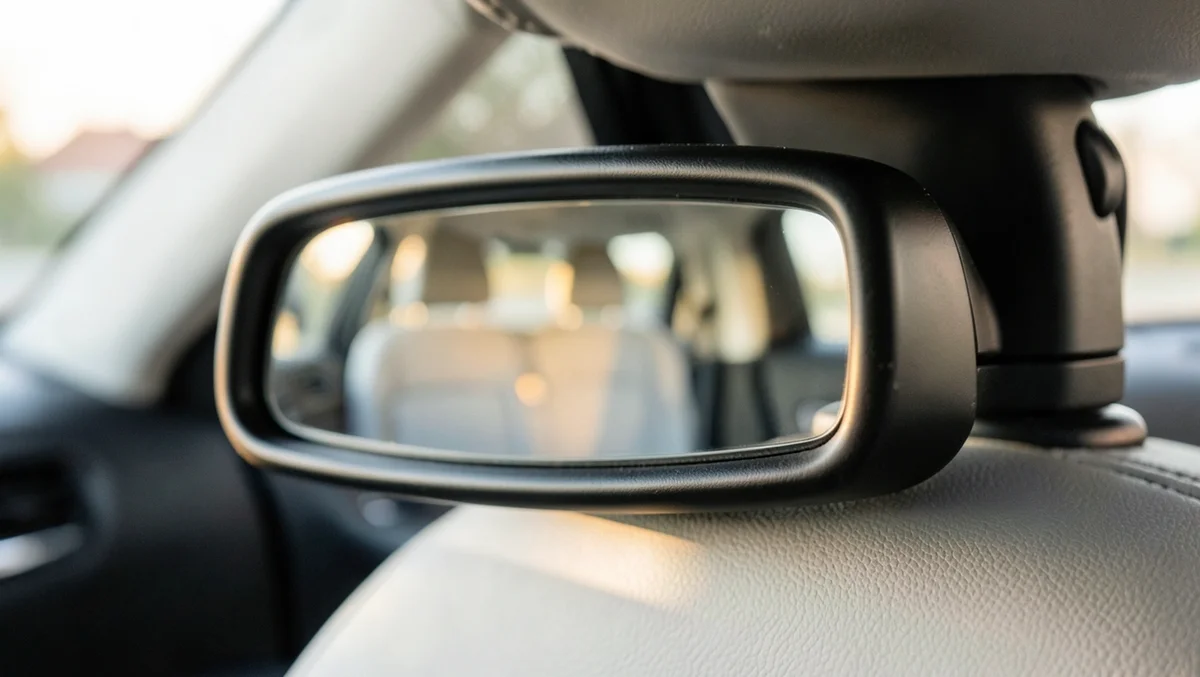
A car mirror for baby is a small convex or acrylic mirror that clips to the headrest so a driver can see a rear-facing infant seat without turning around. It is not federally regulated or “crash tested” in any standardized sense, despite what packaging often claims, but used correctly it lets you check on your baby with the same quick glance you’d give any mirror.
Below are three widely-bought options at different price points, followed by an honest look at what safety research actually says about these mirrors, plus a buying guide so you know exactly what to check before you order one.
Best Baby Car Mirrors: Quick Comparison
WIDEST VIEW PICK
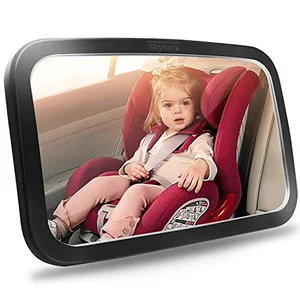 |
Shynerk Baby Car Mirror – $16.46 A wide, crystal-clear acrylic mirror with full 360° rotation, so you can dial in the exact angle for a rear-facing seat without re-adjusting the headrest.
|
Here’s how all three compare side by side. Prices shift on Amazon regularly, so treat these as a starting point rather than a guarantee.
| Mirror | Best For | Rotation | Price |
|---|---|---|---|
| funbliss Baby Car Mirror | Most affordable option | Fixed angle, tilts on the strap | $9.98 |
| Shynerk Baby Car Mirror | Widest field of view | 360° rotation | $16.46 |
| DARVIQS Baby Car Mirror | Easiest fine-tuning | 360° adjustable acrylic | $9.99 |
1. funbliss Baby Car Mirror – Most Affordable
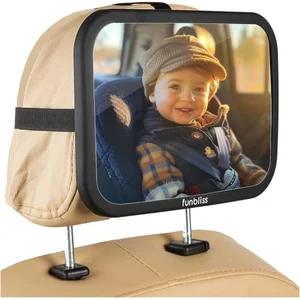
- Brand: funbliss
- Material: PMMA acrylic (shatter-resistant, not glass)
- Finish: Matte black frame
- Price: $9.98
This is the simplest and cheapest of the three. It straps over the headrest posts rather than rotating on a ball joint, so you angle it once during installation and leave it. That makes it a reasonable pick if you just want something functional without extra features to fuss with, though it also means you’ll have less flexibility if you switch cars or move the seat.
Advantages
- Lowest price of the three
- Shatter-resistant acrylic instead of glass
- Straps hold the mirror flush against the headrest, so it sits close and doesn’t hang loose
2. Shynerk Baby Car Mirror – Widest Field of View
- Brand: Shynerk
- Dimensions: 1.1 in. x 7.5 in. x 11.4 in.
- Rotation: 360°
- Price: $16.46 (list price $25.99)
The 360° ball joint is the main reason to pay more for this one over the budget options. It lets you fine-tune the angle from the driver’s seat instead of getting out of the car to readjust, which matters more than it sounds like the first time you install a rear-facing seat and realize the mirror is pointed at the ceiling. The larger mirror surface also shows more of the seat, not just the baby’s face.
Advantages
- 360° rotation for precise angle adjustment
- Larger mirror surface than most budget alternatives
- Currently discounted from its $25.99 list price
3. DARVIQS Baby Car Mirror – Easiest Fine-Tuning
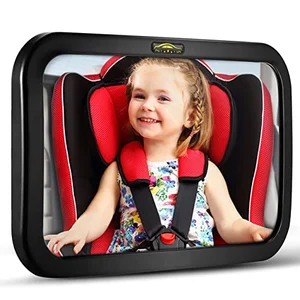
- Brand: DARVIQS
- Material: Adjustable acrylic
- Rotation: 360°
- Price: $9.99 (list price $15.99)
This one splits the difference: it has the same 360° adjustability as the Shynerk at close to the funbliss’s price. If budget and adjustability both matter to you, this is the middle-ground option. Its mirror surface is slightly smaller than the Shynerk’s, which is the main tradeoff for the lower price.
Advantages
- 360° adjustability at close to budget pricing
- Currently discounted from its $15.99 list price
- Shatter-resistant acrylic construction
Are Baby Car Mirrors Actually Safe? What Research Shows
Here’s the part most product pages leave out: baby car mirrors, like other car seat accessories, are not covered by any federal motor vehicle safety standard. The National Highway Traffic Safety Administration (NHTSA) does not test, certify, or approve them, and there is no standardized government or independent test that “crash tested and certified” claims are checked against — it’s a phrase manufacturers apply to their own products, not a rating you can independently verify.
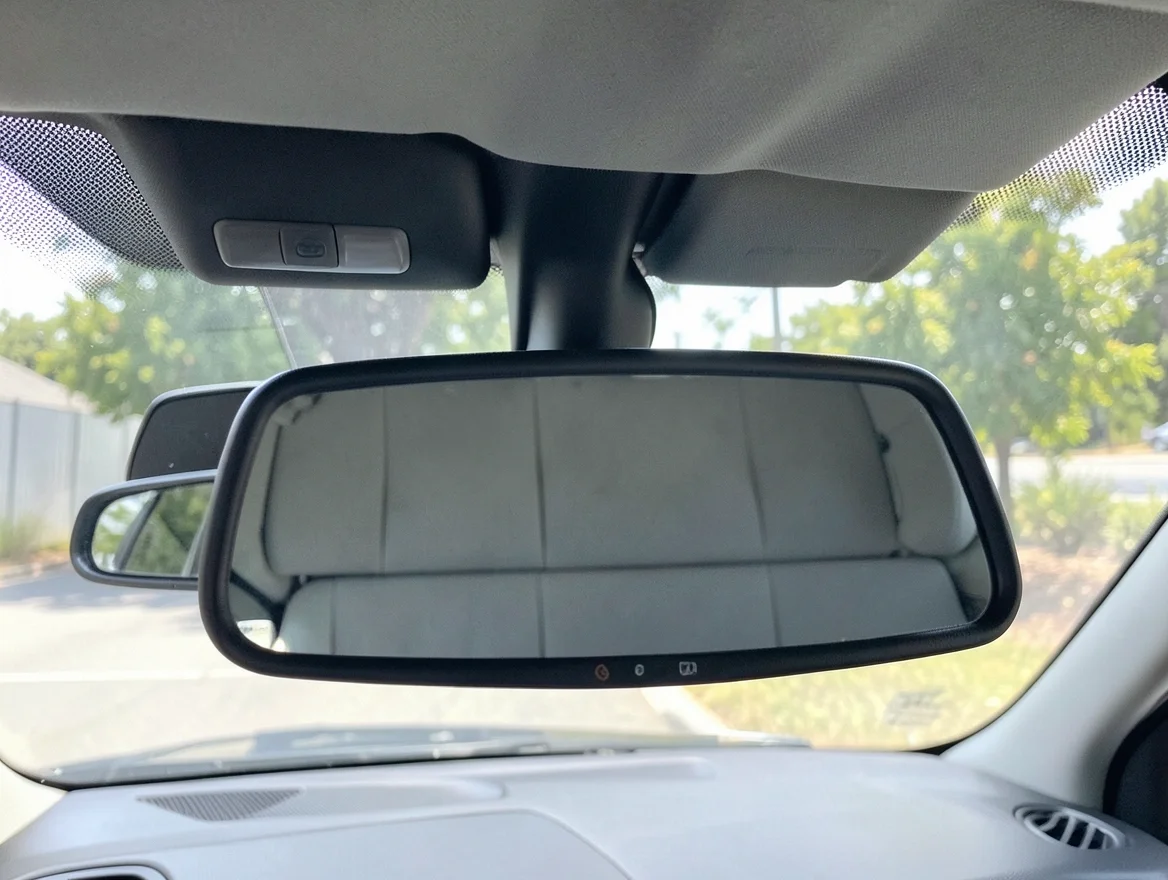
That doesn’t mean these mirrors are dangerous to use, but it does mean the safety burden falls on how you use one, not on a certification you can rely on. The real, measurable risk is distraction: at 45 mph, a car covers roughly 130 feet in two seconds. If you glance at the mirror the way you’d check any other mirror — a second or two, not a sustained look — the added risk is minimal. Some child-passenger-safety educators still recommend skipping the mirror entirely for exactly this reason, so it’s worth deciding for yourself rather than assuming the product packaging has settled the question for you.
Two practical things do matter regardless of which mirror you buy: choose one with a shatter-resistant acrylic surface rather than real glass, since it sits close to your baby’s head, and make sure the mounting strap is cinched tight enough that the mirror can’t work loose and swing or fall during normal driving.
How to Choose the Right Baby Car Mirror
- Mirror size: A larger mirror shows more of the seat, not just a close-up of your baby’s face, which makes it easier to spot a dropped pacifier or a twisted strap at a glance.
- Adjustability: A ball-joint mirror that rotates 360° is far easier to angle correctly than a fixed strap-on mirror, especially the first time you install it.
- Material: Look for shatter-resistant acrylic (PMMA) rather than glass, since the mirror mounts only inches from your baby’s head.
- Strap security: Straps should cinch tight around the headrest posts so the mirror can’t shift or come loose over a bumpy drive.
- Vehicle fit: Most mirrors fit standard adjustable headrest posts, but check the strap length against your specific headrest style before buying, especially in trucks and SUVs with wider posts.
- Field of view: A wide-angle mirror surface gives you a fuller view of the back seat, which matters more the smaller the mirror is.
If you’re still setting up your back seat for a new rear-facing infant seat, our guide to installing a rear-facing car seat covers the base install before you worry about the mirror.
Frequently Asked Questions
Why use a car mirror for a baby?
It lets you check on a rear-facing infant without turning around while driving, which is both distracting and, depending on your state, can be a safety issue on its own. A quick glance at a properly mounted mirror is a smaller distraction than a full head-turn.
How do you install a car mirror for a baby?
Most models strap directly around the headrest posts of the front or back seat facing your baby’s rear-facing seat. Cinch the strap tight, then adjust the angle (either by hand or via the ball joint on rotating models) until you can see your baby’s face clearly from the driver’s seat without leaning.
Are car mirrors for babies safe?
There’s no federal safety standard or independent certification that governs these mirrors, so “crash tested and certified” claims on packaging aren’t independently verified. Choosing a shatter-resistant acrylic mirror, securing the strap tightly, and limiting your glances to a second or two at a time addresses the two real risks: the mirror itself breaking near your baby, and driver distraction.
Which features should you look for in a baby car mirror?
Prioritize a shatter-resistant acrylic surface, a secure strap that won’t loosen while driving, and 360° adjustability if your budget allows it. A wider mirror surface also makes it easier to see more of the seat at a glance instead of just your baby’s face.
Is it distracting to use a baby car mirror while driving?
It can be if you look too long. At 45 mph a car travels roughly 130 feet in two seconds, so treat a baby mirror the same way you’d treat your side mirrors — a quick glance, not a sustained look. Some child passenger safety educators recommend skipping the mirror altogether for this reason, so weigh it against your own driving habits.
Bottom Line
A baby car mirror is a genuinely useful, low-cost tool for keeping an eye on a rear-facing infant, but treat “crash tested and certified” as marketing language rather than a real safety guarantee, since no federal standard actually governs this product category. Pick one with a shatter-resistant surface, strap it down securely, and use it the way you’d use any mirror: quick glances, not a substitute for watching the road.
Products related to this article
Sponsored / affiliate links. As an Amazon Associate I earn from qualifying purchases. I may earn additional commission from eligible campaigns.