Best Infant Mirror for Car Without Headrest (3 Picks Compared)
For cars without usable headrests, the best infant mirror is the one whose mount matches your rear seat: strap to a headrest only if you have one, clip or wedge to the seatback for fixed headrests, or use an app-based rear camera when there is no anchor point at all. A poor fit leaves the mirror loose, blocked, or aimed wrong, which cuts visibility and adds distraction. This guide compares three mount types, explains which vehicles each suits, and helps you pick the right one for your exact rear seat.
Mounting fit and material safety outweigh brand reputation


The core trade-off: fit beats brand name
In this category, mounting compatibility matters more than the logo on the frame. Mom Loves Best says a mirror can help you see your baby at a glance, but CradleCheck notes that standard strap-on mirrors often slip, especially when the seat geometry gives them nothing solid to grab. That is why a fixed-headrest mirror, an extendable-arm design, or a suction-capable model can make more sense than a familiar name on a generic strap.
Shatter-resistant acrylic or ABS plastic is the safer material choice than glass, especially during sudden stops. But material alone does not solve fit. A mirror that is “crash tested” or “certified” still needs a mount that matches the seatback, headrest posts, or dash location in your vehicle.
What this comparison covers and what it does not
This comparison focuses on mounting system, adjustment behavior, and likely failure mode. It does not treat every mirror as equally secure, because a no-headrest bench, a fixed headrest, and a Tesla-style integrated headrest create different attachment problems. It also does not treat shatterproof claims as a substitute for proper installation.
The products below are grouped by use case, not by marketing language. That matters because the same mirror can work well in one vehicle and fail in another if the clip, strap, or suction point has nothing reliable to hold.
Top mirror picks by seat type
| Product | Best fit | Mount type | Key strengths | Main caution |
|---|---|---|---|---|
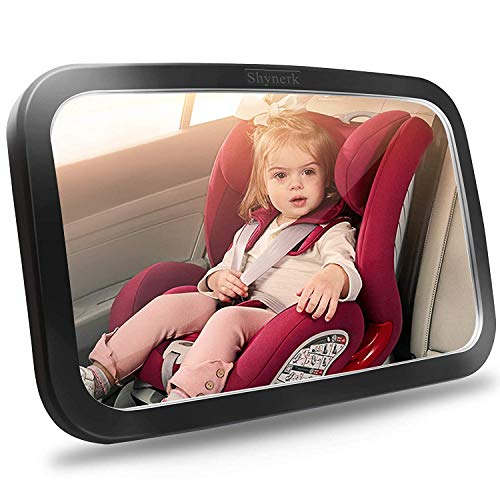
| Shynerk Baby Car Mirror | Standard rear-seat headrests | Strap mount | Wide crystal clear view, shatterproof design, 360° rotation, crash tested and certified | Needs a usable headrest; a bare bench gives it little to grip |
| TAZENI Baby Car Mirror | Rear-facing seats with awkward angles | Stretchable design | 360° view, crash tested and certified, adjustability for rear-facing seats | Adjustability helps only if the attachment point stays stable |
| Onco Fixed Headrest Baby Car Mirror | Tesla-style fixed headrests | Fixed-headrest mount | Tesla-compatible, 100% shatterproof, shake-proof, fixed headrest fit | Not the right pick for a true no-headrest bench |
| Baby Car Mirror with Extendable Arm | No-headrest use case | Stable hook clip | 360° rotating ball joint, impact-resistant acrylic surface, stable hook clip | Hook security depends on seatback geometry and trim clearance |
| Clip-on/Stick-on Baby Car Mirror | Mixed interiors | Dual mounting options | Large HD convex lens, dual 360° joints, adhesive and clamp compatibility | Adhesive can lose strength with heat or textured surfaces |
| Universal Clip/Suction Rearview Mirror | Vehicles with no traditional headrest mirror | Clip or suction | 5.11 x 2.56 inch size, 360° rotation, fits more than one mount scenario | Suction is more sensitive to heat, dust, and curved surfaces |
| Leo&Ella Extra Large Mirror For Tesla | Fixed headrests and premium interiors | Continuous elastic loop system | 13.7-inch convex mirror, 360° rotation, fixed-headrest focus | Large surface can increase visual clutter if the angle is not set carefully |
Shynerk baby car mirror
Choose this if your car has a usable headrest and you want a wide, clear rear-facing view with a simple strap mount. The appeal is straightforward: wide crystal clear view, shatterproof design, 360° rotation, and crash tested and certified language that fits a normal headrest setup.
Do not expect it to solve a no-headrest bench. Without a headrest post or bar to anchor to, a strap mirror has little structural support, and that is where many generic mirrors start to drift or slip.
TAZENI baby car mirror
Choose this if you need more angle forgiveness for a rear-facing seat and want a stretchable design that can adapt to odd seatback shapes. MirrorTopics says the TAZENI mirror offers a 360° view, and that extra movement helps when the child seat sits low or the viewing line is off-center.
Its value is in adjustability, not magic. If the mounting point is weak, repeated fine-tuning becomes a chore, and the mirror can slowly wander out of position.
Onco fixed headrest baby car mirror
Choose this if your vehicle has Tesla-style fixed headrests and you want a mirror made for that layout. Baby’s Gate includes a Tesla-specific fixed-headrest mirror pick, and this one is designed for that exact kind of seat geometry, with 100% shatterproof and shake-proof claims.
It is a poor match for a plain bench with no headrest. The mount is built around a fixed support, so a seat with no anchor point leaves you with the wrong tool.
Baby Car Mirror with Extendable Arm
This is the most useful style for a no-headrest bench when the seatback offers a hook point or a stable edge. My Road News lists an extendable-arm mirror with a stable hook clip, which is exactly the kind of hardware that can help where strap-only mirrors fail.
The trade-off is how often you must recheck it. A longer arm gives you reach, but every extra joint adds one more place for the mirror to sag, twist, or need re-aiming after repeated use.
Clip-on/Stick-on baby car mirror
This option makes sense when you want flexibility between adhesive and clamp attachment. The large HD convex lens and dual 360° joints help you get a usable rear-facing view even when the seat layout is awkward or the mirror must sit off to one side.
Use caution with adhesive in hot cabins and on textured trim. Stick-on pads can lose grip, while clamp mode can lose bite if the surface is narrow, curved, or padded more than expected.
Universal clip/Suction rearview mirror
This is the more adaptable pick for vehicles with no traditional headrest mirror. The same source gives a specific size for its universal mirror: 5.11 x 2.56 inch. That compact format can help when a larger panel would interfere with the driver’s sightline or nearby trim.
Suction helps only when the surface is smooth, clean, and not heat-stressed. In summer, cabin heat can reduce suction hold, which is why this style needs more frequent checking than a fixed mechanical mount.
Leo&Ella extra large mirror for Tesla
Choose this when your car has fixed headrests and you want a large viewing surface with a Tesla-friendly mount. Cars Techie recommends a 13.7-inch mirror for Tesla and fixed headrests, and this model lines up with that use case through its continuous elastic loop system and 360° rotation.
The larger mirror makes sense only if it stays controlled. A big convex surface can add visual clutter if it sits too low or too close to the driver’s mirror line.
Mirror compatibility matrix
| Rear-seat setup | Mount type | Compatible mirror style | Suction sensitivity | Clip security | Expected adjustment frequency | Likely failure mode |
|---|---|---|---|---|---|---|
| No headrest bench | Hook clip or suction | Extendable arm, universal clip/suction | High if the cabin is hot | Moderate if the seatback edge is narrow | Medium to high | Droop, slip, or blocked sightline |
| Fixed headrest | Elastic loop or fixed-headrest mount | Onco, Leo&Ella | Low unless suction is used as backup | High when sized to the headrest shape | Low to medium | Clip mismatch on curved or thick posts |
| Tesla-style integrated headrest | Fixed-headrest specific mount | Onco, Leo&Ella | Low | High with a continuous loop or shaped mount | Low | Loose wrap, tilt drift, or poor angle |
| Seatback with smooth panel | Suction or adhesive | Clip-on/Stick-on, Universal Clip/Suction | High in heat | Moderate if the panel is flat | Medium | Suction loss, pad peel, or rotation creep |
| Headrest with clear posts | Strap mount | Shynerk, TAZENI | Low | High if the strap crosses the posts evenly | Low | Strap slip or mirror bounce |
What works on a car seat without a headrest?
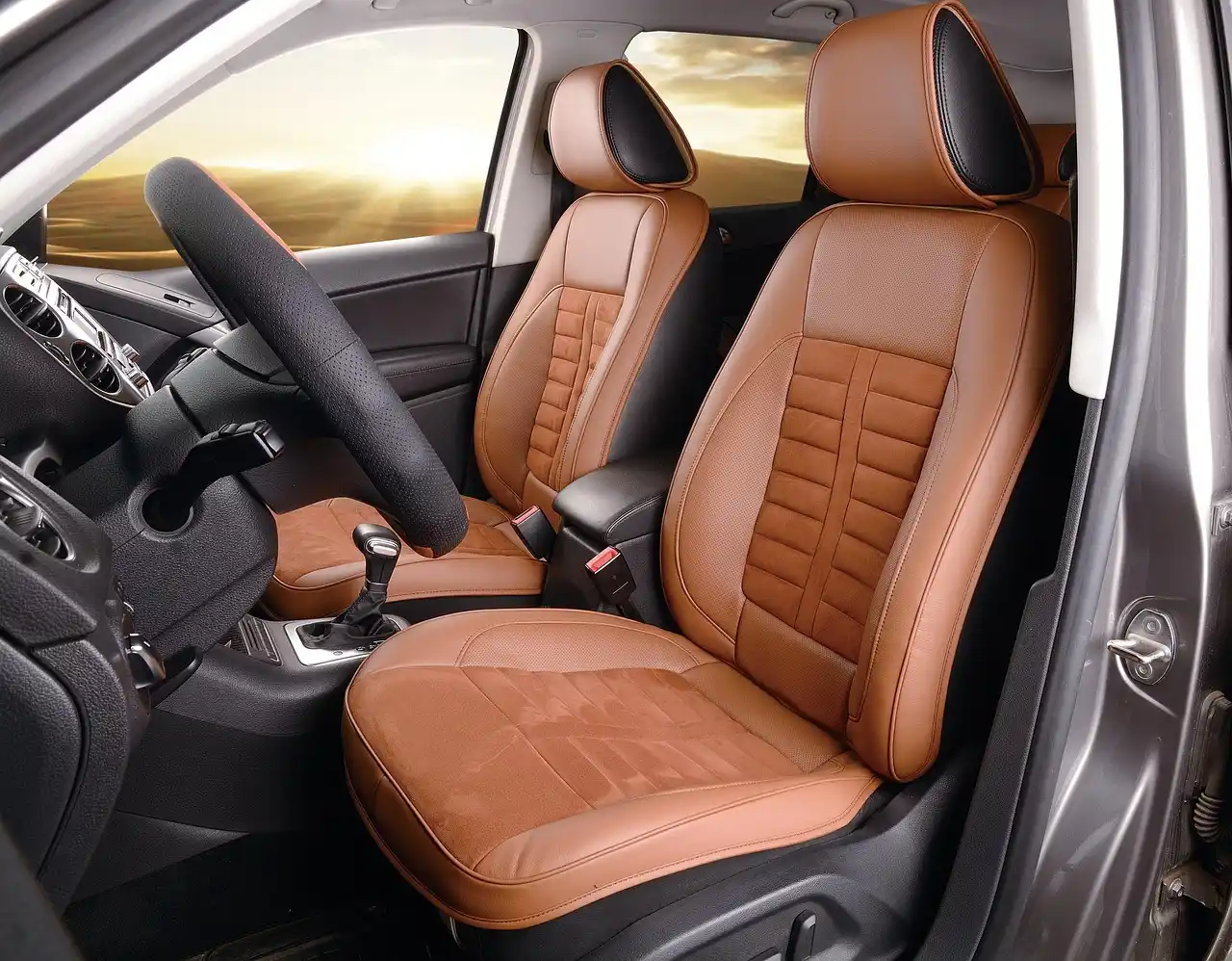
A no-headrest seat needs a mount built for the seatback itself, not for headrest posts. That usually means a hook clip, a wedge point, a suction surface, or a camera-based alternative. CradleCheck recommends mirrors for cars without adjustable headrests, while also warning that standard strap-on mirrors often slip.
Best-in-class for this setup are extendable-arm mirrors and some clip-on or suction designs. The weak choices are strap-only mirrors that assume a headrest exists, because they can rotate, sag, or end up aimed at the roof.
Best mount types for bench seats
For a true bench seat, look first for a stable hook clip or a shaped seatback mount. If the mirror is light enough and the contact point is clean and smooth, suction can work, but only as long as heat and dust do not break the seal.
Picture a minivan bench with no headrest posts and a rear-facing infant seat on the passenger side. A strap mirror may hang with no real anchor, while a hook-clip model can sit higher and keep the baby in view without constant re-aiming.
Mount types that are most likely to fail
Strap-on mirrors are the first to fail when there is no real anchor point. Suction-only designs can also fail in heat or on textured trim. Clip mounts can miss the shape of a fixed headrest, and then the mirror sits crooked or loosens after every adjustment.
A common first-timer mistake is buying a mirror because it says “universal” on the box, then finding that the only attachment point is a curved plastic panel that does not hold a clamp well. Universal does not mean geometry-free.
When a mirror should be skipped
Skip a mirror when there is no stable place to mount it and no way to keep it out of the driver’s line of sight. In that case, a rear camera or another monitoring method may be a better fit than forcing a mirror onto the wrong seat.
If the seatback flexes, the suction pad cannot stay flat, or the clip must fight thick upholstery, the safest move is to stop and choose a different mount type.
How do you keep a baby mirror secure on bumpy roads?
Start by tightening the mount, then test for movement with a firm tug before you drive. On rough roads, small shifts matter. A mirror that is slightly loose at the driveway often becomes a mirror that bounces or tilts once the car hits potholes.
360° joints help you aim the view, but every joint is also a point that can loosen over time. They are useful for rear-facing seats, yet they need periodic rechecking, especially after a seat is reclined, folded, or moved.
Stability checks after installation
- Install the mount exactly as directed for that seat type.
- Check that the mirror faces the rear-facing infant seat without blocking the rearview mirror.
- Press and tug the frame, strap, clip, or suction base to confirm it does not shift.
- Rotate the joint back to the intended angle and confirm it holds.
- Recheck after the first drive, then after any seat adjustment.
Why suction cups and clips slip
Suction cups can lose grip when the surface gets dusty, textured, or hot. Clips can loosen when they are sized for a different headrest shape or when the seatback edge is too thin to hold pressure. That is why secure mounting matters more than marketing claims, as Mom Loves Best notes.
Shynerk and TAZENI both bring useful adjustability, but neither can defeat a bad anchor point. The seat geometry still decides whether the mirror stays put.
Safety claims and materials
Shatter-resistant acrylic and ABS plastic are often preferred because they are generally more impact-resistant than glass. That matters in sudden stops or in the rare case that a mirror gets knocked loose. A safer material does not make the mirror indestructible, but it lowers the risk of sharp fragments.
There is no federal motor vehicle safety standard specific to baby mirrors. That means “crash tested” and “certified” language should be read as a manufacturer or third-party claim, not as a federal rule that guarantees universal fit or retention. (Nhtsa)
What “crash tested” can and cannot mean
Crash-tested and certified can indicate that a product was evaluated under a stated method, but it does not tell you whether it fits your seat. It also does not cancel out suction loss, clip mismatch, or visor interference.
Use the claim as a filter, not a verdict. The mount still needs to match the exact rear-seat geometry in your vehicle.
Why there is no federal mirror-specific standard
Because there is no mirror-specific federal rule, you have to do the compatibility check yourself. Look at the seatback shape, the headrest type, the mounting surface, and the expected heat exposure before you buy.
Which mirror fits Tesla fixed headrests?
For Tesla-style fixed headrests, the best choices are the Onco Fixed Headrest Baby Car Mirror and the Leo&Ella Extra Large Mirror For Tesla. Baby’s Gate includes a Tesla-specific fixed-headrest mirror pick, and Cars Techie recommends a 13.7-inch mirror for Tesla and fixed headrests. Standard no-headrest mounts often miss the mark here because they are made for different anchors.
Fixed headrests need a mount that wraps or braces around the existing shape. A strap made for removable posts can sit wrong on a molded headrest, while a fixed-headrest loop or shaped mount keeps the mirror aligned more reliably.
Why standard no-headrest mounts often miss the mark
Basic suction or hook ideas can work in some cars, but Tesla-style seats often need a more exact wrap. If the loop cannot sit flush or the clip fights the contour of the headrest, the mirror will tilt and need repeated readjustment.
Choose Shynerk Baby Car Mirror / TAZENI Baby Car Mirror / Onco Fixed Headrest Baby Car Mirror if…
Choose Shynerk Baby Car Mirror if your car has usable headrests, you want a wide crystal clear view, and you prefer a simple strap mount with 360° rotation. It fits best when the anchor point is normal and stable.
Choose TAZENI Baby Car Mirror if you need a stretchable design for a rear-facing seat and want more angle freedom without changing the whole setup. It makes the most sense when your main issue is view adjustment, not anchor scarcity.
Choose Onco Fixed Headrest Baby Car Mirror if your car has Tesla-style fixed headrests and you want a mirror built for that geometry. It is the better choice when the headrest itself is the mount surface.
Frequently asked questions
What is the best infant mirror for a car without headrest?
The best infant mirror for a car without headrest is the one that matches the seat geometry, not the biggest or most familiar brand. For a true bench, an extendable-arm or clip/suction design is usually more practical than a strap-only mirror, because it has a real place to anchor and adjust.
How do you install a baby mirror without a headrest?
Attach the mirror to a stable seatback point, then aim it at the infant seat and check for movement before driving. If the product uses suction, clean the surface first. If it uses a clip, make sure the edge is solid enough to hold. Recheck the angle after the first trip.
Will a car seat mirror stay secure on bumpy roads?
It can, but only if the mount matches the seat and the joints are tight. Bumpy roads expose weak straps, loose clips, and marginal suction fast. Mirrors with 360° joints are useful for aiming, yet they should be inspected often because repeated vibration can loosen them over time.
What type of mirror works best for fixed headrests or no headrests?
For fixed headrests, use a fixed-headrest-specific mirror such as Onco or Leo&Ella. For a no-headrest bench, an extendable-arm or clip/suction mirror is more likely to fit. Strap-only mirrors usually work best only when removable headrests give the mount a proper anchor.
Are baby car mirrors safe if they are shatterproof?
Shatter-resistant acrylic or ABS is safer than glass because it reduces the chance of sharp fragments, but it does not make a bad mount safe. Proper installation still matters. A mirror that slips, swings, or blocks the view can create a distraction even if the surface itself is impact-resistant.
Can I use a suction cup mirror in a car without a headrest?
Yes, if the mirror is designed for that setup and the surface is smooth enough to hold suction. Heat, dust, and textured trim can weaken the seal. In hot weather or on rough roads, check it more often than you would a fixed mechanical mount.
Do I need a baby car mirror for a rear-facing infant?
You do not need one, but many parents use a mirror to see the baby at a glance without turning around. If you choose one, select the mount for your exact rear seat first. The wrong mirror can be more distracting than helpful, especially if it cannot stay aimed correctly.
Products related to this article
Sponsored / affiliate links. As an Amazon Associate I earn from qualifying purchases. I may earn additional commission from eligible campaigns.