Car Seat Mirror vs Baby Monitor: Which Fits Best?
Choose a rear-seat mirror if you want the simplest, most reliable option and can glance safely; pick a camera monitor if you drive at night often or need a clearer view with fewer head turns. A bad pick adds distraction, false confidence, or a dead screen right when you need it. I weigh those trade-offs against how I actually drive: daylight commuting, dark roads, and the chance that gear fails.
This guide is part of our Car seat safety and installation guide series.
| Decision factor | Car Seat Mirror | Baby Monitor | Winner |
|---|---|---|---|
| Daytime commuting | Quick rearview-style checks with zero lag and no screen | Clear live feed, but a display competes for attention | Car Seat Mirror |
| Night driving | Weak in darkness; standard mirrors become nearly useless in complete darkness | Infrared night vision helps when the cabin is dark | Baby Monitor |
| Short trips | Fast to use and easy to ignore when the child is settled | Extra setup and a screen can be overkill for quick errands | Car Seat Mirror |
| Long road trips | Fine for periodic checks, but limited in low light | Better when you want a steadier view over many hours | Baby Monitor |
| Multi-vehicle use | Moves quickly between cars and needs no wiring | Transfer usually takes longer and may need cable rerouting | Car Seat Mirror |
| Tech comfort | Simple, familiar, and screen-free | Better if the driver is comfortable managing electronics | Car Seat Mirror |
| Budget sensitivity | Basic mirrors start around $10 to $25 | Systems start at $50 and can run to $150 or more | Car Seat Mirror |
| Reliability priority | No power source, no software freeze, and no connection drop | Depends on power and can fail from battery or connection problems | Car Seat Mirror |
Car seat mirror vs baby monitor: the real trade-off

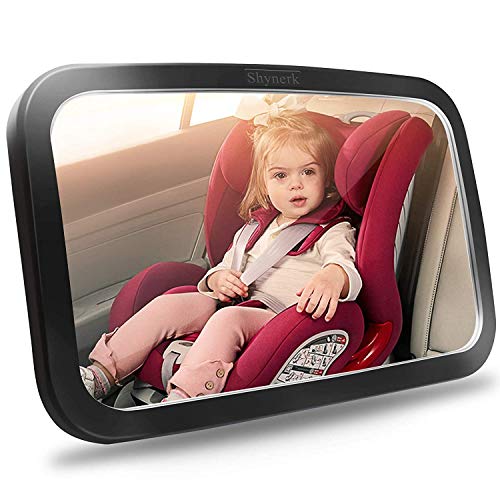

The choice comes down to attention, darkness, and failure risk. A mirror is the lighter tool: cheap, quick, and almost invisible once mounted. A monitor gives a clearer view when the cabin is dark or the rear seat sits far back, but it adds parts that can quit, freeze, or pull your eyes away.
How each one works
A baby car mirror mounts on the rear headrest and lets you see the baby in the rearview mirror. It uses convex reflection, gives a wide-angle view, adds no power source, and has zero lag. A camera monitor uses a camera plus dashboard display, giving a live video feed that can include night vision.
| Feature | Car Seat Mirror | Baby Monitor |
|---|---|---|
| How it shows the child | Convex reflection in the rearview mirror | Live video feed on a display |
| Power needed | No | Yes |
| Screen in the cabin | No | Yes |
| Typical setup time | Under 2 minutes with no tools | 10 to 20 minutes for first-time setup |
| Typical price range | About $10 to $40 | About $50 to $150+ |
The mirror acts like a quick rearview check. The monitor acts like a small camera system in the car. That difference matters when the road is rough, the child is asleep, or the parent is already tracking traffic, mirrors, and lane changes at once.
According to Baby Car Mirror vs. Camera Monitor: Which One Should Parents Choose? — Basic baby car mirrors start around $10 to $25.
Which is safer: a baby car mirror or a camera monitor?
Neither option makes driving safer by itself; both let you see your child while driving. The safer choice is the one that keeps glance-away time short and does not add workload. In most daytime driving, a mirror is easier on attention because it acts like a rearview-mirror check, while a monitor introduces a screen that can compete for the driver’s eyes.
Distraction risk and glance-away time
A mirror usually gets a fast, familiar glance. A screen often invites a longer look, especially when the driver wants to confirm whether the child is sleeping, looking down, or moving. That extra half-second matters when traffic is dense or the car is crossing an intersection.
Screen competition is the main drawback for monitors. A bright display can pull the eyes away from the road more often than a mirror does, even when the picture is clear. Drivers who already dislike infotainment screens often prefer the mirror for that reason alone.
When a screen can create more driver workload
A monitor can add mental steps: check the screen, interpret the image, confirm it is live, and then look back to the road. If the display freezes or the connection drops, the driver may glance twice. That is worse than a simple mirror in everyday commuting.
Is a baby mirror or camera better for night driving?
The camera monitor is usually better at night because infrared night vision can still show the child when the cabin is dark. Standard mirrors become nearly useless in complete darkness, and tint, dark upholstery, or a long rear-seat distance make the mirror even harder to use. If night driving is frequent, the monitor has the clear advantage.
Low-light visibility and night vision
A mirror depends on ambient light. If the child is in shadow and the cabin is dark, the reflection turns weak and hard to read. A monitor can keep the image visible when the car interior offers almost no light, which is where many parents first notice the difference.
That said, image quality is still not magic. Low-light video can bring compression artifacts, grain, or soft edges. On a small screen, the gain is usually enough to identify whether the baby is awake, slouched, or fussing, which is the real job.
Glare, dark cabins, and tinted windows
Mirrors can wash out in bright headlight glare, and tinted rear glass can make the reflection dim. Monitors avoid the mirror glare problem, but they can be affected by display brightness, camera angle, or placement of the screen where it catches sunlight in daytime.
On rough roads, a monitor may still be easier to read at night because the image comes from the camera, not a bouncing reflection. The mirror is simple, but simplicity does not help when the cabin is too dark to reflect much at all.
Reliability, image quality, and failure modes
The mirror wins on reliability because it has no power requirement, no battery life to manage, and no software to freeze. The camera monitor gives better night visibility, but it can fail in ways a mirror cannot: dead battery, loose plug, connection dropout, or a blank screen. For families who hate surprises, that is a real trade-off.
Battery and power dependence
A mirror has zero failure modes during normal use. It does not need charging, pairing, or updates. A monitor depends on power, so the failure list starts with the battery and keeps going to cable faults, wireless interruptions, and a screen that never turns on after a cold morning.
If the system uses wireless connection, a brief drop can be enough to break confidence. A parent who has to wonder whether the feed is still live is carrying another task. That is one reason the mirror feels calmer during routine commuting.
Daylight clarity, low-light detail, and compression limits
In daylight, both usually do the job. The monitor has better detail, but extra resolution matters less when the screen is small and the car is moving. Mirrors are often good enough for a quick check because the driver mainly needs to know whether the child is awake, calm, or unhappy.
Video systems can show compression artifacts and soft edges, especially if the wireless link is weak. The picture may still be usable, but not always sharp. A mirror is less detailed, yet it is honest about that limitation and does not degrade as batteries age.
How hard is it to install and move between cars?
The mirror is much easier to install and transfer. The article says mirrors install in under 2 minutes with no tools, and that matches the usual reality of snapping or strapping one onto the rear headrest. Camera systems take 10 to 20 minutes for first-time setup, mainly because of power routing and display placement.
Tools, straps, and first-time setup time
A mirror typically needs only a firm headrest mount and a quick angle adjustment. A camera system needs more steps: camera placement, display mounting, power connection, and sometimes pairing. That extra work is manageable once, but it is not the same as a simple accessory you can move in a minute.
On top of that, a monitor adds cable routing concerns. If the car layout changes, the installer may need to hide wires again or recheck that the camera angle still catches the rear-facing seat. The mirror avoids most of that hassle.
Vehicle-to-vehicle transfer speed
For multi-car households, the mirror is the easier everyday choice. It moves fast between vehicles and is less sensitive to headrest shape, cabin layout, or available power outlets. A camera system can move too, but the setup time grows when the second car has a different interior or a more awkward dash layout.
Decision matrix: mirror vs monitor across 8 real use cases
Use the mirror when your priority is low distraction and low upkeep. Use the monitor when darkness, rear-seat distance, or day-to-night visibility matter more than simplicity. The right answer changes with driving pattern, not with brand hype.
| Use case | Car Seat Mirror | Baby Monitor | Recommended winner |
|---|---|---|---|
| Daytime commuting | Fast glance, no screen, low distraction | Useful, but adds a display | Car Seat Mirror |
| Night driving | Poor in darkness | Night vision helps a lot | Baby Monitor |
| Short trips | Simple and quick to ignore | More setup than many short trips need | Car Seat Mirror |
| Long road trips | Works, but weaker after dark | Better for extended monitoring | Baby Monitor |
| Multi-vehicle use | Easier to move | Harder to transfer cleanly | Car Seat Mirror |
| Tech comfort | Less to manage | Better for drivers who like electronics | Car Seat Mirror |
| Budget sensitivity | Lower entry price | Higher upfront cost | Car Seat Mirror |
| Reliability priority | No battery, no software freeze, no connection loss | More failure points | Car Seat Mirror |
For city commuters, the mirror is usually the cleaner pick. For long-distance drivers who travel after dark, the monitor earns its place. For families with two or three cars, the mirror often wins again because the transfer is painless.
Choose Car Seat Mirror if… / Choose Baby Camera Monitor if…
Choose the car seat mirror if you drive mostly in daylight, want the least distraction, need the same setup across multiple cars, or want the lowest-cost option. Choose the baby camera monitor if you drive at night often, want better visibility in a dark cabin, or prefer a clearer live feed and can accept power dependence.
Choose Car Seat Mirror if…
- You want a rear-facing infant check with no screen in the cabin.
- You value quick installation, easy transfer, and no wiring.
- You are budget-conscious and want the lower entry price.
- You prioritize a simple setup that does not depend on batteries or software.
Choose Baby Camera Monitor if…
- You drive at night often or spend time in dark cabins.
- You need a clearer view of a child in a rear-facing car seat from the front seat.
- You are comfortable with a display and the maintenance that comes with power use.
- You can accept higher cost in exchange for better low-light viewing.
Frequently asked questions
baby car seat mirror vs camera monitor
The mirror is the simpler option, with zero lag, no power source, and a quick rearview-style glance. The monitor is the better choice when you need a live video feed, especially at night. For most drivers, the decision turns on how often they drive after dark and how much screen time they want in the cabin.
Which is safer: a baby car mirror or a camera monitor?
Safety depends on how much it distracts the driver. A mirror usually creates less glance-away time because it behaves like a normal rearview check. A camera monitor can be useful, but the extra display can pull attention longer, especially if the driver keeps verifying that the image is live.
Is a baby mirror or camera better for night driving?
A camera monitor is usually better for night driving because infrared night vision works when the cabin is dark. A standard mirror can become nearly useless in complete darkness, and tint or rear-seat distance can make it even harder to read. If night trips are common, the monitor has the edge.
Do baby car mirrors reduce distraction compared with monitors?
Usually yes, because the mirror adds no new screen to the driving environment. It supports a quick glance, similar to checking the rearview mirror, while a monitor introduces a display that can invite longer looks. The more crowded the drive, the more that difference matters.
How hard is it to install a baby mirror versus a camera monitor?
A baby car mirror is the easy one. The article says it installs in under 2 minutes with no tools. Camera systems take 10 to 20 minutes for first-time setup because they need camera placement, power, and sometimes cable routing or pairing before the system is ready.
How much does a baby car mirror cost compared with a camera monitor?
Basic baby car mirrors start around $10 to $25, and the broader range is usually about $10 to $40. Camera monitor systems start at $50 and can run to $150 or more. That gap makes the mirror the better option for budget-conscious parents.
What is the best option for a rear-facing infant seat?
For a rear-facing infant seat, the best option depends on when the car is used. Daytime commuters usually do well with a mirror because it is simple and quick. Parents who drive after dark or deal with very dim cabins usually get more value from a camera monitor.
When does a camera monitor make more sense than a mirror?
A camera monitor makes more sense when night driving is frequent, the rear seat is hard to see from the front, or the driver wants a clearer live feed than a reflection can give. It also fits parents who accept extra setup in exchange for better visibility in dark conditions.
baby car seat mirror vs camera
For most families, the mirror wins on simplicity, cost, and reliability. The camera wins when low-light visibility matters more than a screen in the cabin. If the drive is mostly daytime and routine, pick the mirror; if darkness and cabin distance are routine, pick the camera.
Products related to this article
Sponsored / affiliate links. As an Amazon Associate I earn from qualifying purchases. I may earn additional commission from eligible campaigns.