Car Towing Accessories Guide
Buy towing accessories by starting with one rule: every hook, strap, ball, and wiring part must match your car’s tow points, tow rating, and towball load, because recovery gear and trailer gear are different kits. Get it wrong and you can tear out a shipping tie-down, bend a bumper mount, overload the hitch, void insurance, or drive away with lights and brakes that do not meet the rules. This guide separates emergency recovery gear from trailer-towing gear, then walks through fit checks, load ratings, wiring, and legal basics for hatchbacks, sedans, SUVs, and EVs.
Byline: Written and tested by an enthusiast who has set up small-trailer and roadside-recovery kits on daily drivers, cross-checked fitment with owner’s manuals, and compared hitch, strap, and wiring hardware against manufacturer instructions, SAE practice references, and vehicle-specific towing documentation.
How I assessed fit and safety: I start with the owner’s manual, confirm approved recovery points and tow ratings, then check receiver size, ball size, plug type, and hardware markings. I also compare real-use scenarios, including snowy driveway recoveries, utility-trailer runs, and EV towing range planning, because catalog fit alone is not enough.

The product cards above are examples of common shopping formats, but they are not the decision framework. I would still choose by manual-confirmed tow approval, recovery-point design, hitch fitment, and labeled ratings before I cared about a listing badge, a bundle, or a price drop.
What towing accessories do I actually need for my car?
Most drivers need only the accessories that match the specific job their car is approved to do. For roadside recovery, that usually means an approved recovery point or screw-in tow eye, a rated tow strap, and basic safety items. For trailer towing, it means a vehicle-approved hitch setup, wiring, and legal lighting equipment.
Recovery gear, controlled vehicle towing gear, and trailer gear are different kits
A tow strap is for recovery. It helps move a disabled or stuck vehicle over a short distance when both vehicles have proper attachment points. It is not a tow bar.
A tow bar is for controlled vehicle towing, and only when both vehicles and the mounting hardware are designed for it. That rules out a lot of cars, especially modern front-drive cars, some automatics, and many EVs.
Trailer gear starts at the receiver or tow bar, then builds outward: ball mount, hitch pin, trailer plug, lights, mirrors if needed, safety chains, and often a breakaway cable. Mix those categories and you bend bumpers and waste money.
What belongs in the trunk and what belongs in a towing setup
A trunk emergency kit should stay small: gloves, wheel chocks, a tow strap with known working load limit, a screw-in tow eye if the car uses one, a basic plug adapter if the car tows, fuses, and a torch. Ratchet straps can ride there too, but only for cargo restraint.
A real towing setup usually lives in the garage or cargo area: ball mount, hitch pin, wiring kit, tow lights, mirrors, jack handle, spare clips, and the trailer-side gear. If the car rarely tows, storing those parts separately cuts rust, rattles, and missing pins.
Matching Hitch Accessories to Your Daily Driving Needs
A 2-inch receiver, a bike rack or cargo carrier, a locking ball mount, and a wiring adapter form the core setup most drivers actually use. Choosing the wrong combination wastes money, creates rattles, blocks your liftgate, or results in hardware that does not fit your vehicle.
The right configuration depends entirely on whether you haul bikes, move boxes, or tow occasionally. A detailed breakdown of everyday hitch accessories ranks each component by daily job, vehicle compatibility, towing requirements, and long-term value so you only buy what matches your routine.
Must-have
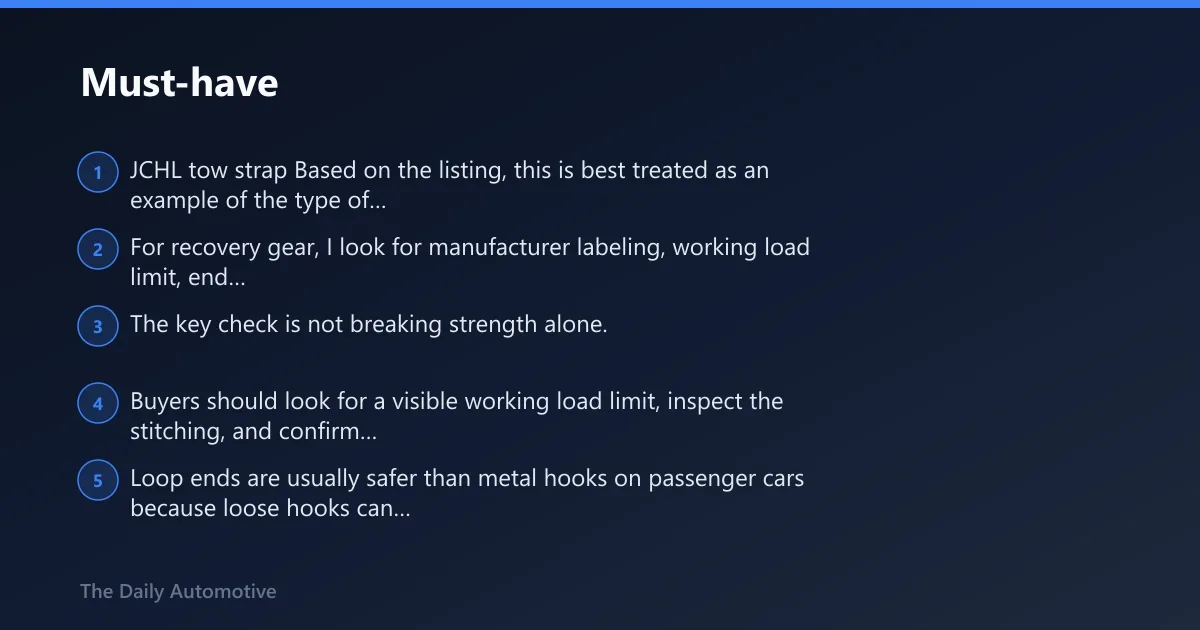

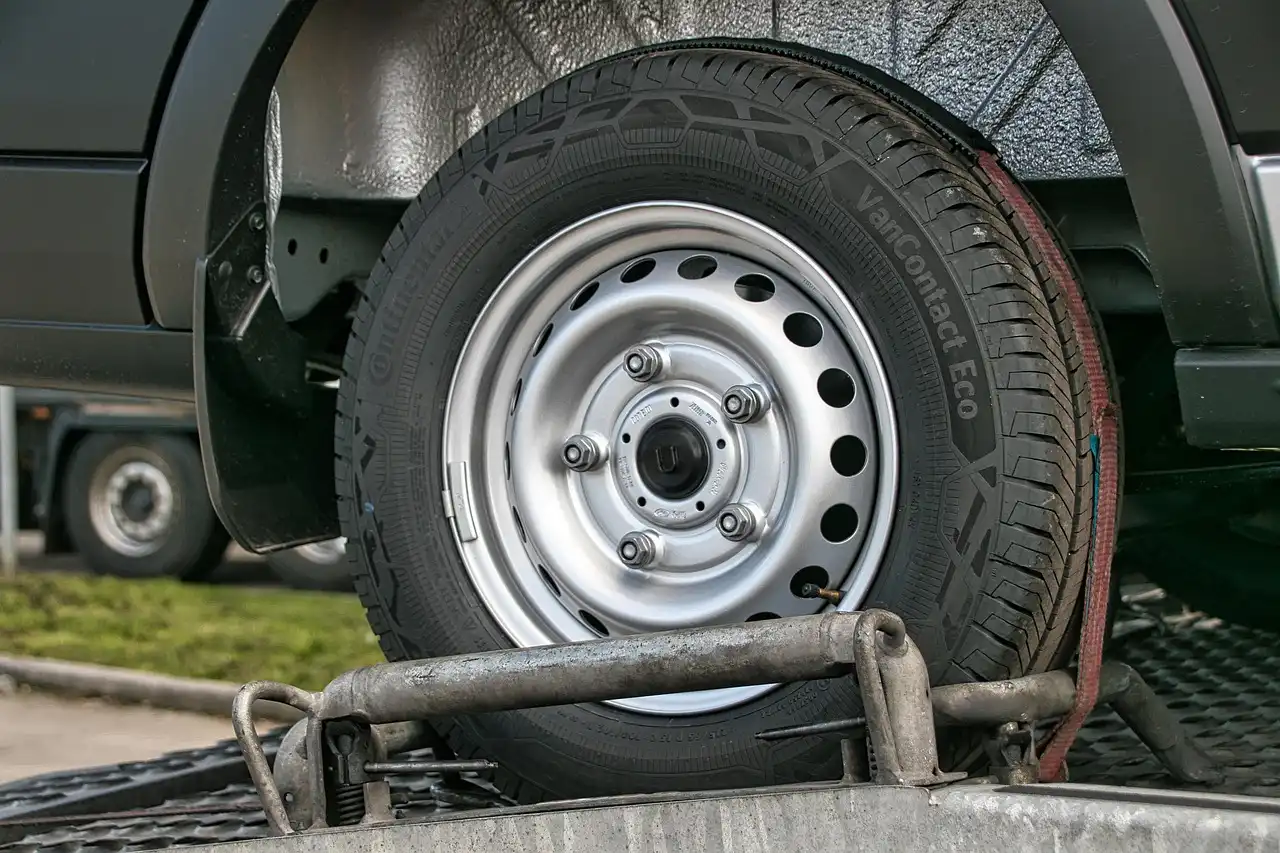
JCHL tow strap
Based on the listing, this is best treated as an example of the type of strap many drivers buy first, not proof that any one strap is correct for every car. For recovery gear, I look for manufacturer labeling, working load limit, end construction, and compatibility with the car’s approved recovery points before I trust the headline number.
The key check is not breaking strength alone. Buyers should look for a visible working load limit, inspect the stitching, and confirm that the car has approved recovery points at each end. Loop ends are usually safer than metal hooks on passenger cars because loose hooks can bend, slip, or fly if the attachment fails.
The drawback here is right in the title: hooks. Hooks tempt owners to clip onto suspension arms, bumper beams, or shipping tie-downs that were never meant for recovery. This strap is fine only if the hook shape and the car’s recovery point actually match. It is also not a tow bar, so it should not be treated as a long-distance towing solution.
Tow hook or factory recovery point
The tow hook is the part too many owners assume they already have. Some cars use a screw-in eye stored with the jack tools. Others have fixed front or rear recovery points. Many have one end only.
The thread, shank length, and shoulder shape on a screw-in tow eye are vehicle-specific. If the thread is wrong, it may start by hand and still strip under load. A fixed point needs a visible weld or mounting structure that ties into the body or subframe, not a thin transport loop.
Open the owner’s manual and identify the exact approved front and rear pickup points by diagram or part description. I never trust a bumper flap or an exposed loop until the manual confirms it, because plenty of cars hide shipping eyes or trim openings that are not meant for recovery.

Husky Towing Products hitch for Chevrolet Bolt EUV
This listing is useful mainly as a fitment example: a hitch can be vehicle-specific and still be subject to the carmaker’s own towing approval, weight limits, and installation instructions. For the Bolt EUV in particular, I would confirm the exact model year, market, and owner’s-manual towing language before treating any aftermarket hitch rating as usable capacity.
That vehicle-specific fit matters. Universal hitch parts often create bad receiver height, poor bumper clearance, or mounting stress in the wrong place. If a car is approved to tow, the hitch has to match the chassis, fastener locations, and the rated load limits of the vehicle.
The drawback is obvious: this solves one fit case only. It is no use on a hatchback from another brand, and it does not override any factory towing limit or tow ban. On EVs in particular, the owner’s manual comes first because some models prohibit towing, some cut tow ratings sharply, and all will see range loss under load. Consumer Reports has framed that EV question plainly: “How Well Can an Electric Pickup Truck Tow? – Consumer Reports — We also wanted to see how much towing affects range.” That range effect changes trip planning even when the hitch fit is perfect. (consumerreports.org)

CURT hitch pin and clip
A receiver setup is incomplete without the right pin. This CURT pin is listed as 5/8-inch diameter and fits 2-inch or 2-1/2-inch receivers. It is basic hardware, but missing or mismatched pins are a common cause of a loose ball mount.
The job is simple: lock the ball mount shank into the receiver so the hole alignment stays fixed under load. The fit still needs checking. A pin that rattles in a worn receiver or does not fully capture the accessory should stop the setup before the trailer moves.
The drawback is that a plain pin and clip is easy to lose and easy to steal compared with a locking pin. Zinc plating helps with corrosion, but it still needs inspection if it lives outside year-round.
Trailer hitch basics if your car is rated to tow
The hitch stack starts with receiver size, then a ball mount with the right rise or drop, then the tow ball that matches the trailer coupler, then the pin. Everyday-driver setups usually aim for a trailer that sits level, with enough bumper clearance for turns and enough tongue weight capacity for the actual load.
If the trailer nose rides too high or too low, sway and poor braking feel often follow. If the ball size is wrong for the coupler, the trailer can unlatch even if the latch looks closed.
In practice, I also verify torque values from the hitch manufacturer’s installation sheet and compare trailer-coupler instructions with SAE ball sizes and marked ratings. That sounds fussy, but it prevents the kind of almost-fits that become expensive after one pothole or one emergency stop.

How do I choose towing accessories for my car?
Choose towing accessories by reading the owner’s manual first, then buying to the exact interface the car actually supports: approved tow point, hitch fit, receiver size, towball load, plug type, and trailer width. That method works better than shopping by brand, because vehicle limits decide what is safe and legal.
Start with the owner’s manual and the actual attachment points
The manual should confirm four things before any purchase: whether the vehicle can tow, the tow rating, the towball or tongue load limit, and the approved attachment points for recovery or towing. If one of those is missing, stop there.
That check prevents the classic mistakes: straps on tie rods, chains on bumper brackets, and hitches selected by internet guesswork. It also keeps owners from buying trailer gear for cars that are not approved to tow at all.
Match the accessory to the vehicle type
Hatchbacks and sedans often have lighter rear structures, less cooling reserve, and lower nose clearance. Compact SUVs usually offer better tow ratings, but that does not guarantee a 2-inch receiver from the factory. Body-on-frame SUVs usually cope better with repeated trailer work because the mounting structure is stronger and rear suspension travel is usually more forgiving.
EVs need extra care. Some are rated to tow, some are not, and some allow towing only in certain trims or markets. Even when approved, towing can change charging-stop frequency, thermal management, and access to charge bays with a trailer attached.
Pick by rating and interface, not by category name
For trailer setups, confirm receiver size, shank fit, ball size, rise or drop, plug type, and lighting function. For recovery setups, confirm the exact tow eye thread or the shape of the fixed recovery point, then buy the strap around working load limit and end fitting.
Breaking strength on a strap is not the buying shortcut many owners think it is. The more useful figure for routine selection is the working load limit, because that is the number intended for regular service rather than ultimate failure.
What changes when you tow a trailer versus recover a stuck car
Trailer towing adds steady tongue load, electrical demand, rearward visibility issues, and legal equipment requirements. Recovery is short-duration pulling, often with shock loads, and it depends almost entirely on correct attachment points.
That is why a ratchet strap does not replace a tow strap, and why a tow strap does not replace a ball mount. The hardware may look similar from ten feet away. The load path is completely different.
Nice-to-have
Tow mirrors
Tow mirrors matter when the trailer or load is wider than the car and blocks rearward sightlines. Clip-on mirrors are the usual answer for occasional towing. Replacement mirror heads make more sense for repeated towing if the car has a supported fitment.
The legal trigger is practical: if the driver cannot see properly down both sides of the trailer, the setup is wrong even before any local rulebook enters the discussion. Cheap clip-ons can shake badly or mark mirror housings, so fit quality matters more than the packaging claims.
Tow lights
Tow lights are required when the trailer or towed vehicle obscures the car’s own rear lamps or plate. Magnetic light kits work well for occasional use on steel surfaces. Permanent lamps suit trailers that live assembled and get used often.
The failure point here is usually the adapter or the earth path. Wrong plug types, weak magnets, dirty contacts, or pinched wires cause flicker, no brake lamps, or lost indicators. Those are the faults that attract roadside attention quickly.
Tow bars
A tow bar for controlled vehicle towing is a different animal from a recovery strap. It keeps distance fixed between vehicles and uses mounting hardware designed for that job. Fixed systems are always present; removable systems cut visual clutter and improve parking clearance.
Compatibility limits are strict. Not every car can be towed this way, and not every towing vehicle is suitable either. Transmission design, steering lock behavior, curb weight, and the available mounting structure all matter before the first bolt goes in.
Trailer jack
A trailer jack supports the drawbar during coupling and uncoupling, then handles height adjustment so the coupler lands on the ball cleanly. Manual crank jacks are common. Ratchet styles can be useful where space is tight.
Capacity and base stability matter most. A jack that sinks into gravel or leans on a cambered driveway turns a simple hitch-up into a fight. On uneven ground, a wide foot or support pad saves time and bad language.

XPE tri ball trailer hitch mount
Based on the listing, this is best viewed as a convenience example for drivers who switch among small trailers, not as a universal recommendation. A multi-ball mount only works when the receiver size, drop or rise, ball rating, shank length, and rear-clearance needs all match the tow vehicle and trailer.
The convenience is real, but fit checks still come first. The drop or rise has to keep the trailer level, the receiver has to be 2 inches, and the tow vehicle’s ratings still control the job. Multi-ball mounts can also add extra length and weight behind the bumper, which may reduce clearance on steep driveways.
The drawback is that a tri-ball mount is bulkier than a single-ball setup and easier to bang a shin on when left installed. The built-in hook may also tempt owners to use it for tasks outside the intended load path unless the manual and hardware ratings clearly support that use.
Consumables and spares
Ratchet straps
Ratchet straps are for securing cargo on a trailer, in a boot, or on a roof system that is rated for the load. They are not vehicle-recovery tools. The hooks need real tie-down points, and the strap path should not cut across sharp edges without protection.
Over-tensioning can damage furniture, motorcycles, bikes, or light trailer rails. Under-tensioning lets cargo walk sideways. The safest routine is even tension, recheck after the first few miles, and no twisted webbing.
Breakaway cable
A breakaway cable is a trailer safety backup that activates the trailer braking system if the trailer separates from the tow vehicle. It attaches to the tow vehicle independently of the safety chains, not looped through the same loose point.
Length matters. Too short and it can pull during tight turns. Too long and it can drag, wear through, or fail to trigger when needed. If a trailer has brakes and requires a breakaway setup in the local rules, this cable moves from optional to mandatory.
Fuses, adapters, grease, gloves, and wheel chocks
Small spares solve big roadside delays. Spare plug adapters help when the vehicle and trailer use different connectors. Dielectric grease helps keep trailer-plug contacts cleaner. Gloves protect hands from rusty couplers and dirty chains. Wheel chocks stop the trailer rolling while coupling or raising the jack.
Halfords explicitly offers safety advice for towing a car, and it has a page for towing rules and regulations. It also says number plates are essential for staying legal, mentions electrical hook-ups as part of its towing range, and says it stocks towing accessories and upgrades for trailer towing. Those broad reminders are useful, but the buying decision still comes down to fit and rating.
Which towing accessories are essential for a safe pull?
A safe pull depends on using the exact accessory stack for the exact job, not combining random towing parts because they seem heavy-duty. Recovery needs approved recovery points and rated recovery gear. Trailer towing needs a matched hitch stack, secure coupling, working lights, and all ratings aligned from vehicle to trailer.
The safe-pull stack for roadside recovery
- Factory-approved front or rear recovery point, or the correct screw-in tow eye
- Rated tow strap with known working load limit
- Soft loop or compatible end fitting that matches the recovery point
- Gloves and wheel chocks
Do not hook to the bumper, suspension arm, tie rod, or shipping tie-down. Those failures often happen fast and violently.
In one winter recovery I helped with, the difference between an easy pull and a parts-ordering nightmare was simply using the manual-identified tow eye instead of the visible loop under the bumper. The car came out cleanly because the load path was correct from the first attempt.
The safe-pull stack for a small trailer
- Vehicle-specific hitch or approved tow bar
- Correct receiver size and ball mount rise or drop
- Correct tow ball and secure pin and clip
- Vehicle wiring kit and matching trailer plug
- Working rear lights and visible number plate
- Safety chains and breakaway cable where required
- Trailer jack and load-securing straps for cargo
How to avoid bumper, subframe, and wiring damage
Bumper damage usually starts with the wrong attachment point or a ball mount that leaves the trailer nose too high, causing poor weight transfer. Subframe damage often comes from shock-loading a transport loop that looked strong enough. Wiring damage comes from hanging adapters, pinched loom routing, or dragging plugs.
The fix is boring but effective: approved points only, ratings checked before purchase, slack managed with clips, and a first-drive recheck. Bent hooks, dragging cables, and dark rear lamps are all stop-now faults.
Decision table: scenario to accessory stack
| Common scenario | Exact accessory stack needed |
|---|---|
| Hatchback stranded on road shoulder, needs short recovery | Correct screw-in tow eye or factory recovery point, tow strap with known working load limit, gloves, wheel chocks; no trailer ball mount, no ratchet straps |
| Sedan being pulled from a snowy driveway | Front or rear approved recovery point, tow strap with looped ends preferred, recovery vehicle matched by weight and traction, spotter for steering alignment |
| Compact SUV towing a small utility trailer for home and yard runs | Vehicle-rated hitch, receiver-matched ball mount, correct tow ball, hitch pin and clip, vehicle wiring kit, matching trailer plug, working lights, safety chains, trailer jack |
| Body-on-frame SUV towing a wider camping trailer | Rated hitch setup, lights, safety chains, breakaway cable if trailer brakes are fitted, tow mirrors for rearward visibility, ratchet straps for cargo inside trailer |
| EV approved to tow a light trailer | Vehicle-specific hitch, receiver hardware, wiring kit with verified vehicle integration, correct plug type, charging plan for reduced range under load, mirror and light checks |
| Car with bike rack or cargo carrier only, no trailer | Receiver and pin matched to accessory, no trailer wiring unless the accessory blocks lamps and requires auxiliary lighting |
Compatibility checklist before purchase
- Confirm the vehicle is approved to tow, and note the tow rating and towball or tongue load limit.
- Identify the approved recovery point locations at the front and rear.
- Confirm whether the car uses a screw-in tow eye and match the exact thread and shoulder.
- For trailer use, verify hitch class or vehicle-specific hitch fit and receiver size.
- Choose ball mount rise or drop so the trailer sits level when loaded.
- Match the trailer coupler to the correct tow ball.
- Match the vehicle plug and trailer plug, usually 4-pin or 7-pin decisions.
- Check whether factory lamps or the number plate will be obscured and add tow lights if needed.
- Check whether trailer width requires tow mirrors for legal rearward visibility.
- Confirm all hardware ratings meet or exceed the actual job, with no weak link in strap, shackle, hook, hitch, or pin.
Red-flag mismatches that should stop the purchase
- No approved recovery point visible, but the plan is to use the bumper
- Breaking strength advertised, but no working load limit shown
- Receiver size and shank size do not match
- Adapter stack needed just to make the lights function
- Trailer coupler size does not match the tow ball
- Breakaway cable clipped to a safety chain instead of the tow vehicle
- EV hitch available online, but the manual does not approve towing
How do I set up car towing accessories safely?
Set up towing accessories safely by checking manufacturer-approved attachment points, torque, lighting, and trailer attitude before the car moves, then rechecking after the first few miles. The safest routine is procedural and a bit repetitive, because most towing problems come from missed fit details, not from dramatic mechanical failure out of nowhere.
Attachment-point checks before the car moves
Install the tow eye fully by hand before any tool touches it. On hitch setups, seat the shank fully into the receiver and confirm the pin captures both walls. Close the coupler on the correct ball and verify the latch is locked.
Safety chains should cross under the drawbar if the trailer setup calls for chains. That creates a cradle if the coupler drops. Nothing should drag.
Lighting, chain, and breakaway checks before road use
Test tail, brake, and indicator functions with someone watching behind the trailer. If the car’s lights or number plate are blocked, auxiliary lighting is the answer. Halfords groups towing products under trailers, towing accessories, straps, and trailer accessories, which is a useful retail split because it reflects these different jobs.
Breakaway cable attachment should be independent of the chains. The cable should pull straight if the trailer separates, without wrapping around the hitch ball or snagging the chain loops.
First 5 miles: recheck tension, plug connection, and trailer attitude
The first short stop catches most setup errors. Recheck ratchet strap tension on cargo, the trailer plug, mirror position, and whether the trailer still sits level. Heat, bumps, and slack often show themselves early.
Owners shopping last-minute should note that Halfords says Click & Collect can be available within one hour, and it offers free home delivery when you spend over £40. Those services are handy, but they do not replace the fit checks above.
Budget setups
The right budget setup depends on whether you are planning for recovery, occasional trailer use, or repeated towing. Spending less works only when the cheap item still matches the car’s approved interface and labeled rating. My own budget rule is simple: save on convenience, never on fitment, labeling, or critical load hardware.
How I build a low-cost kit without guessing
I keep budget kits narrow and task-specific. For a trunk recovery kit, that means only approved-point recovery items and basic safety gear. For trailer use, I buy the correct hitch stack once, then add spares like pins, adapters, and gloves later. That approach avoids duplicate parts and unsafe improvisation.
| Setup level | Who it suits | Core gear | Known product examples and listed prices |
|---|---|---|---|
| Starter trunk kit | Car rarely tows, wants emergency recovery readiness | Tow eye or verified recovery point, tow strap, gloves, chocks, fuses | JCHL tow strap — $11.39 |
| Mid occasional trailer kit | Home and yard runs with a small trailer | Vehicle-rated hitch, ball mount, hitch pin, wiring, lights, jack, straps | CURT hitch pin and clip, $4.59; XPE tri ball hitch mount, $39.99 |
| Serious vehicle-specific setup | Approved vehicle used for regular trailer duty | Vehicle-specific hitch, full hitch stack, vehicle wiring kit, mirrors, tow lights, spare adapters and clips | Husky hitch for Chevrolet Bolt EUV, $194.52; CURT hitch pin and clip, $4.59 |
For trailer buyers, broad retailer facts still help with orientation. Halfords says it stocks Erde trailers, described as Europe’s number one self-assembly trailer brand, and says its trailers are built from rust-free materials. Those points matter after the vehicle-fit decision is settled, not before.
Frequently asked questions
These quick answers cover the points drivers usually miss when mixing recovery gear, hitch hardware, and trailer equipment. I have kept them short, but each answer still follows the same rule used throughout this guide: start with the owner’s manual, then confirm fit, rating, and the exact load path.
What is the difference between tow straps, tow hooks, and tow bars?
A tow strap is flexible recovery gear for short pulls between approved recovery points. A tow hook or tow eye is the vehicle attachment point. A tow bar is rigid hardware for controlled towing when both vehicles and mounts are designed for that use. They are not interchangeable parts.
How do I use towing accessories without damaging the bumper?
Use only factory-approved recovery points or vehicle-specific hitch hardware, never the bumper skin, tie rods, suspension arms, or transport loops unless the manual approves them. Keep the trailer level, match the ball and coupler correctly, and avoid shock loads that can bend brackets or tear mounts loose.
What towing accessories are legal or required for trailer towing?
That depends on the trailer and the local rules, but the practical triggers are clear: working rear lights when the car’s lamps are obscured, a visible number plate, mirrors when rearward visibility is blocked, and a breakaway setup where trailer brakes require it. The right plug and wiring are part of that legal chain.
What should I keep in my car trunk for towing emergencies?
Keep the items that support roadside recovery, not a full trailer build: the correct screw-in tow eye if your car uses one, a rated tow strap, gloves, wheel chocks, torch, spare fuses, and any small adapter your car actually needs. Leave bulky ball mounts and trailer jacks out unless you tow regularly.
How Well Can an Electric Pickup Truck Tow? – Consumer Reports, We also wanted to see how much towing affects range.
The useful takeaway for any EV owner is simple: even when the vehicle is rated to tow, range usually drops under load, charging access gets harder with a trailer attached, and thermal limits matter on long grades. That means hitch fit alone is never the full buying decision for EV towing gear.
Sources
- Vehicle owner’s manuals for tow rating, towball or tongue load, approved recovery points, and wiring requirements.
- Hitch and coupler manufacturer installation instructions for torque values, receiver fit, and coupler-to-ball compatibility.
- SAE J684 for trailer couplings, hitches, and safety chains as a common industry reference point for passenger-vehicle towing hardware.
- SAE J847 and labeled working load information on webbing and tiedown products as practical references for cargo restraint versus recovery use.
- consumerreports.org for EV towing range discussion.
- rated load limits background and terminology context.
Products related to this article
Sponsored / affiliate links. As an Amazon Associate I earn from qualifying purchases. I may earn additional commission from eligible campaigns.