Best Trailer Hitches for Small Cars on a Budget
The cheapest safe hitch for most small cars is a vehicle-specific Class 1, 1-1/4 inch receiver rated for 2,000 pounds gross trailer weight or less, paired only with what your car’s tow rating allows. Buy wrong, and you can waste money on an oversized 2-inch setup, overload the chassis, or end up with a rack that sags and scrapes. This guide sorts rack-only, light-towing, and occasional-trailer options so you buy the right hitch the first time.
Best budget hitch for small cars



The best budget setup for true small cars is a vehicle-specific Class 1 hitch with a 1-1/4 inch receiver. It fits the job without paying for receiver size you may never use. For a Volkswagen Jetta fitment example, CURT 11540 is a Class 1 hitch listed at 2,000 pounds gross trailer weight and 200 pounds tongue weight.
That is the value point: enough capacity for light-duty use, compact hardware, and the right receiver size for many bike racks and light cargo accessories. If a car cannot legally or safely tow much, a bigger receiver does not create capacity. It only adds cost and bulk.
Quick picks by use case
- Bike rack only: Start with a vehicle-specific Class 1 or Class 2 hitch and a 1-1/4 inch receiver. For small cars, that is usually the least expensive safe setup.
- Light towing: Choose a Class 1 hitch if your car’s tow rating is low and the trailer stays within the vehicle limit. Do not buy a larger class unless the vehicle calls for it.
- Occasional trailer use: A Class 2 hitch with a 1-1/4 inch receiver is the better fit when the car and use case justify more tongue weight and more trailer capacity.
- Best 2-inch option for compact SUVs: Pick a Class 3, vehicle-specific hitch when you need more accessory flexibility and the vehicle platform supports it.
What the budget table shows
This table maps the cheapest sensible hitch setup to the job you actually want it to do. It also shows where hidden costs appear. Wiring, ball mounts, pins, labor, and trim work can change the real price more than the hitch shell itself.
| Use case | Recommended class | Receiver size | Typical extra parts | What to avoid | Budget priority |
|---|---|---|---|---|---|
| Bike rack only on a true small car | Class 1 | 1-1/4 inch | Hitch pin, anti-rattle hardware, rack | Buying a 2-inch receiver just for a rack | Fitment first, then rack compatibility |
| Light towing for a small trailer | Class 1 or Class 2, depending on vehicle rating | 1-1/4 inch | Wiring, ball mount, hitch pin, trailer light adapter | Over-rating the car, skipping wiring, using a ball mount that sits too low | Vehicle rating and tongue weight |
| Occasional cargo carrier use | Class 2 | 1-1/4 inch | Carrier, pin, anti-wobble device | Exceeding tongue weight or leaving too little ground clearance | Tongue weight headroom |
| Compact SUV with more accessory needs | Class 3 | 2 inch | Wiring, ball mount, rack or carrier | Buying a 2-inch hitch for a car that only needs a rack | Accessory flexibility and vehicle fit |
Red flags are easy to spot. Avoid any hitch that cuts ground clearance too much, interferes with the exhaust, touches the bumper, or asks you to exceed the vehicle’s real tow rating. If the budget looks low because fitment is vague, the final bill may rise after wiring or trimming.
Which hitch class do you need?
For most small cars, Class 1 is the right starting point. Class 2 hitches typically use a 1-1/4 inch receiver and are commonly rated to tow up to about 3,500 pounds with about 350 pounds of tongue weight capacity.
Class 1 for true small-car duty
Class 1 hitches are designed for compact cars, sedans, crossovers, and some minivans. That makes them the cheapest safe fit for many light-duty jobs. If your plan is a bike rack or a very small trailer, this is usually the first class to check before spending more.
Class 2 for racks and light towing
Class 2 hitches are commonly used for cars, minivans, and crossover SUVs. The extra tongue weight capacity helps when the load sits farther from the receiver, such as with a cargo carrier. If the vehicle-specific catalog points you to Class 2, do not downsize it, but do not upsize it without a reason either.
Class 3 for compact SUVs that need a 2-inch receiver
Class 3 hitches use a 2-inch receiver and are often a better fit when a compact SUV needs more accessory flexibility. They are common on compact SUVs, and they are often the better answer when you want a 2-inch platform for more rack and trailer options. They are not the default answer for a small sedan.
What fits your car?
Fitment is where small-car buyers save or waste money. The hitch must match the exact vehicle, model year, and sometimes a trim or powertrain exception. A close match is not enough when the catalog excludes a trim or engine.
Small-car fitment examples
CURT 11540 is a Class 1 trailer hitch for select Volkswagen Jetta models. That is the pattern to look for when your car is a true small sedan and you only need light-duty capability. It keeps the receiver size in line with the job and avoids paying for more hitch than the car can use.
A common first-timer mistake is choosing a trailer hitch based only on the car’s hatchback shape instead of checking its towing limits and budget fit. A compact sedan and a compact crossover may both look light-duty, but their hitch catalog entries can differ sharply once model year, exhaust routing, and bumper shape are taken into account.
Compact SUV fitment examples
Draw-Tite 76509 is listed as a Class 3 hitch with a 2-inch receiver for 2022-2026 Hyundai Tucson models except N Line, and it is also listed for 2023-2026 Kia Sportage models. Draw-Tite 76342 fits 2017-2025 Honda CR-V models. Draw-Tite 76138 fits 2013-2025 Mazda CX-5 models, excluding diesel. Draw-Tite 75235 fits 2006-2018 Toyota RAV4 models.
Those examples matter because they show the usual pattern: the more vehicle-specific the listing, the less likely you are to run into trimming, bumper contact, or a receiver that hangs lower than it should. They also show when a 2-inch receiver makes sense, which is often on compact SUVs rather than on smaller cars.
Why model-year exclusions matter
Exclusions are not fine print to ignore. If a hitch says it fits a Hyundai Tucson but excludes N Line, that means the N Line packaging or underbody layout can change the fit. The same is true for Mazda CX-5 diesel exclusions. Those differences can affect bracket placement, clearance, or hardware access.
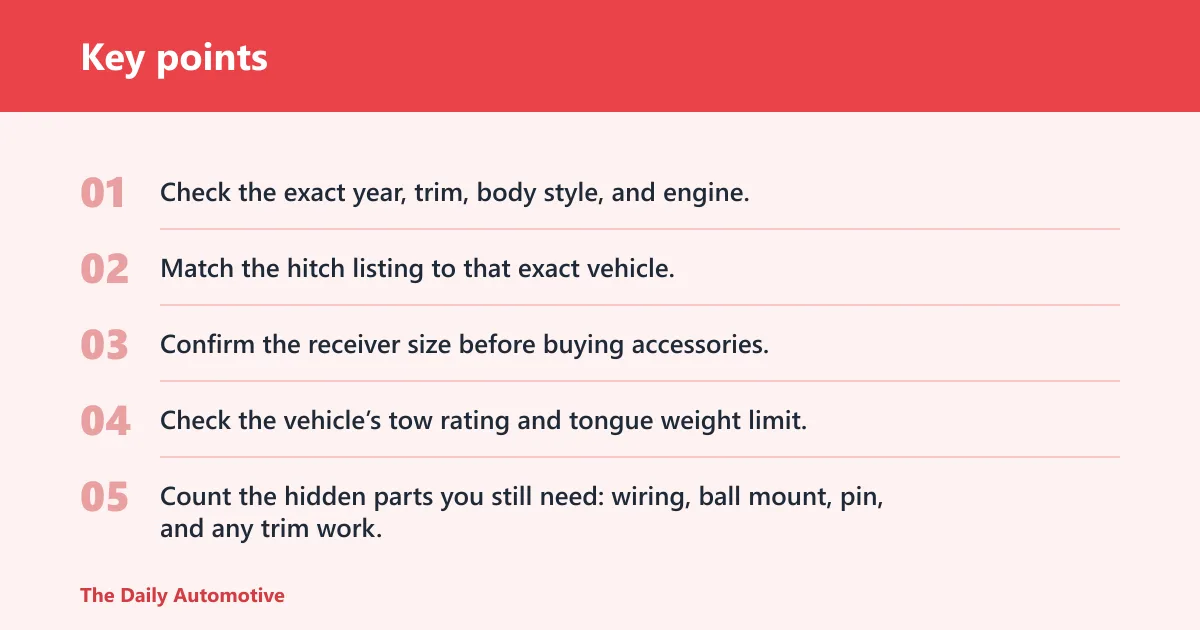
- Check the exact year, trim, body style, and engine.
- Match the hitch listing to that exact vehicle.
- Confirm the receiver size before buying accessories.
- Check the vehicle’s tow rating and tongue weight limit.
- Count the hidden parts you still need: wiring, ball mount, pin, and any trim work.
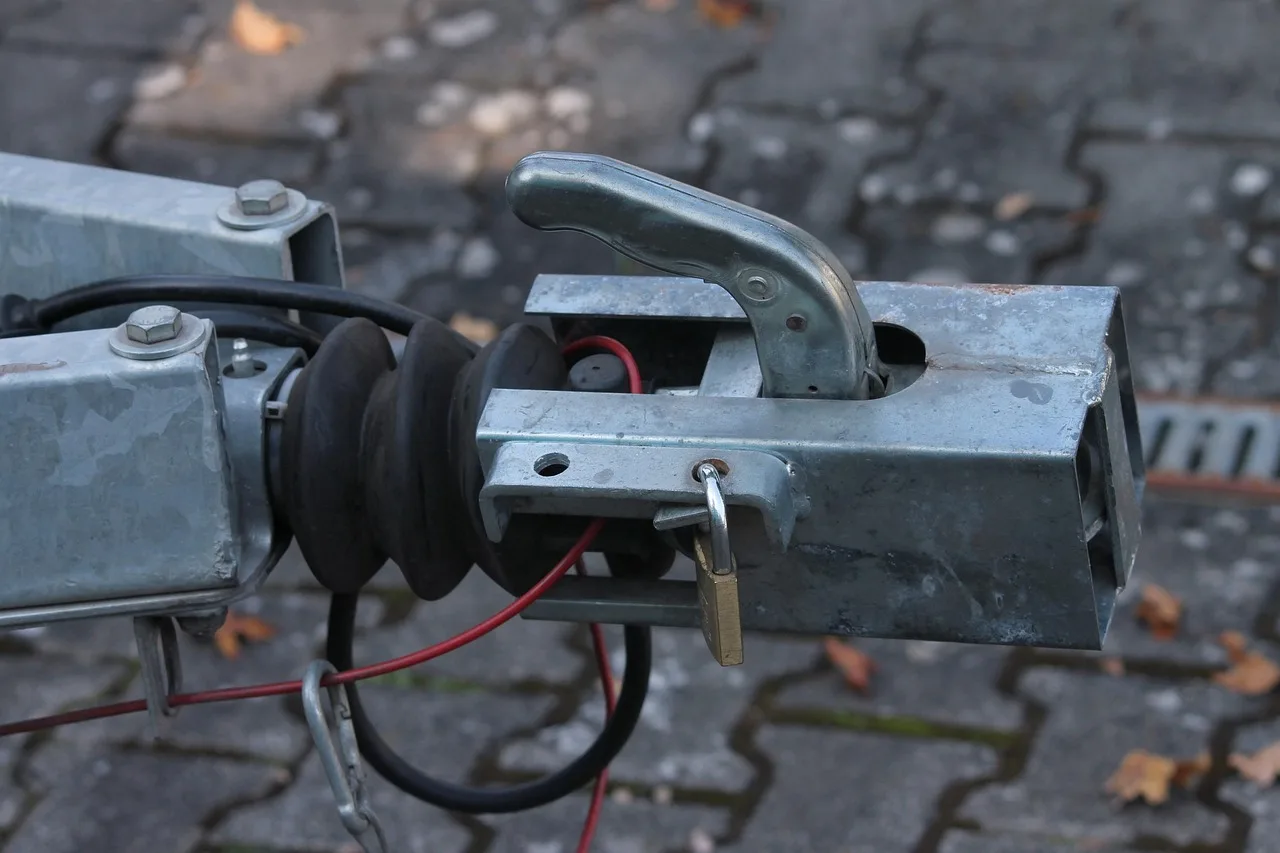
Choose by use case first, not by the biggest receiver you can afford. A 1-1/4 inch receiver is usually the budget answer for small cars because it covers racks and light towing without forcing you into a larger, heavier setup. A 2-inch receiver makes sense when the vehicle is a compact SUV and you need more accessory flexibility.
Receiver size and accessory compatibility
Receiver size drives accessory cost. Many bike racks and small cargo carriers are available in 1-1/4 inch versions, and that keeps the setup cheaper. If you buy 2-inch hardware for a car that only needs a rack, you may spend more on the hitch and still gain nothing useful.
If you need a 2-inch receiver later, buy it only when the vehicle and the use case support it. That avoids paying for an upsized hitch that sits unused under a small sedan.
Tow rating and tongue weight limits
Do not shop by hitch rating alone. The vehicle’s tow rating and tongue weight limit are the real ceiling.
Suppose a compact car can legally tow only a very small trailer, but the hitch on the shelf is rated far above that. The higher number does not make the car safer or stronger. It only means the hitch is stronger than the car.
Installation, wiring, and hidden costs
The hitch price is only part of the bill. Wiring can be required for trailer lights. A ball mount and hitch pin may be separate purchases. Some installs also need trim or bumper clearance work. Labor can matter more on tight underbody layouts where the exhaust or bumper cover sits close to the mounting points.
These extras are why a cheap-looking hitch can cost more than a better-matched one. A clean fit with fewer add-ons often beats a low sticker price that turns into a longer install.
SAE J684 and V-5 testing
Look for product validation against SAE J684 and, where listed, V-5. Those are the safety standards competitors mention for hitch testing. They do not replace vehicle-specific fitment, but they do matter when you compare two otherwise similar hitches.
Do you need a custom-fit hitch?
For most small cars, a custom-fit hitch is usually worth the money because it matches the vehicle’s mounting points and keeps the install cleaner. It is easier to live with when you want a rack or light trailer setup without major modification.
When custom fit is worth the money
Choose custom fit when the car has limited clearance, an exhaust that runs close to the rear mount area, or a bumper shape that leaves little room for improvisation. The right custom fit usually saves time and reduces the risk of visible trimming or odd receiver placement.
When a universal hitch is the wrong buy
A universal hitch is a poor default for a budget-minded small-car owner. It can shift the savings from the product price into labor, fit issues, and clearance problems. If the hitch needs a long list of extra brackets or on-the-fly adjustments, it is usually the wrong buy.
Clearance, exhaust, and bumper fit checks
Before buying, look for three things: ground clearance after installation, exhaust interference, and bumper contact. If the receiver sits so low that the rack will scrape on driveways, the setup is not budget-friendly anymore. If the exhaust or bumper needs clearance work, add that cost before you click buy.
Picture a hatchback owner who only wants a two-bike rack. A 1-1/4 inch custom-fit hitch that sits neatly under the bumper is the better choice than a larger receiver that hangs lower and still does not add legal towing capacity. The right fit saves money and avoids a low-slung setup.
What should you check before buying a hitch for your car?
Check the exact vehicle fit, the receiver size, the vehicle’s tow rating, the tongue weight limit, and the cost of the parts that are not in the box. If the listing does not match your trim or model year, stop there. If it does match, compare the hidden costs before you choose.
That check should also include whether the hitch will interfere with the exhaust, bumper, or spare-tire area, and whether the product is validated to SAE J684 and, where listed, V-5. Those details matter more than a generic “fits most” claim.
Frequently asked questions
What trailer hitch fits a small car on a budget?
A vehicle-specific Class 1 hitch with a 1-1/4 inch receiver is often a budget-friendly safe choice for a small car. It fits the light-duty use case without paying for a bigger receiver you may not need. For select Volkswagen Jetta models, CURT 11540 is one example.
Is a Class 1 or Class 2 hitch better for a small car?
Class 1 is usually better for the smallest cars because it is designed for compact cars, sedans, crossovers, and some minivans. Class 2 is better when you need more tongue weight headroom for racks, cargo carriers, or a small trailer and the vehicle catalog calls for it.
How much tongue weight can a small car hitch handle?
A Class 1 hitch is typically rated for 200 pounds tongue weight. A Class 2 hitch has a 350 pounds tongue weight capacity. The vehicle’s own rating still sets the real limit, so the hitch rating alone is never the full answer.
Do I need a 1-1/4 inch or 2-inch receiver for a small car?
Most small cars do better with a 1-1/4 inch receiver because it matches light-duty racks and small trailers. A 2-inch receiver is more common when the vehicle is a compact SUV and you want more accessory flexibility. Do not buy the larger size unless the vehicle and use case justify it.
Can a small car tow a small trailer with a budget hitch?
Yes, if the car’s tow rating allows it and the hitch matches that rating. A budget hitch does not create towing capacity on its own. You still need the correct wiring, a suitable ball mount, and enough tongue weight margin for safe setup.
How do I know if my car is compatible with a trailer hitch?
Match the exact year, trim, body style, and engine to the hitch listing. Look for fitment notes and exclusions, such as the Hyundai Tucson N Line or Mazda CX-5 diesel examples. Then verify the tow rating, tongue weight limit, and any clearance concerns before you buy.
Are custom-fit hitches easier to install than universal ones?
Usually yes. Custom-fit hitches bolt to the vehicle’s mounting points and are easier to align, while universal hitches can require more adjustment, more labor, and more clearance work. For a budget setup on a small car, custom fit is usually the safer and cleaner choice.
What hitch class is best for a bike rack on a compact car?
For a compact car, a Class 1 hitch with a 1-1/4 inch receiver is usually the best starting point for a bike rack. It keeps the setup light and inexpensive, and it matches the accessory sizes most often used on small cars.
Products related to this article
Sponsored / affiliate links. As an Amazon Associate I earn from qualifying purchases. I may earn additional commission from eligible campaigns.