Engine Coolant Flush Cost Before Winter
A coolant flush before winter usually costs $100 to $250, and a drain-and-fill is often enough unless the coolant is dirty, contaminated, or overdue by the maker’s interval. Skip the wrong service and you can face weak cabin heat, corrosion inside the cooling system, or a frozen, cracked engine. This guide explains what you pay for, when a flush makes sense, and when the cheaper option is the better buy.
What a coolant flush buys


A coolant flush buys fresher coolant, stronger corrosion protection, and better confidence that the coolant-to-water mix can handle winter freeze and boil protection. It also gives a technician a chance to look for leaks, scale, hose aging, and other cooling system issues before cold weather puts extra stress on the system.
Corrosion protection and fluid condition
Coolant, also called antifreeze, does more than transfer heat. Over time, it breaks down chemically, and the corrosion inhibitors lose strength. That matters for the radiator, hoses, water pump, thermostat, heater core, and metal passages inside the engine.
For green coolant, a common service interval is every 3-5 years. For extended-life coolant, the interval is often 5-10 years. Those ranges are a starting point, not a substitute for the owner’s manual. If the fluid looks rusty, sludgy, or oily, condition matters more than the calendar.
Freeze and boil protection through correct concentration
Winter protection depends mainly on the coolant-to-water concentration, not on additives alone. A tester or refractometer can check antifreeze concentration and help confirm whether the mix is ready for cold weather. If the reading is weak, the fix may be a drain-and-fill, a top-off with the correct mix, or a full service if the fluid has aged out.
That is why many shops recommend distilled water for mixing and rinsing. Tap water can leave mineral deposits that build inside passages and reduce long-term reliability. The wrong mix can leave you with weak freeze protection even if the reservoir looks full.
Cooling system parts to inspect first
Before paying for a flush, check the system as a whole. That includes the radiator, hoses, water pump, thermostat, and heater core, plus evidence of leaks, corrosion, or trapped air after prior work. A flush will not fix a failed thermostat or a leaking hose.
A common first-timer mistake is paying for fluid service when the real issue is air trapped in the system. That can cause weak heat or an overheating warning after service, and the repair bill only grows if the root cause is ignored.
When is a flush worth it before winter?
A flush is worth it before winter when the coolant is overdue, the test result shows weak freeze protection, or the fluid is visibly contaminated. If the system has a history of overheating or neglected maintenance, a full flush and inspection are usually worth more than a quick top-off.
Overdue service by coolant type
If the car still uses green coolant and it has been near or beyond 3-5 years, a flush moves from optional to sensible. If it uses extended-life coolant and it is approaching 5-10 years, the same logic applies. Old fluid can still move heat, but it may no longer protect the cooling system well enough for winter.
Low freeze protection on a tester
If a coolant tester or refractometer shows weak antifreeze concentration, you have a winter risk even if the engine runs fine today. A drain-and-fill may be enough when the fluid is otherwise clean. If the coolant is dirty or mixed with the wrong type, a fuller service is the safer buy.
Contaminated coolant or overheating history
Milky, rusty, gritty, or oily coolant points to contamination. So does a recent overheating event, especially if the car lost heat or pushed coolant out of the reservoir. In those cases, the flush is partly a cleanup step and partly a risk check for the radiator, thermostat, hose seals, and water pump.
Suppose a midsize sedan has brown coolant, weak cabin heat, and a past overheating warning after a highway climb. A cheap top-off would miss the cause. A full flush plus inspection is the better decision because the fluid condition and the history both point to higher winter risk.
Coolant flush cost table
This table separates the symptom or risk from the service that usually fits best. The point is to buy the lightest service that solves the problem. That keeps you from paying flush prices when an inspection or drain-and-fill is enough.
| Symptom or risk | Likely service needed | Cost-sensitive owner advice |
|---|---|---|
| Overdue service | Drain-and-fill or full flush | If the coolant is past the interval but still clean, ask whether a drain-and-fill is enough before paying for a full system flush. |
| Low freeze protection | Inspection, then drain-and-fill or flush | Use a tester first. If the mix is weak but the fluid is clean, avoid paying for extra cleaning you do not need. |
| Contaminated coolant | Full flush | Dirty, rusty, or oily coolant usually needs more than a partial exchange. Expect the higher quote only when the fluid condition justifies it. |
| Overheating history | Inspection, then full flush if needed | Do not buy fluid service before the cause is checked. A failed thermostat or leak can make a flush a short-lived fix. |
| Service before first freeze | Inspection or drain-and-fill | If the coolant is in good shape, the cheapest safe option may be a concentration check and a small correction, not a full flush. |
How much should you expect to pay?
For shop service, a coolant flush cost can be $100-$200 at a shop, and the winter-ready total may run higher if the vehicle needs extra labor, special coolant, or disposal fees. DIY coolant flush cost is about $30, while AmpAuto lists a broader DIY materials estimate of $25-50.
Shop price versus DIY parts cost
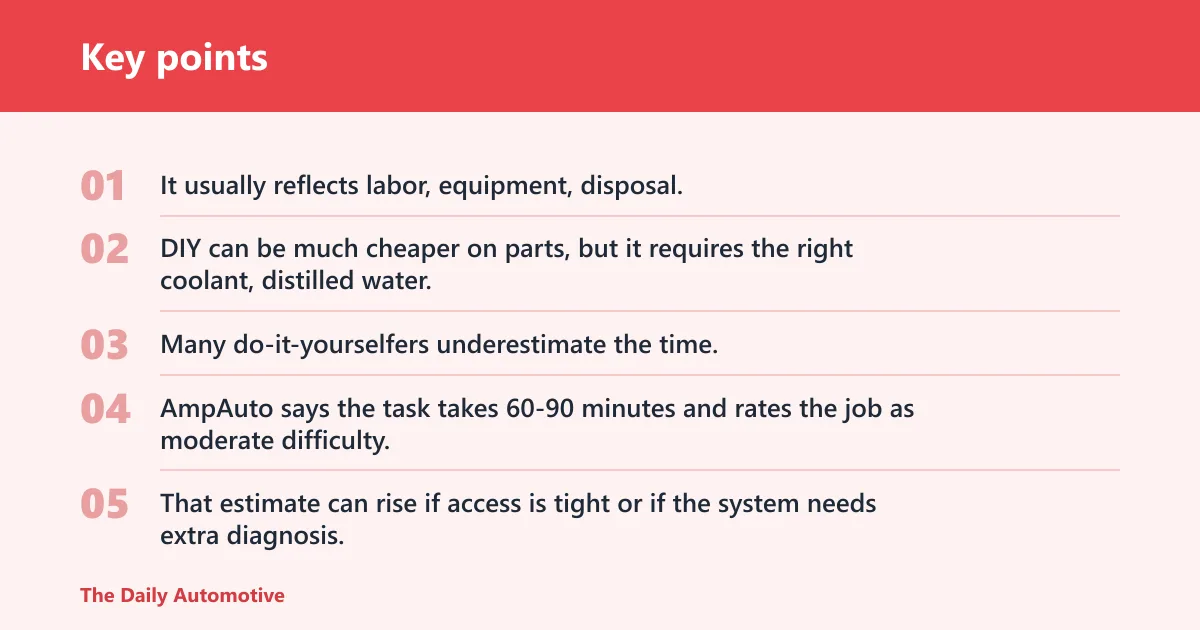
The shop quote is not just fluid. It usually reflects labor, equipment, disposal, and the chance that the technician must spend time checking for leaks or trapped air. DIY can be much cheaper on parts, but it requires the right coolant, distilled water, the correct tools, and time.
Many do-it-yourselfers underestimate the time. AmpAuto says the task takes 60-90 minutes and rates the job as moderate difficulty. That estimate can rise if access is tight or if the system needs extra diagnosis.
Vehicle segment price bands
Pricing tends to climb with vehicle complexity. A simple sedan with easy access usually sits near the lower end of the shop range. Trucks, performance vehicles, and some newer cars with less accessible cooling hardware often cost more because labor time and refill procedures take longer.
Imported models can add another wrinkle if the correct OEM-spec coolant is pricier than a universal product. That does not mean you should skip the correct fluid. It means the quote should spell out what coolant is being used and why.
Add-ons that change the quote
Watch for line items such as diagnostic time, pressure testing, coolant type premiums, and disposal fees. These are not always bad charges. They simply change the final bill, and they should be explained before the work starts so the quote does not jump after the car is already in the bay.
Drain-and-fill or full flush?
A drain-and-fill is often enough when the coolant is clean, the vehicle is on schedule, and the goal is winter concentration correction. A full flush makes more sense when the fluid is dirty, mixed incorrectly, or overdue enough that you want to replace as much old coolant as the system allows.
When a drain-and-fill is enough
Choose the cheaper service when the fluid looks clean, the tester shows acceptable freeze protection, and the service interval is not far past due. The same source notes that a basic drain-and-fill replaces about 50% of the coolant, so it is best used as maintenance rather than rescue work.
That makes sense for a car that just needs a concentration adjustment before the first freeze. It is a price-conscious move when the system is otherwise healthy.
When a full flush makes sense
A full flush is the better buy when the coolant is contaminated, badly aged, or likely mixed with the wrong fluid. The same source says a true flush can replace 95%+ of coolant, which is why it is used when the old fluid needs to be pushed out more completely.
Use the higher-cost service for contamination or overdue maintenance, not just because winter is close. Otherwise, you may pay for more cleaning than the vehicle needs.
When inspection beats service
If the owner’s manual says the coolant is still within interval and a tester confirms good freeze protection, inspection may be enough. That is especially true when the car has no leaks, no overheating history, and no sign of contamination. Spend the money only where the risk is real.
What changes the price?
The biggest price drivers are coolant spec, labor access, diagnostics, and disposal. Two cars can need the same winter protection and still receive very different quotes because one uses expensive OEM coolant or needs more time to reach the system safely.
Coolant type and OEM spec
Green coolant, extended-life OAT coolant, and HOAT formulas are not interchangeable in every vehicle. The owner’s manual should decide the product, not the shelf label. If the correct coolant costs more, that premium is part of the quote because the wrong coolant can shorten service life or cause compatibility problems.
Diagnostics, disposal, and labor
Some shops bundle testing into the job; others charge separately. Disposal fees may also appear if the old coolant is heavily contaminated. Labor goes up when the system is hard to access, when refilling is slow, or when the technician must spend extra time checking for leaks and air pockets.
Shop equipment and access
Modern cooling systems may not have an easy-to-reach drain point, and some vehicles require more careful bleeding than others. That is one reason a quote from a quick-lube bay may differ from a dealership or independent repair shop. The setup changes how long the job takes and how much attention the refill needs.
Winter timing and service checks
Schedule the service before the first hard freeze, not after the weather turns. In places that regularly see sub-zero lows, the margin for error can disappear quickly. If you are unsure of the interval, check the manual or test the coolant annually before winter starts.
Check the owner’s manual or test annually
The manual should tell you the correct coolant type and service interval. If the interval is unclear, annual testing is a smart winter habit. That check can tell you whether you need a top-off, a drain-and-fill, or a full flush before the coldest weather arrives.
Use distilled water and the right mix
Distilled water is preferred for flushing and mixing because it avoids mineral deposits. Tap water can leave behind scale that narrows passages over time. The actual freeze and boil protection still depends on the final concentration, so the mix must be right, not merely fresh.
Burping air with a no-spill funnel
A no-spill coolant funnel helps fill and bleed the system while reducing spills and trapped air. Air pockets can still purge during the first week after service, so a small level change after the job is not unusual. That does not mean the system failed, but it does mean the level should be checked again as directed for that vehicle.
Picture a compact SUV that gets a pre-winter drain-and-fill in October. The coolant is clean, the tester reads well, and the only change is fresh concentration. That is a lower-cost, lower-risk choice than a full flush because the system does not show signs of contamination or overheating trouble.
Frequently asked questions
How much is an engine coolant flush?
A coolant flush cost can be $100-$200 at a shop, with higher totals if the vehicle needs special coolant, diagnostics, or extra labor. DIY coolant flush cost is about $30, and AmpAuto lists a broader DIY materials estimate of $25-50. The final bill depends on vehicle access and coolant spec.
When to get a coolant flush?
Get a flush when the coolant is overdue, contaminated, or showing weak freeze protection, especially before the first freeze. Green coolant is commonly changed every 3-5 years, while extended-life coolant often lasts 5-10 years. If the car has overheating history, inspection should come first.
Coolant change vs flush
A drain-and-fill or coolant change is the lighter service. It is usually the better value when the coolant is clean and the goal is to refresh concentration before winter. A full flush is the better choice when the coolant is dirty, mixed, or badly aged and needs a more thorough exchange.
What does a coolant flush cost?
The usual shop price is $100-$200, but the quote can rise with vehicle complexity, OEM coolant, disposal, and diagnostic time. If the system only needs a simple concentration correction, a drain-and-fill may cost less and still solve the winter problem.
How much should coolant flush cost?
For a typical shop visit, $100-$200 is a reasonable planning range. If the quote is much higher, ask what is included: coolant type, testing, disposal, labor, and access issues. That tells you whether you are paying for a true flush or for extra services bundled into the job.
Why get a coolant flush?
Get a flush to restore corrosion protection, renew winter freeze protection, and reduce the risk of cooling-system damage from old or contaminated coolant. It can also reveal leaks or other issues before cold weather makes them worse. If the fluid is still healthy, though, a cheaper service may be enough.
Products related to this article
Sponsored / affiliate links. As an Amazon Associate I earn from qualifying purchases. I may earn additional commission from eligible campaigns.