Car Window Sunshade Price: What to Expect by Fit
Yes, buy for fit first if you need daily coverage. A cheap universal panel can work for occasional parking, but poor coverage, glare leaks, and awkward storage can turn a bargain shade into dead weight. The better value is the least expensive shade that fits your windshield, side glass, or roof opening closely enough to stay in use.
Price verdict by fit


What the cheapest shade buys you
The lowest price usually gets you a universal panel or a simple reflective fold-up shade. That can be enough for a parked commuter car, an older sedan, or a one-off summer trip. The tradeoff is fit variation, one size will often leave gaps, sag at the edges, or need extra tucking.
When the premium is worth it
Pay more when you want daily convenience, exact coverage, or a vehicle with a large windshield, panoramic roof, or sensitive rear-seat area. A custom-fit windshield sunshade is priced at $19.90 sale price on multiple vehicle listings, with $24.90 shown as the regular price on several custom-fit shades. That premium buys vehicle-specific coverage, not just a shinier material.
How to read price against coverage
Compare the price to the area covered, not the category label alone. A single-piece universal shade can be cheaper, but a custom-fit panel may cover the full glass area better and store more neatly. If a shade must cover a windshield, rear side window, or glass roof precisely, fit quality matters more than a small price gap.
| shade type | typical price band | best use case | common failure mode |
|---|---|---|---|
| Custom-fit windshield sunshade | $19.90 to $24.90 | Daily parking, exact make-model-year fit, better edge coverage | Wrong trim or model year, leading to gaps |
| Universal sunshade | $5 to $20 | Budget parking protection, occasional use, backup shade | Size variability and poor coverage at the corners |
| Side window sunshade | $10 to $30 | Rear-seat and baby use, passenger comfort, daytime blocking | Suction or static failure, or partial coverage |
| Glass roof sunshade | $20 to $50 | Panoramic roof heat reduction and overhead glare control | Incorrect sizing for roof shape or rails |
Pros and cons
Pros of custom-fit shades
- Better edge coverage for a specific vehicle make-model-year.
- Less glare leakage around the mirror, A-pillars, and top corners.
- More predictable storage when the shape folds to the glass outline.
- Usually a better buy for daily parking and repeat use.
Pros of universal shades
- Lower entry price.
- Easy to replace if one is lost or worn out.
- Fine for short-term use, rental cars, or a spare shade.
- Often available in foldable reflective formats that store flat.
Common tradeoffs by material and mount
Reflective sunshade material sends sunlight back out through the glass and helps cut UV exposure, but the format matters. Foldable panels are easy to store. Roller shades pack differently. Sticker-style or film formats may fit side glass better, but they can be less flexible to remove and reuse. Suction mounts can fail in heat, which leaves gaps or a dropped shade.
How much does a car window sunshade cost?
Car window sunshade prices vary by window location, fit style, and mounting method. Windshield shades usually sit in the lowest-to-middle price band, side-window shades can rise when they are shaped for child seating areas, and panoramic-roof shades cost more because they need vehicle-specific sizing. Sale pricing can also change the final bill.
Windshield shade price bands
Basic universal windshield shades usually start near the low end of the market, while custom-fit options often land higher because they are matched to a specific vehicle. For several custom-fit listings, the sale price is $19.90 and the regular price shown is $24.90. That is a modest premium for a much tighter fit.
Side-window shade price bands
Side-window sunshades often cost more than the cheapest windshield panels because they may use suction cups, mesh, clip-on frames, or static cling. Rear-seat coverage for baby use is usually the most demanding case. Full coverage and stable attachment matter more there than a low sticker price.
Glass roof shade price bands
Glass roof shades often cost the most because panoramic roofs vary widely by size and contour. They are bought mainly to cut overhead heat and reduce bright top-down glare. Vehicle-specific sizing is often worth extra cost, especially on vehicles with large roof glass or split roof panels.
Car sunshade price and fit guide
Custom-fit windshield sunshade
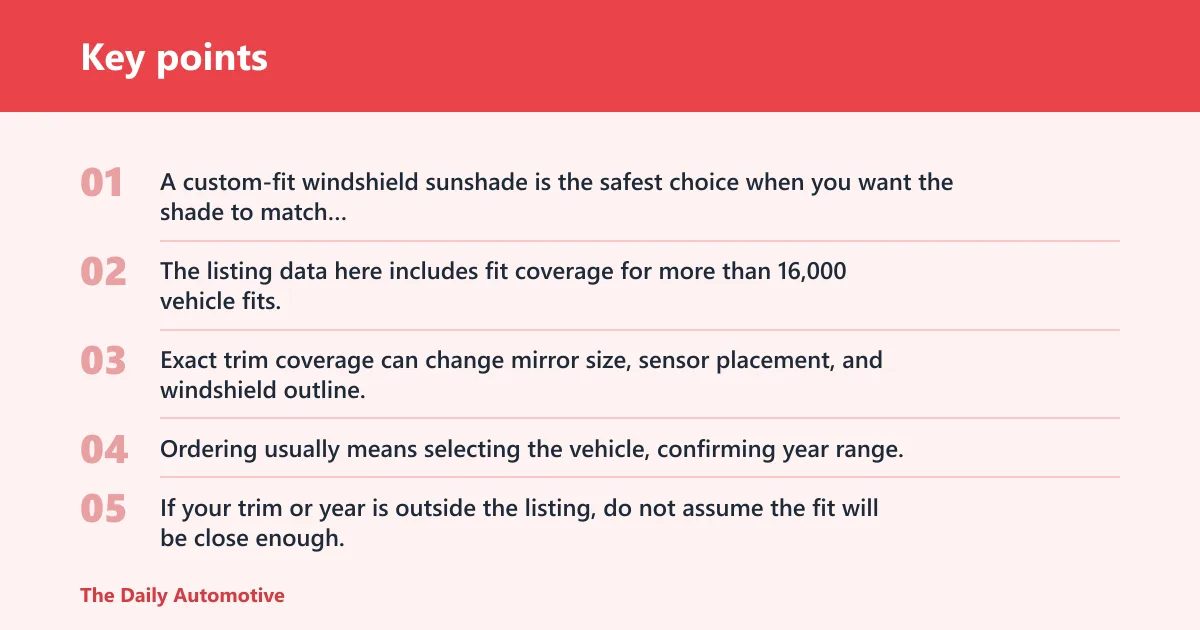
A custom-fit windshield sunshade is the safest choice when you want the shade to match the exact glass shape on a specific vehicle. The listing data here includes fit coverage for more than 16,000 vehicle fits, and examples such as the 2018-2024 Toyota Camry, 2021-2025 Nissan Rogue, 2022-2026 Honda Civic, 2018-2025 Honda Accord, 2018-2026 Chevrolet Equinox, and 2020-2025 Ford Explorer.
That make-model-year detail matters. Exact trim coverage can change mirror size, sensor placement, and windshield outline. Ordering usually means selecting the vehicle, confirming year range, then checking trim notes before checkout. If your trim or year is outside the listing, do not assume the fit will be close enough.
Universal sunshade
A universal sunshade is the lower-cost alternative. It works best when you care more about broad sun blocking than perfect edge-to-edge coverage. It is a good fit for spare use, short errands, or a second car where perfect coverage is not worth the premium.
The tradeoff is variability. A universal panel may be too tall, too narrow, or awkward around the mirror and dash. If the shade is hard to position, it can end up covering less glass than the product photos suggest.
Side window and glass roof fit differences
Side-window sunshade is the category most often used for rear-seat and baby protection. Coverage level matters because a child seat sits low and sun can move across the glass during the drive. Look for a shade that covers most of the window and uses a stable mount such as suction cups, static cling, or a frame built for the window opening.
Glass roof sunshade is different again. It is not about windshield-style width; it is about panoramic-roof compatibility and heat reduction from above. A roof shade that is off by even a little can leave exposed strips that still admit strong overhead light.
Say your SUV has a large panoramic roof and a third-row child seat. A universal windshield shade may be fine for parking, but it will not solve the overhead heat source. In that case, a vehicle-specific roof shade is the better buy, even if the price is higher.
Do you need a sunshade if you have tinted windows?
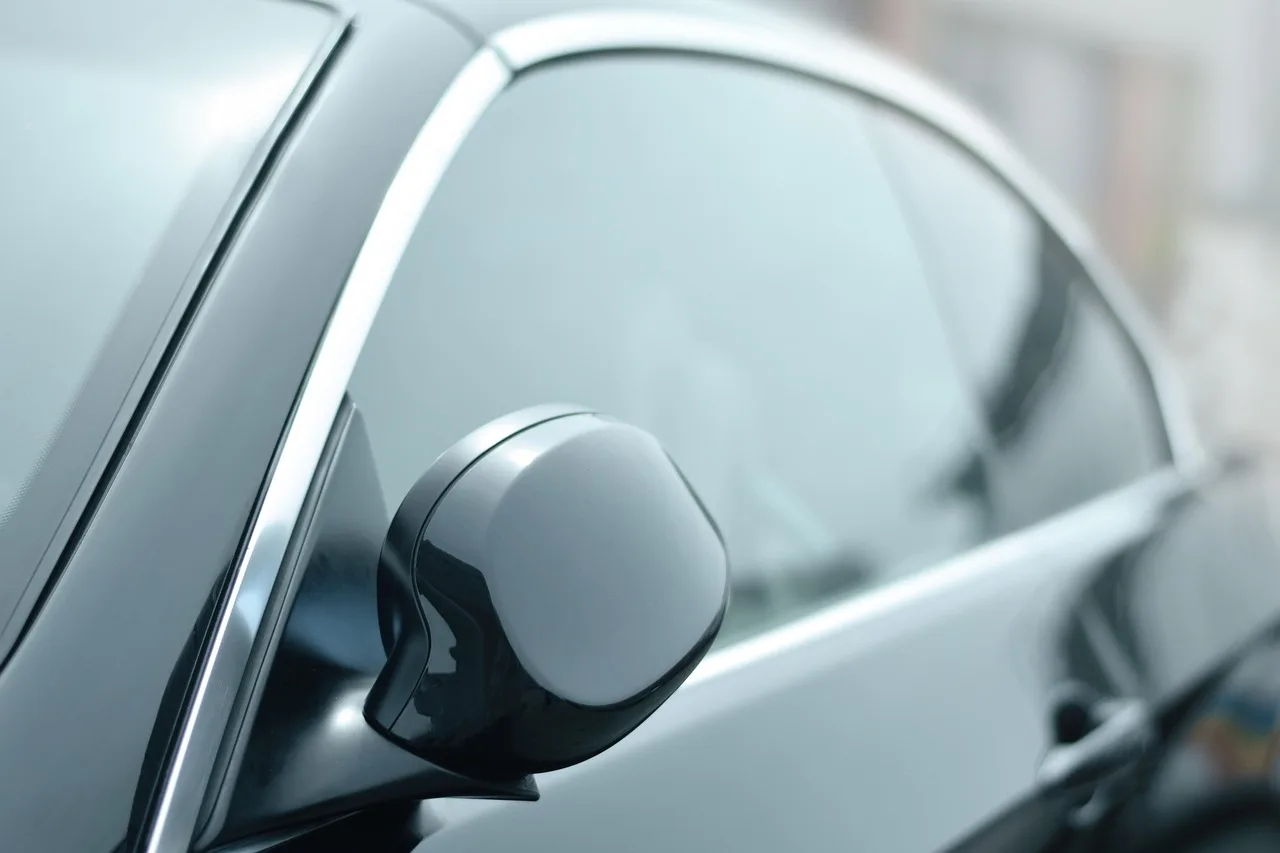
Tint helps with glare and some solar gain, but it does not make a shade pointless. Tint reduces visible light and may help with UV or heat depending on the film, yet the cabin can still heat up through the windshield, roof glass, and side glass. A shade still makes sense for parked cars and child seating areas.
What tint helps
Tint can make the cabin less harsh in bright sun and may reduce direct glare on passengers. It is useful while driving and while parked. If the film is legal and properly applied, it can also improve comfort without adding bulk or storage issues.
Where tint still leaves heat or glare
Even with tinted windows, the windshield often remains the biggest heat source. Roof glass can also pour in light from above. That is where reflective sunshade material helps by sending sunlight away and adding a second barrier. A shade plus tint usually gives more protection than tint alone.
When a shade still makes sense
If you park outdoors, carry a baby, or drive a vehicle with a large greenhouse area, a shade still earns its place. Some markets also regulate shade use, tint level, or reflective films differently. Are car window shades legal in India? Rules can vary by state and by whether the product is used while parked or while driving, so local regulations should be checked before buying a permanent side-window product.
Who it’s for
Drivers with exact make-model-year fit needs
This suits drivers who want a custom-fit windshield sunshade and know their vehicle details. It is the better pick when you want the shade to match the windshield outline and you plan to use it often. It is not the best choice if your vehicle changes frequently or if you only need occasional sun blocking.
Parents needing rear-seat and baby shade
Parents should look closely at side-window sunshade options, not only windshield panels. Rear-seat coverage helps reduce direct light on baby seats and keeps the cabin more comfortable. A shade that fits the rear window shape and stays attached matters more than the lowest price.
Owners of panoramic roofs or large cabins
Vehicles with big roof glass or expansive cabins benefit most from model-specific roof and windshield shades. The added glass area often justifies spending more for exact sizing. If you only need a quick spare shade for a compact car, a universal panel can be enough.
Where to buy and what to check
Shipping threshold and free-shipping minimums
Ordering online often changes the real price. This store offers free shipping for orders over $35, so a single low-cost shade may not qualify. That can make a second item, such as a side-window shade, worth adding if it pushes the order past the threshold.
Money-back guarantees and return windows
Risk matters when fit is vehicle-specific. The store advertises a 30-day money-back policy and hassle-free returns, which lowers the risk of buying online when you are unsure about fit. A return window helps if the shade arrives and does not match the mirror cutout, roof shape, or side glass dimensions.
Ordering workflow for make-model-year fitment
- Confirm the exact make, model, year, and trim.
- Check whether the listing names windshield, side window, or roof coverage.
- Read fit notes for sensors, mirrors, and panoramic roof variants.
- Compare the final cart total against the $35 free-shipping threshold.
- Buy custom-fit when the vehicle sees daily use or when gaps would be a problem.
Picture a 2024 SUV with a split panoramic roof and a rear-facing baby seat. A cheap one-size windshield shade might protect the dash, but it leaves the roof glass untreated and the rear window area too exposed. In that case, spending more on the right fit is cheaper than buying twice.
How to make sun shades for car windows
Home-made shades can be cut from reflective material or stiff board and finished with suction cups, magnets, or static cling, but the result is usually less durable than a purchased product. The biggest risks are poor coverage, sharp edges, and failure to meet the window shape. For daily use, buying the right fit is usually smarter.
Frequently asked questions
Do you need a car window shade for baby?
Often yes. Rear-seat and baby use is one of the strongest reasons to buy side-window sunshades because the child sits low and direct sun can move across the window during a drive. Stable fit and broad coverage matter more than the lowest price.
Where to buy sun shades for car windows?
Buy from sellers that list your exact make-model-year, show the covered window type, and explain return terms clearly. Check shipping thresholds too. If the cart is just under free shipping, adding a second shade can be cheaper than paying postage on a single item.
Why use a windshield sun shade?
A windshield shade blocks direct sun, lowers cabin heat buildup, and helps protect dashboards, trim, and electronics from prolonged sun exposure. It is most useful for parked cars in hot weather. A custom-fit panel usually gives better coverage than a generic one.
Are car window shades legal in India?
Legal treatment can vary by product type and use. Rules may differ for driving versus parking, and tint or opaque covers can face stricter limits than removable sunshades. Check local regulations before buying a permanent side-window or windshield product for road use.
Products related to this article
Sponsored / affiliate links. As an Amazon Associate I earn from qualifying purchases. I may earn additional commission from eligible campaigns.