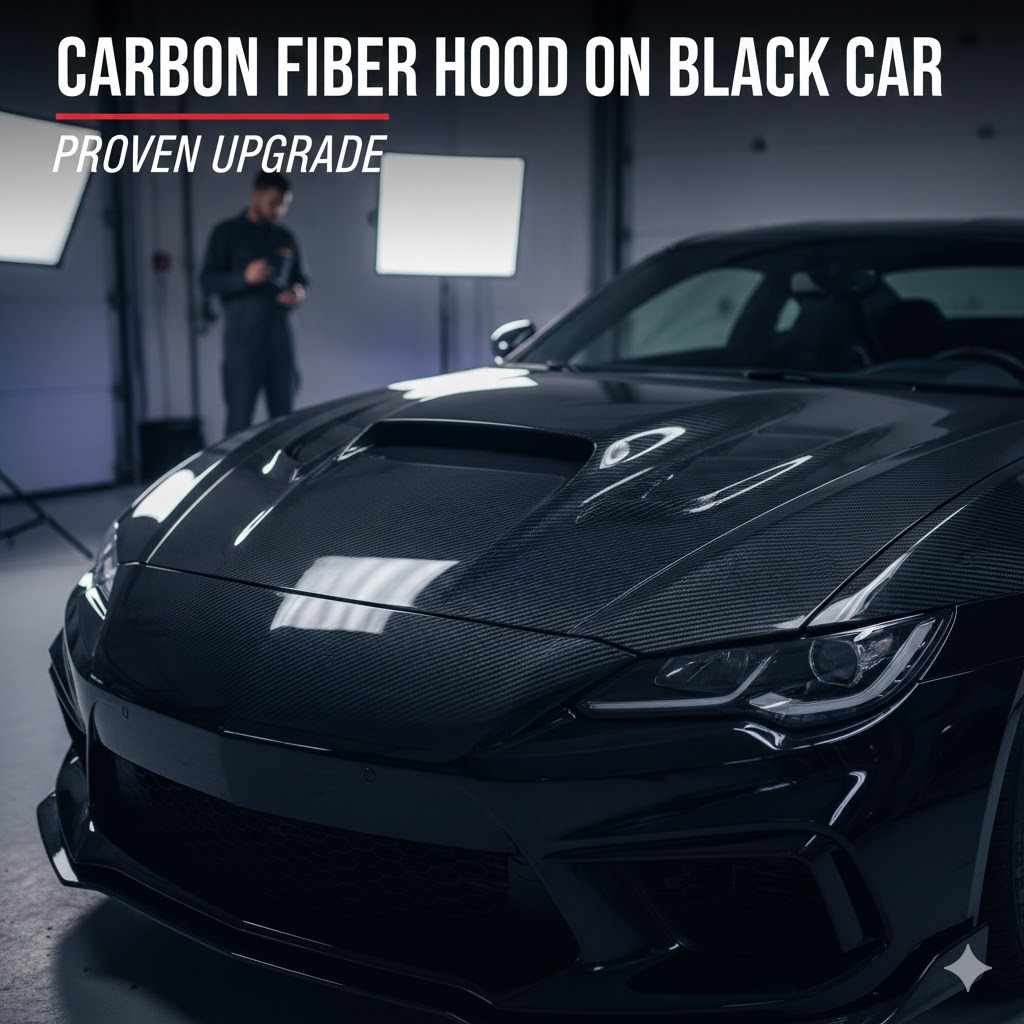
Carbon Fiber Hood on Black Car: Proven Upgrade
A carbon fiber hood on a black car is a proven upgrade because it sharply contrasts with the dark paint, adding an aggressive, high-performance look while significantly reducing weight for better handling and cooling. Installation is simple with the right tools.
If you own a black car, you know how sleek and powerful it looks. But sometimes, even the deepest black finish needs a little something extra to stand out. Many car owners consider swapping their heavy factory hood for a lightweight carbon fiber version. This change isn’t just about looks; it’s a smart performance move.
You might worry it’s too complicated or that the look won’t match, but I’m here to show you why the carbon fiber hood on black car combination is a classic winner. We will break down the benefits, the installation process, and how to keep that stunning new hood looking perfect. Let’s dive into making your ride even better!
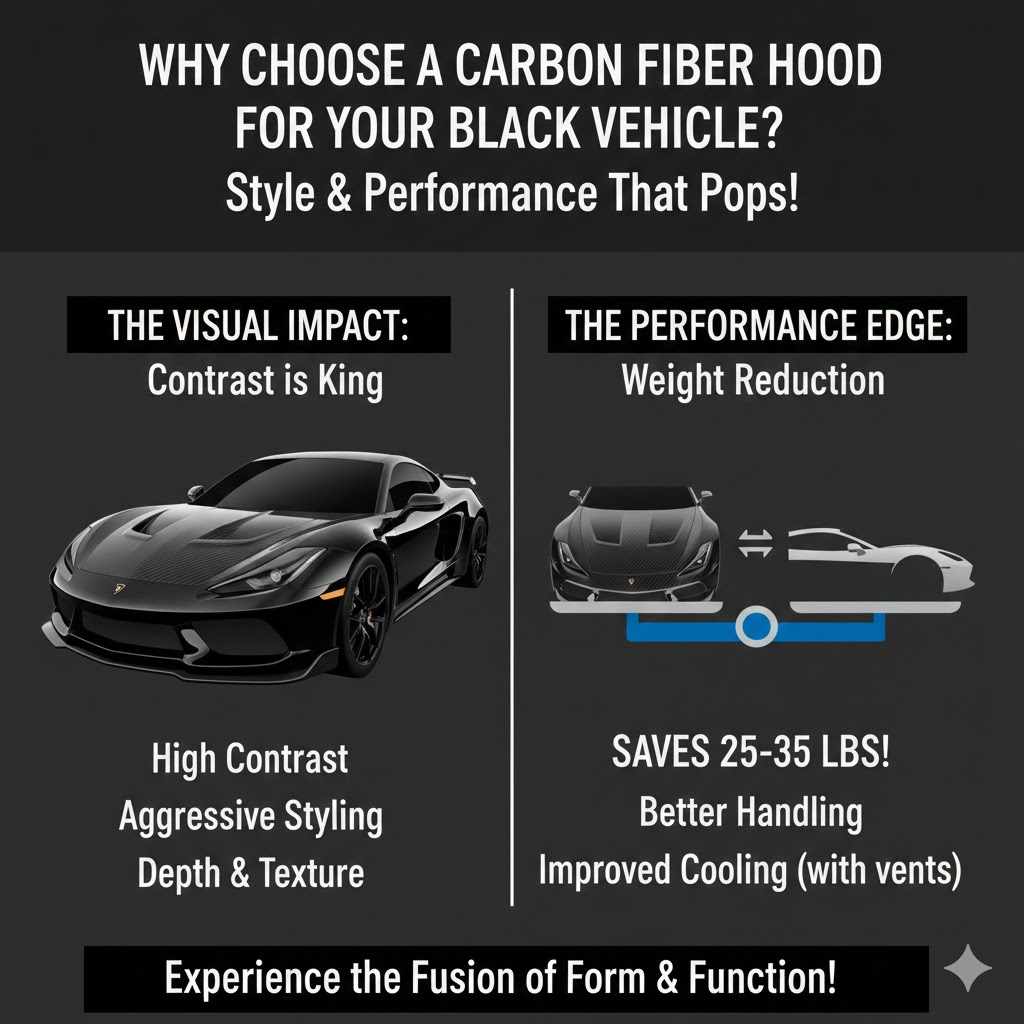
Why Choose a Carbon Fiber Hood for Your Black Vehicle?
Choosing carbon fiber isn’t just picking a part; it’s investing in both style and function. When paired with black paint, the unique weave of carbon fiber creates an incredible visual impact that factory parts simply cannot match.
The Visual Impact: Contrast is King
Black paint is the ultimate canvas. It absorbs light, making the intricate, woven pattern of carbon fiber “pop” like nothing else.
High Contrast: The deep, often glossy black exterior provides a perfect backdrop for the matte or clear-coated carbon fiber. This contrast draws the eye immediately to the hood.
Aggressive Styling: Carbon fiber is instantly associated with racing and high-performance tuning. Adding this component gives your car an immediate track-ready appearance.
Depth and Texture: Unlike a painted hood, carbon fiber has visible texture. On a black car, this texture catches the light at different angles, adding a layer of visual interest that flat paint cannot achieve.
The Performance Edge: Weight Reduction
This is where the “proven upgrade” aspect really shines. The hood is one of the largest, heaviest body panels on your car.
A factory steel or aluminum hood can weigh anywhere from 35 to 55 pounds. A comparable carbon fiber hood often weighs between 10 and 20 pounds. That’s a massive weight saving right off the top of your car!
Why does weight reduction matter?
1. Better Handling: Less weight up high and forward means a lower center of gravity. This helps the car feel flatter in corners and more responsive when turning.
2. Improved Cooling: Many aftermarket carbon hoods feature functional vents. These aren’t just for looks; they help extract hot air from the engine bay, which is vital for performance driving or just hot summer days.
3. Aesthetics Meets Function: You get the race-car look and the race-car benefit simultaneously.
Understanding Carbon Fiber: What Are You Buying?
Before you purchase, it helps to know what carbon fiber actually is and what quality looks like. Carbon fiber reinforced polymer (CFRP) is made by weaving carbon threads together and setting them in a resin matrix.
Types of Finishes for Your Black Car
The way the carbon fiber is finished heavily influences how it looks against black paint.
| Finish Type | Description | Best For Black Cars | Maintenance Level |
|---|---|---|---|
| 2×2 Twill Weave | Most common pattern; tight basketweave look | Excellent contrast; traditional performance style | Moderate (requires UV protection) |
| Forged Carbon | Irregular, marbled pattern; modern and high-end | Subtle, unique texture that complements deep black | Moderate to high (more prone to minor scratches) |
| Gloss Finish | Deep clear coat with high shine | Matches black paint for a deep, wet look | High (needs careful washing) |
| Matte Finish | No glossy clear coat; light-absorbing | Stealthy, subtle contrast for flat/satin black | Lower (hides minor swirl marks) |
OEM vs. Aftermarket Quality
When looking for a carbon fiber hood on black car, you will encounter two main quality tiers. Always prioritize quality for safety, as the hood must latch securely.
OEM Replacement: This is a direct replacement for your factory hood using carbon fiber construction. Usually highest fitment quality.
Aftermarket/Tuning Style: These often feature more aggressive scoops, vents, or wider profiles. Fitment can vary, so always check reviews.
Always ensure the manufacturer follows proper curing processes. Poorly made carbon fiber can delaminate or yellow quickly, especially when exposed to sun—a major issue on a black car that absorbs more heat. For durability tips, resources like those from reputable university material science departments often detail the importance of UV inhibitors in clear coats.
Step-by-Step: Installing Your Carbon Fiber Hood
Installing a new hood can seem daunting, but it is often one of the most accessible bolt-on modifications you can do yourself. We are focusing on a direct bolt-on replacement here, not a complex fiberglass molding project.
Tools You Will Need
Gathering your tools first makes the process smooth and prevents frustrating stops mid-job.
Socket wrench set (Metric and/or SAE, depending on your car).
Basic hand tools (Screwdrivers, pliers).
Trim removal tools (Plastic pry bars to avoid scratching paint).
A helper (Hoods are awkward and sometimes surprisingly light, but a second person is safer).
Painter’s tape or soft blankets (To protect your fenders).
Phase 1: Preparation and Removal of the Old Hood
Safety first! Ensure your car is parked on level ground, the engine is off, and the parking brake is firmly set.
1. Protect the Paint: This is critical. Lay soft towels or blankets over the fenders near the hinges and latch area. A misplaced tool can instantly chip the black paint finish.
2. Disconnect Components: If your old hood has wiring (for the hood alarm sensor or washer fluid lines), carefully disconnect them. Washer lines usually just pull off the nozzle.
3. Unbolt the Hinges: Locate the hinges where the hood connects to the chassis. You will typically have two or three bolts on each side. It is highly recommended to have your helper support the hood as you remove the final bolt on one side.
4. Remove the Old Hood: With the helper supporting the weight, carefully lift the old hood away from the car and set it safely aside.
Phase 2: Transferring Hardware
New carbon fiber hoods often do not come with all the small necessary parts pre-installed.
1. Transfer Latch and Striker: The latch mechanism and the striker (the U-shaped metal piece that locks into the latch) must usually be moved from the old hood to the new one. Carefully unbolt these components.
2. Transfer Seals and Bump Stops: Remove the rubber weather stripping and the small rubber or plastic hood bump stops (the things that keep the hood from rattling). Transfer them to the corresponding mounting points on the new carbon fiber hood. Proper adjustment of the bump stops is key for a tight, rattle-free fit.
Phase 3: Installing the Carbon Fiber Hood
This is where the magic happens!
1. Position the New Hood: With your helper, carefully lower the carbon fiber hood onto the car, aligning the hinge mounting holes with the holes on the chassis.
2. Start the Bolts: Hand-tighten all hinge bolts slightly. Do not fully tighten them yet.
3. Adjust Alignment: Before tightening, you need to align the hood so the gaps (panel gaps) around the fenders and bumper are even. This usually requires slight shifting from side to side. Open and close the hood gently multiple times to check the alignment with the latch.
4. Final Tightening: Once the gaps look perfect, tighten the hinge bolts securely. Reconnect any wiring or fluid lines you disconnected earlier.
5. Check Latch Operation: Test the latch mechanism thoroughly before driving. Have someone hold the hood down while you pull the release lever inside the car to ensure it opens and closes smoothly.
Maintaining That Show-Stopping Look on Black Paint
A carbon fiber hood on black car is a magnet for attention, which means it needs extra care to keep that contrast sharp and prevent sun damage.
UV Protection: Non-Negotiable for Carbon Fiber
The resin that binds the carbon fibers is extremely vulnerable to ultraviolet (UV) rays. UV damage causes the clear coat to turn yellow or hazy (oxidation), which looks terrible against deep black paint.
Invest in Quality Clear Coat: If your hood didn’t come with a high-quality, UV-inhibited clear coat, consider applying one immediately.
Use Ceramic Coating: Applying a ceramic coating (like those used on paint) provides superior, long-lasting UV blockage and makes washing much easier. A good ceramic coating adds depth and shine to the weave.
Washing Techniques: Always use the two-bucket method when washing a black car. This prevents swirl marks, which show up easily on both the black paint and the clear coat of the hood. Use pH-neutral soap.
Dealing with Heat Soak
Black cars already absorb more heat than lighter colors. Carbon fiber hoods, especially those with vents, help dissipate engine heat. However, if you have a high-performance setup, you might still notice heat affecting the clear coat over time.
A common solution, particularly popular among enthusiasts tracking their cars, is using specialized heat shielding tape or blankets on the underside of the hood to manage radiant heat directed upwards, protecting the resin structure.
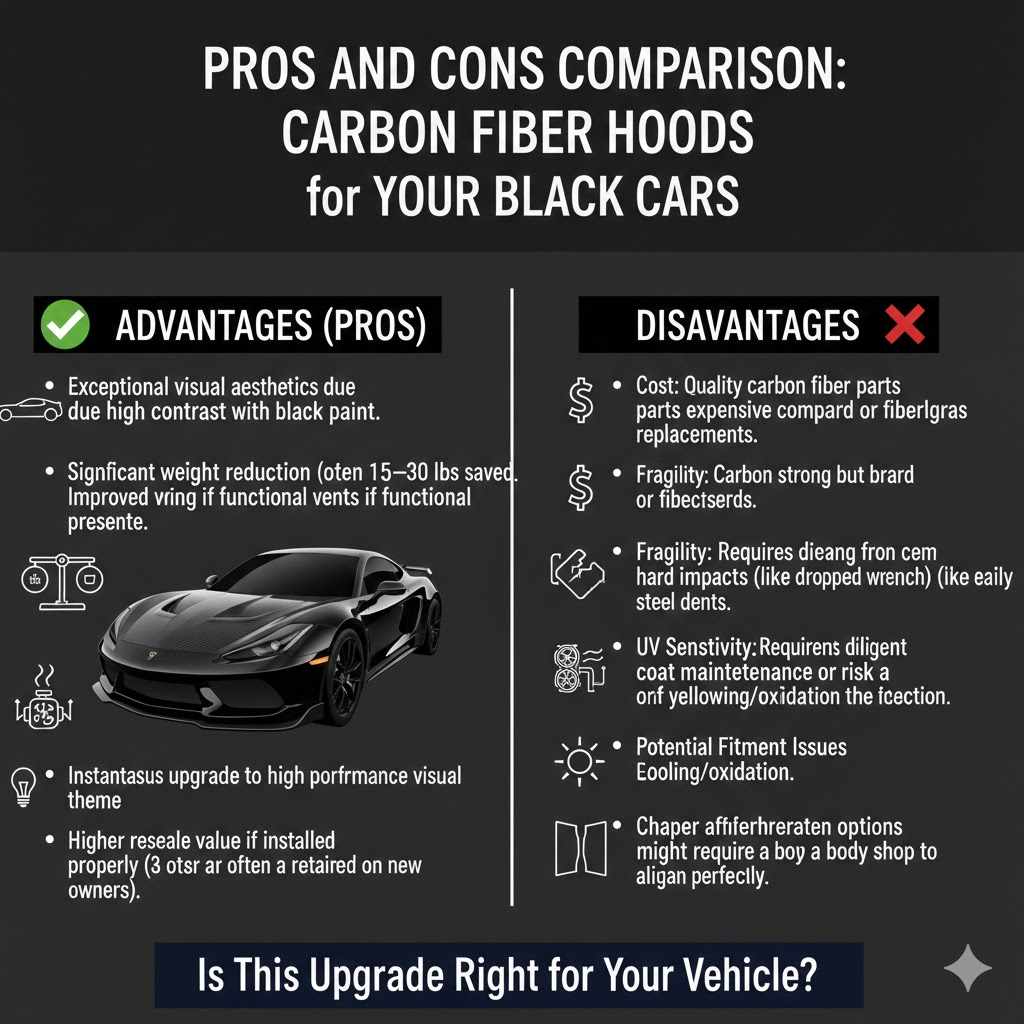
Pros and Cons Comparison
To help you decide if this upgrade is right for your specific black vehicle, here is a balanced look at the trade-offs involved.
Advantages (Pros)
Exceptional visual aesthetics due to high contrast with black paint.
Significant weight reduction (often 15–30 lbs saved).
Improved engine bay cooling if functional vents are present.
Instantaneous upgrade to a high-performance visual theme.
Higher resale value if installed properly (carbon parts are often retained by new owners).
Disadvantages (Cons)
Cost: Quality carbon fiber parts are expensive compared to steel or fiberglass replacements.
Fragility: Carbon fiber is strong but brittle. It can crack from hard impacts (like a dropped wrench) more easily than steel dents.
UV Sensitivity: Requires diligent clear coat maintenance or risk of yellowing/oxidation.
Potential Fitment Issues: Cheaper aftermarket options might require adjustments by a body shop to align perfectly.
FAQ: Beginner Questions About Carbon Fiber Hoods
Here are answers to common questions car owners have when considering this upgrade.
Q1: Is a carbon fiber hood safe for daily driving?
Yes, absolutely. If the hood is made correctly with a proper clear coat and latching system, it is just as safe as a factory hood. However, remember that carbon fiber is more prone to cracking on sharp impacts than steel is to denting.
Q2: Will my black car get hotter with a carbon fiber hood?
Generally, no. If the carbon fiber hood has functional vents, it will likely help keep the engine bay cooler than the factory hood. Black paint absorbs heat, but the hood material itself doesn’t drastically change underhood temperatures unless it’s poorly insulated underneath.
Q3: Do I need to paint my carbon fiber hood to match my black car?
Most people choose not to. The primary appeal of putting a carbon fiber hood on black car is the visual contrast. Painting it negates the entire aesthetic benefit and adds significant cost. If you prefer a uniform look, a fiberglass hood painted black is a much cheaper alternative.
Q4: How do I clean a carbon fiber hood?
Treat the clear coat finish like you would any high-quality automotive paint. Use mild, pH-neutral car wash soap, a soft microfiber wash mitt, and dry with a soft drying towel. Avoid harsh chemical cleaners or abrasive pads, which will scratch the protective clear coat.
Q5: Can I install a carbon fiber hood myself?
For most standard bolt-on replacements, yes. If you are comfortable handling a wrench and have a helper to lift the hood safely, the process is straightforward, focusing mainly on alignment. If you need to drill new holes or modify hinges, it’s better to seek professional body shop help.
Q6: How long does the clear coat on a carbon fiber hood last?
A high-quality UV-protected clear coat, especially one that is ceramic coated, can last 3 to 5 years before showing noticeable fading or hazing under constant sun exposure. Lower-quality coatings might fail in less than a year. Regular waxing or ceramic coating application extends this life significantly.
Finding the Right Fit: A Look at Installation Considerations
Getting the fitment perfect on a black car is extremely important. Any unevenness in panel gaps will be starkly visible against the deep, uniform backdrop of black paint.
Checking Panel Gaps Before Final Tightening
When you are in Phase 3 of installation, focus heavily on these three areas for alignment:
- Side to Fender Gap: Ensure the gap running down the side of the hood (between the hood edge and the top of the fender) is consistent from front to back. It should look visually equal on both sides of the car.
- Front to Bumper Gap: Check the gap where the hood meets the front grille or bumper cover. This is often the most noticeable gap.
- A-Pillar Seam: Look at the line where the hood meets the windshield cowl/A-pillar. The hood should sit flush or slightly below the surrounding body lines for optimal aerodynamics and appearance.
If you struggle to get the alignment right, do not over-tighten or force the bolts. Body panels need a little “slop” in the hinge mounting points to allow for perfect adjustment. Consult a local body shop if you cannot achieve even gaps after several adjustments—they have specialized tools to ensure a factory-level fit.
The Final Verdict on the Carbon Fiber Hood Upgrade
Adding a carbon fiber hood on black car is more than just slapping on a new part; it’s a transformation. It seamlessly merges aggressive, race-inspired performance aesthetics with tangible weight-saving benefits. The dramatic contrast between the raw, textural carbon weave and the smooth, deep black paint is a timeless combination that signals quality and performance intent.
As a trusted automotive guide, I encourage modifications that offer both form and function, and this upgrade definitely delivers. By understanding the importance of UV protection, carefully executing the installation (or having a professional handle it), and maintaining the clear coat, you ensure that your stunning new carbon fiber hood remains a proven, high-impact upgrade for years to come. Enjoy the compliments and the subtle performance boost!