Best Car Wax for Metallic Paint: 4 Top Picks for 2026
The best car wax for metallic paint is a non-abrasive carnauba or synthetic formula — because the aluminium flake sits in the basecoat under the clear coat, wax never actually touches it. That means film clarity and durability matter more than a “for metallic” label, and cleaner waxes containing abrasives slowly thin the clear coat protecting that flake. This guide covers four picks, carnauba vs synthetic vs graphene, and safe application steps.
Quick Answer
For most metallic finishes, a ceramic- or graphene-infused paste such as Turtle Wax Hybrid Solutions Graphene Paste Wax gives the clearest, longest-lasting film. Choose a pure carnauba paste instead if you want warmth on dark metallics, and reapply it every two to three months rather than twice a year.
What Makes Metallic Paint Different From Solid Paint
Metallic paint is a two-stage basecoat/clearcoat finish that carries finely ground aluminium particles suspended in the colour layer, with a transparent clear coat sprayed over the top. The flake is what creates the sparkle and the sense of depth that shifts as you walk around the car. Crucially, that flake is sealed beneath the clear coat — it is never exposed to the air, to your wash mitt, or to wax.
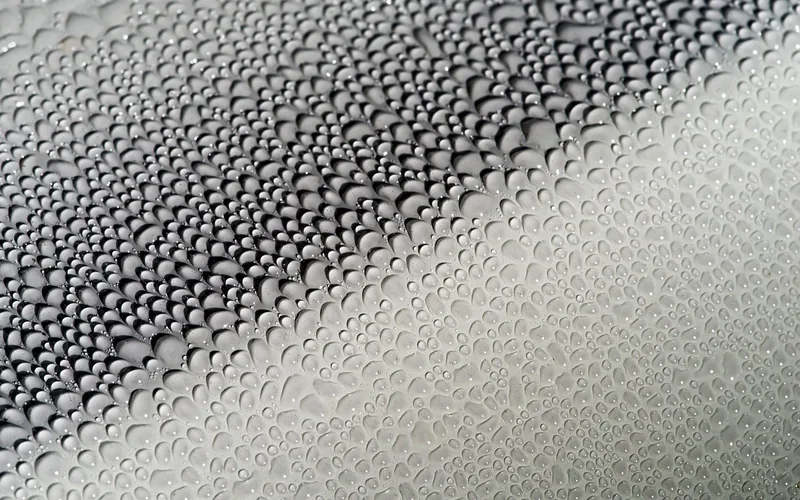
The aluminium used in factory metallic paint is measured in microns rather than millimetres — roughly 10 to 50 microns across, far finer than the 50 to 200 micron “metal flake” used on custom show finishes. That fineness is why a metallic panel reads as a smooth shimmer rather than a coarse glitter.
Why This Changes Which Wax You Should Buy
Because the flake is buried, no wax can chemically bond to it, brighten it, or restore it. What a wax actually does on metallic paint is lay a thin, transparent film across the clear coat. Light has to travel down through that film, through the clear coat, bounce off the flake, and come back out. Anything that scatters light on the way — a hazy wax film, a cloudy clear coat, fine swirl marks — flattens the flake effect.
That reframes the shopping question entirely. Instead of hunting for a bottle labelled “for metallic paint,” you want the wax that dries to the clearest film, protects the clear coat the longest, and does not require aggressive rubbing to apply. If your paint already has fine scratches, addressing those first will do more for flake depth than any wax — our guide on how to get swirl marks out of car paint covers that step.
📊 Grey and silver — the two shades most commonly sold as metallic finishes — account for 29% of vehicles globally (grey 22%, silver 7%), behind white at 29% and black at 23%. — Source: Axalta 2025 Global Automotive Color Popularity Report
Best Car Wax for Metallic Paint: Our 4 Top Picks
All four picks below are colour-neutral formulas — none are tinted or restricted to a single paint colour, which matters on metallic finishes where a pigmented product can mask flake rather than reveal it. They are ordered by what each one prioritises: clarity and longevity first, then warmth, then convenience, then sheer staying power.
Best Metallic Paint Wax Pick
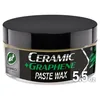
Turtle Wax Hybrid Solutions Ceramic Graphene Paste Wax
A paste wax that blends ten waxes with ceramic and graphene polymers, built to cure into a hard, highly transparent film over clear coat while forcing water to bead and sheet off.
- Best for: Metallic finishes where you want maximum optical clarity plus protection that lasts through a full season
- Why we picked it: Graphene and ceramic polymers dry to a hard, high-clarity layer — and clarity is exactly what flake depth depends on, since light has to pass cleanly through the wax to reach the metallic particles
- Main drawback: Paste takes more effort to spread evenly than a liquid, and it costs noticeably more per ounce than basic carnauba
Compare more metallic paint wax options
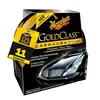 Option 1 Meguiar's Gold Class Carnauba Plus Premium Paste Wax
|
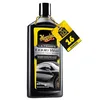 Option 2 Meguiar's Ultimate Liquid Wax
|
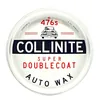 Option 3 Collinite 476 Super Doublecoat Wax
|
As an Amazon Associate we earn from qualifying purchases.
1. Turtle Wax Hybrid Solutions Ceramic Graphene Paste Wax — Best Overall
This pick best matches what metallic paint actually needs. The formula pairs a traditional wax base with ceramic and graphene polymers, and Turtle Wax states it can be applied by hand with a foam applicator or by machine polisher, even in direct sunlight — a genuinely useful trait, since most paste waxes streak badly on a warm panel.
It is also rated by the maker for use across clear coats, aluminium, chrome, glass and wheels, so one jar covers trim and headlights as well as paint.
- Pros: Hard, high-clarity cured film; strong water beading; tolerates direct-sun application; multi-surface
- Cons: Paste requires more spreading effort than a liquid; higher cost per ounce than entry-level carnauba
2. Meguiar's Gold Class Carnauba Plus Paste Wax — Best for Dark Metallics
Carnauba's appeal on metallic paint is optical rather than protective. It leaves a slightly warm cast that deepens dark colours and softens the transition between light and shadow across a panel, which is why black, navy and graphite metallics tend to look richest under it. Gold Class is a carnauba blend rather than pure carnauba, trading a little of that warmth for easier removal.
- Pros: Warm, deep reflection that flatters dark metallic flake; forgiving to apply; widely available
- Cons: Natural wax degrades under UV and heat; realistically a two- to three-month product
3. Meguiar's Ultimate Liquid Wax — Best for Daily Drivers
If you want protection with the least friction, this is the one. It is a pure synthetic polymer formula that Meguiar's states is safe on all glossy paints and clear coats, and it uses hydrophobic polymer technology to raise surface tension so water tightens into beads instead of sitting in sheets. Application is spread-on, wipe-off, by hand or with a dual-action polisher.
- Pros: Fastest application of the four; clear-coat safe by the maker's own spec; strong beading; good durability for a liquid
- Cons: Reflection reads sharp and glassy rather than warm — better suited to silver and light metallics than dark ones
4. Collinite 476 Super Doublecoat — Longest Protection
Collinite's No. 476s has been produced for over 80 years and is the pick for anyone who wants to wax twice a year and forget about it. It combines number-one-grade carnauba with high-endurance polymers, and the manufacturer notes it bonds without requiring paint to be surgically clean first — useful on a car that lives outside.
- Pros: Manufacturer-rated 7–10 month durability; keeps carnauba warmth alongside sealant longevity; tolerant of imperfect prep
- Cons: Stiff paste that is hard to buff if over-applied or used in cold conditions
Carnauba vs Synthetic vs Graphene on Metallic Paint
The three formula families behave differently on a metallic finish, and the trade-off is almost always warmth versus durability. Reapplication windows below reflect typical detailing guidance and manufacturer ratings, not a controlled comparison — real-world life varies with climate, garaging and wash frequency.
| Formula type | Typical reapplication window | Look on metallic flake | Best for |
|---|---|---|---|
| Carnauba paste | Roughly 2–3 months | Warm, deep, slightly softened | Dark metallics and show days |
| Synthetic liquid wax | Roughly 4–6 months | Sharp, glassy, high-contrast | Silver and light metallics, daily drivers |
| Ceramic / graphene infused | Roughly 6–12 months | Very high clarity, hard gloss | Maximum protection with flake depth |
| Carnauba + polymer hybrid | 7–10 months (maker-rated) | Warm gloss with sealant durability | Cars parked outdoors year-round |
Carnauba and synthetic products are not mutually exclusive. A common enthusiast approach is to lay down a synthetic sealant for durability, then top it with a carnauba layer for warmth — you get the protection window of the sealant with the optical character of the wax. If you go that route, strip the old layer first rather than stacking indefinitely; our guide on how to remove wax from a car without ruining the paint walks through it safely.
For a broader look at how carnauba and synthetic chemistries differ, Chemical Guys publishes a detailed comparison of the two.
How to Wax Metallic Paint Without Adding Swirl Marks
On metallic paint, application technique matters as much as product choice. Every fine scratch you introduce during waxing scatters light before it ever reaches the flake, which is exactly the effect you are trying to avoid.
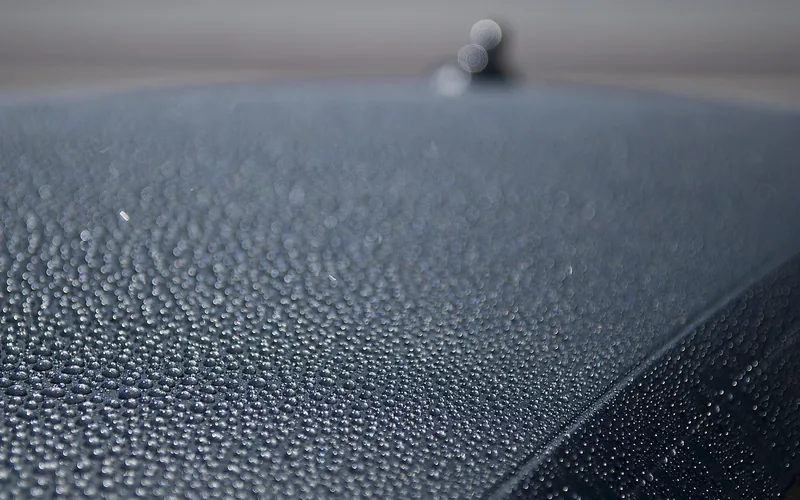
- Wash and dry completely: Use a pH-neutral shampoo and the two-bucket method so grit is never dragged across the clear coat.
- Check the panel temperature: Touch the paint — if it is warm, move into shade, because most waxes flash-dry and streak on hot metal. Check the label first, as some graphene and ceramic pastes are rated for direct-sun use.
- Decontaminate only if needed: Run a plastic bag over the dry paint; if it feels gritty, clay the panel before waxing so you are not grinding bonded fallout into the finish.
- Apply a thin, even coat: Load a clean foam applicator and spread wax one panel at a time in light overlapping passes — thin coats buff off easily, thick coats do not.
- Let it haze: Wait for the film to dull to a matte cast, typically a few minutes, rather than buffing while it is still wet.
- Buff with clean microfiber: Use a plush, dry microfiber towel and flip to a fresh face often; a saturated towel is what puts swirl marks back into the paint.
If your paint already shows swirls before you start, wax will hide them for a wash or two but will not remove them. Correcting first with a machine gives a far bigger jump in flake depth — see how to polish a car at home for the prep stage, and how to wax your car the right way for the full step-by-step process.
“No. 476s Super Double Coat Wax's high-endurance polymers provide 7-10 months of durability, long-lasting hydrophobics… and uniquely bonds to surfaces without the pre-requirement for paint to be 100% surgically clean.”
That last point is the practical one for metallic paint on a daily driver. Waxes that demand a fully corrected, surgically clean surface tend to disappoint on real cars; a formula that tolerates slightly imperfect prep will realistically get used more often, and consistent protection beats an occasional perfect application.
What Actually Dulls Metallic Flake
Wax itself does not dull metallic paint. The things that flatten flake depth are almost always mechanical or optical problems in the layers above it, and three of them are self-inflicted.
Cleaner Waxes and Repeated Abrasive Passes
Cleaner wax, sometimes labelled polish-and-wax or one-step, contains mild abrasives that shave a small amount of clear coat to remove oxidation along with the wax. Used once or twice a year on neglected paint, that is a fair trade. Used every wash, it steadily thins the clear coat that protects the flake — and once clear coat gets thin enough to fail, no wax fixes it. Save abrasive products for correction, and use a non-abrasive wax for maintenance.
Tinted and Colour-Matched Waxes
Products sold as colour waxes for silver, black or red contain pigment that fills and masks fine defects. They can visually improve a tired finish, but they work by hiding scratches rather than clearing them, and pigment sitting above the clear coat is the opposite of the transparency metallic flake needs. On a healthy metallic finish, a clear formula almost always reads deeper.
Bonded Contamination Nobody Cleaned Off
Industrial fallout, rail dust, tree sap and brake dust embed in the clear coat and scatter light at the surface. Wax laid over that contamination seals it in. A clay bar or decontamination wash before waxing often produces a bigger visible gain in flake sparkle than switching wax brands does.
Waxing Over a Ceramic Coating
If your metallic paint already has a professional ceramic coating, adding traditional wax on top can mute the coating's hydrophobic behaviour without adding meaningful gloss. There are better maintenance options — we cover them in should you wax a car after ceramic coating.
Frequently Asked Questions
Does car wax work on metallic paint?
Yes. Metallic paint is a standard basecoat/clearcoat system, and wax bonds to the clear coat exactly as it does on solid paint. The metallic flake is sealed in the colour layer beneath, so wax never contacts it directly — what wax does is protect and add clarity to the transparent layer light travels through to reach that flake.
Will waxing dull metallic flake?
No, not when you use a non-abrasive wax and clean applicators. Dulling comes from fine scratches introduced by dirty towels, from cleaner waxes that abrade clear coat over time, or from bonded contamination sealed under the wax. The wax film itself is transparent and does not mute the flake.
Is carnauba or synthetic wax better for metallic paint?
It depends on the result you want. Carnauba gives a warmer, deeper reflection that flatters dark metallics but typically needs reapplying every two to three months. Synthetic and ceramic-infused formulas give a sharper, glassier gloss and last considerably longer, which suits silver and light metallics and daily-driven cars.
How often should you wax a metallic car?
Match the interval to the product rather than the paint. Pure carnauba realistically needs reapplying every two to three months, synthetic liquid waxes run roughly four to six months, and ceramic or graphene formulas can hold six months to a year. Cars parked outdoors year-round need the shorter end of each range.
Do you need a wax specifically formulated for metallic paint?
Not really. Because the flake sits under the clear coat, no wax can interact with it chemically, so “for metallic paint” is largely a marketing label. What genuinely matters is that the formula dries to a clear, non-hazing film, contains no abrasives, and protects the clear coat for as long as you need.
Can you use cleaner wax on metallic paint?
Occasionally, yes — cleaner wax contains mild abrasives that strip oxidation and light defects while leaving protection behind. Used once or twice a year on neglected paint that is a reasonable trade. Using it at every wash gradually thins the clear coat protecting the metallic flake, so switch to a non-abrasive wax for routine maintenance.
What is the best wax for silver or grey metallic paint?
Silver and grey hide fine swirls well, so warmth matters less and durability matters more. A synthetic or ceramic-infused formula such as Meguiar's Ultimate Liquid Wax or Turtle Wax Graphene Paste Wax suits these shades best, delivering the sharp, glassy reflection that makes light metallics look crisp rather than soft.
The Bottom Line
The single most useful thing to understand about waxing metallic paint is that you are never waxing the metallic layer — you are waxing the clear coat above it. Once that clicks, product selection gets simpler: pick the formula that cures clearest, protects longest, and does not require abrasives to apply.
For most drivers that means a ceramic- or graphene-infused paste like the Turtle Wax Hybrid Solutions Graphene Paste Wax. If you run a dark metallic and care more about warmth than about waxing twice a year, a carnauba paste will look richer. If the car lives outdoors and gets attention rarely, Collinite's maker-rated 7–10 month durability is the practical answer. In every case, clean prep and a fresh microfiber towel will do more for flake depth than upgrading to a more expensive jar.
Products related to this article
Sponsored / affiliate links. As an Amazon Associate I earn from qualifying purchases. I may earn additional commission from eligible campaigns.