Should You Service Your Car at a Dealer or Independent?
Choose an independent garage for routine maintenance and a dealer for warranty repairs, recalls, software updates, and complex diagnostics; if the car is under warranty, check the service terms first. A poor choice can mean higher bills, slower repairs, or a warranty claim being refused. This guide compares cost, records, parts, diagnostics, and which jobs fit each option.
Dealer or independent: the real trade-off

The choice is about the job, not loyalty. Oil changes, filters, brake fluid, tyres, and many brake jobs often suit a capable independent garage, while brand software work, recall work, and warranty-sensitive repairs can justify a dealer service department.
What usually drives the bill is simple: labor rate, parts markup, and access to diagnostic software. Dealers often bill at higher hourly rates. Independents may charge less per hour and offer OEM or aftermarket parts, depending on the job and the owner’s preference.
A common first-timer mistake is booking a dealer for a straightforward service on a six-year-old car, then paying dealer labor for work that an experienced repair shop could complete under the same manufacturer schedule. The reverse mistake is sending a warranty complaint to a general garage when the fault needs factory-level coding or a campaign update.
Dealer vs independent service at a glance
| Service type | Warranty risk | Required tools/software | Typical cost pressure | Best choice |
|---|---|---|---|---|
| Minor service: oil, filter, inspection | Low if done to schedule and documented | Basic service tools, reset capability | Dealer labor rate and parts markup | Independent garage |
| Major service: plugs, belts, fluids, deeper checks | Low to moderate if manufacturer schedule is followed | Model-specific service data, scan tool for resets | Labor time and OEM part choice | Usually independent, dealer for brand-sensitive items |
| Fault diagnosis and warning lights | Moderate if the problem is tied to software or modules | Diagnostic scan tools, coding access, factory procedures | Diagnostic time can add quickly | Dealer for complex or repeated faults |
| Software updates, coding, module resets | Higher if not handled correctly | Manufacturer-level tools and portal access | Access and programming fees | Dealer |
| Recall or campaign repair | Should be handled through the manufacturer path | Factory campaign system | Usually not paid by the owner for recalls | Dealer |
When should you choose a dealer?
Choose a dealer when the job depends on manufacturer systems, when the car is still under warranty, or when a recall or service campaign is open. Dealers have OEM-trained technicians, brand diagnostic tools, and access to manufacturer software that an independent garage may not have.
Warranty-covered repairs and service intervals
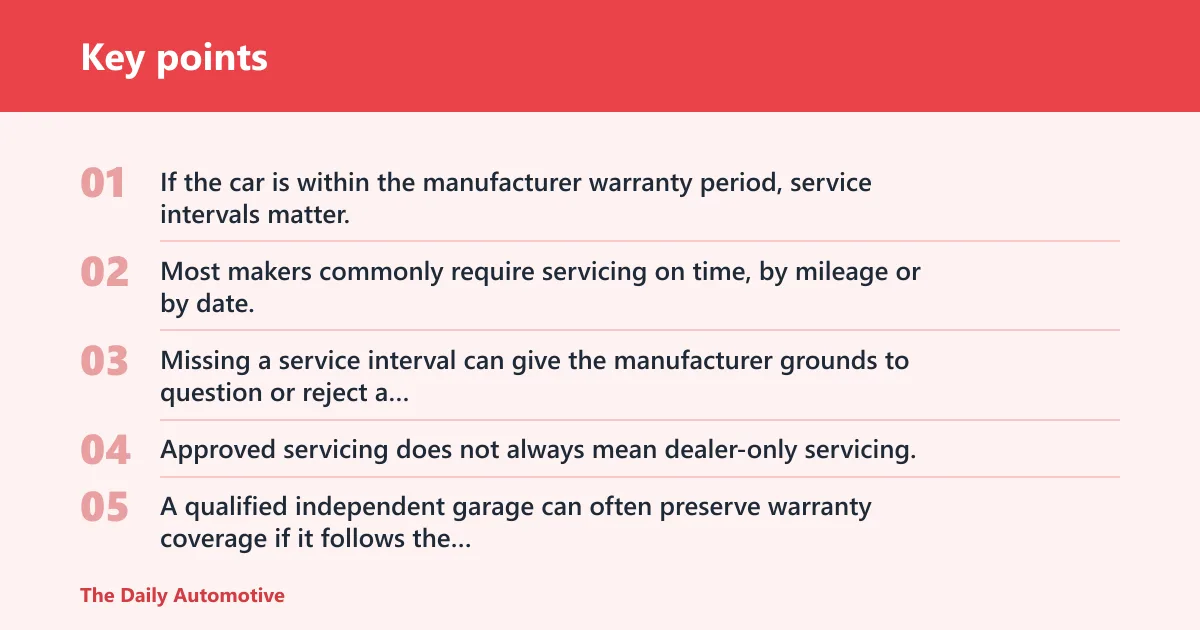
If the car is within the manufacturer warranty period, service intervals matter. Most makers commonly require servicing on time, by mileage or by date, and they usually expect proof. Missing a service interval can give the manufacturer grounds to question or reject a related claim if the missed service is tied to the failure.
Approved servicing does not always mean dealer-only servicing. A qualified independent garage can often preserve warranty coverage if it follows the maker’s schedule, uses parts and fluids that meet the specification, and records the work properly. The key is evidence, not badge loyalty.
Diagnostics, coding, and software updates
Choose the dealer for problems that involve coding, software resets, control-module programming, and platform-specific fault paths. A generic scan tool may read fault codes, but it may not perform manufacturer coding, guided functions, or some post-repair calibrations. That matters after battery replacement, module replacement, or certain driver-assistance repairs.
Recalls and manufacturer campaigns
Recalls and campaign work are dealer-sensitive jobs because they tie into the manufacturer portal and campaign record. A dealer can confirm the vehicle’s status, apply the approved fix, and update the digital service record where the brand system supports it.
Leased cars and brand-specific records
Leased cars often need neat paperwork and proof that the service schedule was followed. A dealer can make that simpler when the lease terms or end-of-term inspection will be judged against manufacturer records. That said, a reputable independent garage can also work if it records the service clearly and uses the right parts and fluids.
When is an independent garage the better fit?
An independent garage is usually the better fit for routine maintenance, especially on cars that are out of warranty or high mileage. Lower labor rates, more flexible parts choice, and broader inspection work can make the total bill lower without sacrificing the manufacturer service schedule.
Routine oil, brake, tyre, and fluid work
For oil changes, cabin filters, brake pads, discs, tyres, and fluid checks, a capable repair shop can often complete the work to spec. Many independents can fit OEM parts or aftermarket parts, depending on the owner’s budget and the importance of exact fitment.
OEM parts matter most when fitment, calibration, or warranty sensitivity is in play. Aftermarket parts are often acceptable for wear items if they meet the correct specification, but it is sensible to ask whether the part number, fluid grade, or brake hardware matches the manufacturer schedule.
Out-of-warranty cars and labor rates
Once the car is out of warranty, the cost discussion changes. Dealer labor rates are often higher because of brand training, facility overhead, and access to factory systems. Independent labor rates are usually lower, and hourly billing can reduce the total bill on routine work.
Suppose a seven-year-old hatchback needs a standard oil service and brake fluid change. A local independent may be the better fit because the work is routine, the parts are common, and the owner does not need manufacturer coding or campaign access. The same car with a recurring fault message may need dealer diagnostics first.
How to check qualifications and equipment
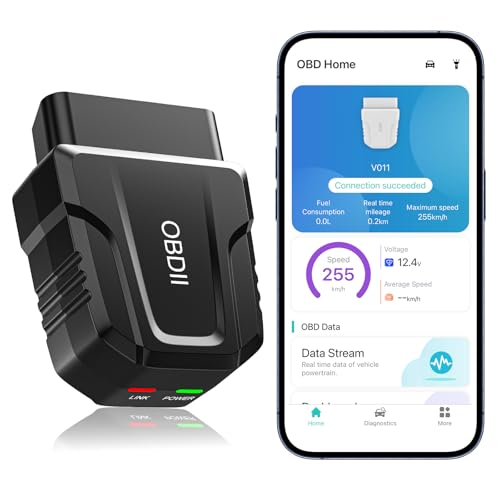
Before booking, ask whether the garage has current service data for your exact model and engine, plus a scan tool that can clear service reminders and handle resets. A good independent should be able to say what parts it will use, what it can record, and what it will not attempt.
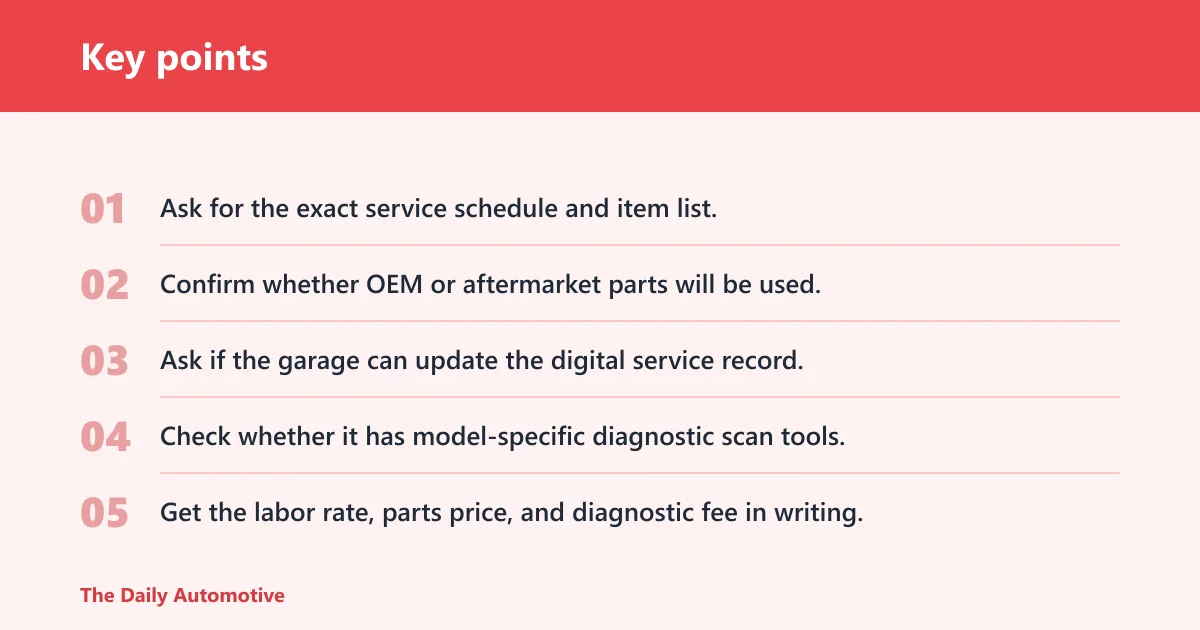
- Ask for the exact service schedule and item list.
- Confirm whether OEM or aftermarket parts will be used.
- Ask if the garage can update the digital service record.
- Check whether it has model-specific diagnostic scan tools.
- Get the labor rate, parts price, and diagnostic fee in writing.
Service records and warranty rules
Manufacturer warranty claims depend on evidence. The car usually needs servicing on the correct time-and-mileage schedule, with parts and fluids that meet the required specification. If an interval is missed, the maker may question whether poor maintenance contributed to the failure.
Digital service record versus paper stamps
Many newer cars rely on a digital service record rather than a stamp book alone. Some brands update records through a dealer portal, while others accept invoices and service sheets from an independent garage. Keep the invoice, mileage, date, parts list, and fluid specifications.
That record can affect resale value. Buyers and dealers often value clean proof of maintenance more than a missing stamp. A complete digital history, or a paper history with matching invoices, can be easier to explain at sale time than a service book with gaps.
What missed intervals can change
Missed service intervals do not automatically void a warranty, but they can weaken a claim. If the engine fails and the oil service was overdue, the manufacturer may argue that the missed maintenance mattered. If the claim is unrelated, the dispute may be weaker, but the paperwork still matters.
Dealer service matrix
This matrix puts the comparison into practical terms. The best choice depends on the task, the car’s age, and how much factory access the job needs. Routine work leans one way; programming and campaign work lean the other.
| Work type | Dealer advantage | Independent advantage | Best fit |
|---|---|---|---|
| Routine maintenance | Factory service history and OEM paperwork | Lower labor rate and flexible parts choice | Independent |
| Diagnostics and scan-tool work | Factory codes, guided tests, module access | Often lower diagnosis fee for basic faults | Dealer for complex faults |
| Programming and software resets | Manufacturer coding and updates | Limited on many brands and models | Dealer |
| Recalls and campaign repairs | Direct access to campaign records | Usually not the right path | Dealer |
| Warranty-sensitive jobs | Lower risk of paperwork disputes | Can be fine if fully documented | Dealer or vetted independent |
Choose dealer if… / Choose independent if…
Choose the dealer if the car is under warranty, leased, subject to a recall, or needs brand software access. Choose an independent garage if the job is routine, the car is older, the service history is well documented, or labor cost matters more than factory portal access.
Dealer if the car is under warranty, leased, or needs brand software access
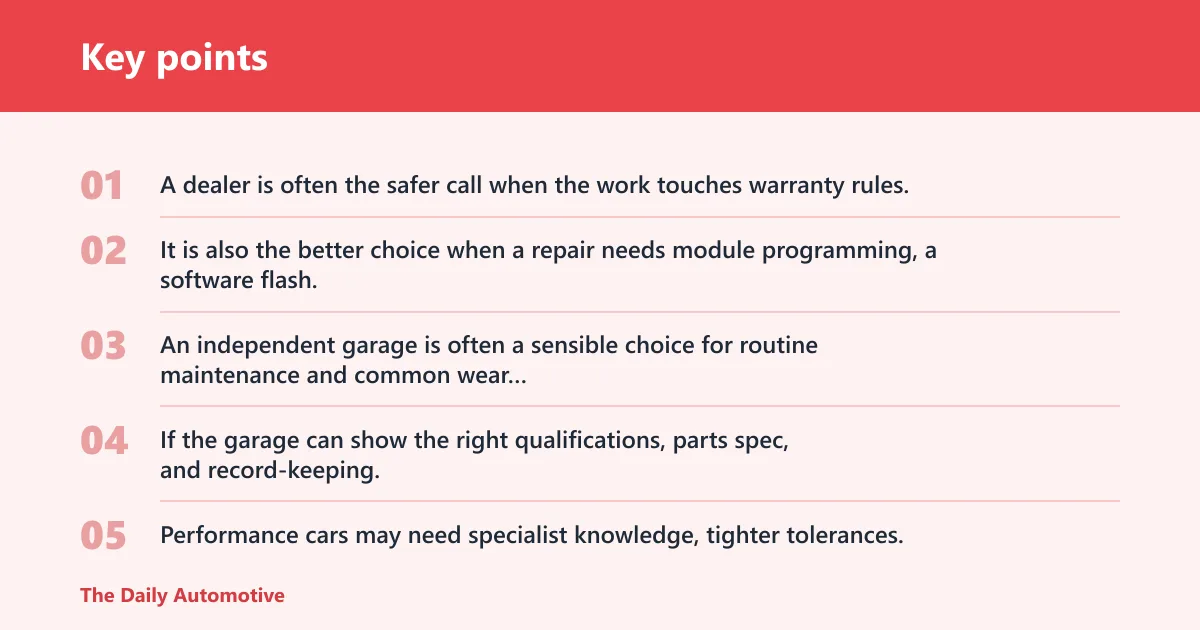
A dealer is often the safer call when the work touches warranty rules, digital service records, or manufacturer campaigns. It is also the better choice when a repair needs module programming, a software flash, or a diagnostic routine that only the brand tool can complete.
Independent if the work is routine, the car is older, or labor cost matters most
An independent garage is often a sensible choice for routine maintenance and common wear items on an out-of-warranty car. If the garage can show the right qualifications, parts spec, and record-keeping, the owner can save money without giving up proper maintenance.
Mixed cases: performance cars, EVs, and extended warranties
Performance cars may need specialist knowledge, tighter tolerances, or model-specific parts, so the cheapest quote is not always the best quote. EVs can be routine for filters, tyres, and cabin items, but high-voltage repairs and software work may still favor the dealer or a specialist repair shop with the right training.
Extended warranties need their own reading. Some are strict about where service can be done and what parts are used. Others allow independent servicing if the schedule is followed and the invoices are complete.
Practical scenarios
Say your 3-year-old sedan needs a scheduled oil service and cabin filter. If it is still inside warranty, an independent garage may still be fine if it uses the correct spec oil, follows the interval, and records the work clearly. If the service reminder will not reset, dealer access may be worth the extra cost.
Picture a 10-year-old SUV with an intermittent engine warning light after a battery replacement. A dealer may be the better first stop because the issue could involve coding, module sleep settings, or a software reset. If the fault turns out to be routine sensor wear, a trusted independent can often finish the repair more cheaply.
Frequently asked questions
Should I service my car at a dealer or independent garage?
Start with the job, not the badge. Routine servicing often fits a capable independent garage, while warranty repairs, recalls, coding, and manufacturer software updates are better suited to a dealer. If the car is under warranty, check the service terms and record requirements before booking.
Is a dealer service worth the extra money?
It can be worth it when the car needs factory diagnostics, software updates, campaign work, or a clean manufacturer record. For a basic oil service on an older car, the extra money often buys brand overhead rather than a better outcome, so compare the actual job list.
Will an independent garage void my warranty?
Not automatically. A qualified independent garage can service a car without voiding warranty coverage if it follows the manufacturer schedule, uses parts and fluids to the correct specification, and keeps proof. The risk rises when intervals are missed or when the garage cannot document the work properly.
Is dealership servicing better for resale value?
Sometimes, especially on newer cars, leased vehicles, and premium models where buyers expect a clean brand record. But resale also depends on proof. A full folder of invoices, service dates, mileage, and parts used from a reputable independent garage can still support strong resale value.
How do dealer and independent service prices compare?
Dealer pricing is usually higher because of labor rate, OEM parts markup, and access to factory systems. Independent garages often charge less per hour and may offer aftermarket parts where suitable. The gap widens on jobs that do not need brand tools and narrows on diagnostics or programming.
Can any garage service a car that’s still under warranty?
Many can, but not every job is a good fit. Routine maintenance can often be done by a competent independent garage if the schedule is followed and documented. Recall work, software updates, some diagnostics, and warranty disputes are stronger candidates for the dealer path.
Products related to this article
Sponsored / affiliate links. As an Amazon Associate I earn from qualifying purchases. I may earn additional commission from eligible campaigns.