Is Chemical Guys Butter Wet Wax Worth It?
Chemical Guys Butter Wet Wax is worth it if you want warm-looking gloss from a simple wax and do not mind reapplying every few weeks; for most DIY owners, a spray sealant or hybrid wax gives better shine per minute. Pick the wrong product, and you spend more time chasing gloss than protecting paint.
This guide is part of our Car ownership essentials series.
Butter Wet Wax decision table
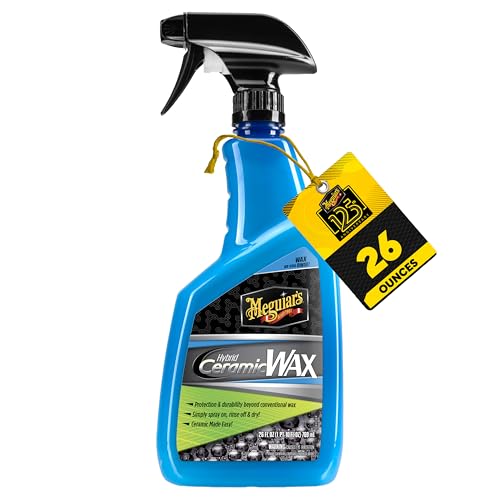
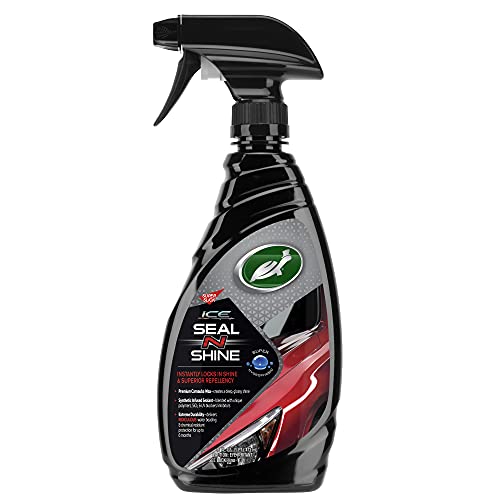
| Product type | Application time | Durability | Gloss | Cost per use | Best fit |
|---|---|---|---|---|---|
| Butter Wet Wax | Medium; spread, then buff | Low to moderate; about monthly reapplication is the usual rule for carnauba wax | High wet look, especially on dark paint | Moderate if used thinly; higher over time because of repeat use | Garage-kept cars, weekend drivers, show prep |
| Spray wax | Low; fastest of the group | Low to moderate; usually shorter than hybrid protection | Good, but usually less depth than a hand-applied wax | Low per application | Busy owners who want quick upkeep |
| Hybrid wax | Low to medium | Moderate to high; often lasts months | Good gloss with stronger protection balance | Low to moderate because of longer intervals | Daily drivers and time-limited owners |
| Ceramic coating | High at install stage | Highest here; durability benchmark | Good, but aimed more at protection than wax warmth | High upfront; lower frequent reapply burden | Owners who want long-term protection and less upkeep |
Application time compared with spray wax, hybrid wax, and ceramic coating
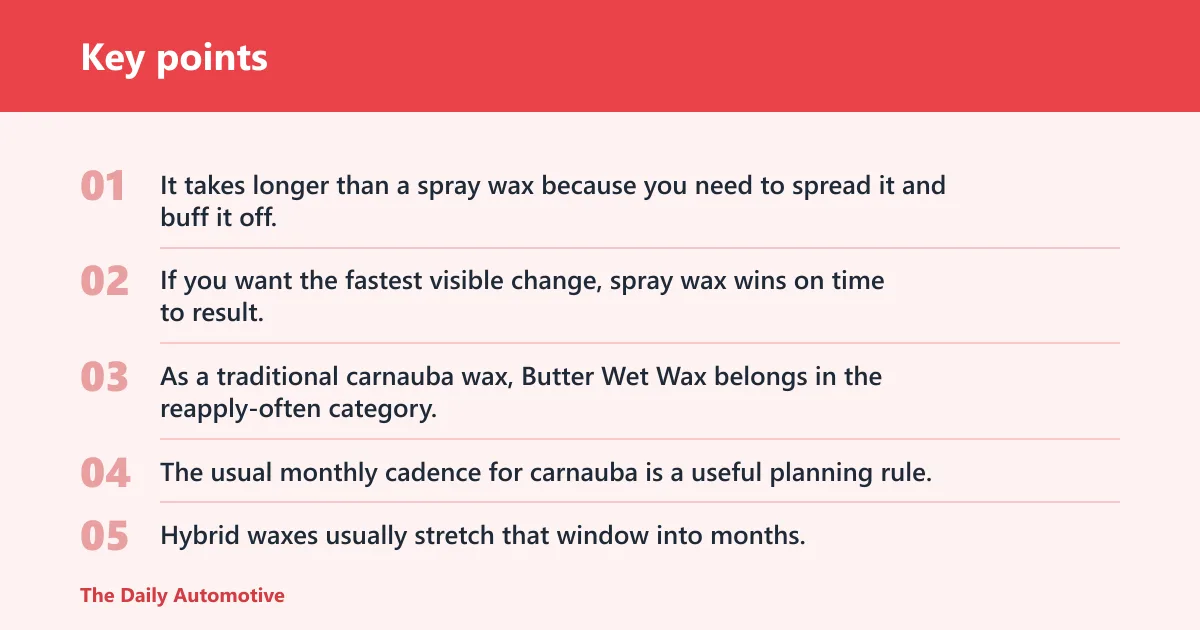
Butter Wet Wax sits in the middle. It takes longer than a spray wax because you need to spread it and buff it off, but it is quicker than the prep-heavy work a ceramic coating calls for. If you want the fastest visible change, spray wax wins on time to result.
Durability compared with spray wax, hybrid wax, and ceramic coating
As a traditional carnauba wax, Butter Wet Wax belongs in the reapply-often category. The usual monthly cadence for carnauba is a useful planning rule, especially on cars that see rain, frequent washing, or street parking. Hybrid waxes usually stretch that window into months. Ceramic coating sits in another class altogether.
Gloss and wet look compared by use case
Its value is strongest when finish quality matters more than long wear. The retailer describes a wet, deep shine, and The Drive describes “amazing shine and gloss.” That matters most on clean, well-kept paint. On neglected paint, the finish may look softer and less even because wax does not fix surface defects.
Cost per use and best-fit driver profile
The 473 ml bottle, listed as WAC_201_16, is not the same value proposition as a spray wax that goes on in seconds. Thin application helps stretch each bottle, but frequent reapplication raises the real cost per season. For garage-kept cars, the shine payoff can justify that. For daily drivers, a hybrid is often the better spend.
What is butter wet wax?
Product basics: WAC_201_16, 16 oz size, and liquid carnauba format
Chemical Guys Butter Wet Wax is commonly listed as a liquid carnauba wax in a 16 oz bottle. It is meant for manual or machine application. The main appeal is plain: a traditional wax format that aims for a wet, deep shine instead of long-wear synthetic protection.
How carnauba wax differs from synthetic protection
Carnauba wax is the older-school option in this comparison. It is usually chosen for depth and warmth, while synthetic sealants and hybrid products are chosen for stronger durability. The tradeoff is predictable: more visual softness and gloss up front, less protection time after time. Liquid and paste formats both exist, and Butter Wet Wax is the liquid form.
What the polymer and resin additives are meant to do
The retailer description says the formula includes polymers and resins. That matters because those additives are meant to support the wet look alongside the natural carnauba base. They do not turn it into a coating, but they can help the finish read wetter and smoother than a plain traditional wax formula.
How do you apply it correctly?
Hand application with an applicator pad
Begin with a clean, dry panel. Use an applicator pad and apply a thin coat. The product is described as beginner-friendly, but thin coverage still matters. Heavy application wastes product and makes buffing harder. A small amount should spread farther than most new users expect.
- Wash and dry the paint fully.
- Apply a light amount to an applicator pad.
- Work one panel at a time.
- Let the wax haze lightly if needed.
- Buff with a clean microfiber towel.
- Use a second microfiber towel for the final wipe.
Machine application and thin-coat tips
Machine use is possible, but the same rule applies: thin is better. A machine can speed up spread on larger panels, yet it does not change the product’s short protection window. Keep the coat even, avoid loading the pad, and do not chase coverage by piling on more wax.
Buffing with microfiber towels and the final wipe
The Drive notes that application requires an applicator pad or microfiber towel, and a second towel is needed for buffing. That second towel matters because it helps remove leftover film and finishes the surface more cleanly. If the towel loads up too fast, the layer was probably too thick.
Common mistakes that cause streaking or wasted product
Over-application is the most common mistake. So is trying to cover too much at once. Dusty paint, a dirty applicator, or a damp towel can also leave haze. Picture a black hood under shop lights: a thin coat buffs cleanly, while a heavy coat leaves streaks that are easy to spot.
Does it really look wet on paint?
Why black metal-flake paint is a useful test surface
Black metal-flake paint is a good finish check because it shows streaks, haze, and uneven buffing more clearly than many lighter colors. The Drive tested Butter Wet Wax on a 2014 GMC Acadia with black metal-flake paint, which makes the result useful for judging whether the wet look is real or just marketing language.
What a deep gloss finish should look like after buffing
On properly prepared paint, the finish should look darker, slicker, and more reflective without obvious smear lines. That is the type of result Butter Wet Wax is chasing. Its strength is visual depth, not defect repair. If the panel already has oxidation, swirls, or wash marring, the wax will not erase them.
Where the finish can fall short on dusty or neglected paint
A common first-timer mistake is applying wax to paint that still has dust or residue. On a neglected surface, the wet look can be uneven, and the coating may appear to sit on top of grime instead of flowing across the paint. A clean surface is part of the result, not an optional extra.
Pros and cons
Pros
- Strong wet-look gloss on clean paint.
- Beginner-friendly application when used in a thin coat.
- Works by hand or machine.
- Good fit for weekend cars and black paint owners who want visible shine.
Cons
- Shorter durability than hybrid waxes and ceramic coatings.
- Monthly reapplication is a realistic planning point for carnauba wax.
- Over-application can cause streaking and wasted product.
- It does not remove scratches or act like a polish.
Who should buy it?
Best for garage-kept cars and weekend drivers
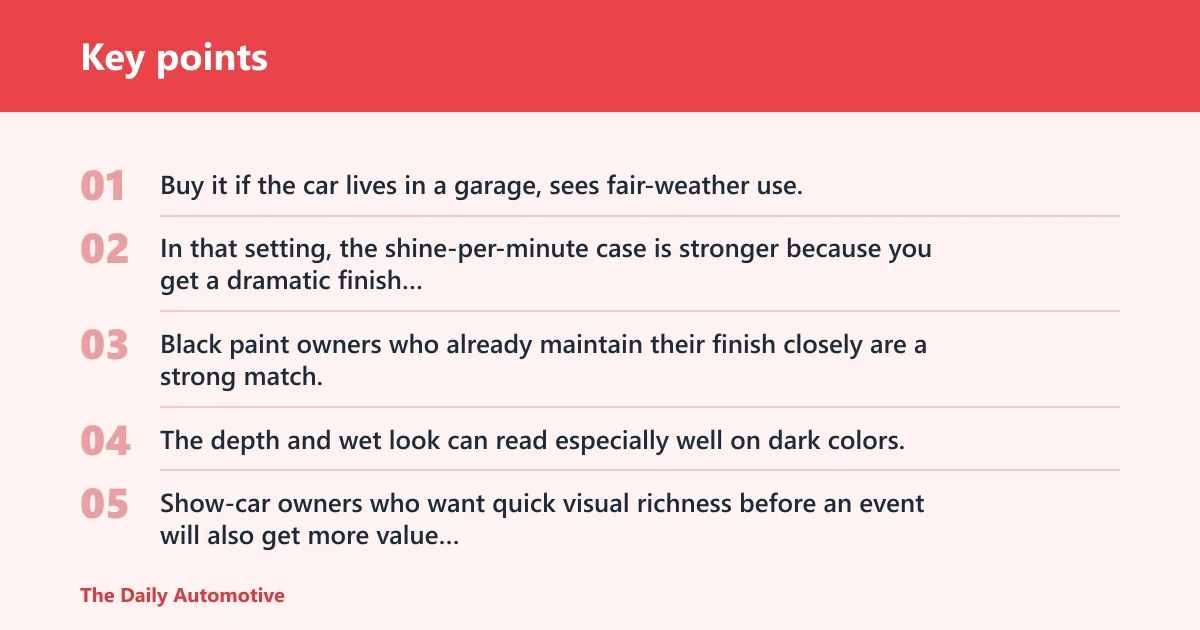
Buy it if the car lives in a garage, sees fair-weather use, or gets detailed for meets and weekend drives. In that setting, the shine-per-minute case is stronger because you get a dramatic finish without needing long-term protection from the wax itself.
Best for show-car detailers and black paint owners
Black paint owners who already maintain their finish closely are a strong match. The depth and wet look can read especially well on dark colors, including black metal-flake paint. Show-car owners who want quick visual richness before an event will also get more value than daily commuters will.
Not the best fit for high-mile daily drivers
If the car is driven daily, parked outside, and washed often, Butter Wet Wax is harder to justify. A hybrid spray wax usually gives better time to result and longer durability. Ceramic coating is the better benchmark if the priority is long-term protection rather than repeated waxing.
Say your coupe sits in a garage and gets driven on weekends. Butter Wet Wax can make sense because you can spend a little extra time for a deeper finish, then reapply on a monthly rhythm. Say your sedan lives outside and sees highway miles every day. A hybrid or coating is usually the better fit.
Suppose you own a black hatchback and notice haze after a quick wash. Butter Wet Wax can improve the look if the paint is already clean and smooth, but it will not fix the haze itself. That is where the product’s limits matter: it improves appearance, not paint correction.
Frequently asked questions
Is chemical guys butter wet wax worth it?
It may be a good fit if a warm, wet-looking finish matters more than long-lasting protection and frequent reapplication is acceptable. It is a value buy for garage-kept cars, show prep, and owners who care more about gloss than long wear. For most daily drivers, a hybrid wax or spray sealant gives better shine per minute.
How long does Chemical Guys Butter Wet Wax last?
Carnauba wax is usually a monthly product, and that is the right expectation here. Real-world longevity depends on washing habits, weather exposure, and whether the car is garaged. It should not be treated like a long-wear sealant or a ceramic coating.
Does Butter Wet Wax leave a deep wet shine?
Yes. The retailer describes a wet, deep shine, and that is the product’s main appeal. The effect is strongest on clean, dark, well-kept paint. On neglected paint, the finish can still look good, but it will not hide swirls, haze, or oxidation.
Is Butter Wet Wax easy to apply by hand?
Yes. The Drive calls the application beginner-friendly, and the process is simple if you keep the coat thin. Use an applicator pad, then buff with microfiber towels. The main challenge is not skill; it is avoiding too much product and rushing the wipe-off.
Does Butter Wet Wax remove scratches?
No. It is a wax, not a polish or paint correction product. It can improve gloss and make the paint look deeper, but it will not remove scratches, swirls, or oxidation. If defect removal is the goal, a correction step comes first.
Can I use Butter Wet Wax on black paint?
Yes, and black paint is one of the best cases for this type of wax. The finish can look especially deep, but black paint also exposes streaks, haze, and over-application fast. That makes it a good test surface and a good reason to use two clean microfiber towels.
How often do I need to reapply Butter Wet Wax?
A monthly cadence is the practical rule of thumb for carnauba wax. If the car lives outside or gets frequent washing, reapplication may be needed sooner. If the car is garage-kept and lightly used, the finish may hold longer, but this is still not a set-it-and-forget-it product.
Chemical guys butter wet wax vs meguiar’s
Choose Butter Wet Wax if your priority is a wet, carnauba-style finish and you are fine with repeated application. Choose a Meguiar’s alternative if you want the specific balance that product offers on ease, protection, and price. The better buy is the one that matches your maintenance schedule, not the loudest gloss claim.
Adam’s buttery wax vs chemical guys
Compare them by the same three questions: how fast it applies, how often you are willing to reapply, and how much gloss you want from a traditional wax. If the car is a weekend toy or show piece, Butter Wet Wax is easy to justify. If you want fewer top-ups, a hybrid option is usually smarter.
Products related to this article
Sponsored / affiliate links. As an Amazon Associate I earn from qualifying purchases. I may earn additional commission from eligible campaigns.