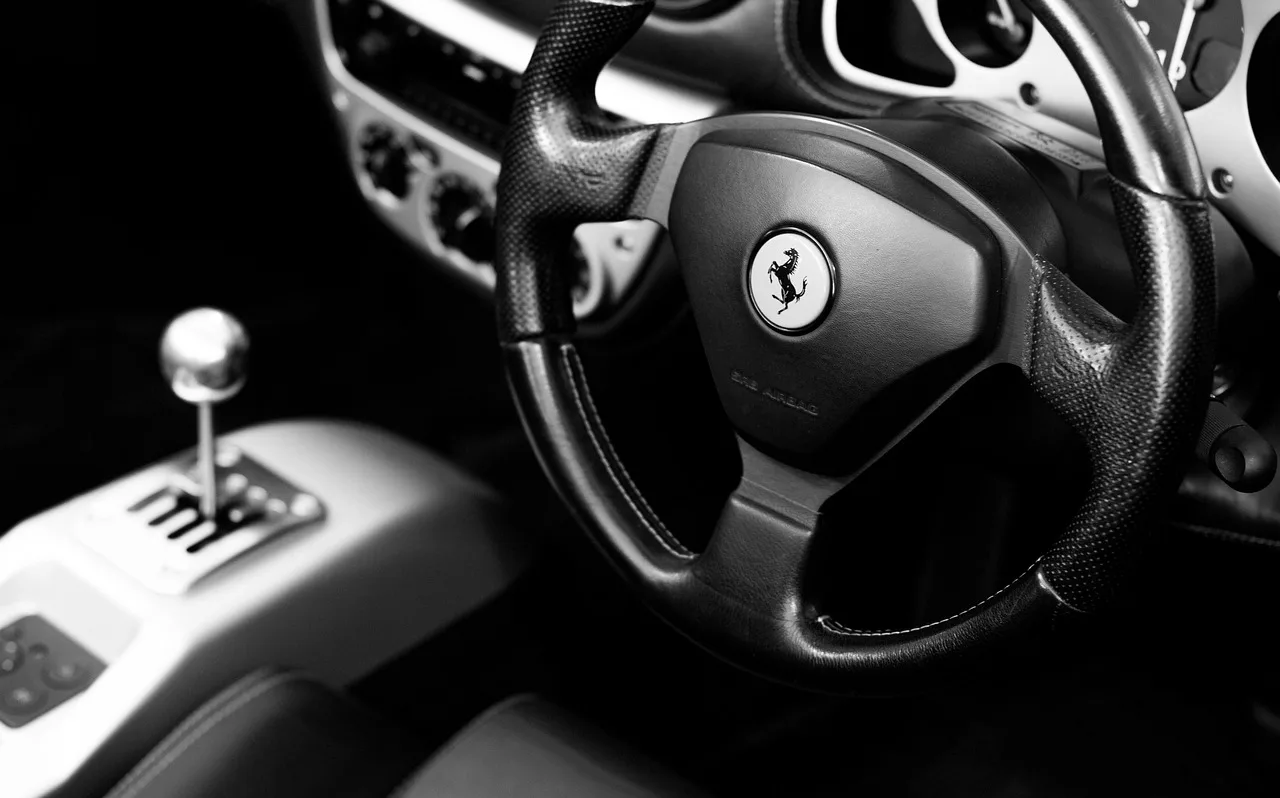
Meguiar’s Ultimate Interior Detailer Review: Worth It?
Meguiar’s Ultimate Interior Detailer is a strong daily-driver maintenance spray for light dust, fingerprints, and UV care, but it should not replace a dedicated leather cleaner or heavy-duty degreaser when the cabin is dirty. Skip the wrong cleaner and grime stays in seams, glossy trim, and leather that ages faster. This review covers where it works, where it falls short, and the exact jobs it can and cannot replace.
This guide is part of our Car ownership essentials series.
Quick verdict: is Meguiar’s Ultimate Interior Detailer worth it?
Who should buy it, and who should skip it
This is the right bottle for drivers who want one quick wipe product for dashboards, door panels, center consoles, and other high-touch plastic or vinyl surfaces. It also makes sense for garage-kept cars that still see sunlight, because the formula includes UV protection. The satin look suits owners who hate greasy interiors.
Skip it if the cabin needs real cleaning, not upkeep. Heavy sunscreen buildup, old coffee, body oils, and muddy transfer marks need a stronger cleaner. Unfinished leather, delicate aftermarket screens, and perforated leather also need separate judgment, not blind use of an all-purpose interior spray.
Where it fits in a weekly maintenance kit
In a weekly or monthly kit, this product fits well next to a microfiber towel and a small interior brush. It is a maintenance tool first. That means it keeps a clean cabin looking clean longer, instead of rescuing a neglected one.
According to Best 10 Meguiar’s Ultimate Interior Detailers – Cars Shelf — Cars Shelf lists the Meguiar’s G201316 Ultimate Leather Detailer as a separate product.
What Meguiar’s Ultimate Interior Detailer is and how it works
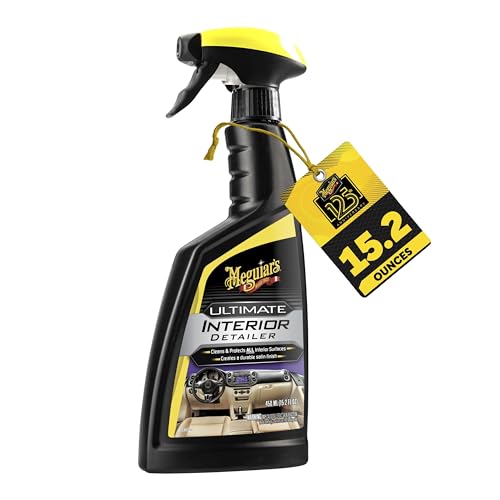
This interior detailer is sold in a spray bottle and is intended as an interior cleaner/protectant. It uses a spray-and-wipe method, leaves a non-greasy satin finish, and includes UV protection. The formula is meant for routine cleaning, not heavy stain removal.
What the cleaner/protectant blend is meant to do
The job is straightforward: pull off light grime, leave a low-glare finish, and add UV blockers to exposed cabin surfaces. That setup works on daily drivers that pick up dust and fingerprints fast. It is less useful on neglected interiors that need agitation and stronger chemistry.
Why the finish matters for daily drivers
A maintenance spray has to fit into the routine. If it leaves a sticky film, people stop using it. This one aims for a clean satin look instead of a shiny or greasy finish, which is exactly why it works for frequent wipe-downs.
What surfaces can you use Meguiar’s Ultimate Interior Detailer on?
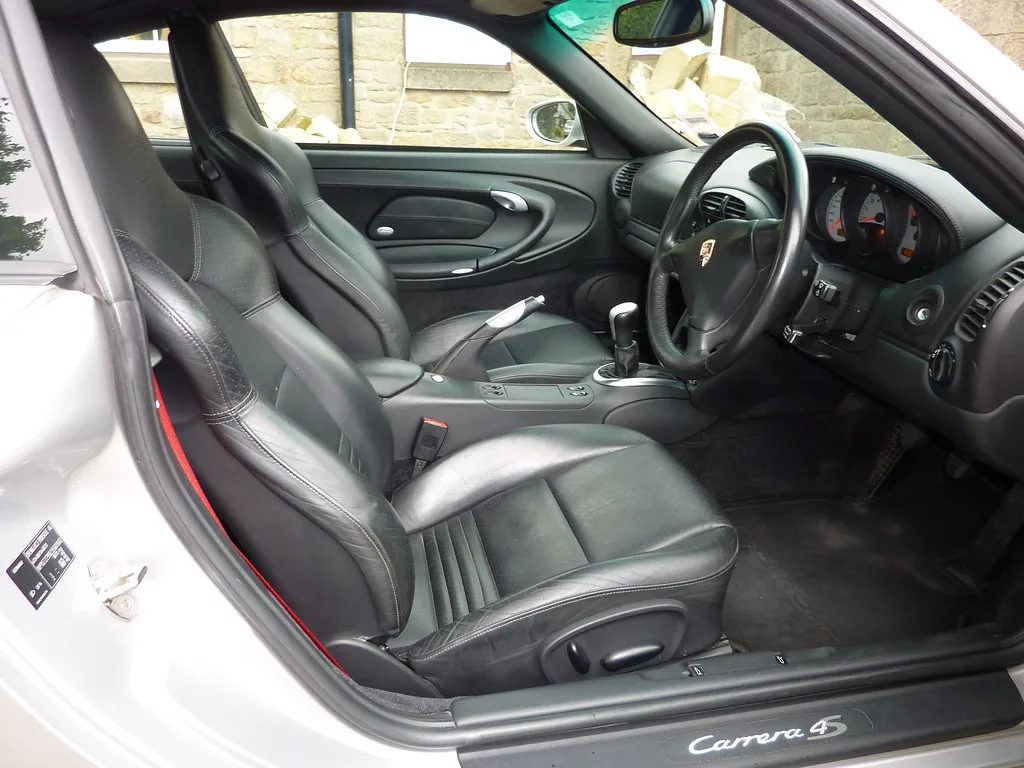
It is intended for dashboards, door panels, center consoles, steering wheels, and navigation screens. In practice, that makes it a good fit for the hard, frequently touched parts of a cabin that show dust and hand oil first. It is not a universal answer for every interior material.
Dashboard, door panels, and center console
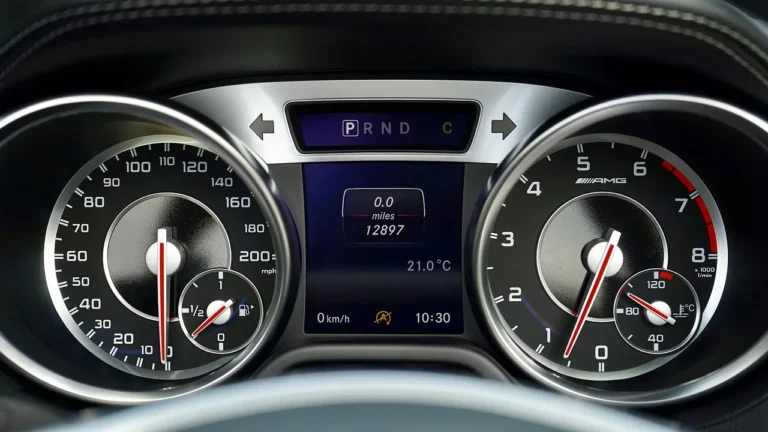
Dashboard use makes the most sense because the dash is a high-touch surface with sun exposure and fading risk. Door panels and the center console are also common interior surfaces that benefit from quick wipe-down cleaning. A microfiber towel gives more control than spraying directly on the panel.
Screens, buttons, and piano black trim
Navigation screens and LCD screens are where restraint matters. The product is listed for navigation screens, but low-residue application is the goal, not wet application. Piano black trim, buttons, and seams can hold excess product and show haze if they are flooded.
Leather seats and trim: where it is acceptable and where it is not
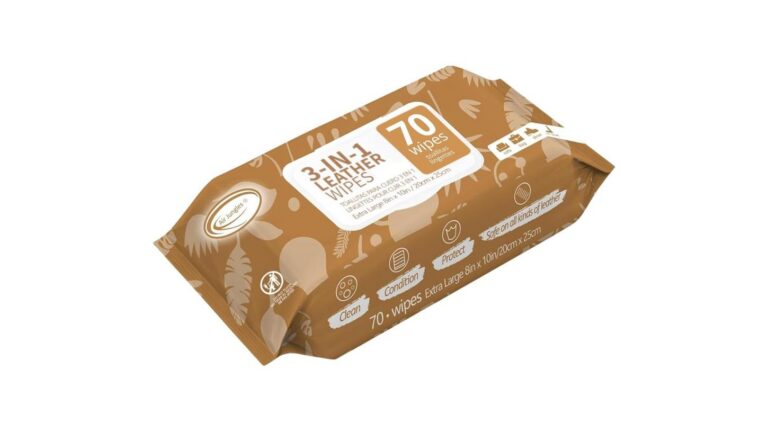
On finished leather, this can be used as a light maintenance wipe for dust and fingerprints. It is not a substitute for a leather-specific cleaner on soiled seats, and it should stay away from unfinished leather, perforated leather, and delicate aftermarket leather surfaces. Those materials can react differently to residue and moisture.
Does it leave a shiny or matte finish?
The finish can be described as satin and low-glare. It is not a flat cleaner, and it is also not meant to leave a wet shine. Wiped correctly, it gives a clean interior look without the greasy film many drivers dislike.
What the satin finish looks like in real use
On dashboards and door panels, the finish reads as subdued and even. That helps in daylight because it avoids a reflected glare that can distract the driver. The product can be wiped to a more matte look if excess is removed before it dries.
How to avoid residue, haze, and glare
Haze usually comes from using too much product or letting overspray land on glossy trim. The fix is not more product; it is less. Spray onto the towel, work one small section at a time, and turn the towel often so you are not smearing leftover film back onto the surface.
Does it protect against UV damage?
Yes, it includes UV protection, which matters most on sunlit surfaces that age fastest. That said, UV blockers are a preservation aid, not armor. They help slow fading and cracking on exposed plastics and vinyl, especially dashboards and upper door panels, but they do not reverse existing damage.
What UV blockers can help with on hot, sunlit surfaces
Dashboards benefit most because they take direct sun and heat. Upper door panels, A-pillar trim, and center consoles also see regular exposure through side glass. In a car that sits outside, the UV layer is worth having as part of routine upkeep.
Dashboard versus garage-kept interiors
A garage-kept car still gains from UV protection, but the need is lighter. If the vehicle spends most of its life parked inside, the product becomes more about convenience and appearance than damage control. For a commuter that lives in full sun, the UV side of the formula matters more.
How do you use it without streaks?
Spraying onto a microfiber towel can give more control than spraying directly at the surface. That matters on screens, piano black trim, and glossy buttons where excess product shows fast. The best results come from light application, a clean towel, and a final dry pass.
Why a microfiber towel is the preferred tool
Microfiber spreads the cleaner evenly and lifts dust instead of dragging it around. It also lets the user keep product off seams and switches. For delicate areas, a folded towel gives a clean working face before the first one gets damp.
How much product to use on screens and trim
Use the minimum that removes the film. A light spray onto the towel is often enough for a small screen area or a row of buttons. On larger trim pieces, work in sections and follow with a dry buff to reduce streaks.
- Dust the surface first so the towel is not grinding grit into the finish.
- Spray the product onto the microfiber towel, not directly onto sensitive parts.
- Wipe one small section at a time with light pressure.
- Flip to a dry side of the towel and buff away excess.
- Inspect seams, buttons, and edges for pooled residue.
Surface-by-surface decision table: where it fits, where it does not

This is the part most product pages skip. The bottle can do useful work, but only on the right materials and with the right expectations. The table below separates good fit, cautionary fit, and no-go use cases.
| Surface | Fit level | Why it fits or fails | Expected finish |
|---|---|---|---|
| Dashboard | Good fit | High-touch, sun-exposed, and compatible with quick wipe-down maintenance | Clean satin, low glare |
| Door panels | Good fit | Common interior grime and fingerprints come off well with a microfiber towel | Even satin finish |
| Center console | Good fit | Trim-safe for routine cleaning when applied lightly | Low-glare, non-greasy |
| Navigation screen / LCD screen | Cautionary fit | Sensitive surface; use a small amount and avoid overspray or wetting seams | Low residue if buffed well |
| Piano black trim | Cautionary fit | Shows streaks and haze easily; product must be applied sparingly | Can look clean, but excess creates haze |
| Steering wheel | Cautionary fit | Useful for fingerprints, but traction and residue control matter | Dry satin, no slick feel |
| Finished leather seat | Cautionary fit | Okay for light upkeep, not a replacement for leather-specific cleaning | Subtle, not glossy |
| Unfinished leather | No-go | Too uncertain for a general interior spray | Not recommended |
| Perforated leather | No-go | Product can settle in holes and leave residue | Not recommended |
| Delicate aftermarket screen | No-go | Low-residue needs vary by coating and panel maker | Unknown risk |
| Heavily soiled fabric | No-go | Routine interior spray is not built for deep stain removal | Won’t correct the stain |
Meguiar’s Ultimate Leather Detailer vs Gold Class and Ultimate Interior Detailer
Meguiar’s Ultimate Leather Detailer (G201316) is the leather-specific product in the lineup, and that matters. If the job centers on leather care, the leather detailer is the more direct choice. Meguiar’s Ultimate Interior Detailer is broader, but broader is not better for every seat or trim material.
When the leather-specific product is the better pick
Use Ultimate Leather Detailer when the job is leather-focused and you want a product built for that material. It makes more sense for regular leather seat maintenance than an all-surface cleaner/protectant does, especially when the leather needs dedicated treatment rather than a general wipe.
How Gold Class fits into the comparison
Gold Class sits in the same conversation because it is often chosen for leather upkeep. The choice comes down to the routine: if the cabin needs leather-first care, the leather-specific bottle belongs there; if the interior needs a broader wipe-down of plastics, vinyl, and screens, Ultimate Interior Detailer fits better.
Which bottle belongs in a leather-focused routine
A leather-focused routine should not start with the general interior spray. It should start with the leather-specific product, then use the interior detailer for adjacent trim, console plastics, and screens. That division keeps each bottle doing the job it was built for.
Value, bottle life, and buying decision
Value depends on how often the bottle is used and what the cabin looks like between cleanings. A 15.2 oz spray bottle can stretch a long way in a compact sedan or garage-kept coupe, because light maintenance uses very little product. In a three-row SUV with lots of plastic trim, usage rises fast.
Cost per full interior detail
The real cost is not the shelf price alone. It is how many complete interior wipe-downs one bottle provides before it runs dry. Light use on dash, doors, console, and screen can make one bottle feel economical; heavy use on every panel and seat side bolsters shortens that life.
How far a 15.2 oz bottle goes by vehicle size
Smaller cabins need less product because there is less surface area. Larger SUVs and trucks, especially those with more plastic trim and third-row touchpoints, use more per session. If the goal is weekly maintenance, a single bottle should last much longer than if it is used as a cure for neglected interiors.
Does it still make sense in 2026?
Yes, because the core use case has not changed. Drivers still need a quick, low-glare interior spray for routine wipe-downs, and this formula still fits that job. The limitation is the same too: it is useful because it is restrained, not because it can replace more specialized cleaners.
Frequently asked questions
Is Meguiar’s Ultimate Interior Detailer worth it?
Yes, if the goal is regular cabin upkeep. It is worth it for drivers who want a quick cleaner/protectant for dashboards, door panels, center consoles, and screens. It is not worth buying as a fix for dirty leather, stained fabric, or heavy grime that needs stronger cleaning.
What surfaces can you use Meguiar’s Ultimate Interior Detailer on?
It is intended for dashboards, door panels, center consoles, steering wheels, and navigation screens. It also works as a light maintenance wipe on finished leather, but that use should stay limited. Avoid unfinished leather, perforated leather, and delicate aftermarket screens unless the maker specifically approves similar products.
Does Meguiar’s Ultimate Interior Detailer leave a shiny or matte finish?
It leaves a non-greasy satin finish, which sits between shiny and flat. Used lightly, it looks clean and low-glare. Too much product can create haze on glossy trim or make the finish read glossier than intended, so buffing off excess matters.
Does Meguiar’s Ultimate Interior Detailer protect against UV damage?
Yes, it includes UV protection. That matters most on dashboards and other sun-exposed plastics and vinyl that fade or dry out faster in hot parking conditions. UV blockers help with preservation, but they do not fix already damaged surfaces or replace shade and garage storage.
How do you use Meguiar’s Ultimate Interior Detailer without streaks?
Spray the product onto a microfiber towel, then wipe one small section at a time. Follow with a dry side of the towel to remove excess and keep seams, buttons, and piano black trim from hazing. On screens, use very little product and avoid a wet pass.
Can you use Meguiar’s Ultimate Interior Detailer on leather seats?
It can be used on finished leather for light upkeep, but it is not the better choice when the seat needs leather-specific care. It should not be used as a stand-in for a dedicated leather cleaner on dirty leather, unfinished leather, perforated leather, or delicate aftermarket upholstery.
Meguiar’s Ultimate Leather Detailer vs Gold Class
Ultimate Leather Detailer is the cleaner choice when the routine is centered on leather and the goal is material-specific care. Gold Class fits the same general leather-maintenance lane, but neither should be treated as a universal interior cleaner. For plastics, vinyl, and screens, the interior detailer still has the wider job.
Products related to this article
Sponsored / affiliate links. As an Amazon Associate I earn from qualifying purchases. I may earn additional commission from eligible campaigns.
 MPD PRO Interior Detailer Spray – Car Interior Cleaner for Dashboard, Plastic & Leather Trim – Repels Dust, Professional Automotive Interior Cleaning Spray – 16 oz (Pack of 1)
 MPD PRO Interior Detailer Spray – Car Interior Cleaner for Dashboard, Plastic & Leather Trim – Repels Dust, Professional Automotive Interior Cleaning Spray – 16 oz (Pack of 2)