Clothes Pole for Car: 3 Best Hanger Bars Compared
The best clothes pole for a car is usually a telescoping hanger bar clipped to the grab handles or set between cabin supports; it fits most sedans and SUVs, while fixed-width bars are steadier and multi-hook systems fail most often under load. A poor fit can bend trim, drop garments, or send suits, uniforms, and dry-cleaning bags into the footwell. This guide compares three hanger bar styles by cabin fit, load stability, and failure risk so you can choose the one that best fits commuting, rideshare work, formalwear, or road trips.
Clothes pole decision table


The decision comes down to three things: where the bar mounts, how the cabin carries the load, and what gives first when the car brakes hard. Headrest-mounted bars are easiest to fit when the seat posts are adjustable. Telescoping rods span the cabin better. Overhead grab-handle bars spread weight well, but they depend on the cabin layout.
| Bar style | Vehicle type | Install method | Likely failure mode | Best use case |
|---|---|---|---|---|
| Headrest-mounted hanger bar | Sedans and SUVs with adjustable headrest posts | Clamps or sleeves around the headrest posts; no-drill install | Slip, tilt, or rattle if the posts are narrow, fixed, or uneven | Daily commuting, short business trips, light suits and coats |
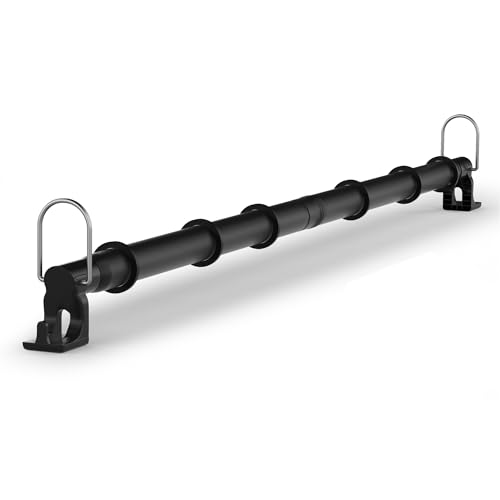
| Telescoping garment rod | Sedans, SUVs, minivans, and some trucks with enough cabin width | Extends between side supports or hooks; locks by twist, button, or spring latch | Sag in the center, end slip, or bend if the lock or tube is weak | Formalwear, road trips, winter layers, mixed garment loads |
| Overhead grab-handle clothes bar | Sedans with usable grab handles; many SUVs and minivans with taller cabins | Hooks or brackets onto overhead grab handles or roof-side mounting points | Rattle, reduced rear headroom, or interference with passengers | Rideshare work, frequent laundry transport, heavier balanced loads |
Which hanger bar fits your car?
The right style depends more on cabin shape than body style. Sedans usually favor headrest bars or grab-handle bars. SUVs and minivans have more vertical space, which helps overhead styles and longer telescoping rods. Trucks vary widely, a crew cab may work well, while a smaller cab can leave too little clearance behind the front seats.
Sedans and fixed headrests
Sedans are the hardest place for a hanger bar when the headrests do not raise on separate posts. Headrest-mounted bars need adjustable posts to clamp onto, and many fixed headrests leave no clean mounting point. In that case, a telescoping rod or grab-handle bar is the safer choice because it avoids forcing hardware around trim that was never meant to carry load.
If the rear seatback sits close to the front seat, rear-seat legroom also matters. A wide bar can crowd passengers or push coats into the rear window area. Check whether the bar will sit below the rearview mirror line and above the seatbelt guides before buying.
SUVs and minivans with taller cabins
Taller cabins give you more installation room and better garment clearance. That helps overhead grab-handle bars, which spread weight across the cabin instead of loading one narrow point. Telescoping rods also benefit because the extra height reduces the chance that long coats drag on seats or floor mats.
Still, taller cabins can hide a fit problem. A bar that spans the width may clear the seats but not the rear air vents, dome lights, or center grab points. Measure the usable span between the intended mounting points, not the full cabin width.
Trucks and wide rear cabs
Wide truck cabs can make telescoping rods attractive because they often need a longer span than a sedan. The trade-off is that long spans increase sag risk unless the rod has a strong lock and a tube that resists bending. Overhead bars can work too, but check for clearance from rear passengers and the rear glass.
Trucks with fixed headrests often rule out headrest-mounted bars. If the posts are short, angled, or shaped oddly, the bar may twist instead of sitting level. That is a common setup failure, not a defect in the concept itself.
Headrest-mounted hanger bar
Headrest-mounted bars are the simplest answer when the front seats have adjustable headrest posts. They clamp to the posts, so installation is usually quick and the bar sits close to the seatback. That low position helps keep suits and coats from swinging, but it also means less room for bulky winter layers and larger bags.
Mount style and post fit
This style depends on straight, accessible posts. Most designs use a clamp, sleeve, or bracket that grips the metal rods under the headrest. A common fit range is the set of adjustable posts found on many passenger cars and crossovers, but the exact spacing and rod diameter vary by vehicle. Check the listing for the model-specific width range.
Fit problems usually show up fast. If the posts are too far apart, too close together, or hidden inside molded seatbacks, the bar may sit crooked. Crooked mounting raises the chance of rattling and load shift.
Stability with suits, coats, and light bags
Headrest bars are a good match for one or two garments, especially business travel clothing or light outerwear. The short lever arm helps reduce bounce in normal driving. They are less suitable for heavy, dense loads because the seatback and posts carry the entire force during braking.
Suppose a driver hangs two wool coats and a suit jacket on one side of the bar. The bar may stay in place during cruising, then tilt forward under a hard stop. That is a load-distribution issue, not a mystery failure. Keep heavier pieces centered and avoid stacking extra weight on one end.
Where this style can slip or rattle
Plastic joints and loose clamps are the weak spots. A bar that depends on friction alone can creep lower over time, especially on rough pavement. Rattle risk rises when the clamp contacts painted metal or when the posts are narrow and the bar has too much side play.
Rubberized contact points help, but they do not fix a poor fit. If the listing does not explain how the joint locks, skip it and look for a bar with a clear post clamp and positive fastening method.
Telescoping garment rod
Telescoping garment rods are the most flexible option for cabin width. They adjust to the space between supports, then lock in place. That makes them practical for mixed vehicle use, road trips, and drivers who move between different cars. They also give you the best chance of keeping clothes centered when the cabin is wide enough to support the rod properly.
Length adjustment and locking mechanism
The key detail is the lock. A twist lock, push-button lock, or spring latch needs to hold the rod at the chosen length without creeping shorter. If the lock is weak, the rod can sag as the load settles or shorten during cornering. A good listing should explain the lock type, not just say “adjustable.”
Some rods add anti-sag support in the middle or at the ends. That matters because the center span takes the most bending force. Without support, a long rod may look fine empty and then droop once coats or garment bags go on it.
Steel or aluminum construction
Steel rods usually resist bending better, which helps when the bar carries heavier coats or a few garment bags. Aluminum can be lighter and still strong enough for lighter loads, but it depends on wall thickness and joint quality. Plastic joints are the first place to inspect closely, because that is where a rod often fails before the tube itself does.
Rust resistance also matters if the rod will see wet winter gear. Coats that drip road salt or meltwater can leave corrosion on lower-grade hardware. A coated steel rod or corrosion-resistant finish is a better bet than bare metal in that use case.
Sag risk under heavier loads
Telescoping rods can sag under heavy coats if the span is long, the tube is thin, or the lock lets the rod settle. The practical load is often lower than the claim on the box, especially when the car brakes hard. A safe load is the amount that stays level without bowing noticeably in normal driving and without shifting during a stop.
That is why single-rod and dual-rod systems behave differently. A dual-rod layout spreads weight better and can reduce sway, while a single rod concentrates load in one span. For suit transport and one or two coats, a single rod may be enough. For laundry or multiple winter layers, the support structure matters more than the headline rating.
Overhead grab-handle clothes bar
Overhead grab-handle bars work well when the vehicle has strong handle mounting points and enough headroom. They spread the load across the cabin, which can improve balance and reduce visible sag. The trade-off is that installation is more involved, and the bar can interfere with rear-seat passengers if clearance is tight.
Mounting points and cabin clearance
This style depends on grab handles, roof-side hooks, or nearby mounting points that can safely carry the bar’s load. It is a better fit for many SUVs and minivans than for compact sedans, where the ceiling may sit too low or the handles may be too far forward. The listing should say which mounting points it uses.
Clearance is the hidden problem. A bar may fit on paper and still sit too low for tall passengers. If the rear occupants will regularly use the seat, measure the space from the roofline to the seat cushion and check how much the bar hangs below that line.
Weight distribution across the cabin
These bars often handle load better because the force spreads across two or more overhead points. That reduces point stress and can limit bounce under braking. It does not make the bar immune to movement, though. If the garments slide toward one side, the load balance changes and the bar can start to yaw or rattle.
A common first-timer mistake is hanging all the heavy pieces on one end. A few winter coats plus a laundry bag on the same side can pull the bar out of level even if the total weight seems modest. Keep weight centered and avoid loading the far end first.
Install complexity and rear-seat trade-offs
This is the most installation-sensitive style. Even when it is no-drill, the mounting points and strap or hook layout need careful setup. The payoff is useful cargo space for rideshare drivers and frequent travelers who need a cleaner hanging solution than a seatback hook.
The trade-off is cabin interference. Overhead bars can reduce headroom, block a rear dome light, or create a visual barrier through the rear window. That matters if you carry passengers or need clear rear visibility at night.
Choose headrest bars if… / Choose telescoping rods if…
Choose headrest bars if your front seats have adjustable posts, you usually carry a few light garments, and you want a quick no-drill install. Choose telescoping rods if your cabin is wide, you need adjustable length, or you want the best balance between fit and daily flexibility. For many SUVs, trucks, and minivans, a telescoping rod is often a good adaptable starting point.
Best option for commuters and rideshare drivers
Rideshare drivers usually need fast loading, low mess, and enough clearance for a passenger seat to stay usable. Headrest bars work well for a small number of garments. Overhead grab-handle bars make more sense if the car regularly carries multiple uniforms, coats, or garment bags and the rear seat stays mostly dedicated to cargo.
For commuters, the simplest setup often wins. A short daily route does not need a complicated bar if the clothing load is light and the vehicle has adjustable headrest posts.
Best option for formalwear and road trips
Formalwear needs the least wrinkling and the most stable hang. A telescoping rod is usually the better pick because it can span the cabin without forcing the suit onto a tight hook. On road trips, that same adjustability helps when the car is packed with bags and the rear seats change from day to day.
Best option for SUVs, trucks, and minivans
These vehicles usually have the most room for overhead bars and longer rods. SUVs and minivans benefit from the extra height. Trucks benefit from the span, as long as the rod lock is strong and the bar does not block rear passengers. If the cabin has fixed headrests, skip headrest-mounted bars and move straight to the other two styles.
Safe installation is about matching the mount to the cabin, not forcing the bar into place. Keep the bar clear of airbags, seatbelt paths, and rear visibility lines. Then verify that the lock or clamp holds under a hard push before adding clothes. If the bar shifts with an empty load, it is not ready for travel.
- Check the vehicle listing or owner’s manual for headrest, grab-handle, and airbag locations.
- Measure the usable span between the mount points, not the full cabin width.
- Install the bar without twisting seat covers, trim, or headrest posts.
- Confirm that rubberized ends or hooks contact firm surfaces, not loose plastic trim.
- Load one garment first, then check for tilt, slip, or rattle.
- Add weight gradually and stop if the bar bows, shifts, or blocks rear visibility.
Can a car clothes bar damage headrests or airbags?
Yes, if the bar is mounted in the wrong place or forced against the wrong surface. Headrest posts can be scratched or bent by clamps that are too tight or poorly shaped. Airbags are a separate concern: a bar should not block side curtain deployment paths, seat-mounted airbag zones, or the movement of seatbelt guides.
That is why “universal fit” needs a second look. A universal bar can still be wrong for a specific car if the headrests are fixed, the grab handles are too far apart, or the bar sits in the path of an airbag cover. Check the vehicle-specific listing before buying.
Frequently asked questions
What is the best clothes pole for car use?
For most drivers, a telescoping hanger bar is the best starting point because it adjusts to cabin width and works in more vehicle types. If your car has adjustable headrest posts and you carry lighter garments, a headrest-mounted bar is simpler. For larger cabins, an overhead grab-handle bar can carry weight more evenly.
Do car hanger bars fit all vehicles?
No. Fit depends on headrest style, cabin width, grab-handle placement, and how much rear-seat clearance you need. Fixed headrests, narrow sedans, and some trucks create fit problems. The safest move is to check the bar’s mounting method against your exact vehicle layout before ordering.
Will a clothes hanger bar sag with heavy coats?
It can. Sag risk rises with long spans, weak locks, thin tubing, and uneven loading. Steel rods and dual-support designs usually handle heavy coats better than lightweight plastic-joint bars. If the bar bows with an empty test fit, it will likely sag more once coats go on.
How do you install a car clothes pole safely?
Mount it only where the vehicle can support the load without blocking airbags, seatbelts, or rear visibility. Use the listed hardware, whether that is headrest posts, hooks, straps, or rubberized ends. After installation, load one item first and confirm that the bar stays level and quiet under braking.
Which hanger bar is best for SUVs, sedans, and trucks?
SUVs usually suit telescoping rods or overhead bars because they offer more interior height. Sedans often do better with headrest bars if the posts are adjustable, or with a compact telescoping rod if they are not. Trucks vary most, so cabin width and rear-seat space should decide the choice.
Can you use a clothes pole for car rideshare work?
Yes, but choose the style that keeps passenger space usable and avoids rattle. Rideshare drivers usually do best with a stable bar that loads quickly and does not interfere with rear visibility or headroom. Keep the load light, centered, and clear of seats so passengers can still enter comfortably.
Products related to this article
Sponsored / affiliate links. As an Amazon Associate I earn from qualifying purchases. I may earn additional commission from eligible campaigns.