Does Car Insurance Affect Credit Score? The Truth About Soft Pulls, Insurance Scores, and Your Premiums
You’ve probably heard that checking your credit can hurt your score, so you might hesitate before shopping for car insurance. That hesitation is understandable, but it’s based on a misunderstanding. The short answer is this: getting a car insurance quote will not damage your credit score, but your credit history absolutely influences what you pay for coverage.
This guide separates fact from fiction. You’ll learn exactly when an insurer pulls your credit, how a proprietary insurance score differs from your FICO score, and what you can do if an error is inflating your premiums. You’ll also get a clear picture of the states where this practice is banned entirely.

Parkez
ESSENTIAL Car Auto Insurance Registration BLACK Document…
- ESSENTIAL Car Auto Insurance Registration BLACK Document Wallet Holders 2 Pieces
Quick Answer: Does Car Insurance Affect Your Credit Score?
No, car insurance does not affect your credit score. The act of getting a quote or buying a policy does not lower your credit score. However, the reverse is true: your credit history can affect your insurance rates.
Insurers use a specialized metric called a credit-based insurance score. This score predicts how likely you are to file a claim, based on your financial behavior. It’s not the same number your lender sees, though it’s calculated from similar data.
So the relationship works one way. Your credit influences your insurance premium, but your insurance activity doesn’t feed back into your credit report. Paying your insurance bill late won’t show up on your credit report, and missing a payment won’t lower your FICO score.
The Short Answer: Quotes vs. Policies
When you request a car insurance quote, the insurer may look at your credit. This is a soft inquiry, which doesn’t affect your credit score at all. You can get dozens of quotes from different companies, and your score won’t move a point.
A hard inquiry, on the other hand, does affect your score. This type of pull is used when you apply for a loan or a credit card. It signals to lenders that you’re taking on new debt, and each hard pull can shave a few points off your score for up to two years.
Soft Inquiries vs. Hard Inquiries
Here’s the timeline that most people don’t know. When you fill out an online quote form, the insurer runs a soft inquiry. This happens instantly and leaves no trace on your credit file that other lenders can see. You could compare rates with five different carriers in one afternoon, and your credit score would remain untouched.
The only time a hard inquiry might happen is if you miss a payment and the insurer sends your account to collections. That’s a different situation entirely. A collections account on your credit report can drop your score by 50 to 100 points, depending on your starting point. But that’s a consequence of non-payment, not of having insurance.
One more thing to know: your existing insurer may periodically review your credit while you’re a customer. This is also a soft inquiry, and it won’t affect your score. They do this to reassess your risk profile at renewal.
Why Insurers Use Credit-Based Insurance Scores
Insurance companies are in the business of predicting risk. They’ve found a statistical correlation between credit behavior and the likelihood of filing a claim. Data from the Federal Trade Commission shows that people with lower credit-based insurance scores file more claims, and those claims tend to be more expensive.
This isn’t about judging character. It’s about actuarial math. Insurers have decades of claims data showing that someone who pays bills on time is less likely to file a fraudulent claim or let their policy lapse. The insurance score helps them price your policy more accurately.
Your credit-based insurance score is built from several factors, but they’re weighted differently than a consumer credit score. Payment history matters most, followed by outstanding debt and credit utilization. The length of your credit history and your mix of credit types also play a role, but they carry less weight.
Here’s the key distinction: your insurance score is proprietary. Each insurer uses its own formula, so the same credit report could produce different insurance scores at different companies. You’ll never see this number the way you see your FICO score, and you can’t access it for free through a standard credit report service.
The Real Impact: How Much Your Score Matters
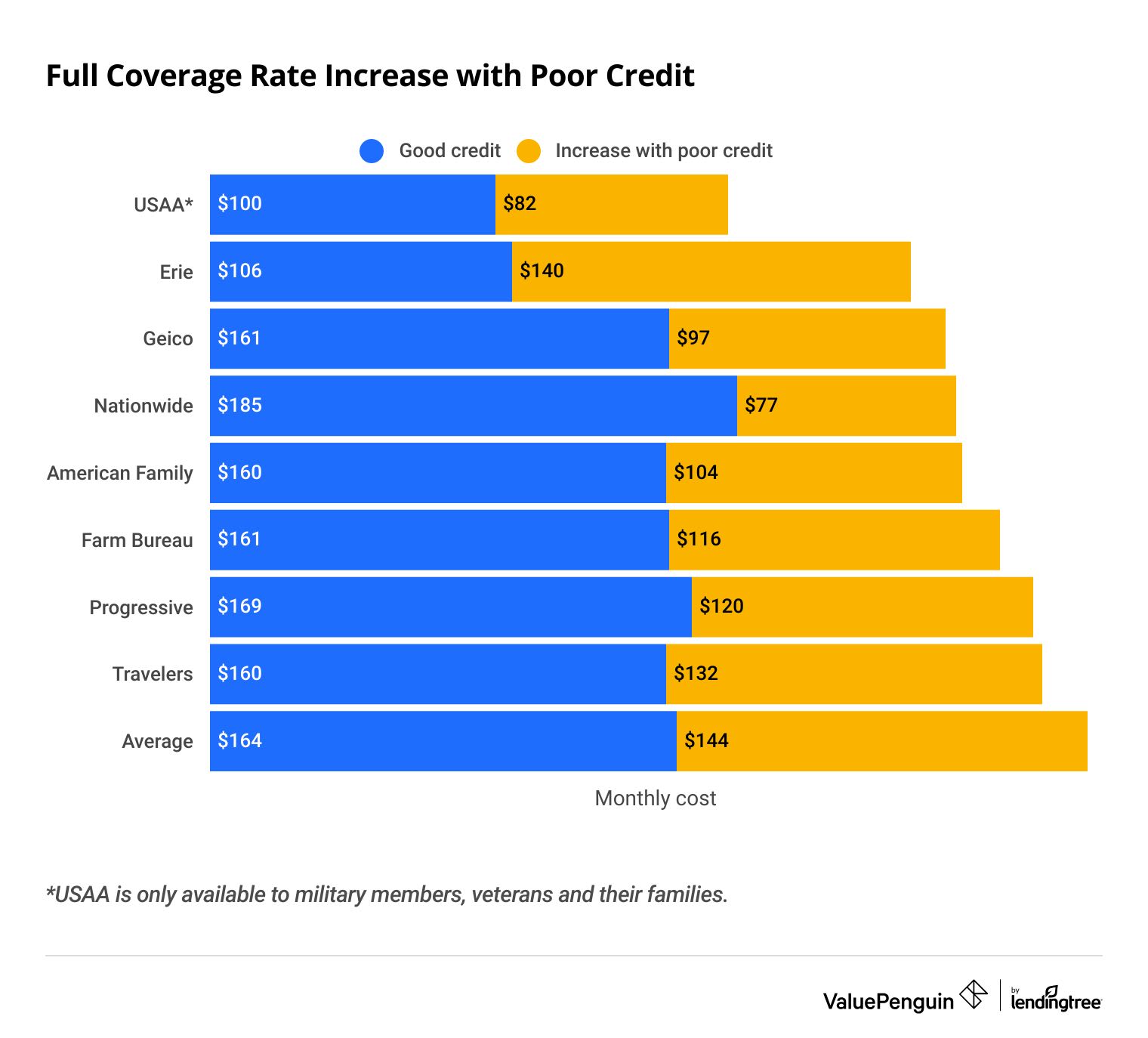
Your credit-based insurance score can move your premium by a significant amount. It’s not a small factor—it’s often one of the top three pricing variables, right behind your driving record and claims history.
Average Rate Differences by Score Tier
The Insurance Information Institute reports that a driver with poor credit can pay up to double what a driver with excellent credit pays for the same coverage. That’s not an exaggeration. A 2026 study by the Consumer Federation of America found that drivers with poor credit pay an average of $1,550 more per year for auto insurance than drivers with good credit.
To make this concrete, consider a hypothetical driver in Ohio with a clean driving record. With excellent credit, they might pay $800 per year for full coverage. The same driver with poor credit could pay $1,600 or more. That’s a difference of $800 a year, which is a substantial amount of money.
The table below shows typical rate differences based on credit tier. These are national averages, and your actual rates will vary by state, carrier, and vehicle.
| Credit Tier | Average Annual Premium | Percentage Increase vs. Excellent |
|---|---|---|
| Excellent (720+) | $1,200 | Baseline |
| Good (660-719) | $1,400 | 17% higher |
| Fair (620-659) | $1,700 | 42% higher |
| Poor (below 620) | $2,400 | 100% higher |
These numbers are illustrative, but they align with industry research. The point is that your credit score matters a lot when it comes to insurance pricing.
What If You Have No Credit or Bad Credit?
A thin credit file—or no file at all—is treated differently than a bad score. Insurers don’t see a blank slate as a good thing. In their models, a lack of data is a risk factor because they can’t predict your behavior.
If you have no credit history, you’ll likely pay higher rates than someone with a modest but positive history. This is the “no credit” penalty, and it’s a real problem for young drivers and recent immigrants who haven’t built a credit file yet.
This penalty can be steep. A driver with no credit might see rates similar to someone with poor credit, even though they’ve never missed a payment in their life. It feels unfair, and in some ways, it is. But there are ways to work around it.
Strategies to Lower Premiums Without a Good Score
If your credit is holding you back, you have options beyond just waiting for your score to improve.
- Shop around aggressively. Different insurers weight credit differently. One company might use it heavily, while another might rely more on your driving record. You could find a 30% price difference between carriers for the same driver.
- Ask about non-credit pricing. Some insurers offer programs that don’t use credit, especially for high-risk drivers. These policies cost more, but they can be cheaper than a standard policy with bad credit.
- Raise your deductible. A higher deductible lowers your premium, and it’s a choice you control. Just make sure you can cover the deductible if you need to file a claim.
- Take a defensive driving course. Many insurers offer a discount for completing an approved course. It won’t offset a bad credit score, but every dollar helps.
- Bundle your policies. Combining your auto and renters or homeowners insurance can earn you a significant discount, sometimes 10% or more.
Pro tip: if you’re a young driver with no credit, ask a parent to add you as an authorized user on their credit card. This can help you build a credit history, but it takes time.
How to Check and Dispute Your Insurance Score
You have a legal right to know what’s in your credit report, and you can dispute errors that are hurting your insurance score. Here’s a step-by-step process to audit your own insurance score.
- Pull your credit reports. Go to AnnualCreditReport.com, which is the only federally authorized source for free weekly credit reports. Get all three bureaus: Equifax, Experian, and TransUnion.
- Review for errors. Look for accounts that aren’t yours, late payments that were actually on time, and collections that you’ve already paid. These are common errors that drag down your insurance score.
- File a dispute online. Each credit bureau has an online dispute process. You’ll need to provide your personal information and explain the error. Attach supporting documents, like a bank statement showing a payment was made.
- Follow up within 30 days. The bureaus have 30 days to investigate your dispute. They’ll contact the creditor and verify the information. If they can’t verify it, they must remove it.
- Request your insurance score. After your credit report is corrected, ask your insurer for the specifics of your insurance score. Some carriers will share this if you ask, though they’re not required to.
Pro tip: if a dispute is denied, you can add a statement to your credit file explaining the situation. This won’t change your score, but it lets insurers see your side of the story.
One thing to keep in mind: disputing an error takes time. While you’re waiting, your premiums won’t change. But if you find a significant error, the effort can save you hundreds of dollars a year.
Does Paying Your Insurance Bill Build Credit?
This is a common question, and the answer is usually no. Car insurance payments are not reported to the credit bureaus. Paying your premium on time every month won’t build your credit score.
But there’s a catch. If you miss a payment badly enough, your insurer can send the account to a collections agency. That collection account will appear on your credit report and can damage your score. So insurance payments can only hurt your credit, never help it.
What about paying your insurance bill with a credit card? That’s a different story. When you use a credit card to pay your premium, the credit card company reports your payment activity to the bureaus. Your on-time credit card payments can help build your credit, but that’s a function of the credit card, not the insurance policy.
There’s a circular logic here that’s worth understanding. You might use a credit card to build credit so you can lower your insurance rates. But if you carry a balance on that card, the credit utilization will hurt your credit score, which then raises your insurance rates. It only works if you pay off the card in full each month.
For more on how credit cards and rental cars interact, check out our article on rental car insurance.
State Bans and Regulations: Where It’s Illegal
Not every state allows insurers to use credit information in their pricing. Five states have banned the practice entirely, and a few others have placed restrictions on it.
California, Hawaii, Massachusetts, Michigan, and Washington all prohibit insurers from using credit-based insurance scores to set premiums. In these states, your credit history has no bearing on your auto insurance rates.
There are also states with partial restrictions. For example, some states allow insurers to use credit but prohibit them from denying coverage solely based on a lack of credit history. Others require insurers to disclose when credit was a factor in a rate increase.
If you live in one of the banned states, your rates are based on other factors: your driving record, age, vehicle type, and location. This can be a relief if you have poor credit, but it also means you won’t get a discount for having excellent credit.
For a deeper look at how your driving history affects premiums, read our guide on age and car insurance.
Protecting Your Wallet and Your Score
Here’s what you need to remember from all of this.
- Getting a car insurance quote is a soft inquiry and will never hurt your credit score.
- Your credit history affects your insurance premium, but insurance payments don’t build credit.
- Insurers use a proprietary insurance score, not your FICO score, to set rates.
- Poor credit can double your premium, making it worth your time to improve your score.
- You can dispute errors on your credit report that are inflating your insurance rates.
- If you live in California, Hawaii, Massachusetts, Michigan, or Washington, credit can’t be used to price your policy.
- Keeping your insurance paperwork organized in a document wallet helps you stay on top of renewals and avoid lapses, which keeps your rates stable.
Your credit score is a tool, and now you know how it interacts with your insurance. Use that knowledge to shop smart, dispute errors, and keep your premiums as low as possible. For more on how credit affects other automotive costs, see our piece on car financing and credit.
Products related to this article
Sponsored / affiliate links. As an Amazon Associate I earn from qualifying purchases. I may earn additional commission from eligible campaigns.