Cool Cars for $20K: Best Picks for 2026
The best cool cars for $20K in 2026 are usually used, not new. The top overall pick here is the Mazda3 hatchback because it pairs sharp styling, accurate steering, good fuel economy, and stronger resale than most budget fun cars, while avoiding the repair risk that can follow true enthusiast models.
For this ranking, the shortlist is based on manufacturer specs, listing details, and published buyer feedback. The goal is coolness-to-cost, how much style, performance, and daily livability you get before ownership pain starts rising.
What are the best cool cars under $20K?
$20K also means you need to watch mileage, accident history, and trim level. A clean, lower-mileage base car often beats a worn “desirable” trim with big wheels, extra tech, and expensive tires.
Quick picks
| Pick | Best for | Key spec to target | Price range |
|---|---|---|---|
| Mazda3 hatchback | Style and balanced daily use | 2.5-liter engine, automatic, safety suite | $16,000-$20,000 |
| Honda Civic hatchback | Practical fun and resale strength | 1.5-liter turbo, automatic, driver-assist package | $17,000-$20,000 |
| Toyota Corolla hatchback | Low ownership pain | 2.0-liter, automatic, active safety tech | $16,000-$20,000 |
| Subaru Crosstrek | Snow-belt commuting and ground clearance | AWD, 8.7 inches of ground clearance | $18,000-$20,000 |
| Volkswagen GTI | Most enthusiast appeal per dollar | Stock car, full service history, manual or DSG | $18,000-$20,000 |
Cool cars scorecard
This scorecard separates enthusiast appeal from ownership pain. A fast-looking car can still be a bad budget buy if tires are pricey, insurance is high, or the trim is loaded enough to push resale and repair costs upward.
| Model | Purchase price band | 0-60 feel | Fuel economy | Estimated annual ownership pain | Best-use case |
|---|---|---|---|---|---|
| Mazda3 hatchback | $16K-$20K | Quick enough, not frantic | About 26-34 mpg combined, depending on engine and trim | Low to moderate | Daily driver with upscale feel |
| Honda Civic hatchback | $17K-$20K | Holds pace well in traffic | About 31-36 mpg combined | Low | Practical fun with strong resale |
| Toyota Corolla hatchback | $16K-$20K | Calm, not fast | About 34-35 mpg combined | Low | Lowest-stress commuter |
| Subaru Crosstrek | $18K-$20K | Relaxed, especially off the line | About 27-29 mpg combined | Low to moderate | Snow-state all-rounder |
| Volkswagen GTI | $18K-$20K | Strong midrange punch | About 24-28 mpg combined | Moderate to high | Most fun for drivers who accept upkeep |
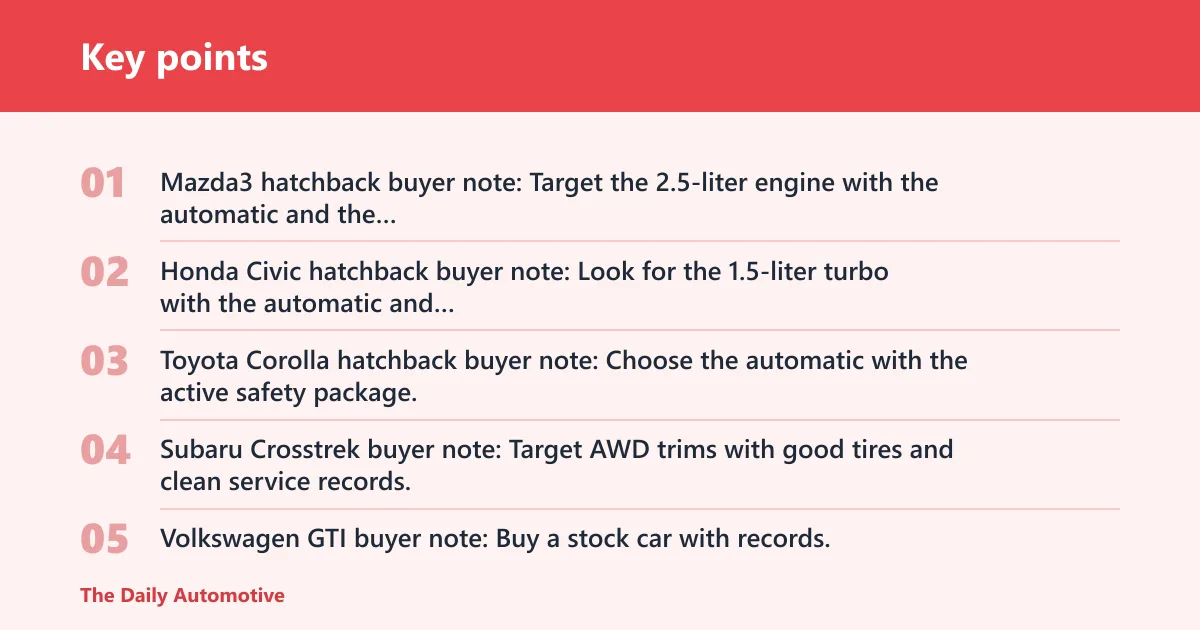
Mazda3 hatchback buyer note: Target the 2.5-liter engine with the automatic and the available safety suite; avoid heavily optioned, high-mileage cars with big wheels and obvious suspension wear.
Honda Civic hatchback buyer note: Look for the 1.5-liter turbo with the automatic and driver-assist package; avoid overpriced sport trims that add little beyond styling and raise the buy-in.
Toyota Corolla hatchback buyer note: Choose the automatic with the active safety package; avoid appearance packages that add no real value and can inflate price without improving ownership costs.
Subaru Crosstrek buyer note: Target AWD trims with good tires and clean service records; avoid underpowered, neglected examples that need fresh brakes, tires, and fluids all at once.
Volkswagen GTI buyer note: Buy a stock car with records, ideally a well-kept SE or Autobahn example if the price allows; avoid modified cars and tired dual-clutch or manual examples with incomplete service history.
Mazda3 hatchback
The Mazda3 hatchback ranks first because it feels more expensive than its price tag suggests, yet its fuel use, cargo space, and repair profile stay manageable for a 2026 buyer. It is the strongest mix of cool styling and low drama on this list.
Why it lands so high
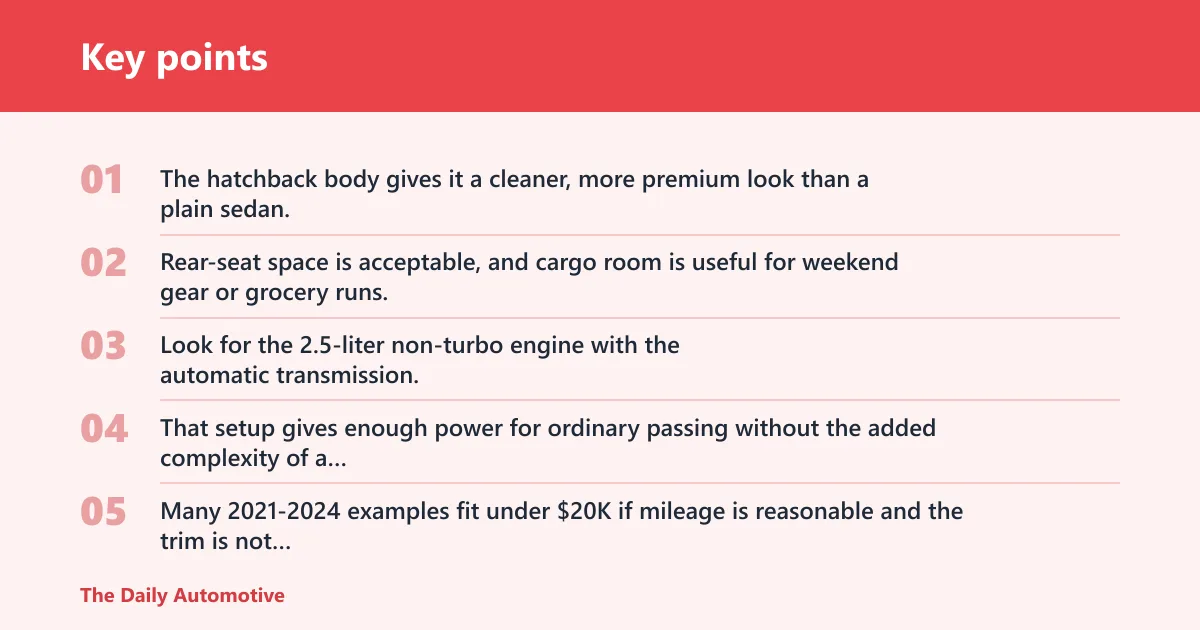
The hatchback body gives it a cleaner, more premium look than a plain sedan, and the steering and chassis tuning make it feel alert without asking for specialist upkeep. Rear-seat space is acceptable, and cargo room is useful for weekend gear or grocery runs.
What to target and what to skip
Look for the 2.5-liter non-turbo engine with the automatic transmission. That setup gives enough power for ordinary passing without the added complexity of a turbocharged engine. Many 2021-2024 examples fit under $20K if mileage is reasonable and the trim is not padded with expensive options.
Skip cars with obvious neglect, aftermarket wheels, or service gaps. A loaded trim can push the price over the budget while adding little to daily value, especially if it comes with larger tires and costlier brake parts.
The safety suite matters here. Automatic emergency braking, lane keeping assist, blind-spot monitoring, and adaptive cruise control are the features to confirm before traveling for the car. Those systems help the Mazda3 work as a commuter, not just a style piece.
Honda Civic hatchback
The Civic hatchback is the safest all-around buy if you want a car that stays easy to live with and easy to resell. It does not feel as upscale as the Mazda3, but it combines useful cargo space, strong fuel economy, and broad parts support.
Why shoppers keep coming back to it
Honda’s hatchback body gives you real cargo flexibility without moving into SUV territory. The rear seat is more useful than many shoppers expect, and the cabin layout suits longer commutes better than many sportier compacts.
Under this budget, the 1.5-liter turbo with the automatic is the sweet spot. It gives better response than the base setup, and used listings often include the driver-assist package with the safety tech most buyers now expect.
Do not pay extra for a worn sport trim just because it looks sharper. If the car has high mileage, curb rash, or a history of hard use, the resale strength may already be gone by the time you buy it.
For ownership cost, the Civic usually stays friendly on fuel and tires, with reasonable scheduled maintenance and strong parts availability. That helps keep total cost of ownership below many similarly priced fun cars.
Toyota Corolla hatchback
The Corolla hatchback is the least exciting car here and one of the smartest purchases. It wins on low fuel use, predictable maintenance, and broad trust in the market, which matters when the budget cannot absorb surprise repairs.
Why it is the ownership pain leader
This is the pick for buyers who want the least hassle, not the most speed. The 2.0-liter engine and automatic are not quick in a headline sense, but they are easy to live with and usually inexpensive to feed.
The available safety tech package is a big part of the value. Automatic emergency braking, lane keeping assist, blind-spot monitoring, and adaptive cruise control are worth prioritizing if you commute in traffic or want a calmer first car.
Skip appearance packages that do not add equipment you will actually use. The Corolla hatchback can be a poor value if you pay for cosmetic content while passing up a cleaner, lower-mileage standard car.
Its cargo space is usable, but not class-leading. The rear seat is fine for short trips and smaller adults, which is enough for many buyers who want a compact hatchback with low running costs.
Is the Subaru Crosstrek the smart all-weather pick?
Yes, if you live in a snow-belt state or want more ground clearance than a hatchback provides. The Crosstrek trades some fuel economy and acceleration for standard AWD, a higher ride height, and cargo room that works better on rough roads and winter commutes.
Why it fits certain buyers
The Crosstrek’s 8.7 inches of ground clearance helps in slush, rutted parking lots, and lightly maintained roads. AWD comes standard, which is the main reason it belongs on this list for buyers who face regular winter weather.
That capability comes with a cost. The Crosstrek is slower than the compact hatchbacks, and fuel economy is weaker. Tires can also cost more if the car sits on larger wheels or needs winter rubber for a second set.
Target a clean, stock example with records and avoid paying extra for trim content that does not improve how you will use it. For snow-state shoppers, the value is traction and clearance, not appearance.
Suppose you commute 18 miles each way on plowed suburban roads. A front-drive hatchback may save gas, but the Crosstrek can be the better winter tool if you value easier starts from snowy driveways and less scraping over frozen ruts.
Is the Volkswagen GTI worth the repair risk?
The GTI is worth it for shoppers who want the most enthusiast credibility in the group and accept higher ownership risk. It has the best performance feel here, but the right car matters more than the badge, because neglected examples can erase the budget advantage quickly.
What to buy and what to avoid
Under $20K, the safest GTI is a stock car with a clear service record, original hardware, and no evidence of tuning. Both manual and DSG-equipped cars can work, but the transmission condition and maintenance history matter more than preference alone.
A modified GTI is where buyers get trapped. Aftermarket tuning, lowered suspension, missing records, or signs of repeated hard use should push you away, especially if the car also has higher mileage or tired clutch and transmission behavior.
It also costs more to own than the hatchbacks above. Insurance can be higher, tires are not cheap, and repair frequency tends to matter more once mileage climbs. That is the price of buying the most entertaining car in the group.
How do you choose the right one?
Choose the body style that fits your life first, then decide how much ownership pain you can accept. Sedans usually cost less to buy, hatchbacks give better cargo flexibility, and a subcompact SUV like the Crosstrek makes sense when weather and clearance matter more than fuel economy.
Decision criteria that matter
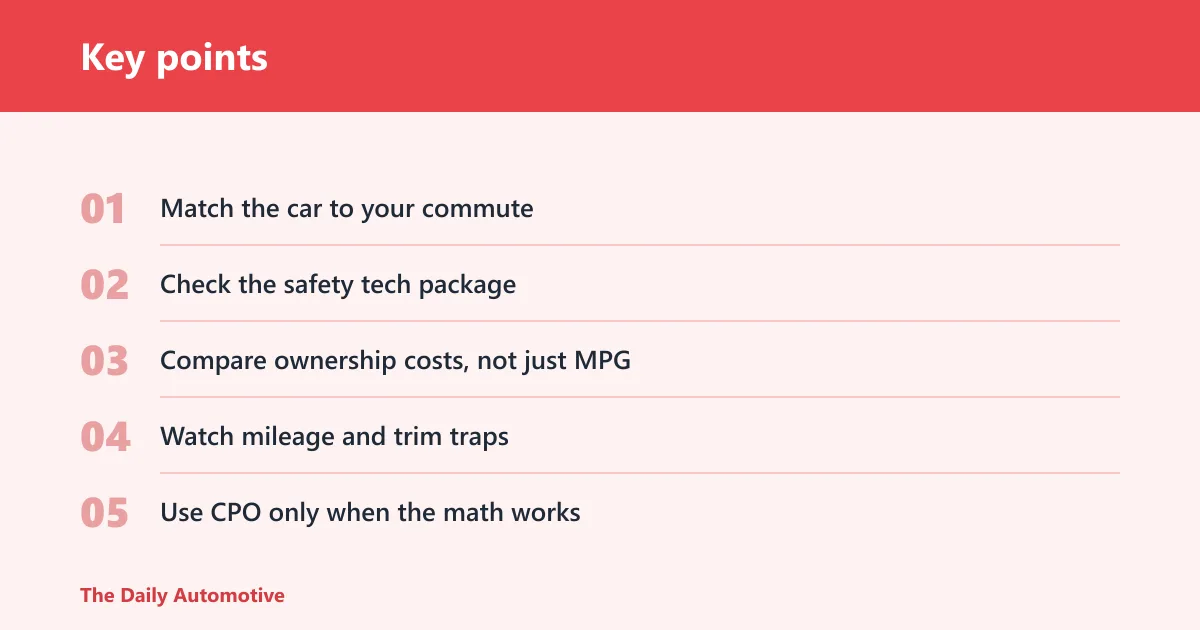
- Match the car to your commute. Long freeway drives favor the Civic or Corolla; snowy roads favor the Crosstrek; the GTI makes sense only if you value driving feel enough to accept higher upkeep.
- Check the safety tech package. Look for automatic emergency braking, lane keeping assist, blind-spot monitoring, and adaptive cruise control, especially on a car that will see daily commuting.
- Compare ownership costs, not just MPG. Fuel is only one piece. Tires, brakes, scheduled maintenance, insurance, and repair frequency can move the real cost far more than a small mpg difference.
- Watch mileage and trim traps. A lower-mileage base car often holds more value than a loaded trim with expensive wheels and a tougher future tire bill.
- Use CPO only when the math works. CPO usually adds a manufacturer-backed inspection and a warranty extension, often around 12 months or 12,000 miles on the limited warranty plus longer powertrain coverage, but the added cost can exceed a clean private-party car if the price premium is too large.
A common first-timer mistake is buying the trim with the nicest photos instead of the cleanest history. Another is ignoring tire age and brake wear, then discovering the “cheap” car needs immediate money before the first month is over.
Say your budget is $19,500 and you want a commuter for a 30-mile round trip. A Corolla hatchback with fewer miles can make more sense than a sportier GTI with a louder exhaust and unknown service history, because the repair gap can erase the driving fun.
Depreciation matters too. These cars land under $20K because they are past the steepest three-year drop, have higher mileage, or sit in trims that new-car buyers skipped. Well-kept, popular trims with full records usually hold value better than odd colors, obscure packages, or modified cars.
Frequently asked questions
What are the best cars for 2026 under $20K?
The best cars under $20K in 2026 are used models that balance condition, mileage, and equipment rather than chasing the newest year. The Mazda3 hatchback, Honda Civic hatchback, Toyota Corolla hatchback, Subaru Crosstrek, and Volkswagen GTI are the strongest mix of fun, practicality, and predictable ownership costs.
What are the coolest used cars under 20k?
The coolest used cars under 20K are the ones that still feel special without turning into maintenance projects. That usually means a Mazda3 hatchback for style, a Civic hatchback for balance, a Crosstrek for weather duty, and a GTI for the most enthusiast appeal if the car is stock and documented.
What new 2026 cars are under 20k?
Very few genuinely new 2026 cars will sit under $20K once destination and trim are counted, so this budget mostly means used. If you want something fun and new, expect to compromise on equipment, power, or size; the used market delivers much better value at this price.
What should I avoid when shopping for a car under $20K?
Avoid modified cars, flood or accident histories, missing maintenance records, and trims that look cheap on paper but become expensive to own. Pay close attention to mileage, tire condition, brake wear, and transmission type, because a bad example can cost more than a cleaner car that listed higher.
What cars give the best value for the money in 2026?
The best value for the money in 2026 comes from cars that stay affordable to fuel, insure, and maintain while still feeling modern. The Corolla hatchback usually leads on low-stress ownership, the Civic hatchback balances resale and livability, and the Mazda3 hatchback gives the strongest style-to-cost ratio.
What cars around 20k are actually worth buying?
The cars around $20K that are actually worth buying are the ones with clean titles, sensible mileage, and the right trim. A base or mid-trim hatchback with good records often beats a worn premium or performance model, because depreciation has already done the heavy lifting without leaving you with the worst repair risk.
Products related to this article
Sponsored / affiliate links. As an Amazon Associate I earn from qualifying purchases. I may earn additional commission from eligible campaigns.